





 Portuguese
  English
  Spanish
 3 min of reading
  1 comment


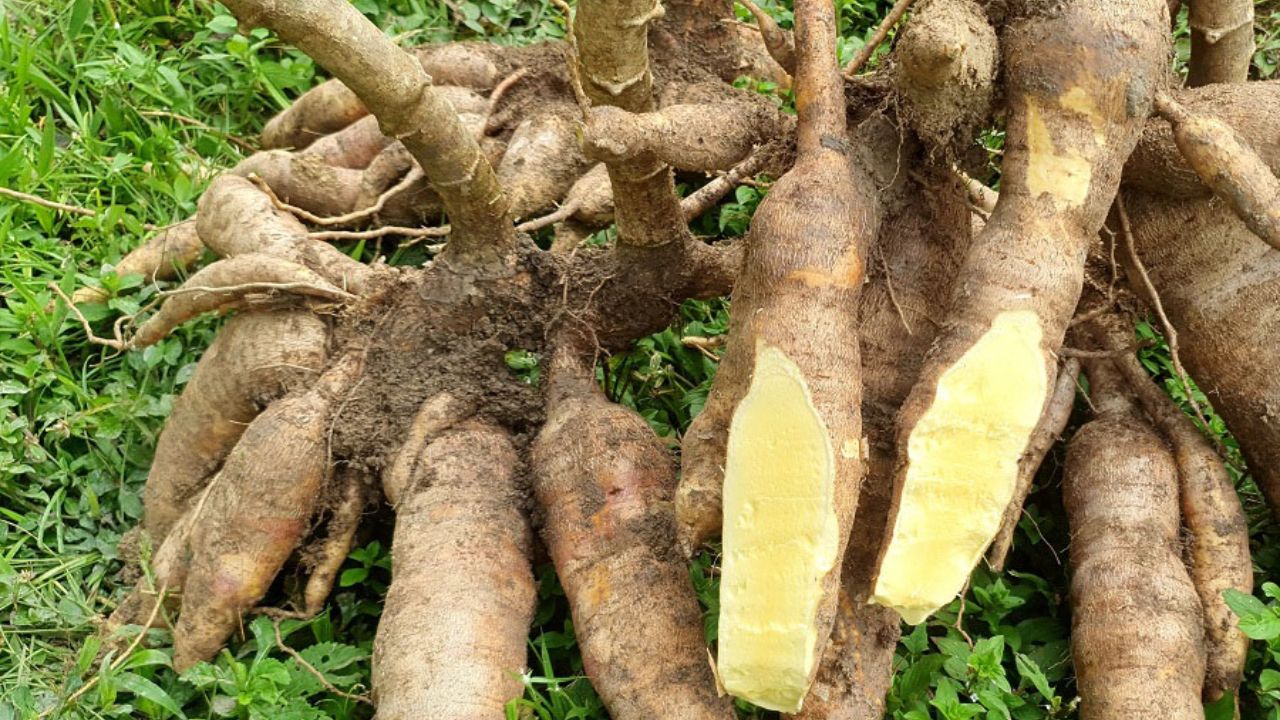


With Productivity Three Times Higher Than the Amazon Average, New BRS Jacundá Cassava from Embrapa Promises to Revolutionize Local Agriculture and Strengthen Food Security in the State.
The production of cassava in the Amazon gains a new boost with the arrival of BRS Jacundá, a variety developed by Embrapa Amazônia Ocidental (AM) specifically for the region’s soil and climate conditions.
Created to meet the demands of local farmers, the cultivar stands out for its high productivity, resistance to pests and diseases, and characteristics that cater to the traditional consumption of the Amazonian population.
In evaluations conducted in the state, BRS Jacundá showed yields exceeding 30,000 kilograms of roots per hectare, a number that nearly triples the current average for the Amazon, estimated at around 10,500 kg/ha.
-
The water that almost everyone throws away after cooking potatoes carries nutrients released during the preparation and can be reused to help in the development of plants when used correctly at the base of gardens and pots, at no additional cost and without changing the routine.

-
The sea water temperature rose from 28 to 34 degrees in Santa Catarina and killed up to 90% of the oysters: producers who planted over 1 million seeds lost practically everything and say that if it happens again, production is doomed to end.

-
An Indian tree that grows in the Brazilian Northeast produces an oil capable of acting against more than 200 species of pests and interrupting the insect cycle, gaining ground as a natural alternative in soybean, cotton, and vegetable crops.
-
The rise in oil prices in the Middle East is already affecting Brazilian sugar: mills in the Central-South are seeing their margins shrink just as ethanol gains strength.

The impressive performance positions the new cassava as a strategic alternative to enhance productive efficiency in the field.
Cassava Was Introduced by Embrapa During Field Day in Manaus
The official launch of the new variety took place on October 9, during a field day held at Embrapa’s headquarters in Manaus.
The event brought together rural producers, technical assistance and rural extension professionals, seed producers, agro-industry representatives, and institutional partners.
At the event, results were shared from areas of producers who have already cultivated BRS Jacundá.
The data highlighted the agronomic potential of the variety and its adaptation to the upland environment, which is predominant in various regions of the Amazon.
Regional Adaptation Strengthens the Cassava Production Chain
According to Embrapa researcher Ferdinando Barreto, the new cultivar was designed to strengthen the cassava production chain in the state.
Adapted for cultivation in upland conditions, BRS Jacundá features characteristics that favor its adoption, especially in regions such as Médio Solimões, where cassava is the mainstay of the agricultural economy.
Barreto emphasizes that, with proper management, the cultivar possesses important attributes such as root quality and tolerance to major pests and diseases.
“As a result, it should contribute to food security and strengthen the cassava production chain in the state of Amazonas,” claims the researcher.
Cassava Is Essential for Food and Income in the Amazon
Cassava occupies a central role in the lives of rural communities in the Amazon.
Whether consumed fresh or processed into flour, it is one of the main sources of carbohydrates for the population, especially in lower-income areas.
In addition to its dietary importance, the crop also generates work and income through the commercialization of roots and their derivatives.
Therefore, advancements in the genetic improvement of cassava directly impact the local economy and food security.
Embrapa’s Cassava Has Yellow Flesh and Meets Cultural Preferences of the Population
One of the distinguishing features of Embrapa’s BRS Jacundá cassava is its yellow-fleshed pulp, a characteristic valued in the Amazon.
The flour produced from the bitter cassava with yellow flesh is widely preferred by consumers and used in the preparation of traditional products, such as table flour and tucupi.
This aspect was defined as an important criterion by the farmers themselves during the cultivar selection process.

Besides the color, the variety has a high starch content and good availability of seed cuttings, factors that facilitate its multiplication and adoption.
Genetic Diversification Reduces Vulnerabilities in the Field
The recommendation for BRS Jacundá is also associated with the need to diversify cassava crops in the state.
In regions like Médio Solimões, production is predominantly concentrated on a single variety known as “Catombo.”
This scenario increases the exposure of crops to biotic stresses, such as pests and diseases, and abiotic stresses, such as climate variations.
The introduction of a new cultivar helps reduce the risks of genetic erosion, a process characterized by the gradual loss of genetic diversity in the crop.
Thus, BRS Jacundá emerges as an alternative that combines productivity, regional adaptation, and sustainability, broadening the possibilities for the future of cassava in the Amazon.
With information from Embrapa.









Não entendi é espécie brava ou mansa para por mesa?