





 Portuguese
  English
  Spanish
  6 min of reading
  0 comments


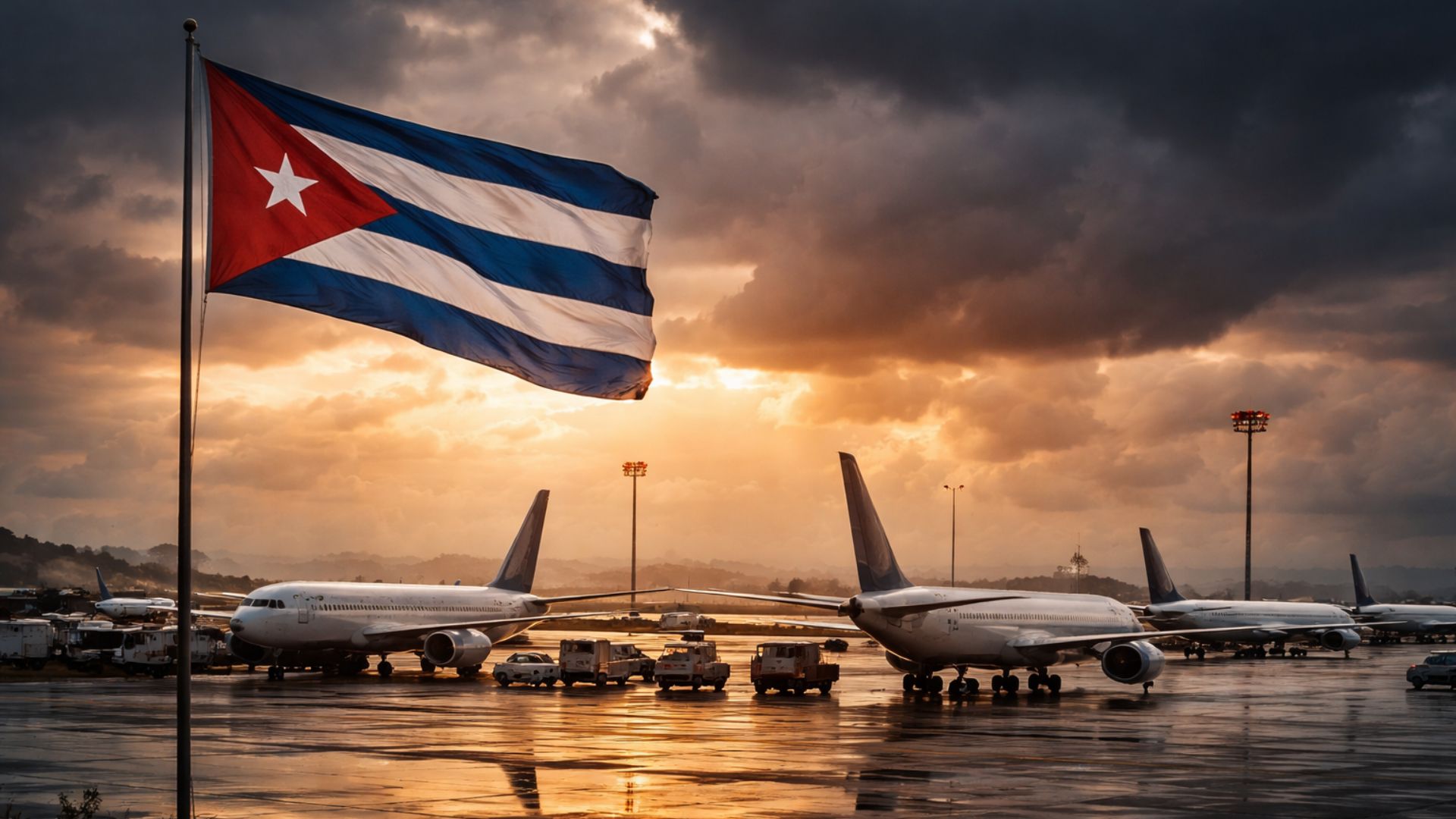
Understand How the Energy Scarcity on the Caribbean Island Caused by Oil Cutbacks Affects Aviation, Impacts Airlines, Tourism, and Logistics, and Generates Economic and Operational Alerts in the Global Scenario
On February 9, 2026, authorities in Cuba officially confirmed the suspension of aircraft fuel supply across the country starting the next day. According to an article published by G1 on Monday (9), the decision was communicated to civil aviation and airlines operating international routes amid an energy crisis exacerbated by oil cutbacks from strategic partners. The measure directly impacts air logistics and may affect international flights, tourism, and foreign currency inflow, which are fundamental elements for the Cuban economy.
Oil Cutback and Its Direct Impacts on the Aviation Sector in Cuba
According to official statements and declarations from representatives of European airlines, the supply of Jet Fuel would be interrupted at midnight on the 10th local time. The decision forces airlines operating long-distance routes to plan technical stops outside Cuba for refueling. On the other hand, regional flights are expected to continue operating normally. Air France confirmed maintenance of its route with a technical stop in another Caribbean country, demonstrating that the immediate impact is operational but does not represent a total halt of air traffic.
The suspension of aviation fuel is one of the clearest signals of the severity of the current energy situation in Cuba. Although airspace remains open, the limitation on supply creates uncertainties for companies, tourists, and investors. The tourism sector, highly dependent on air connectivity, now operates at risk of reduced flight frequency, increased costs, and potential fare adjustments.
-
Petrobras evaluates suspension of sales to distributors and considers canceling the cooking gas auction following guidelines from the Federal Government.
-
Lula reveals a masterstroke by Petrobras to undo a deal made by Bolsonaro, which involves the return of an important refinery that currently produces less than half of what was expected and makes Brazil dependent on international diesel.

-
A study confirms that the natural gas sector will reduce greenhouse gas emissions in Brazil by 0.5% and accelerate the energy transition by 2026.

-
Petrobras implements a severe adjustment and confirms a 55% increase in the price of aviation kerosene with a proposal for installment payments for the companies.


Energy Crisis in Cuba and the Oil Cutback That Triggered the Suspension of Aircraft Fuel
The energy crisis affecting Cuba did not arise suddenly. It is the result of a buildup of structural difficulties and recent geopolitical factors. The central element is the oil cutback from Venezuela, the traditional supplier of fuels and energy derivatives to the island. The interruption of supply occurred after international pressures and changes in the regional political landscape, drastically reducing the volume of energy inputs available in the country.
Without a regular flow of oil, the internal supply chain began to suffer interruptions. This affected not only electricity generation and land transportation but also aircraft fuel, which requires specialized logistics and continuous import. Civil aviation is one of the first areas to feel the impact of deep energy crises, precisely because it depends on refined products and has high operational costs.
The Cuban government announced a series of emergency measures to preserve resources. Among them are reduced workweeks in public offices, expansion of remote work, restrictions on fuel sales, reduction of bus and train lines between provinces, and temporary closure of some tourist establishments. The declared aim is to prioritize food production and electricity generation, sectors considered essential for social stability.

Civil Aviation Under Pressure and Adjustments in International Flights
The suspension of aviation kerosene supply quickly altered the dynamics of the air network. Companies operating international flights now need to plan technical stops outside Cuban territory, typically in airports in the Caribbean or Central America. This practice is not new in global aviation, but it becomes a relevant additional cost factor when applied continuously.
The impact is mainly felt on long-distance routes, such as connections to Europe and parts of North America. Increased operational costs may reflect in higher fares or reduced frequencies, even though companies seek to preserve their routes for strategic reasons. Tourism, which represents an important source of foreign revenue for Cuba, directly depends on the regularity of flights and logistical predictability.
Regional flights, on the other hand, tend to experience less immediate interference, as they use a smaller volume of fuel and have shorter routes. Still, experts point out that any instability in energy supply can create a chain reaction, affecting airport services, aircraft maintenance, and even the perception of operational safety by international travelers.
Economy, Tourism, and the Indirect Effects of a Prolonged Energy Crisis
The Cuban economy had already been facing structural difficulties before the current energy aggravation. The suspension of aircraft fuel exacerbates the challenge by placing pressure on tourism, a sector responsible for significant foreign currency inflow. When air connectivity becomes uncertain, hotels, travel agencies, and local operators feel the impact almost immediately.
In addition, cargo transport may also be affected. Perishable goods, medical equipment, and industrial inputs often depend on air routes to guarantee speed and safety in transportation. The reduction of international flights may compromise logistics chains and delay essential deliveries, amplifying the economic effects of the crisis.
Internally, the population faces restrictions on public transport and adjustments to the school calendar. Schools have begun operating with reduced hours, and universities have adopted a hybrid format. These measures seek to save fuel and electricity, but they also reveal the extent of the crisis. Energy has ceased to be merely a technical issue and has begun to directly influence social and productive daily life.
Diplomatic Repercussions and the Weight of Geopolitical Decisions
The Cuban energy scenario gained international projection following expressions from foreign governments. The Kremlin classified the situation as critical and stated it is maintaining dialogue with Havana to evaluate possibilities for cooperation and assistance. The diplomatic dimension shows that the crisis transcends national borders, involving strategic interests and large-scale commercial agreements.
At the same time, Cuban authorities criticized foreign policies that, according to the government, hinder access to fuels and financing. The international debate reveals that the issue is not only about energy supply but also about geopolitical positioning, tariffs, and economic sanctions. This combination amplifies the complexity of the solution and reduces the predictability of a rapid normalization of supply.
Experts in international relations point out that energy crises often require diversification of suppliers and strengthening of multilateral agreements. Countries highly dependent on a few partners tend to suffer more intense impacts when there are supply disruptions. Energy dependency thus transforms into economic and political vulnerability.

Possible Paths and What to Expect from Air Supply in the Coming Months
In the short term, the trend is to maintain technical stops for refueling outside Cuba. This alternative preserves air connectivity and avoids mass cancellations, but increases operational costs and requires more complex logistical planning. The continuity of international flights directly depends on the airlines’ capability to absorb these additional costs without compromising the financial viability of the routes.
In the medium term, the normalization of supply depends on new contracts for the supply of energy derivatives and potential diplomatic agreements. Investments in alternative energy sources also emerge as a possibility, although they require time and infrastructure. The resilience of the aviation sector is evident, but does not eliminate the need for structural solutions for fuel supply.
For tourism and the local economy, energy stability represents more than operational comfort — it defines the capacity for growth and attraction of investments. Energy and air transport are interconnected pillars of modern economic development. As long as the supply of derivatives remains uncertain, airlines, investors, and travelers will continue to closely monitor every update on the Cuban scenario.










Seja o primeiro a reagir!