





 Portuguese
  English
  Spanish
  3 min of reading
  0 comments


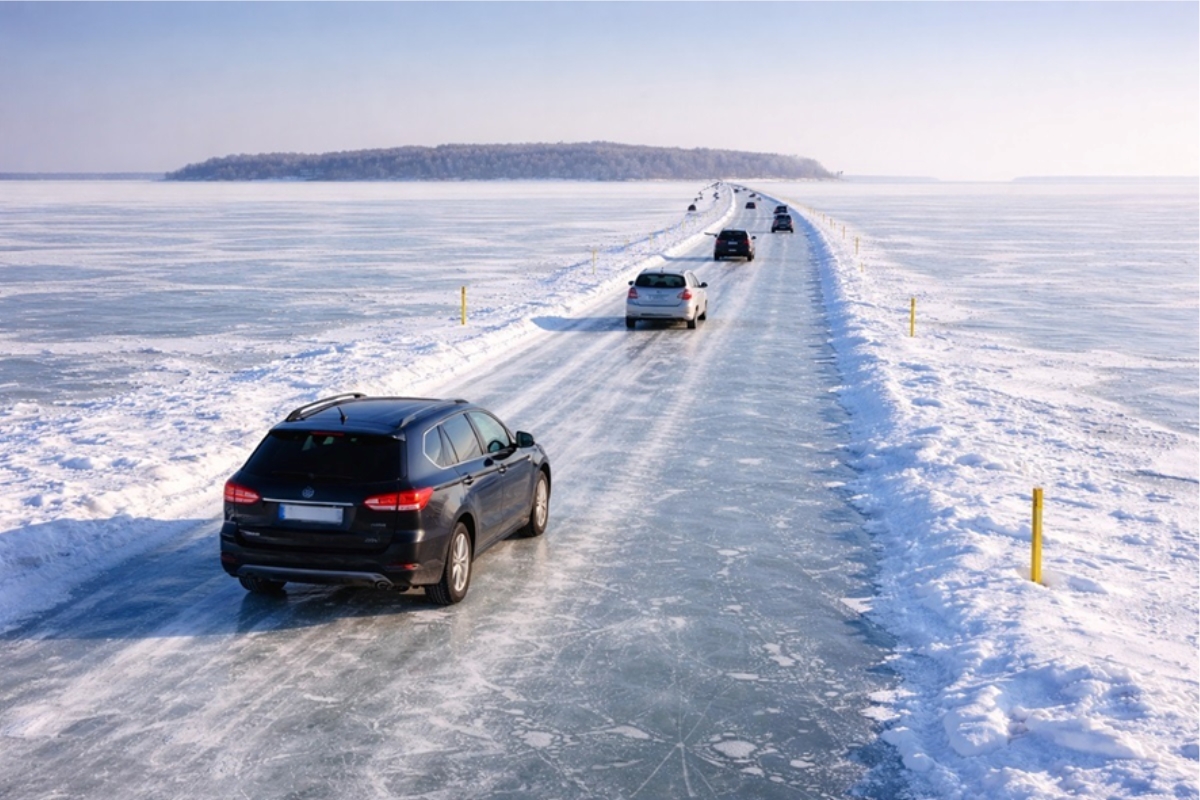
In Estonia, the government opened a 17-kilometer road over the frozen Baltic Sea to connect the islands of Hiiumaa and Saaremaa, prompting changes in local transportation and drawing attention from authorities and the population.
The winter in the Northern Hemisphere has reached extreme levels and completely transformed the landscape of Estonia. With daily temperatures dropping to minus 15 degrees, rivers and sections of the Baltic Sea have frozen.
In light of this scenario, the government made an unusual and impressive decision. The first ice road over the frozen sea was officially opened, creating a new route between islands that relied exclusively on boats.
What seemed impossible has become a reality. Cars now circulate on a surface of ice in the middle of the sea.
-
Friends have been building a small “town” for 30 years to grow old together, with compact houses, a common area, nature surrounding it, and a collective life project designed for friendship, coexistence, and simplicity.

-
This small town in Germany created its own currency 24 years ago, today it circulates millions per year, is accepted in over 300 stores, and the German government allowed all of this to happen under one condition.

-
Curitiba is shrinking and is expected to lose 97,000 residents by 2050, while inland cities in Paraná such as Sarandi, Araucária, and Toledo are experiencing accelerated growth that is changing the entire state’s map.

-
Tourists were poisoned on Everest in a million-dollar fraud scheme involving helicopters that diverted over $19 million and shocked international authorities.


Ice Road Becomes Official Solution for Isolated Islands
The road was created in a frozen section of the Baltic Sea to connect Hiiumaa and Saaremaa, two large islands located to the east of the mainland of Estonia.
Normally, travel between these points occurs via maritime transport. However, with the freezing of the sea, boat services were canceled.
The opening of the ice road ensured mobility for the local population and prevented the total isolation of the islands during the harshest part of winter.
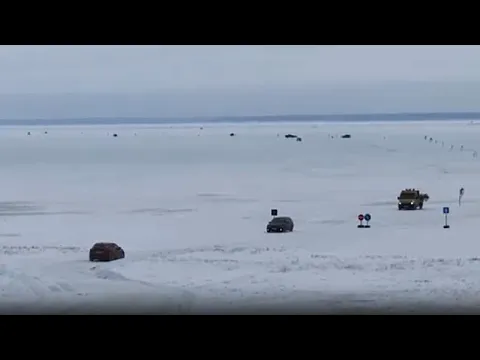

17-Kilometer Route Already Receiving Vehicle Traffic
The road is 17 kilometers long. Drone footage shows vehicles crossing the path over the ice.
Even before the official opening, there was already traffic in the area. The scene catches attention for the contrast between regular cars and the frozen sea backdrop.
The detail that stood out the most was the organization of the route, which became the only authorized crossing over ice by the country’s authorities.
Negative Temperatures of Up to Minus 15 Degrees Allowed the Formation of the Route
Temperatures in Estonia remain negative daily, reaching as low as minus 15 degrees.
This intense cold was the decisive factor for the safe freezing of the section of the Baltic Sea used for the road.
Although several rivers and maritime areas are frozen, only this route has received official authorization. This reinforces the level of control adopted by local authorities.

Unofficial Roads Concern Authorities Due to Ice Risk
Even with an authorized route, drivers have been creating alternative paths over the ice.
One of the informal stretches is about 7 kilometers long and connects the mainland to Vormsi Island.
Authorities warn of the risk. According to Estonian police officer Maiko Sirts, it is not illegal to cross the ice, but it is dangerous because there is no guarantee of the thickness of the frozen layer. No one officially measures these improvised routes.
The risk exists and can be high.
Cold Wave Hits All of Europe and Causes Extreme Effects
The situation in Estonia is part of a larger scenario. Europe is facing a series of cold waves and snowstorms this winter in the Northern Hemisphere.
The phenomena have already caused flooding and deaths in Portugal and Spain. In Poland, beaches have frozen over. In Paris and London, improvised ski slopes have appeared. European capitals have experienced various disruptions.
The impact is continental, and the effects continue to be felt.
The opening of the ice road in Estonia demonstrates how extreme weather conditions can completely change a country’s routine. A crossing that once depended on boats now takes place over the frozen sea, in a scenario that impresses and raises alarms about safety and adaptation to extreme cold.
Would you have the courage to cross 17 kilometers over the frozen sea? Share your opinion in the comments.










-

2 pessoas reagiram a isso.