





 Portuguese
  English
  Spanish
  5 min of reading
  4 comments


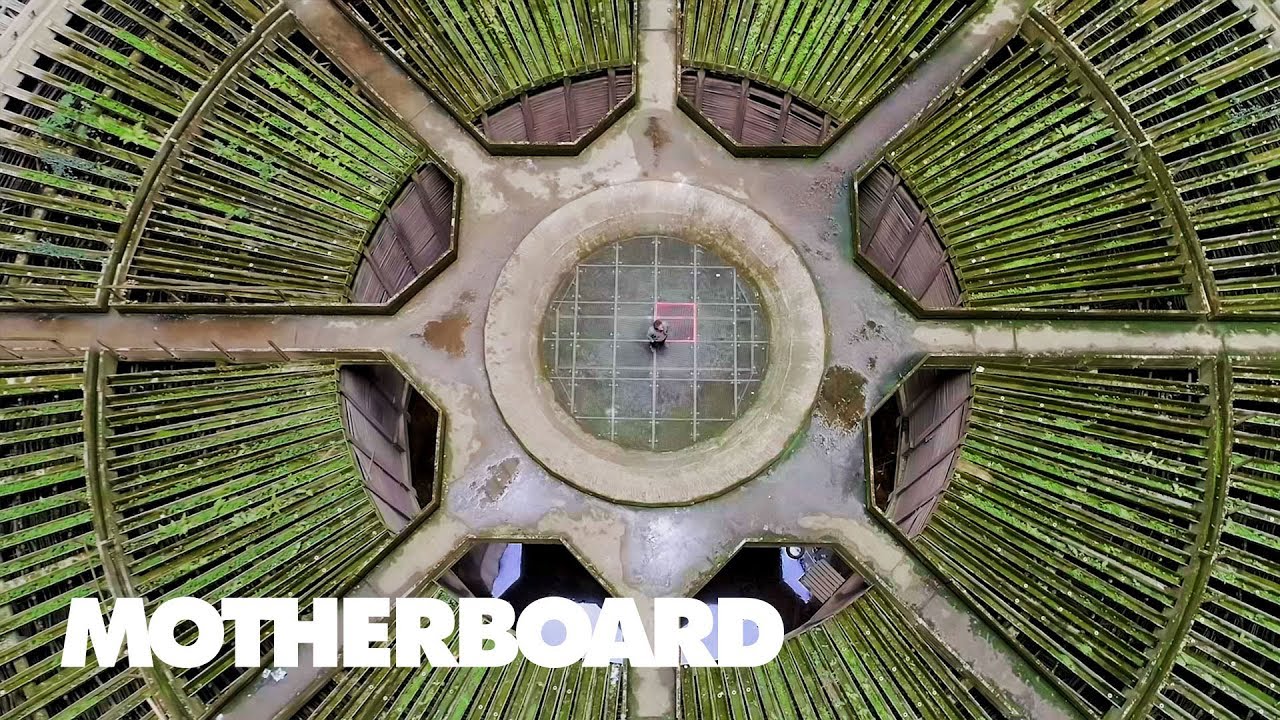


At 1,400 Meters Deep and Protected by 2,300 Meters of Rock, the Gran Sasso Laboratory Seeks Dark Matter and Invisible Particles That Could Explain the Universe.
In the heart of Italy, between Rome and L’Aquila, in the Abruzzo region, there is a structure that almost no one sees but may help explain the very origin of the universe. The Laboratori Nazionali del Gran Sasso (LNGS), operated by the INFN (Istituto Nazionale di Fisica Nucleare), is located beneath the Gran Sasso d’Italia massif, protected by approximately 1,400 meters of depth and about 2,300 meters equivalent of rock, which serve as a natural shield against cosmic radiation.
Officially inaugurated in 1987, the LNGS is considered the largest underground laboratory in Europe dedicated to particle physics, astrophysics, and nuclear physics. The structure occupies about 180,000 cubic meters of excavated volume, with three large experimental halls, each approximately 100 meters long, 20 meters wide, and 18 meters high.
But what happens there is neither mining nor strategic storage. It is a silent search for something that no one has ever seen directly: dark matter.
-
Motorola launched the Signature with a gold seal from DxOMark, tying with the iPhone 17 Pro in camera performance, Snapdragon 8 Gen 5 that surpassed 3 million in benchmarks, and a zoom that impresses even at night.

-
Satellites reveal beneath the Sahara a giant river buried for thousands of kilometers: study shows that the largest hot desert on the planet was once traversed by a river system comparable to the largest on Earth.

-
Scientists have captured something never seen in space: newly born stars are creating gigantic rings of light a thousand times larger than the distance between the Earth and the Sun, and this changes everything we knew about stellar birth.

-
Geologists find traces of a continent that disappeared 155 million years ago after separating from Australia and reveal that it did not sink, but broke into fragments scattered across Southeast Asia.

Why Go Down 1,400 Meters to Study the Universe?
The answer lies in cosmic radiation. At the Earth’s surface, particles from space constantly collide with the atmosphere, producing a “noise” that interferes with extremely sensitive experiments. To detect exceedingly rare events like hypothetical interactions of dark matter particles — an environment almost free from this interference is necessary.
The thick layer of rock above the laboratory reduces the flow of cosmic muons by about one million times compared to the surface. This isolation transforms Gran Sasso into one of the quietest places on the planet from a subatomic perspective.
There, giant detectors operate day and night trying to register events that may happen only once in months or years.
The Search for the Dark Matter That Comprises 27% of the Universe
According to the standard cosmological model, about 27% of the universe is composed of dark matter, an invisible substance that does not emit light, does not absorb electromagnetic radiation, and cannot be observed directly. Its existence is inferred by the gravitational effects on galaxies and cosmic clusters.
At Gran Sasso, experiments such as XENONnT, one of the world’s most advanced initiatives in the search for dark matter, use tons of ultra-pure liquid xenon within shielded tanks to detect extremely rare interactions between hypothetical particles called WIMPs (Weakly Interacting Massive Particles) and ordinary atoms.
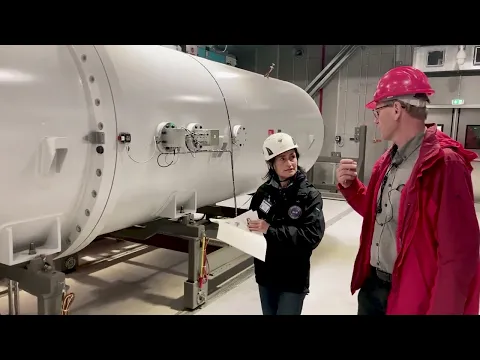

The XENONnT uses approximately 8 tons of liquid xenon, making it one of the most sensitive detectors ever built. The experiment is the result of an international collaboration with dozens of scientific institutions and was upgraded in 2020 to further enhance its sensitivity.
The goal is simple in theory but monumental in practice: to capture the faintest signal possible from a particle that can traverse the entire Earth without leaving a trace.
Neutrinos: Ghost Particles Detected in the Depths
In addition to dark matter, the laboratory also hosts experiments dedicated to the study of neutrinos, particles known as “ghosts of the universe” because they hardly interact with matter.
The Borexino experiment, also installed at Gran Sasso, was crucial for precise measurements of solar neutrinos.
In 2020, researchers from Borexino announced the first direct measurement of CNO cycle neutrinos in the Sun, a milestone in stellar astrophysics.
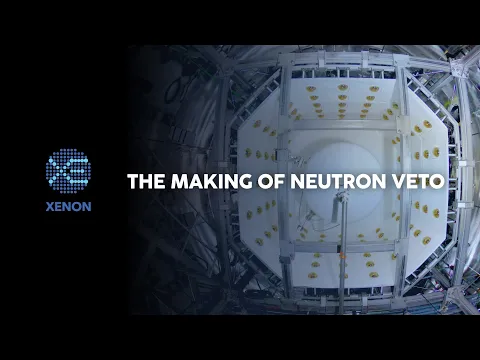
These particles constantly traverse the entire planet. Trillions of them pass through the human body every second without any perceptible effect.
Detecting them requires extremely sensitive sensors and absolute isolation, something possible only in underground environments like Gran Sasso.
Colossal Infrastructure Beneath the Italian Alps
The LNGS is not a small scientific bunker. It is a true underground city connected to the Gran Sasso highway tunnel, which crosses the central Italian Alps.
The structure includes:
- Three large experimental halls
- Auxiliary tunnels
- Independent ventilation systems
- Strict control of environmental radiation
- Research and technical support areas
About 1,000 researchers from over 30 countries use the facilities every year. The laboratory is considered a key piece in the global network of particle physics, collaborating with the CERN in Switzerland and other international institutions.
The Silence That Protects the Experiments
Below the mountain, the environment is precisely controlled. The natural radioactivity of the environment is constantly monitored. Materials used in experiments undergo rigorous screening to avoid any contamination that could cause “false positives.”
Some detectors are built with metals and components that have spent years stored in protected environments to avoid activation by cosmic radiation.
The obsession with physical silence is total. The goal is to eliminate any interference that could mask what may be one of the most important discoveries in modern physics.
What’s at Stake: Understanding What the Universe Is Made Of
If dark matter is directly detected, the impact will be historic. The standard model of particle physics will need to be expanded. Understanding galaxy formation, the expansion of the universe, and cosmic structure could change radically.
Today, about 68% of the universe is dark energy, 27% dark matter, and only about 5% corresponds to ordinary matter — the matter that forms stars, planets, and human beings.
In other words, everything we see represents only a small fraction of the cosmic reality. Gran Sasso is one of the few places on the planet where scientists are trying to open this invisible door.
A Laboratory Operating at the Edge of Known Physics
Even after decades of experiments, dark matter has yet to be directly detected. Each update to the detectors increases sensitivity and reduces the space of possible theoretical candidates.
The LNGS continues to expand its experiments, with new phases planned for the coming years. The scientific race involves laboratories in the United States, China, and Canada, but Gran Sasso remains one of the most strategic centers in this search.
The paradox is fascinating: the deeper one goes into the mountain, the more one tries to see beyond the stars.
The Hidden Science That Few Know Exists
While Italian cities follow their routine on the surface, beneath the Alps, a silent structure operates continuously, recording almost imperceptible signals that could redefine physics.
There are no sirens. There are no explosions. There are no dramatic announcements.
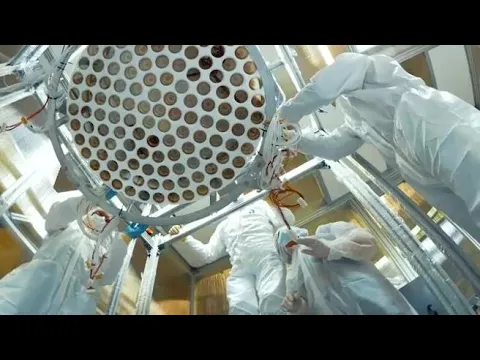
Only attentive sensors are waiting for an invisible particle to finally reveal its presence.
If that happens, it will be a discovery capable of changing books, theories, and the very way humanity understands the cosmos. And it all started with a bold decision: to dig deep into the Earth to try to glimpse what lies beyond it.
The laboratory is not just “underground.” It is protected by about 1,400 meters of vertical rock and approximately 2,300 meters of equivalent water coverage (m.w.e.), a metric used in particle physics to describe the level of shielding against cosmic radiation.








Nossa!Faz uma matéria tão séria e erra totalmente a geografia?Gran Sasso não está nos Alpes, está no centro da Italia nos Apeninos. Corrija isso.
Se o “Éter”, bosons, permeia o Cosmos, com 70% energia e 30% de massa, como ainda não encontramos evidencias ? Ainda sabemos muito pouco sobre o Universo Quântico
Mas não é só esses tipos de análises não. Aí tem outros tipos de experimentos.