





 Portuguese
  English
  Spanish
  3 min of reading
  0 comments


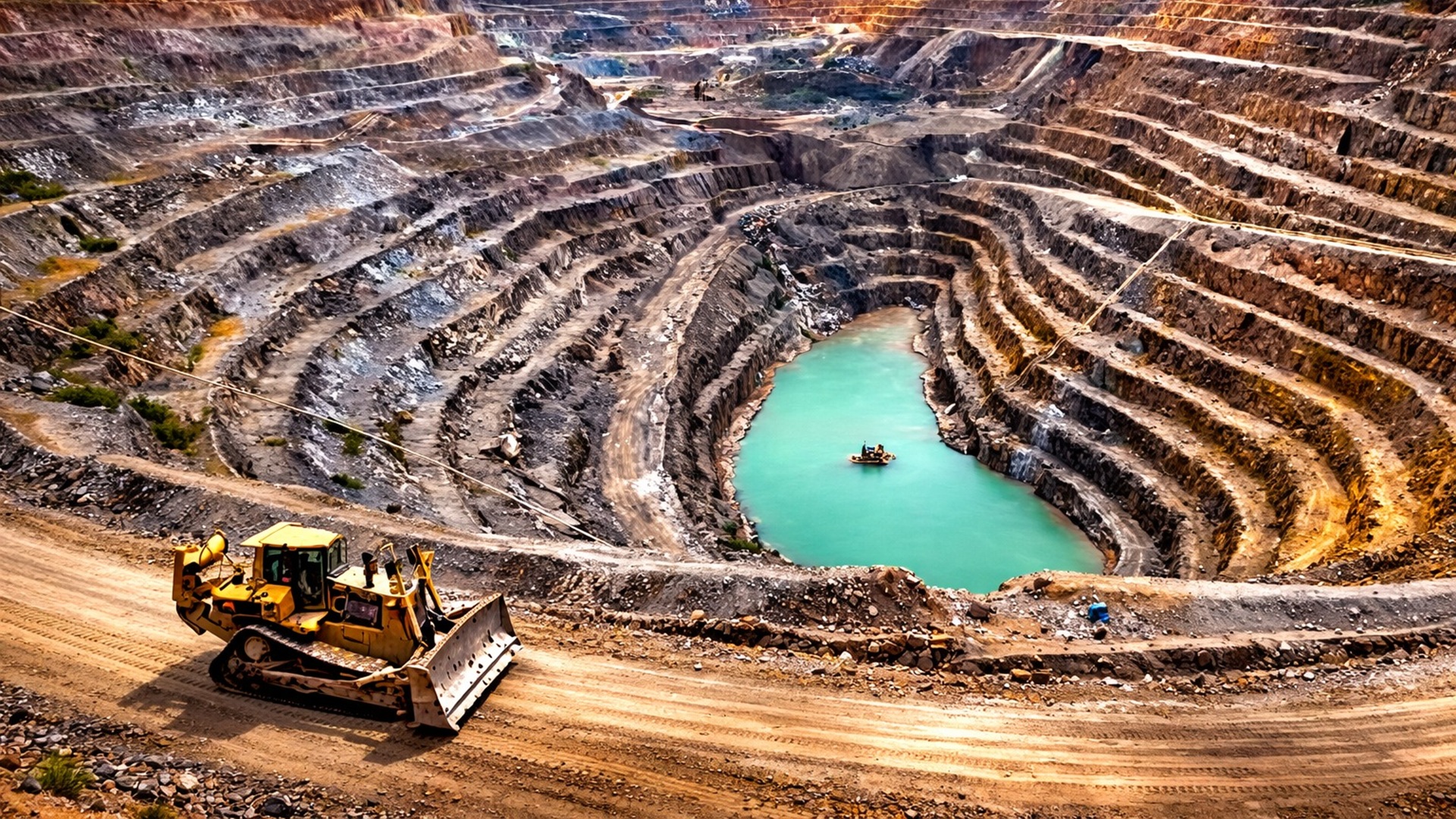
Discovery of a Deposit with Up to 1 Million Tons of Lithium at the Emerys Allier Mine in Beauvoir May Secure Annual Supply for 700 Thousand Electric Cars and Reach 34,000 Tons by 2030, with Public Investment of 50 Million Euros
A lithium deposit discovered at the Emerys Allier mine in Beauvoir, France, could enable the manufacturing of 700 thousand electric cars per year in Europe, with the potential of up to 1 million tons and an estimated supply of 34,000 tons by 2030.
Europe Discovers a Key Resource for Manufacturing 700 Thousand Electric Cars Per Year
Europe discovers a key resource for manufacturing 700 thousand electric cars per year with the identification of a lithium deposit beneath a kaolin mine operating since the late 19th century.
The mine is called Emerys Allier and is located in the city of Beauvoir, France. The French multinational mining company Emerys has been extracting clay on the site since the late 19th century.
-
Motorola launched the Signature with a gold seal from DxOMark, tying with the iPhone 17 Pro in camera performance, Snapdragon 8 Gen 5 that surpassed 3 million in benchmarks, and a zoom that impresses even at night.

-
Satellites reveal beneath the Sahara a giant river buried for thousands of kilometers: study shows that the largest hot desert on the planet was once traversed by a river system comparable to the largest on Earth.

-
Scientists have captured something never seen in space: newly born stars are creating gigantic rings of light a thousand times larger than the distance between the Earth and the Sun, and this changes everything we knew about stellar birth.

-
Geologists find traces of a continent that disappeared 155 million years ago after separating from Australia and reveal that it did not sink, but broke into fragments scattered across Southeast Asia.

A large lithium deposit was detected beneath the clay in the 1960s. Only in 2022, after more specific studies, it was found that the deposit was up to three times larger than initially expected.
It is estimated that there could be up to 1 million tons of this mineral. The volume would be enough to produce the batteries for 700,000 electric cars every year, supplying the European industry.
Estimated Capacity and Projections Until 2030
The concentration of the mineral is estimated to be around 1% of the total material in the deposit. This means that 100 tons of rock need to be processed to obtain 1 ton of lithium.
With this ratio, the deposit could provide up to 34,000 tons of the mineral for the industry by 2030. This number is equivalent to what is needed for manufacturing the batteries of 700,000 electric cars per year.
This volume places the Beauvoir mine second among the 10 most promising lithium extraction projects in Europe. The site’s potential reinforces its strategic relevance for the sector.
Production Costs and Impact on the Battery Industry
The availability and concentration of the mineral allow for an estimated production cost between 7 and 9 euros per kilo. This level is considered a crucial factor for the European battery industry.
Local production could avoid the purchase of lithium from abroad, currently the main source of the essential mineral. This would contribute to lower costs and greater competitiveness for batteries manufactured in Europe.
The cost of the battery still represents up to 40% of electric cars, according to the CEO of Skoda. A reduction in the price of the input would directly impact the cost structure of the electric automotive sector.
Project Structure and Public Investment
The deposit would consist of two distinct areas. The mine would be excavated to a depth of 350 meters to extract lithium instead of clay.
A refining center, located less than 100 km away, would transform the mineral into lithium hydroxide. This is the most suitable form for battery manufacturing.
The French government invested an initial amount of 50 million euros in the project. The investment ensures a minority stake and will be used for feasibility studies.
The estimated extraction period would have a minimum duration of 25 years, potentially reaching 35 years. During this time, the activity could create and maintain 1,000 jobs.
Strategic Relevance for Europe
In addition to supplying the local industry, Europe could even sell this lithium to China. The potential of the deposit expands the continent’s commercial possibilities.
Roland Lescure, Minister of Economy, Finance, Industry, Energy, and Digital Sovereignty of France, stated that strategic metals and rare earths are the geostrategic issue of the century.
According to him, these resources are crucial for energy supply and sovereignty. The statements reflect the strategic dimension attributed to the deposit identified in Beauvoir.
With the identification of the estimated volume, promising concentration, and projected costs, the deposit becomes central to discussions about the future of battery and electric car manufacturing in Europe.








-

-

3 pessoas reagiram a isso.