





 Portuguese
  English
  Spanish
  4 min of reading
  6 comments


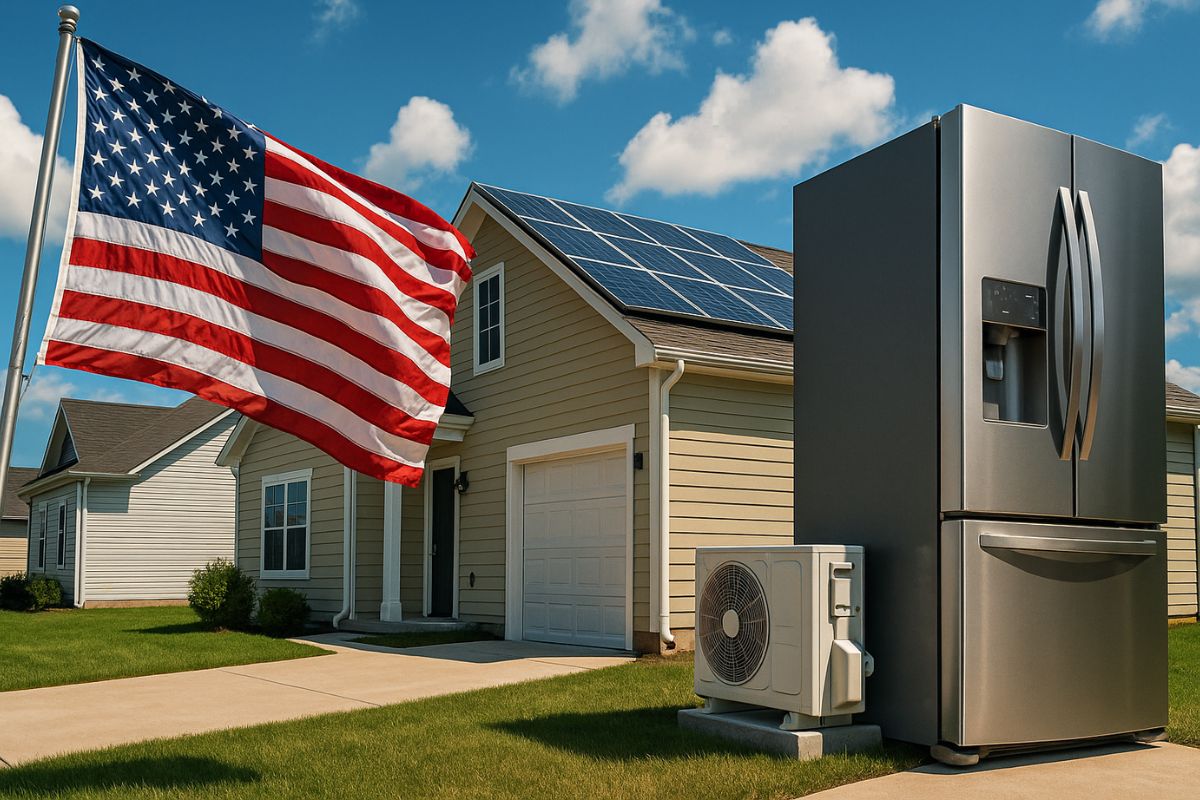


Even With Annual Income of Less Than 60 Thousand Dollars, American Families Access Housing With Central Air Conditioning, Full Kitchen, and Appliances Thanks to Ample Credit, Long Terms, and Construction Standards That Deliver the House Ready to Live In
The reality of American families contrasts with the experience of many Brazilians: even with an annual income below 60 thousand dollars, it is possible to buy a house or rent a property already equipped with central air conditioning, refrigerator, stove, microwave, water heater, and washer-dryer. In many states, this “basic kit” comes standard, reducing the initial expense for those starting out and ensuring immediate comfort.
By combining historically lower interest rates than those practiced in Brazil, long terms, and homebuying programs for first-time homebuyers, American families access neighborhoods with integrated public services, schools in the same ZIP code, and standardized infrastructure. The result is a level of comfort considered unthinkable for similar income brackets in Brazil.
What Comes Standard in the House: Comfort as Standard
According to attorney Davi Aragão, who lives in the United States, the typical house is delivered with central air conditioning and installed ducts, heating for the winter, and cooling for the summer.
-
The government requests the Federal Revenue Service for a new system to automate the income tax declaration, reducing errors, time, and bureaucracy for millions of Brazilians.

-
Pix in installments, international Pix, and contactless payment without internet: the Central Bank revealed the new features coming to the tool that is already used by almost every adult in Brazil.

-
Mercado Livre has just started selling medications with delivery in up to three hours to your door, and this move could completely change the way Brazilians buy medicines on a daily basis.

-
In Dubai, rising tensions from the war in the Middle East are causing super-rich individuals to leave the Gulf and direct their fortunes to a new financial refuge in Asia.


A kitchen equipped with a refrigerator, stove, and microwave is standard practice, as is a central water heater that supplies showers and faucets throughout the property.
In addition to the kitchen trio, it is common to find dishwashers, washing machines, and dryers.
For those buying new properties, builders deliver everything functioning. For renters, the package is usually included in the contract.
This allows the family to move in “with the mattress” and live there from day one.
Financing That Fits the Budget
The American mortgage system has consolidated long terms and generally lower interest rates than those in Brazil, which reduces the installment amount and expands eligibility.
In practice, with a responsible credit history, American families access payments compatible with their income, without the need for expensive renovations right away.
Another differentiator is the reduced down payment.
Depending on the credit profile and the program adopted, it is possible to start with a 10% down payment, 5%, and in some specific cases, cover only financing costs.
This financial structure accelerates the transition from renting to homeownership.
First Home and Subsidies: Who Is Starting
State and local affordable housing programs assist young couples and first-time homebuyers with subsidies, insurance, and special conditions.
In markets outside the major urban centers, it is possible to find houses in the 150 thousand to 180 thousand dollars range, maintaining the comfort standard that includes climate control and appliances.
These mechanisms lower the barrier to entry and stabilize the household budget, as the family does not need to immediately spend on expensive items.
For lower incomes, predictability is what sustains the dream of homeownership.
Renting Also Delivers the “Full Package”
Those who have not yet purchased a home turn to renting without sacrificing comfort. Rental apartments and houses typically come with equipped kitchens, central air, and heating.
Thus, even in lower-income brackets, American families maintain their standard of living with climate control and daily conveniences.
In everyday life, replacing appliances is also facilitated by competitive retail and installment plans at the stores themselves.
Duplex refrigerators under a thousand dollars during seasonal promotions show why upgrading large items is simpler than in Brazil.
Size, Urbanism, and the Zip Code Effect
Outside of super-dense areas like Manhattan, the standard is to live in a house. Single-family homes dominate the countryside and medium-sized cities, offering more space than the Brazilian average.
Even compact units easily exceed 50 square meters. In gated communities and planned neighborhoods, public schools, firefighters, and other services are funded by local taxes tied to the property.
This integration creates equity of access to infrastructure between more expensive and cheaper neighborhoods, accounting for differences in location and size.
The ZIP code guides services and makes life easier for those starting out without sacrificing basic quality.
Limits and Exceptions That Matter
There are real restrictions. Expensive and dense markets raise prices and tighten square footage, and the availability of affordable housing varies by region.
Interest rates fluctuate with the economic cycle, and credit depends on score and payment history.
Still, the institutional framework favors the essential: long terms, complete construction standards, and accessible retail.
This explains why American families with incomes below 60 thousand dollars achieve stable comfort more quickly.









Não sou ninguém, porém digo a todos: direita ou esquerda, dólar em alta!
Quando o Brasil vai se equiparar as outras nações em desenvolvimento? Só teremos poder de compra se o real se equiparar ao dólar, euro e outras moedas fortes. Poder para comprar equipamentos, para baratear e melhorar a produção… Agora digo uma coisa: não vai adiantar se governo, políticos e empresários fizerem cartéis. Quando o real era quase 2×1 dólar um pouco mais, uma moto no Japão a CB1000 era por volta 18 mil reais lá, e no Brasil era 68 mil reais. Ai não dá né?
Isso é baixo para eles mas aqui no Brasil a maioria não tira um mês de renda americana somando o ano todo de salário.
Imagine aqui a pessoa ganhando R$20.000/mês teria carro zero e morava em mansão fora das metrópoles. O custo de vida lá só é mais caro devido saúde e previdência, mas aqui no Brasil isso não é tão considerável pois aposentar com 65 anos e o SUS poder ser descartado como considerável vantagem.
É preciso lembrar que aqui, o governo e o PD condenam o rico e a riqueza publicamente, impondo a ideia de que a pobreza e a favela são o meio de vida ideal.
O povo aceita passivamente, gosta e espera ser sustentado pelo governo durante a vida inteira!!
Parabéns Brasil!!!
Quem **** isso, ****??? Quem fez o plano Minha Casa minha vida?? A direita??
Sempre tem amebas para querer defender a esquerda podre…
Mudança de nome colaborador já existia a décadas e outros programas de habitação desde do regime militar pelo menos, mesma coisa fies já existia antes a esquerda muda o nome e diz que criou