





 Portuguese
  English
  Spanish
  4 min of reading
  0 comments


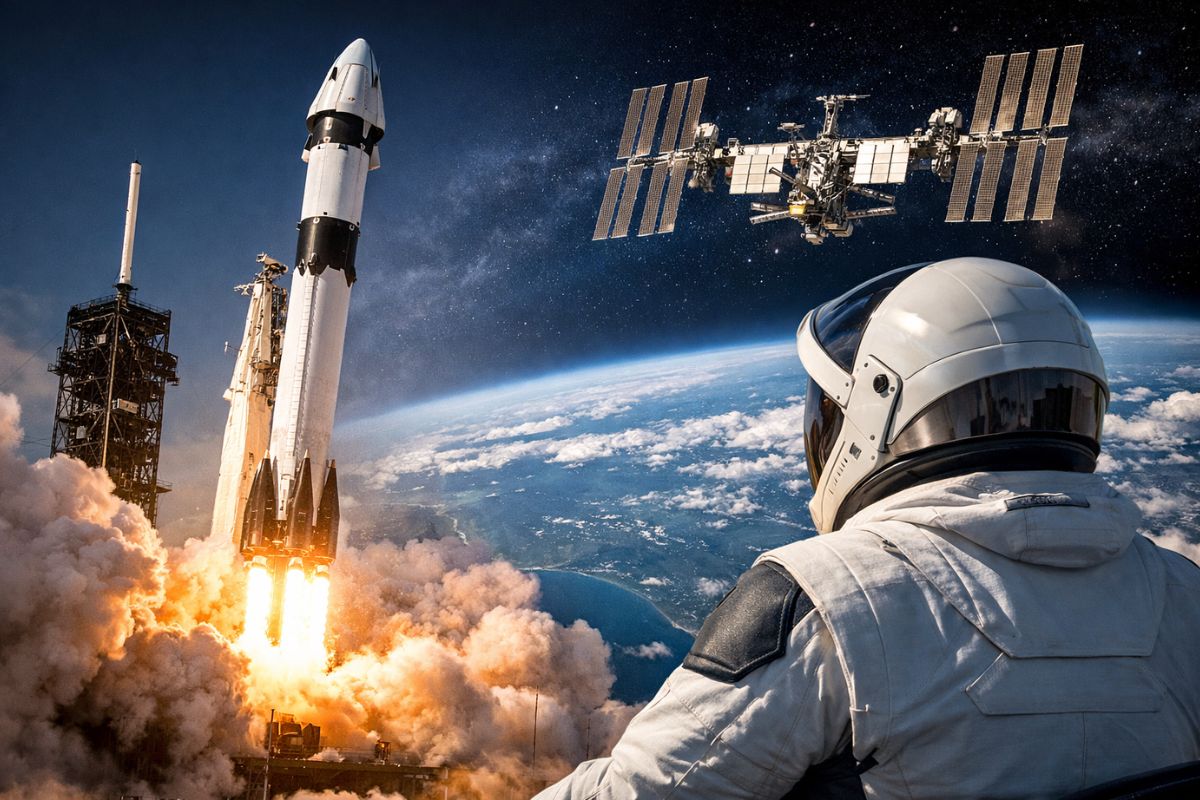
With FAA Authorization, SpaceX Resumes Falcon 9 After Four Days of Standstill, Confirms Crewed Launch of Crew-12 for February 11 in Cape Canaveral and Sends Four Astronauts in the Freedom Capsule Toward the ISS Amid Investigation Into Upper Stage Failure Before Full Operational Return.
SpaceX is back on the crewed flight schedule after the FAA cleared Falcon 9, ending a four-day suspension caused by a technical issue with the upper stage. As a result, the Crew-12 mission has been confirmed for February 11, launching from the Cape Canaveral Space Force Station in Florida at 6:01 AM Eastern Time.
The announcement puts the company back at the center of a sensitive phase of human operations in low Earth orbit. The regulatory decision came with a technical requirement, as the return only occurred after a formal investigation and the adoption of corrective measures to reduce the chance of recurrence of the failure observed earlier this month.
FAA Clears Falcon 9 and SpaceX Returns to Crewed Agenda
The suspension began after the launch of 25 Starlink satellites on February 2 from California. In that mission, the upper stage placed the payloads into low Earth orbit as planned, but did not execute the planned deorbit burn. The result was the uncontrolled reentry of the rocket body into the atmosphere, an event that triggered the investigation protocol.
-
Motorola launched the Signature with a gold seal from DxOMark, tying with the iPhone 17 Pro in camera performance, Snapdragon 8 Gen 5 that surpassed 3 million in benchmarks, and a zoom that impresses even at night.

-
Satellites reveal beneath the Sahara a giant river buried for thousands of kilometers: study shows that the largest hot desert on the planet was once traversed by a river system comparable to the largest on Earth.

-
Scientists have captured something never seen in space: newly born stars are creating gigantic rings of light a thousand times larger than the distance between the Earth and the Sun, and this changes everything we knew about stellar birth.

-
Geologists find traces of a continent that disappeared 155 million years ago after separating from Australia and reveal that it did not sink, but broke into fragments scattered across Southeast Asia.

According to the history cited by authorities, this was the fourth issue linked to the upper stage of Falcon 9 in 19 months. A previous episode did not lead to a formal investigation, while two others took the vehicle out of operation for about two weeks each. This time, the process was completed in a shorter timeframe, allowing for a quicker return to the launch routine.
Crew-12: Who Flies, Where It Launches From, and How Long It Stays

With the clearance, Crew-12 carries four crew members: Jessica Meir and Jack Hathaway from NASA, Andrey Fedyaev from Roscosmos, and Sophie Adenot from ESA. The group will travel in the Crew Dragon Freedom capsule and is expected to stay at the International Space Station for approximately nine months.
The mission launches from Cape Canaveral and enters a strategic window for team rotation in orbit.
The multinational composition of the crew underscores the operational cooperation logic of the ISS, while also requiring technical predictability in the launch vehicle, especially after a recent interruption for safety reasons.
Failure in the Second Stage, Investigation, and Corrective Measures
In the report accepted by the FAA, the likely cause was ignition failure of the second stage engine prior to the deorbit burn.
This point is critical because the final stage of the flight involves not only cargo delivery but also control of the hardware’s fate after the mission, directly impacting operational safety and protocol compliance.
SpaceX reported that it has implemented technical and organizational measures to prevent recurrence. Although the full details of these changes have not been widely disclosed in the official summary, the regulatory clearance indicates that the actions presented met the required standard for the return of Falcon 9 to NASA-related crewed flights.
Direct Effect on the ISS and NASA’s Human Schedule
The arrival of Crew-12 restores the ISS to its standard complement of seven people. Since January 15, the station has been operating with only three astronauts following the early departure of Crew-11, a situation that alters the distribution of scientific tasks, system maintenance, and routine management aboard.
The return of Crew-11 occurred one month earlier than expected and marked the first medical evacuation in the history of the ISS.
NASA did not disclose the identity of the affected astronaut or clinical details, citing privacy. This context increases the burden on Crew-12, as the new rotation is not just a continuation of the schedule, but also a recomposition of operational stability.
The sequence of events shows a complete cycle of risk, response, and recovery: technical incident, suspension, investigation, corrections, and authorization to return to flight.
In the short term, SpaceX, FAA, and NASA converge on the same goal: to maintain human access to the ISS with safety, regularity, and minimal technical transparency to sustain public and institutional trust.
If you were setting priorities for upcoming missions, would you place more emphasis on launch cadence or extra safety margins even with delays? And looking at Crew-12, which indicator should the public monitor more closely: the performance of the second stage, time spent at the ISS, or the scientific impact of the rotation?







-

-

-

-

4 pessoas reagiram a isso.