





 Portuguese
  English
  Spanish
  9 min of reading
  0 comments



Family Networks Born in the Interior, Strong in the Northeast and Hungry for Wholesale, Advance on Multinational Assets, Change the Game of Food Retail and Stir a Gear That Already Represents More Than 9% of Brazil’s GDP.
There’s a quiet turnaround happening in food retail: the family that knows the “smell of the stockroom” is taking space from multinational companies with English names. And it’s not just a figure of speech. The engine driving this turnaround runs through the Northeast, through the expansion of wholesale, and through a sector that, combined, already generates R$ 1.067 trillion, about 9.12% of Brazil’s GDP, according to data from the ABRAS Ranking 2025.
It’s not just a market struggle. It’s a battle of methods: on one side, rigid processes and decisions made miles away; on the other, owners on the ground, stripped-down logistics, and neighborhood adaptations.
Brazilian GDP, Wholesale, and the Size of the Arena Where the Family Fights
The Brazilian food retail sector is not “just another segment.” It has become economic infrastructure. The ABRAS itself considers the sector a driving force: the revenue of the set of companies reaches R$ 1.067 trillion, equivalent to 9.12% of the national GDP, with hundreds of thousands of stores serving around 30 million consumers daily.
-
The government requests the Federal Revenue Service for a new system to automate the income tax declaration, reducing errors, time, and bureaucracy for millions of Brazilians.

-
Pix in installments, international Pix, and contactless payment without internet: the Central Bank revealed the new features coming to the tool that is already used by almost every adult in Brazil.

-
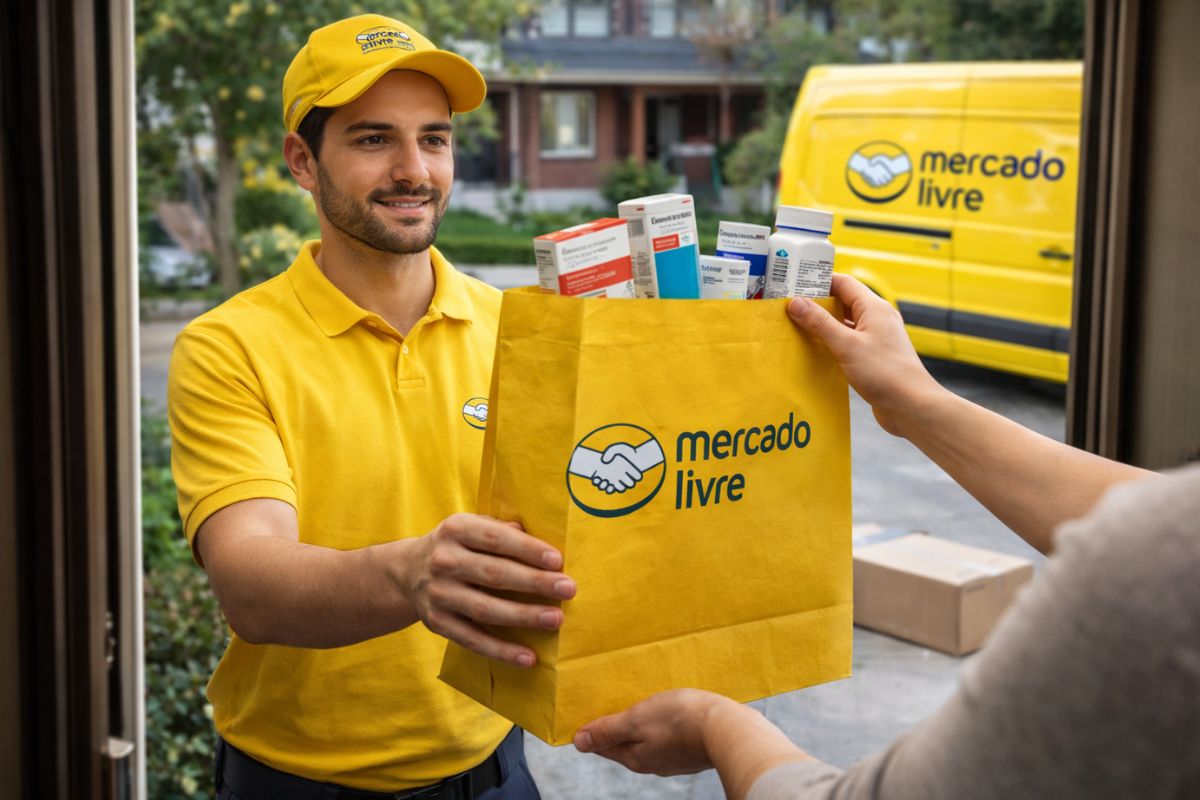
Mercado Livre has just started selling medications with delivery in up to three hours to your door, and this move could completely change the way Brazilians buy medicines on a daily basis.
-
In Dubai, rising tensions from the war in the Middle East are causing super-rich individuals to leave the Gulf and direct their fortunes to a new financial refuge in Asia.


In this landscape, wholesale has become a weapon for expansion. It caters to housewives and, at the same time, to small retailers who want price and volume. When this format fits with local logistics and management, it turns into a steamroller.
Why Global Giants Began to Lose and Why This Opened Up Space for Families from the Interior of Brazil
For decades, Brazil was a laboratory for foreign giants. However, the country charges a high toll for those trying to run things from outside. Brazilian volatility destroys rigid planning: costs change, demand changes, margins change, everything changes quickly.
Walmart: The Didactic Case of Disconnection
The world’s largest retailer entered Brazil in 1995 with the promise of replicating the “everyday low price” model, but struggled to understand local consumption, from shopping habits to negotiations with regional suppliers.
The end was an exit: in 2018, it sold 80% of the operation to Advent, which rebranded it as Grupo BIG, and later this business was sold to Carrefour, a transaction announced in 2021, with expectations for approval by 2022.
The point here is not just “Walmart left.” It’s the reason: Brazil punishes those who do not master operational details.
Makro Sold 30 Stores to Carrefour for R$ 1.95 Billion
Makro, a pioneer in wholesale, followed a similar path: it took a long time to react to the advance of local competitors and lost competitiveness.
The exit was gradual. In 2020, Makro sold 30 stores to Carrefour for R$ 1.95 billion.
Then, in 2023, it negotiated 16 stores and 11 gas stations in São Paulo with Grupo Muffato, consolidating another chapter of leaving the field and surrendering territory to a regional player.
Cencosud and Bretas: When Brazil Doesn’t Forgive Regional Mistakes
Entrepreneur Horst Paulmann, from Cencosud, publicly admitted in 2015 the difficulty of understanding Brazil and was even more direct in pointing out the strategic error related to Bretas: “My mistake was going to Minas Gerais and Bretas,” he said in a meeting, acknowledging the cost of the bet.
Cencosud had bought Bretas in 2010, when the chain was the absolute leader in Minas. Under Chilean management, it lost ground.
In 2025, the Minas operation was sold to Supermercados BH for a value 47% lower than what was paid 15 years earlier, illustrating how much local efficiency weighs.
Grupo Pão de Açúcar: From Crown Jewel to “Turnaround” in the Hands of the Interior
The most dramatic chapter was that of GPA (Grupo Pão de Açúcar). Under French control Casino, the company entered a spiral of debt.
To alleviate pressure, it underwent a dismantling with the sale of relevant assets, including movements linked to Assaí and the extinction of Extra Hiper, converting stores to wholesale.
The final act of this power shift came between August and September 2025, when the Coelho Diniz family from Governador Valadares acquired 24.6% of Grupo Pão de Açúcar, becoming the largest shareholder and calling for changes in the board, surpassing Casino.
In its material, this appears as control with five of the nine board seats and the arrival of André Diniz with a mission described as “buckle up”: to sell non-strategic assets and accelerate cost-cutting, the logic of “cash first.”
The Leap of Regionals: The Family Eating from the Edges, Until Becoming the Main Course
The turnaround has numbers and method.
Ten years ago, large networks accounted for about 80% of sales in Brazil. Today, the scenario has flipped: approximately 50% of the market is in the hands of regional and superregional networks, which adjust stock, price, and logistics to the reality of each neighborhood, something that no headquarters in Paris or Chicago has managed to replicate.
And 2025 has become the symbolic year: “control has returned to those who know the ground.”
Minas, Family, and Wholesale: The R$ 716 Million Check That Changed the Game
If this resurgence has a face, it belongs to Pedro Lourenço (Pedrinho) from Supermercados BH.
The story is rooted in retail: a former loader, 22 years learning on the shop floor, until in 1996, at 40 years old, he opened a small grocery store in Santa Luzia (MG). From there emerged one of the largest networks in the country.
BH dominated classes C and D with low fixed costs and a lean operation. Revenue skyrocketed from R$ 1.5 billion (2010) to R$ 21 billion (2024), and the ABRAS Ranking confirms BH’s 4th position nationally, with R$ 21.278 billion in 2024.
The scale is impressive:
- More than 400 stores in 109 cities in Minas and Espírito Santo;
- Own fleet: 463 trucks and 96 support vehicles;
- Private label: 160+ products carrying the BH seal, already representing 8% of revenue;
- In February 2025, the movement that closed the cycle: check for R$ 716 million to acquire 54 stores of Bretas in Minas, plus 8 gas stations, 1 distribution center, and other assets, eliminating foreign competition in the state.
And the symbolic “period” point: with an estimated fortune of R$ 7.5 billion, Pedrinho bought 90% of Cruzeiro’s SAF for R$ 600 million, a signature of power for someone who has risen from truck unloading to the top.
Northeast, Wholesale, and Logistics: The Empire of Ilson Mateus
The biggest phenomenon outside the South-Southeast axis goes by the name of Ilson Mateus.
A former shoeshiner and mechanical turner, he tried mining in Serra Pelada and, in 1986, opened a 50 m² grocery store in Balsas (MA).
While Carrefour and GPA hesitated to enter the deep interior of Maranhão, Pará, and Piauí due to poor infrastructure, Mateus “colonized” the territory. The secret there is not just selling. It’s making it arrive.
The group built its own network:
- 19 distribution centers feeding an ecosystem that ranges from neighborhood supermarkets to wholesale, including appliance stores.
- Accelerated growth after the IPO in 2020, when it raised R$ 4.6 billion and opened over 100 stores in 3 years.
The numbers of his text are monumental:
- 3rd largest network in Brazil, with revenue of R$ 36.4 billion (2024);
- Operation nearing 300 stores, 40,000+ employees;
- Empire valued at R$ 15 billion and personal fortune of R$ 10 billion.
And in 2025, came the definitive seal of regional dominance: the group took over 51% of Novo Atacarejo (with investment and strategic combination), opening the doors of Pernambuco and Paraíba and integrating 30 more stores at once.
Family, Wholesale, and São Paulo: Muffato Invades the Economic Heart
In Paraná, the Muffato Group has become the 6th largest network in the country, with revenue of R$ 17.4 billion. Under the command of brothers Everton and Emerson Muffato, the Cascavel network decided that “the South was not enough” and sought out Brazil’s largest market.
The expansion was surgical:
- Bought 16 stores from Makro in São Paulo and converted them in record time to the Max Atacadista brand.
- Obsessive vertical integration: from gas stations to its own television network, forming an ecosystem.
- Third generation already involved in managing 116 stores, turning continuity into an asset.
Then came the move that surprised the market: through the Snapper Rocks funds (and WHG Apache), the Muffato brothers built a position of around 10% in Assaí.
Sendas Distribuidora communicated this movement to the market, with relevant participation and part of operations that increase economic exposure.
The logic is the same as in its text: operational expertise. The group identified a discounted price and bought a relevant stake in a direct competitor, showing that a strong regional player doesn’t need to “fight” a giant: it can become a large partner instead.
Santa Catarina: The Coque Family and Komprão Becoming a Power
In Santa Catarina, the story is of five siblings who started as street vendors in the 1980s and transformed the network into a powerhouse.
The leap is brutal:
- In 2012, it generated R$ 288 million;
- Twelve years later, it closed 2024 with R$ 10.3 billion (growth of 3,400%), placing the group on the map of the 10 largest powers in the country.
The “game-changer” was the creation of Komprão (wholesale) in 2016, capturing pent-up demand for wholesale with neighborhood agility.
The group invested over R$ 150 million in the latest wave of openings in the southern state and, in its text, it also appears as a total investment of R$ 500 million to put the Santa Catarina network on the map of the 10 largest.
Differential: margin. Instead of growing by burning cash, it bet on omnichannel and technology, maintaining low debt and high profitability. Today: 91 stores, 10,000 employees and state leadership, surpassing traditional networks.
GPA in the Hands of the Family: Coelho Diniz and the Chance to “Fix” an Icon
The movement that best defines the new era came from Governador Valadares: the Coelho Diniz family became the largest shareholder of GPA with 24.6%, displacing the French from Casino and seeking to reshape the board.
The obvious question is: why buy a giant that generates R$ 18 billion but has been seen as inefficient?
In its text, the answer is opportunity:
- Casino needed to sell assets “at any price”;
- GPA was cheap;
- The Coelho Diniz family saw a turnaround.
And then comes their specialty: generating cash and cutting costs.
- The group generates R$ 3 billion per year with just 22 supermarkets in the interior of Minas;
- Diversified with a discreet empire in agriculture, logistics, and real estate;
- With an average of R$ 136 million per store, they see “fat” to trim.
It’s the return of the “owner’s eye” in the form of a board of directors.
What Explains the Victory of Interior Families Over Global Giants
The guiding thread is simple and cruel: in food retail, margins are pennies. And pennies do not respect international organizational charts.
Regional families have advanced because:
- They adapt stock and pricing by neighborhood, not by country;
- They negotiate with local suppliers without formality;
- They build their own logistics to avoid dependence on third parties;
- They use wholesale to gain scale without losing turnover;
- They buy assets from exiting multinationals (or in need of cash).
Meanwhile, global models have suffered from distance, rigidity, and slow reactions, and Brazil, when it senses weakness, exacts its toll.
And Now: Will They Continue Growing or Will They Become “Too Big”?
The final provocation makes sense: growing too much can push anyone into the same mistake as multinationals, becoming a heavy, slow machine, distant from the counter.
However, there is a difference: these companies grew with an operational culture, not a slide deck. If they maintain cash discipline, strong logistics, and close management to the customer, the trend is to continue advancing.
If they lose touch with the shop floor, history will demand its price.
And you: do you think Brazilian wholesale will consolidate a new balance in Brazil’s GDP? Share your views and pass this article to someone who follows businesses in Brazil.









-

-

2 pessoas reagiram a isso.