





 Portuguese
  English
  Spanish
  4 min of reading
  67 comments


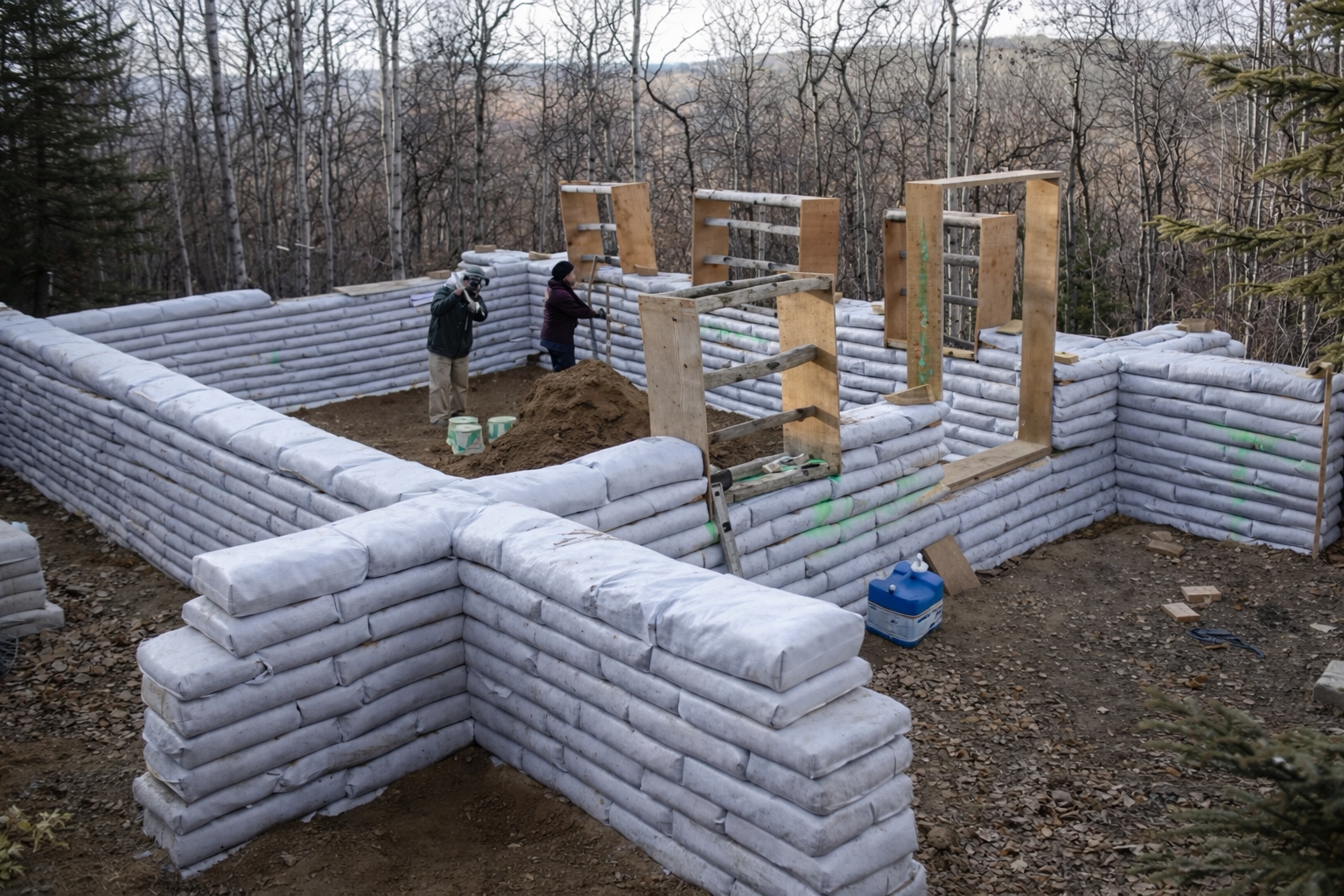


With Soil Removed From The Ground, Intense Manual Compaction, And Ties With Wires And Metal Sheets, The Family Builds A House Of Soil Bags That Confronts The Conventional Model Of Civil Construction
There was no concrete, there were no stacked industrial blocks. There was only exposed soil and a bold decision: to transform that common earth into walls capable of supporting an entire roof.
The family builds a house of soil bags using the very material from the land. Shovel, bucket, sturdy bags, and physical strength replace heavy equipment. What seemed like an improvisation starts to take on a technical form.
And that’s where the tension arises. Can merely compacted soil support a complete structure? The answer emerges layer by layer.
-
With 74% of companies facing difficulties in hiring, technicians and engineers in renewable energy are becoming scarce in Brazil and are essential to support the expansion of solar, wind, and green hydrogen projects.

-
The lack of welders, electricians, and operators becomes a structural threat in 2025, with the construction industry and manufacturing already suffering from delays, cost pressures, and labor shortages in Brazil.

-
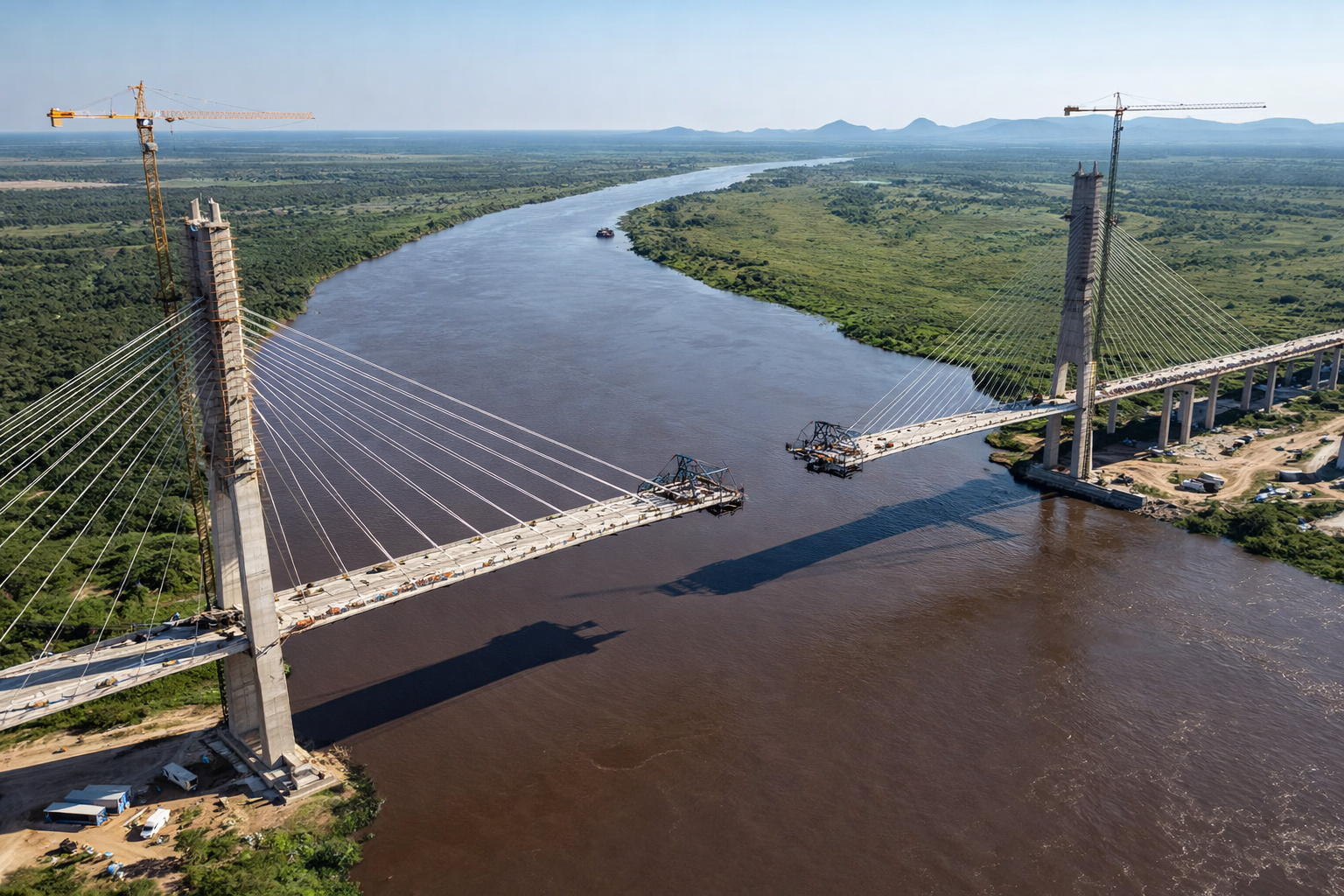
Brazil and Paraguay are just 46 meters away from a historic union on the bioceanic bridge that promises to revolutionize trade between the Atlantic and the Pacific.
-
With 55 km over the sea, a cost of US$ 20 billion, and enough steel to build 60 Eiffel Towers, China’s largest project has connected Hong Kong, Zhuhai, and Macau in a colossal bridge that defies the logic of engineering.


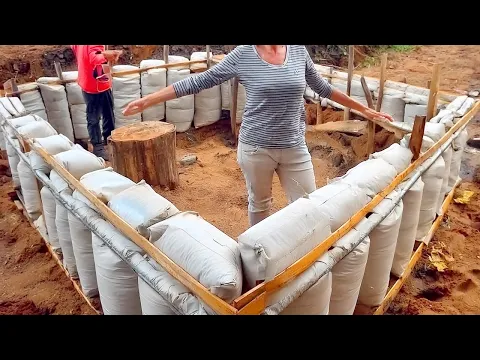

The Problem Was How To Transform Loose Soil Into A Stable Structural Wall
Loose soil does not support anything. It spreads, gives way, crumbles. The challenge, then, was to convert this raw material into something capable of maintaining shape and height.

The solution came with elongated bags filled manually. The family fills each unit with soil, seals the ends, and positions them side by side, forming the first circular row.
Next comes the manual socket. Strike after strike, the compaction eliminates gaps and creates a firm base. With each completed layer, the wall gains density and weight.
Between one row and another, metal wires extend over the already compressed bags. When the next layer is placed, the wire becomes pressed, locking the set in place.
The Secret Of Resistance Lies In The Almost Exhaustive Repetition Of The Process
There are no shortcuts. The method depends on discipline.
Fill the bags with soil. Position each one. Compact. Extend the metal wire. Repeat. For months, this was the construction process that deviated from the standard.
This sequence creates a thick and continuous wall. The circular shape distributes the weight around the base, reducing load concentration points.
As the layers advance, the house of soil bags begins to gain real height. What was once just a line close to the ground transforms into a structure above the head.
Doors And Windows Appear Amid The Rise And Show That Nothing Is Improvised
Another critical moment arises when the openings arrive. A mistake there would compromise the entire stability.
Wooden frames are positioned at the locations of the doors and windows before the wall reaches full height. The subsequent rows rise, contouring these structures.
Support planks maintain the alignment while the bags are compacted on the sides. Thus, the openings are already integrated into the wall, without later cuts.
This reveals that the family builds the house with planning. Nothing is inserted later. Everything is born along with the structure.
The Roof With Wood And Metal Sheets Changes The Game And Proves That The Structure Supports Load
When the walls reach sufficient height, another decisive test emerges: supporting the weight of the roof.
Wooden beams are supported on the top of the circular construction. They extend from the center toward the edges, creating a defined slope.
Some receive simple adjustments for proper fitting. Then, the corrugated metal sheets are positioned and fixed with visible screws.
At this moment, the doubt disappears. The house of soil bags supports wood and metal without visible deformation. The structure begins to have direct protection against rain and sun.
The Final Coating Hides The Bags, But Confirms The Engineering Behind The Work

Even firmly, the bags still appear on the external surface. The solution comes with the application of mortar.
With a trowel and plastering float, the material is pressed against the wall. The irregularities are filled, the texture changes.
The wires and metal sheets become invisible. The curved shape stands out. The construction takes on a uniform appearance.
Behind the finish, there is a system based on compression, weight, and mechanical tying. Nothing more than that. And yet, sufficient to support a complete dwelling.
The family builds a house of soil bags and, therefore, exposes an alternative that confronts traditional masonry. Soil, wood, and metal sheets organized with a method create a functional, resilient, and visually solid structure. This draws attention not only for its economy but also for the logic of engineering applied with simple resources.
Would You Take On A Project Like This On Your Own Land? Leave Your Opinion In The Comments And Share With Those Interested In Sustainable Construction.









Acho isso muito legal. parabéns
Muita força de vontade e coragem
Parabéns
Tem vídeos do processo. Gostaria de ver