





 Portuguese
  English
  Spanish
  5 min of reading
  0 comments


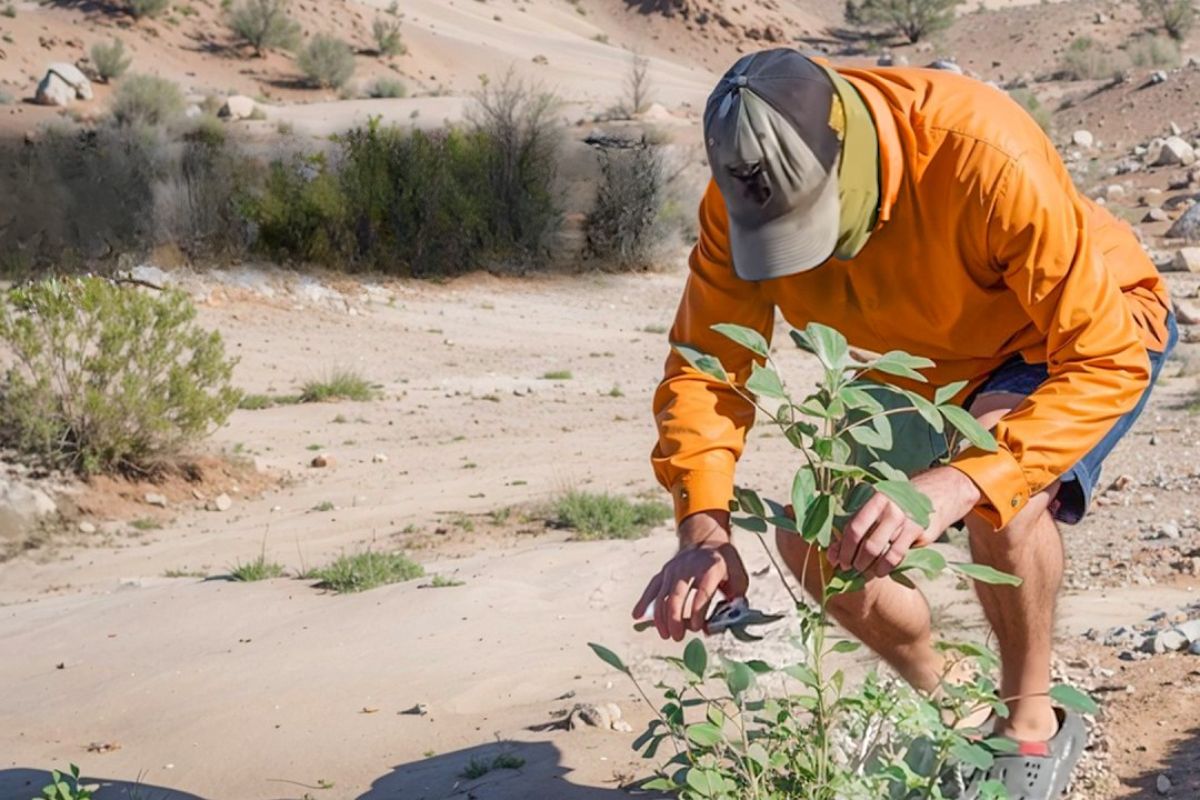
In The Heart Of The Desert Ranch, A Plant Appears Without Sowing And Without Irrigation: The Palmer Amaranth, Treated As A Weed Capable Of Cutting Yields By 50% To 75%. Instead Of Chemical Warfare, The Bet Is To Use Biomass To Retain Organic Carbon In The Soil And Protect Moisture During The Summer.
At The Ranch, The Discussion Begins With A Simple Paradox: The Same Plant That Scares Farmers By Reducing Productivity Is Also The First To Appear Where Almost Nothing Sprouts. The Palmer Amaranth Has Become A Biological Marker Of Opportunity, Because It Grows Without Added Water And Responds Quickly When Organic Matter Is Available.
The Logic Of The Project Is Pragmatic And Measurable: The Goal Is Not To ‘Beautify’ The Desert, But To Increase The Organic Carbon In The Soil And Hold That Stock For Longer. This Redefines The Central Question: Why Fight Against A Weed If It Can Be Used As A Tool For Covering And Protecting The Land?
What Makes The Plant A Problem For Farmers And An Asset In The Ranch

In Agricultural Areas, The Palmer Amaranth Is Cited As A Super Weed For Three Technical Reasons: It Is Allelopathic, Meaning It Releases Substances That Harm Nearby Plants, It Is Resistant To Herbicides, And It Can Cut Yields By 50% To 75% When Established.
-
Motorola launched the Signature with a gold seal from DxOMark, tying with the iPhone 17 Pro in camera performance, Snapdragon 8 Gen 5 that surpassed 3 million in benchmarks, and a zoom that impresses even at night.

-
Satellites reveal beneath the Sahara a giant river buried for thousands of kilometers: study shows that the largest hot desert on the planet was once traversed by a river system comparable to the largest on Earth.

-
Scientists have captured something never seen in space: newly born stars are creating gigantic rings of light a thousand times larger than the distance between the Earth and the Sun, and this changes everything we knew about stellar birth.

-
Geologists find traces of a continent that disappeared 155 million years ago after separating from Australia and reveal that it did not sink, but broke into fragments scattered across Southeast Asia.

To Make Management Worse, A Single Plant Can Produce Half A Million Seeds, Accelerating Colonization.
At The Ranch, The Reading Is Different Because The Constraints Are Different.
The Main Challenge Is Not Competing For Corn And Soybean Yields But Dealing With Scarce Water And Stabilizing Organic Carbon In The Soil After A Heavy Intervention With Organic Matter.
In This Scenario, The Weed Becomes An Emergency Cover Crop, Provided It Is Controlled So As Not To Form Monoculture.
The Soil Experiment That Changed The Pace Of The Land In Three Weeks

The Turning Point Came When The Land Received 11 Cubic Yards Of Horse Manure On An Area Of 3,000 Square Feet, Raising The Organic Carbon In The Soil From Just Over 0.5% To More Than 3%, With The Potential To Reach 4% In Desert Soil.
Instead Of Sowing And Irrigating, The System Observed What Sprang Up Naturally, And The Plant That Dominated In About Three Weeks Was The Palmer Amaranth.
This Result Does Not Mean That The Ranch Has ‘Solved’ Regeneration, But Rather That Biomass Capable Of Holding The Newly Added Organic Carbon Has Emerged.
Without Living Cover, Microorganisms Consume Carbon More Easily And Return Some Of It To The Atmosphere, Reducing The Benefits Of The Intervention.
The Strategy, Therefore, Tries To Transform Rapid Growth Into Permanence.
Soil Organic Carbon: Why It Disappears And How The Plant Can Hold It
Soil Organic Carbon Functions As The Structural Base Of Fertility And Water Retention, But It Does Not Automatically Stay Where It Was Placed.
When Manure And Mulch Enter The System, Microbes Feed On Sugars And Starches And Release A Portion Of The Carbon As Carbon Dioxide.
It Is A Rapid Cycle That Reduces The Balance If There Is No Matter Continuously Returning.
This Is Where The Palmer Amaranth Enters As The Ranch’s “Carbon Pump.”
The Plant Draws Carbon Dioxide From The Air, Converts It Into Plant Tissue, And When Cut And Organized As Mulch, Part Of That Carbon Returns To The Soil Food Web, Feeding Fungi, Helping To Form Humus, And Increasing The Chances Of Soil Organic Carbon Being Stored For Longer.
The Operational Detail Is Critical: It Is Not About Letting The Weed Die Standing, But About Managing The Biomass At The Right Moment.
Roots, Shade And Infiltration: The Invisible Engineering Of Palmer Amaranth

The Growth Of The Palmer Amaranth Is Fast, But The Most Relevant Effect Is Underground.
The Roots Create Channels That Increase Rainwater Infiltration And Bring Moisture To Deeper Layers, In Addition To Leaving Carbon Along The Way When They Die.
This Process Also Helps Microbes Unlock Minerals Already Present In The Soil, Improving Availability For Other Plants.
Above The Ground, The Cover Provides Thermal And Hydric Gains.
Shade And Mulch Can Reduce Soil Temperature By 20 To 40 Degrees In The Summer, Which Decreases Evaporation And Keeps More Water In The Root Zone.
In A Ranch Where Growth Is Modest And Water Is Paramount, This Microclimate Changes The Chances Of Seedlings Surviving.
The Risk That Cannot Be Ignored: Seeds, Monoculture And Neighbors
The Major Disadvantage Of The Palmer Amaranth Is Precisely What Makes It Feared: Its Ability To Sow Aggressively.
One Plant Can Produce Half A Million Seeds, And The Reproductive Structures Can Become Sharp, Requiring Handling With Gloves.
If It Goes Too Far, The Weed Tends To Dominate The Space And Choke Diversity.
Therefore, The Ranch Rule Is Control.
The Plant Is Used As A Temporary Cover Crop, Pruned Before Seed Formation, And The Biomass Is Distributed To Protect The Soil, Without Encouraging Expansion Beyond The Managed Area.
The Context Defines The Limit: In Areas With Neighboring Farmers, The Choice Would Require Another Evaluation, Because The Cost Of Dissemination Could Be High.
From Kitchen To Management: What Can Be Done With The Plant And What Cannot
Besides Its Ecological Role, The Palmer Amaranth Has Edible Uses On A Small Scale, As Greens, With Young Leaves That Can Be Cooked And Incorporated Into Preparations Like Chimichurri.
Still, There Are Restrictions: The Plant Can Accumulate Oxalates And Nitrates, Especially In Hot And Dry Climates Or In Fertilized Soils, Requiring Moderate Consumption.
This Part Helps Explain Why The Weed Becomes An Ally Without Turning Into A “Magic Solution.”
At The Ranch, The Focus Is Not To Turn The Plant Into A Commercial Crop, But To Take Advantage Of Its Adaptation To Dessert Stress To Initiate A Regeneration Sequence: Create Shade, Reduce Water Loss, Maintain Soil Organic Carbon, And Over Time, Make Room For Desired Species.
The Case Of The Ranch Shows That The Same Weed Can Be A Villain And A Tool, Depending On Where It Is And What One Wants To Measure.
When The Priority Is Water And Soil Organic Carbon, The Plant That Grows Naturally Can Accelerate Processes That, Through Conventional Means, Would Require Irrigation And Repeated Sowing Attempts.
If You Had A Ranch In A Dry Area, Would You Try To Manage A Plant Like The Palmer Amaranth To Build Soil Organic Carbon, Or Would You Prefer To Eliminate Any Weed From The First Sprout Even With Little Water?







-

-

-

-

-

11 pessoas reagiram a isso.