





 Portuguese
  English
  Spanish
  4 min of reading
  4 comments


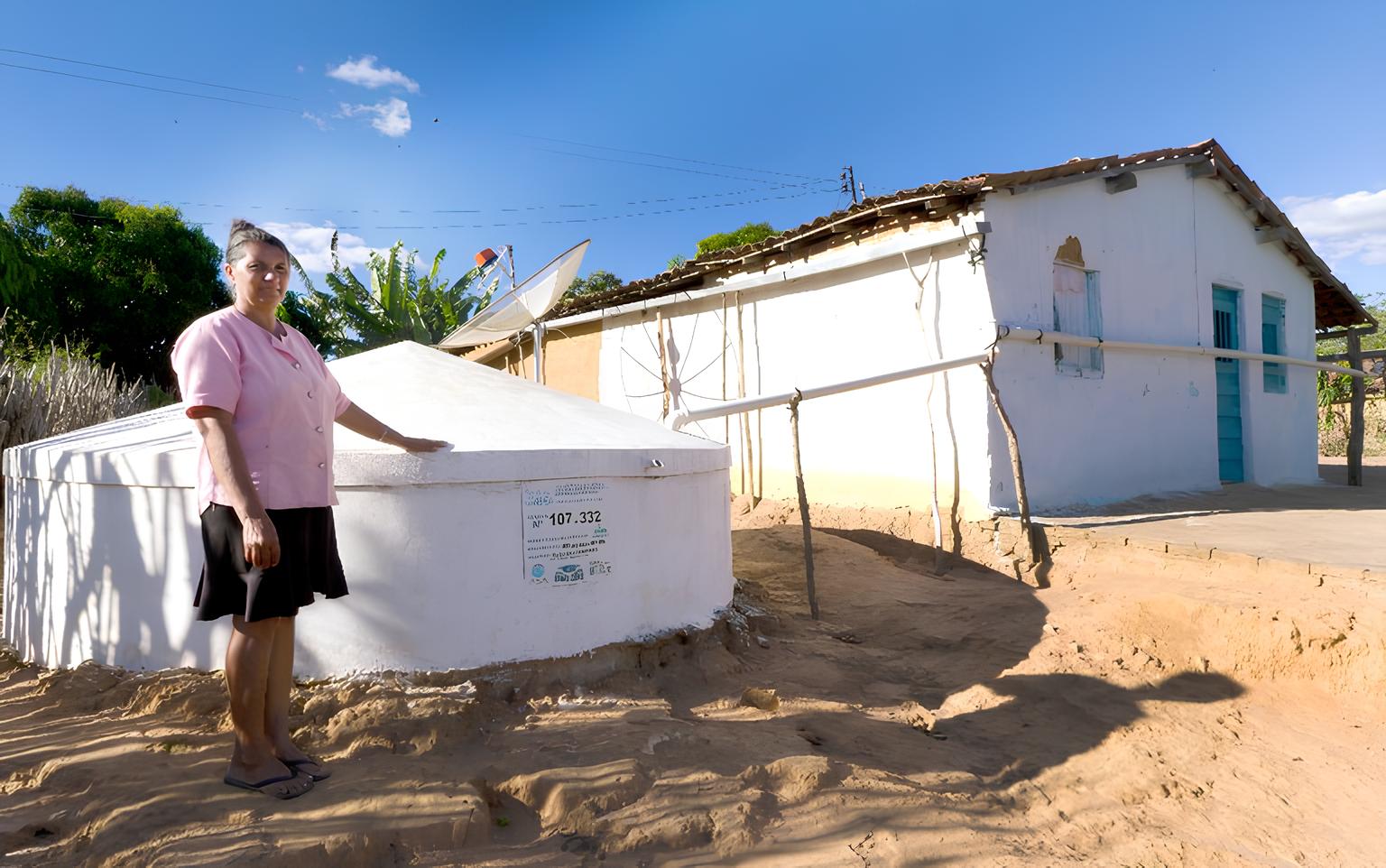


In The Brazilian Semiarid Region, 16,000-Liter Cisterns Store Rainwater and Reduce Dependence on Water Trucks. Program Has Installed Over 1.2 Million Units.
The rainwater harvesting model with 16,000-liter cisterns has been implemented on a large scale in the Brazilian Semiarid Region, which encompasses parts of Bahia, Ceará, Pernambuco, Paraíba, Rio Grande do Norte, Piauí, Alagoas, Sergipe, and northern Minas Gerais. The initiative began in 2003 with the launch of the One Million Cisterns Program (P1MC), coordinated by the Brazilian Semiarid Articulation (ASA Brasil) in partnership with the Federal Government. Subsequently, the program was institutionalized through Law No. 12.873/2013, within the so-called Cisterns Program, executed by the Ministry of Social Development (MDS).
According to official data from the federal government and ASA, more than 1.2 million cisterns for human consumption have already been built in the region.
How The 16,000-Liter Cistern Works In The Semiarid
The technology is considered simple but technically efficient. The cistern is built with pre-molded cement slabs and has a standard capacity of 16,000 liters of storage.
-
The sugar-energy sector advances with agricultural technology, but agricultural productivity still raises concerns.

-
The eggshell that almost everyone throws away is made up of about 95% calcium carbonate and can help enrich the soil when crushed, slowly releasing nutrients and being reused in home gardens and vegetable patches.

-
This farm in the United States does not use sunlight, does not use soil, and produces 500 times more food per square meter than traditional agriculture: the secret lies in 42,000 LEDs, hydroponics, and a system that recycles even the heat from the lamps.
-
The water that almost everyone throws away after cooking potatoes carries nutrients released during the preparation and can be reused to help in the development of plants when used correctly at the base of gardens and pots, at no additional cost and without changing the routine.


The system operates in three stages:
- Harvesting rainwater from the roof of the residence
- Conveying through gutters and pipes with impurity filters
- Storing in a closed and protected reservoir
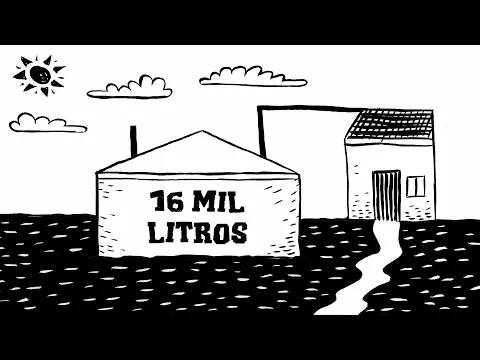
The capacity of 16,000 liters is designed to supply a family of up to five people for about eight months, considering the average recommended consumption for drinking and cooking.
This estimate is used by the Cisterns Program itself as a technical reference for household water security.
Water Security: Reducing Dependence on Water Trucks
Before the program’s expansion, thousands of families relied exclusively on:
- Emergency water trucks
- Temporary ponds
- Low-flow wells
- Distant sources
With the installation of cisterns, there was a significant reduction in household water vulnerability, especially during prolonged drought periods.

The World Bank and international organizations have classified the Brazilian model as one of the most relevant experiences of living with drought in semi-arid regions of the world.
Collective Water Stock: Billions of Liters Stored
If each cistern stores 16,000 liters and more than 1.2 million have been installed, the Brazilian Semiarid has a potential capacity exceeding:
19 billion liters of stored water
This number represents a decentralized water infrastructure built directly on rural properties, without the need for large dams or transposition works.
Productive Cisterns: Irrigation and Family Farming
In addition to cisterns for human consumption, the program evolved into what is called P1+2 (One Land and Two Waters), which includes larger reservoirs — such as 52,000-liter cisterns — aimed at agricultural production.
These units allow for:
- Maintenance of family gardens
- Production of fruits and vegetables
- Raising small animals
- Generating local income
The model promotes family-based agriculture adapted to the semi-arid climate, prioritizing the rational use of water and productive diversification.
Living With Drought: Paradigm Shift in The Semiarid
The program’s central concept is not “fighting drought,” but coexisting with it. The Brazilian Semiarid presents:
- Rains concentrated in a few months
- Long periods of drought
- High evaporation
- Irregular rainfall patterns
The cistern transforms each rainy period into a strategic stock of water security. This approach has been internationally recognized as a public policy for climate adaptation.
Social and Public Health Impacts
Various technical reports highlight positive effects associated with the expansion of cisterns:
- Reduction of diseases transmitted by contaminated water
- Decreased time spent searching for water
- Increased school attendance among children
- Expanded female autonomy (historically responsible for water collection)
These effects have been documented by institutional evaluations linked to the program itself and by multilateral organizations.
Brazilian Semiarid: 13% of National Territory
According to the National Institute of the Semiarid (INSA) and IBGE, the Semiarid occupies approximately 13% of Brazil’s territory and is home to over 27 million inhabitants.
This is the most populous semi-arid region in the world, which makes decentralized solutions like cisterns particularly strategic.
The Brazilian model has been studied by countries in Africa and Latin America for its relevant technical characteristics:
- Relative low cost
- Replicable social technology
- Constructed with local labor
- Simple maintenance
- Direct impact on food security
Organizations like FAO and the World Bank have already highlighted the program as a success case in policies for access to water in vulnerable regions.
Climate Change and The Role of Cisterns In The Future
With increased climate variability and the intensification of extreme events, decentralized water storage models gain even more relevance.
The Brazilian Semiarid faces increasingly irregular precipitation cycles, reinforcing the importance of:
- Rainwater harvesting
- Domestic storage
- Community water management
Cisterns have solidified as a structural tool for rural climate adaptation.
From Vulnerability to Strategic Reserve
What began in 2003 as an initiative by civil society organizations has become one of the largest public policies for rural water security in the world.
With over 1.2 million installed cisterns and a collective capacity exceeding 19 billion liters stored, the Brazilian Semiarid now has an invisible yet strategic infrastructure.
Instead of waiting for the water truck, thousands of families have come to depend on their own rain—stored with technical planning. And this has changed the logic of survival in the region.










É Lula 🇧🇷 2026✌️
No Maranhão também tem cisternas com tecnologia da Asa, inclusive várias associações filiadas estão em atividades
Cisternas para acumular água das chuvas no sertão e caatinga
no nordeste. Pergunto e em regiões da caatinga como na região de Manoel Vitorino na Bahia, mais precisamente nas áreas das fazendas como a região conhecida como poço da pedra que dificilmente chove como as famílias vai poder juntar água nas cisternas. Então a prefeitura municipal, governo estadual e federal tem que por mais carros pipas para abastecer as famílias desta região e com urgência pois água é vida e necessidade.