





 Portuguese
  English
  Spanish
  4 min of reading
  6 comments


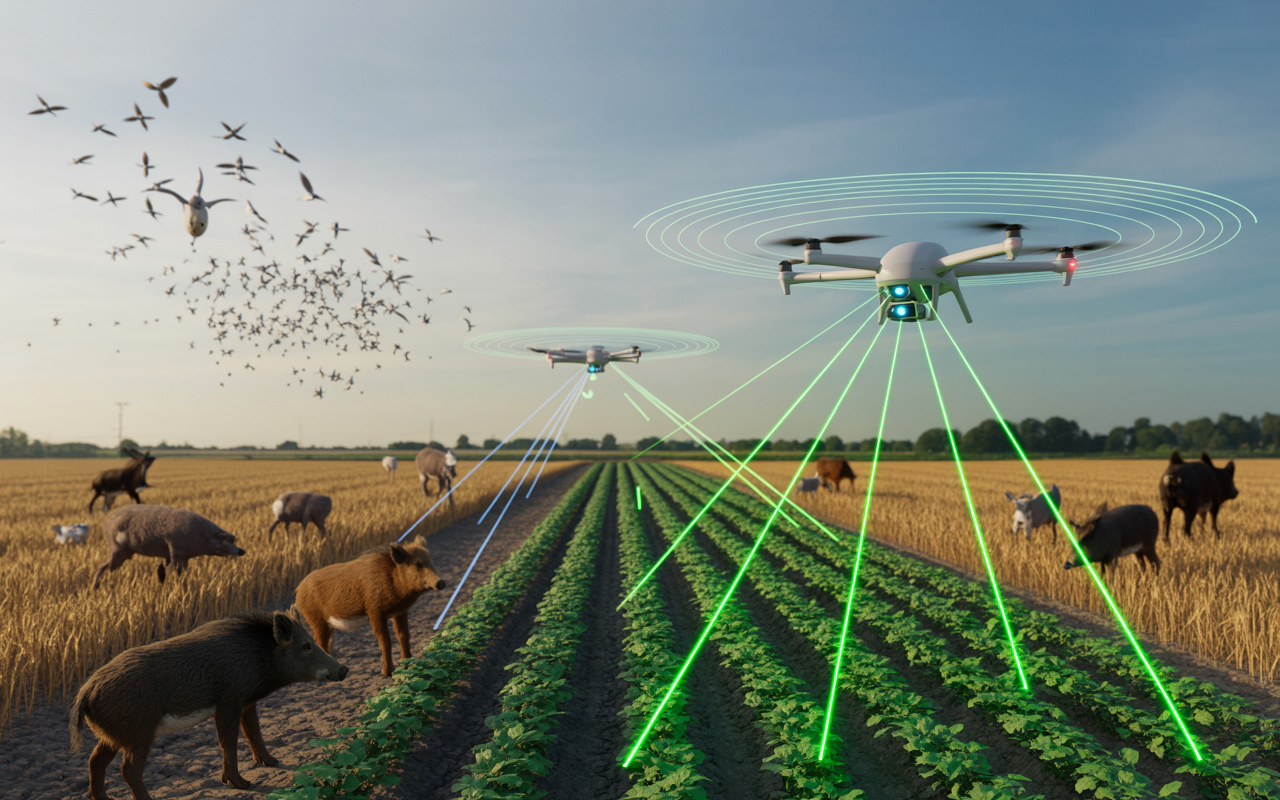


Electric Fences, Computer Vision, Lasers, and Sensors Are Being Used in Agriculture to Contain Wild Boars and Other Invasive Animals with Real Results.
The presence of wild boars and other invasive animals is no longer just an isolated problem but has become a structural challenge for agribusiness. In Brazil, the European wild boar (Sus scrofa), an exotic invasive species, has spread across different biomes, causing direct damage to crops, pastures, springs, and fences, as well as severe environmental impacts on native fauna.
The Brazilian Institute of Environment and Renewable Natural Resources (IBAMA) itself recognizes the wild boar as one of the most problematic invasive species in the country, classifying its control as a subject of high environmental, economic, and social complexity. The agency maintains specific technical manuals for handling and containment of the species, emphasizing that the unchecked advance of the animal jeopardizes agricultural areas and entire ecosystems.
From Hunting to Technological Control: The Change in Strategy in the Field
For decades, the main response to the advance of wild boars and other large animals has been direct human control, with constant presence, manual surveillance, and traditional containment methods. However, this model has become costly, limited, and inefficient on extensive properties.
-
The sugar-energy sector advances with agricultural technology, but agricultural productivity still raises concerns.

-
The eggshell that almost everyone throws away is made up of about 95% calcium carbonate and can help enrich the soil when crushed, slowly releasing nutrients and being reused in home gardens and vegetable patches.

-
This farm in the United States does not use sunlight, does not use soil, and produces 500 times more food per square meter than traditional agriculture: the secret lies in 42,000 LEDs, hydroponics, and a system that recycles even the heat from the lamps.

-
The water that almost everyone throws away after cooking potatoes carries nutrients released during the preparation and can be reused to help in the development of plants when used correctly at the base of gardens and pots, at no additional cost and without changing the routine.


In recent years, producers have begun to adopt a different approach: automated detection and deterrence systems, combining physical infrastructure with digital technologies. The goal has shifted from merely reacting to damage to preventing the entry of the animal before it causes harm.
Smart Fences Continue to Be the Most Efficient Line of Defense
Despite technological advancements, physical containment remains the most effective element in controlling large animals. The difference lies in the concept of “common fence” versus “designed fence.”
In the case of wild boars, effective structures require adequate height, reinforced lower sections to prevent digging, high mechanical strength, and constant maintenance. In critical areas, producers use electrified fences associated with tension and failure sensors, capable of indicating breaches or attempted invasions in real-time.
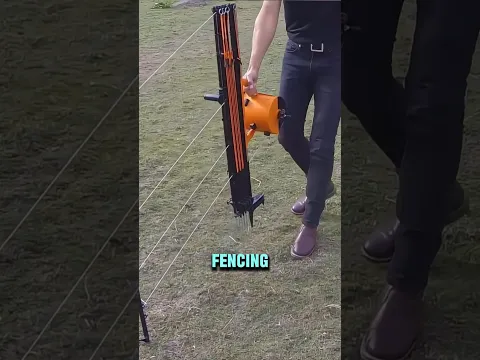

Technical reports from IBAMA highlight that poorly sized or unmaintained fences are quickly neutralized by the adaptive behavior of the wild boar, which learns to exploit weak points in the perimeter.
Cameras with Artificial Intelligence Anticipate the Attack Before Damage
The major recent innovation lies in early detection. Monitoring systems with conventional, infrared, or thermal cameras have begun to be integrated with computer vision algorithms capable of identifying movement patterns, body size, and animal behavior.
These systems allow for recording peak activity times, recurring invasion routes, and vulnerable points on the property. Instead of discovering damage the next day, the producer now receives automatic alerts at the moment of an attempted entry.
This type of monitoring reduces operational costs, directs decision-making, and transforms wildlife control into a data-driven process, rather than one based on trial and error.
Light, Sound, and Variable Stimuli Work Better Than Passive Repellents
The response to detected animals is another critical point. Passive solutions, such as generic ultrasonic devices, have limited effectiveness due to the rapid behavioral adaptation of species.
Active and variable systems, on the other hand, yield more consistent results. Among the most commonly used methods are high-intensity spotlights triggered by presence, sirens with alternating sound patterns, directional water jets, and movable reflectors.
The principle is to avoid predictability. The more repetitive the stimulus, the greater the chance of habituation. Systems programmed to alternate patterns reduce this effect and increase the escape rate.
Lasers Go from Experimental Concept to Real Application
Although better known for bird control, laser-based systems represent one of the most promising technologies in the field of active deterrence. Recent scientific studies show that green laser beams, associated with automated detection, significantly reduce the presence of animals in sensitive areas.

Research published in international scientific journals describes automated scanning systems that use lasers as a non-lethal visual stimulus, especially effective in open and low-light environments. The concept has been adapted for different species and agricultural scenarios.
Drones Expand Surveillance, but Do Not Replace Fixed Infrastructure
Agricultural drones have begun to integrate monitoring strategies on large properties. Equipped with thermal cameras, they allow mapping extensive areas, locating invasion hotspots, and identifying trails used by animals.
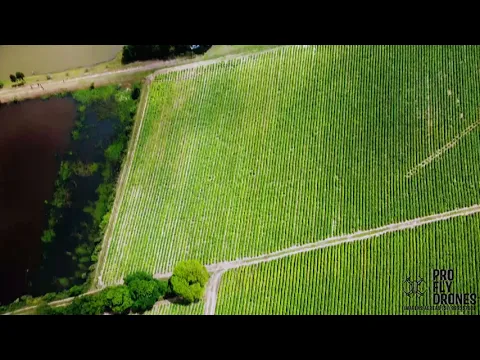
However, experts point out that drones work better as a complementary tool. Continuous containment relies on fixed systems, such as fences and automatic deterrents, while drones serve as tactical reinforcement at specific moments.
Wild Boar Control in Brazil Requires Technology and Legal Compliance
The handling of wild boars in Brazil is subject to specific environmental regulation. IBAMA emphasizes that any control strategy must respect legal norms, health safety, and environmental principles.
In this context, technological solutions gain relevance precisely by reducing human risks, avoiding indiscriminate methods, and allowing for more precise, localized, and documented control.
What Tests Consistently Show
Experiences in Brazil and abroad indicate that there is no one-size-fits-all solution. The most solid results arise from the combination of layers:
– well-designed physical barriers
– automatic detection with cameras and sensors
– active and variable deterrence
– continuous monitoring based on data
This model does not completely eliminate the presence of invasive animals, but drastically reduces the frequency of invasions, productive losses, and environmental impacts.
In modern agriculture, wildlife control has shifted from being merely physical force to being a problem of engineering, data, and automation.








Deveria criar em cativeiros com todos procedimentos de inspeção ,vacinas e aptas para consumo humano afinal carne de javali é carne nobre,sadia e de baixa caloria e mais benéfica para saúde dos humanos,e ao mesmo tempo aumento da concorrência dentre todas ofertas de alimentos e consequentemente redução de preços de carne bovina principalmente .
Contrata um helicóptero com metralhadoras e saem varrendo esses baixos, dá pra matar muitos assim
Poderiam desenvolver uma forma de esterilizar as fêmeas com isso diminuiria em muito a reprodução em grande escala.
Não tenho ideia de investimento para está possibilidade…é apenas uma sugestão.