





 Portuguese
  English
  Spanish
  4 min of reading
  19 comments


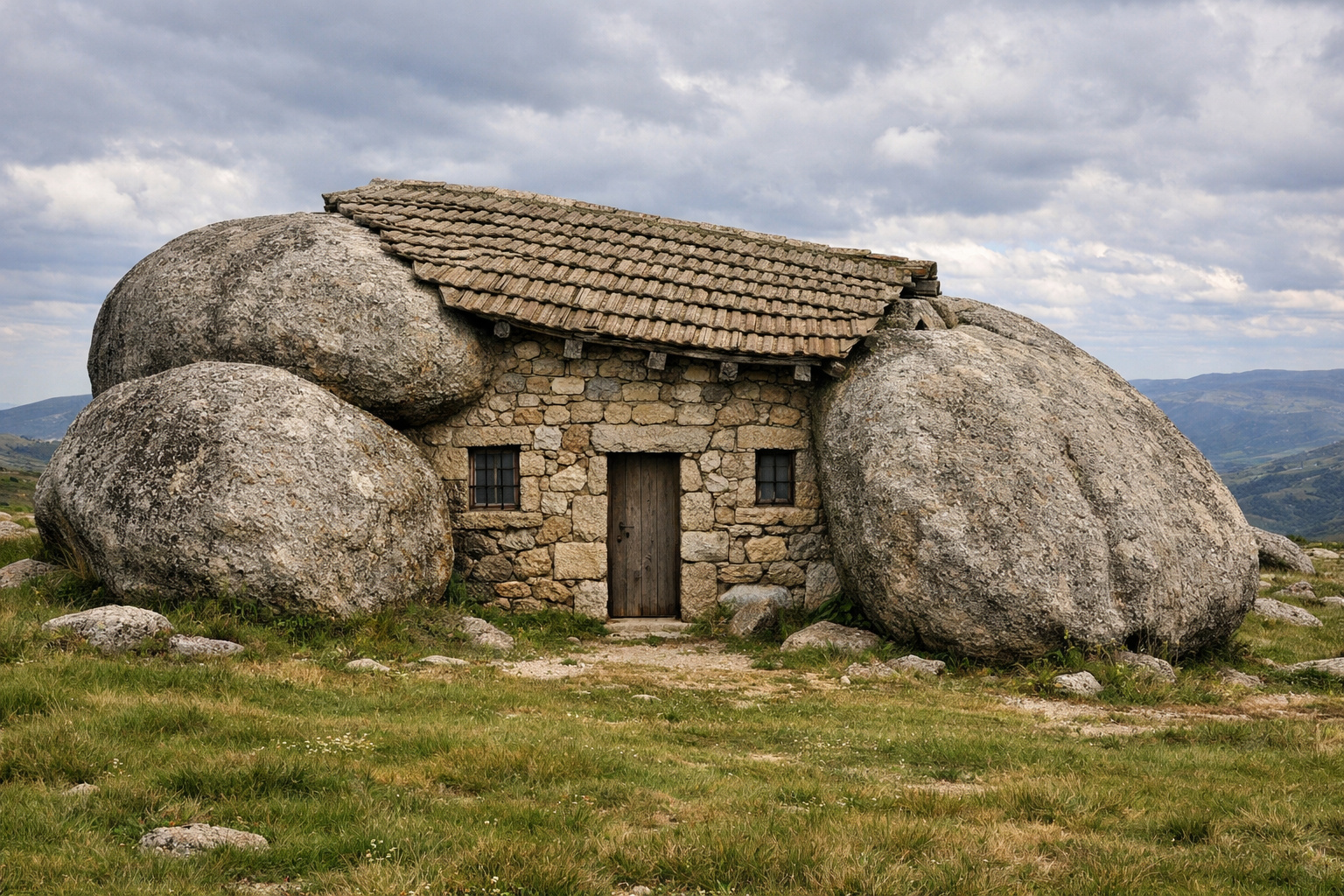


Integrated Among Four Granite Blocks in the Fafe Mountains, the Casa do Penedo Rejects Electricity, Embraces Off-Grid Living, and Has Become One of the Most Extreme Examples of Organic Architecture Ever Preserved in Europe
Literally integrated among four giant granite boulders, the Casa do Penedo, in Portugal, seems to have been carved by nature itself. Built in 1974, this residence draws attention not only for its primitive and organic aesthetic but mainly for one detail that challenges contemporary standards: it has never been connected to the electrical grid. In an increasingly technology-dependent world, the property has become a symbol of radical simplicity and total integration with the natural environment.
The information was disclosed by specialized architecture and tourism websites, as well as international reports and audiovisual content from channels such as Portugal From the Sky, which helped popularize the building around the world. Since then, the Casa do Penedo has transitioned from a family retreat to a true cultural icon, attracting curious visitors, scholars, and tourists interested in off-grid experiences.
Located in the Fafe Mountains in northern Portugal, the house stands out in the mountainous landscape as if it has always been a part of it. At first glance, the property resembles a natural rock formation, reinforcing the feeling that architecture and geology merge into a single element. This visual effect, however, is a result of very precise technical and conceptual decisions.
-
He started running at 66 years old, broke records at 82, and is now a subject of study for having a metabolic age comparable to that of a 20-year-old, in a case that is intriguing scientists and inspiring the world.

-
Oldest tree on the planet reappears after 130 years of searches: Wattieza, 385 million years old, was 10 meters tall and had no leaves or seeds; Gilboa fossils in New York solved the mystery in 2007.

-
A 48-square-meter house assembled in hours with 4,000 bricks made of recycled plastic that does not absorb moisture, has natural thermal insulation, and costs less than 90,000 reais in a complete kit.

-
Luciano Hang revealed that Havan’s air fleet has already accumulated more than 20,000 landings, 10,000 flight hours, and 6 million kilometers traveled, and he says that without the planes, the company would never have grown so quickly.


How the Casa do Penedo Was Built Among Giant Rocks and Transformed Geology into Architectural Structure

The Casa do Penedo was conceived by a Portuguese engineer as a vacation retreat for his family. Instead of leveling the ground or removing natural obstacles, the project took the opposite approach: the four granite rocks existing on the site became a structural part of the house. They function simultaneously as walls, foundation, and, in some places, as part of the building’s roof.
Additionally, the empty spaces between the blocks were filled with concrete and wood, materials chosen to complement the granite’s strength and maintain aesthetic coherence with the natural environment. As a result, the house exhibits no obvious straight lines or refined finishes, taking on an almost prehistoric appearance, often compared to the famous Flintstones house.
Consequently, each internal space molds itself to the irregular shapes of the rocks, creating a unique spatial experience. The floor, walls, and even the furniture seem to follow the natural terrain, reinforcing the idea of architectural mimicry. This approach, now associated with so-called organic architecture, was extremely uncommon in the 1970s, which makes the project even more singular.
On the other hand, this extreme integration with the environment has also imposed functional limitations. There is no modern thermal insulation, nor complex electrical or plumbing systems. Still, this simplicity is part of the project’s philosophy, which prioritizes direct experience with the landscape and maximum reduction of human interference.
Life Without Electricity, Global Fame, and the Challenges of Preserving an Off-Grid Architecture Icon
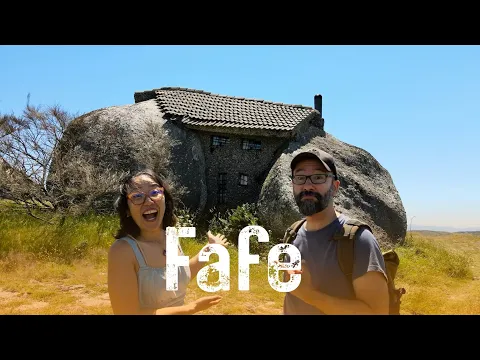

Since its construction, the Casa do Penedo has never used electricity. Internal lighting is done exclusively with candles, while heating occurs through a large stone fireplace. This choice, which in the 1970s was merely a personal option, now aligns with modern concepts of off-grid living and energy minimalism.
However, with the rise of the internet, the house gained global fame. Comparisons with cartoons, aerial photos, and viral videos transformed the former family retreat into an international tourist hotspot. As a result, the increased flow of visitors has brought unexpected problems, including attempted break-ins and episodes of vandalism.
In light of this scenario, the owners were forced to install bull-proof windows and a steel door, measures that starkly contrast with the original rustic aesthetic. Currently, visitation is controlled, and the site operates as a small museum, offering the public a glimpse into a simpler and disconnected way of life.
Experts point out that if it were in Brazil, a building with these characteristics would likely be protected by organizations such as IPHAN, due to its architectural, historical, and cultural value. In Portugal, the preservation effort follows the same line, seeking to balance tourism, security, and conservation.
While traditional country houses attempt to bring urban comfort to natural areas, the Casa do Penedo does exactly the opposite: it brings its residents into nature, foregoing basic technologies to enhance the sensory experience and direct contact with the environment. This inversion of logic explains why, decades later, the property continues to evoke fascination and debate about the future of sustainable architecture.







Portugal ???
Ganho em real para gastar em euro?
Brasileiro é muito **** mesmo. Vou para a Tailândia onde o meu real vale bem mais, clima tropical, país seguro e lindo demais e é conhecido como o país do sorriso. Português é muito mal educado e grosso. Passei pelo aeroporto de Lisboa e vi o quanto são. Um português estava querendo bater em um policial federal. Português reclama de quê? Tem mais português no Brasil do que brasileiro em Portugal.
Já vais tarde…nem sei tão pouco o q vieste a fazer a Portugal…
Comer as portuguesas e chama os portugueses de frouxos. Só isso!
Loser
Só passaste no aeroporto e já achas que conheces os portugueses? Realmente…
Portugal ?? pra que ?? o brasil me espera !!
Quanto a casa, já visitei 3 vezes, e digo, não acredito que a casa fosse feita para pessoas, não acredito que jamais alguém ali viveu, foi feita para parecer o que é e servir o turismo. Se entram lá dentro verificam que não tem segurança, não tem tem condições, nada de nada. A minha avó morava numa casa de xisto, faleceu em 85, a casa tnha 2 divisões, e a casa de banho era fora e de madeira, mas essa dita casa não tem nada, se vão lá dentro concordam comigo, aquilo foi feito mesmo para atrair turistas, e é explorado por lucais
Estás a falar do que não sabes, quanto aos l(u)ocais, faz uma experiência e fala com algum, assim ficas mais e melhor informado.