





 Portuguese
  English
  Spanish
 5 min of reading
  2 comments


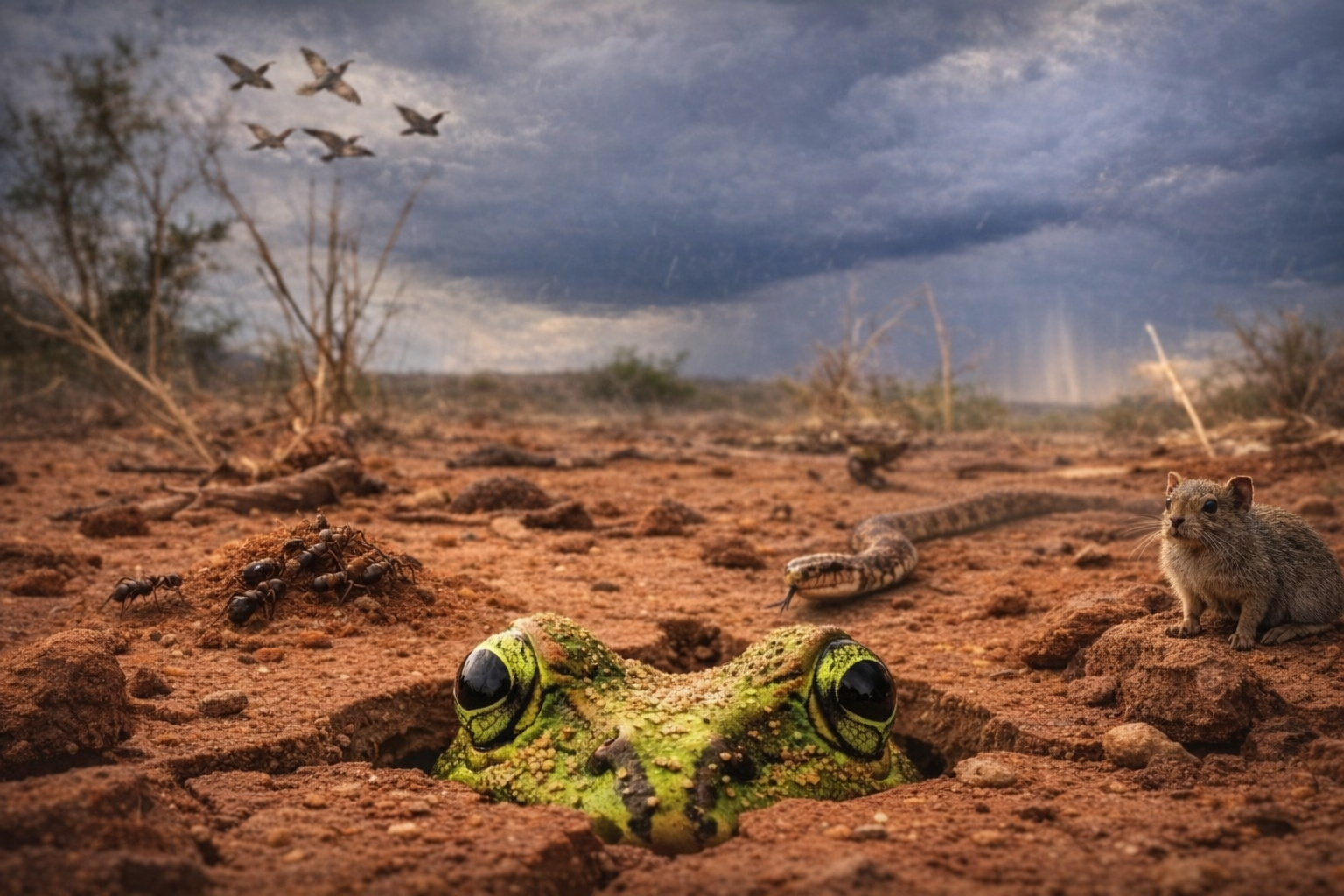


In The Brazilian Backlands, Where The Soil Cracks, The Heat Burns, And Water Defines Survival, Frogs, Ants, Birds, Snakes, And Small Rodents Form An Ancestral Natural System Capable Of Foretelling The Rain Even Before The Clouds Appear In The Sky
In the Brazilian backlands, where drought shapes the rhythm of life and water is worth more than gold, there exists ancient knowledge that transcends generations and continues to be extremely accurate. Long before technology, satellites, and weather forecasting apps, nature itself developed an efficient and silent alert system. This system works through the heightened senses of creatures in the Caatinga, capable of perceiving minimal changes in the environment and announcing, in advance, the arrival of rain.
The information has been disclosed by various studies on animal behavior as well as historical accounts documented in specialized reports and scientific dissemination channels focused on the Caatinga biome, in addition to the practical experience of local inhabitants who have learned to read the signs of nature over decades. This knowledge, although poorly documented in academic books, remains alive in the daily lives of those who directly rely on the climate to plant, raise animals, and survive.
Long before the clouds form in the sky, at least five animals in the Caatinga begin to change their behavior in clear and consistent ways. These signs are not random. They are part of a natural mechanism built over thousands of years of adaptation to one of the planet’s most extreme environments.
-
He started running at 66 years old, broke records at 82, and is now a subject of study for having a metabolic age comparable to that of a 20-year-old, in a case that is intriguing scientists and inspiring the world.

-
Oldest tree on the planet reappears after 130 years of searches: Wattieza, 385 million years old, was 10 meters tall and had no leaves or seeds; Gilboa fossils in New York solved the mystery in 2007.

-
A 48-square-meter house assembled in hours with 4,000 bricks made of recycled plastic that does not absorb moisture, has natural thermal insulation, and costs less than 90,000 reais in a complete kit.

-
Luciano Hang revealed that Havan’s air fleet has already accumulated more than 20,000 landings, 10,000 flight hours, and 6 million kilometers traveled, and he says that without the planes, the company would never have grown so quickly.


The Frog and Its Extreme Sensitivity to Humidity and Air Pressure
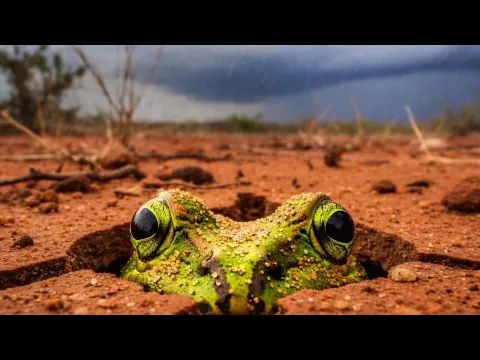

The first animal on the list is the frog, considered by locals to be one of the most reliable indicators of impending rain. Even during periods of intense drought, when there are no puddles, ponds, or visible rivers, the frog begins to croak loudly, persistently, and out of season. This behavior draws attention precisely because it occurs when everything around still seems dry and motionless.
This happens because the frog’s body, especially its skin, is extremely sensitive to changes in the environment. It detects increases in humidity and changes in atmospheric pressure long before any visible signs appear in the sky. These changes activate its reproductive instinct since the frog’s reproduction directly depends on the presence of water.
Thus, when the croaking of frogs echoes in the silence of the Caatinga during a dry period, the warning is clear for those who know the backlands: the land will soon drink water. Where there is rain, there is life, and the frog knows this before everyone else.
Ants and Birds: Engineers of the Soil and Sentinels of the Sky
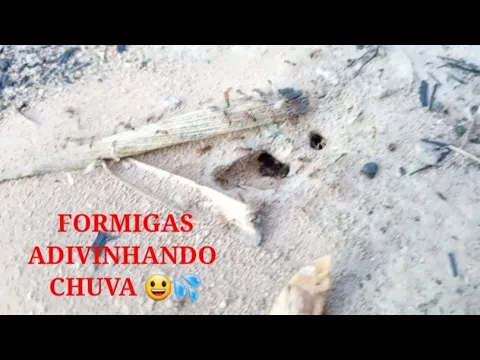
The second animal that announces the arrival of rain is the ant. Small, silent, and extremely organized, it acts as a true engineer of nature. When rain approaches, ants begin to reinforce their anthills, close holes, divert pathways, and completely alter their usual routes.
This behavior occurs because they perceive changes in soil moisture, air density, and even vibrations in the environment. The purpose of this intense movement is to protect the colony from flooding and ensure the group’s survival. In the Caatinga, observing anthills in full activity, with a large flow of ants, almost always indicates that rain is near.
Meanwhile, in the sky, birds serve as natural sentinels. Typical species of the backlands, such as the cancão and the asa-branca, greatly change their behavior when the weather begins to transform. They sing louder, vocalize more frequently, form larger flocks, and seek higher branches to perch on.
Additionally, some birds alter their flight paths, anticipating atmospheric changes. This behavior occurs because birds are extremely sensitive to air pressure and atmospheric currents. By adapting before the rain, they ensure protection and strategically position themselves to take advantage of the rebirth of vegetation, which brings abundant food soon after the first drops fall.
Snakes and Small Rodents: Survival Before The First Drop
The fourth animal that announces the rain is the snake. Contrary to what many think, the appearance of snakes before the rains is not random. During long dry periods, many snakes remain hidden, conserving energy and avoiding exposure to extreme heat. However, when the rain approaches, they begin to move.
Snakes emerge from their hideouts and search for drier, elevated locations. They sense thermal changes in the soil and variations in humidity even before the first drop falls. The objective is simple: to prevent their underground burrows from flooding and ensure safety during the weather change. For the locals, seeing a snake moving during a dry period is almost a certain sign that the weather is about to change.
The fifth animal on the list is the small rodent, such as the preá and the mocó. These animals begin to stockpile food, change their activity hours, and seek shelter in higher areas upon sensing the approaching rain. They detect changes in the environment through vibrations in the ground and subtle shifts in the air.
The function of this behavior is vital: survival. The arrival of rain transforms the Caatinga completely, altering access to food, shelter, and movement routes. Those who do not prepare do not survive. Thus, these rodents anticipate their movements and ensure better chances of survival.
Together, these five animals do not act by chance. They are part of an extremely precise natural system, refined over thousands of years of evolution. For those who live in the backlands, observing these signs is as important as looking at the sky. An out-of-time croak, a strange silence, or an unusual movement may indicate the right moment to plant, seek shelter, or care for family.
This knowledge is not found in traditional books but in everyday experience. It transcends generations and teaches that humanity is part of nature, not above it. When the Caatinga begins to stir and animals change their rhythm, it is a sign that something big is about to happen. Rain, which for many is just water falling from the sky, in the backlands represents rebirth, hope, and new life.
After learning these signs of the Caatinga, do you trust more in the app’s forecast or in the silent wisdom of the animals?








Cresci vendo meu pai falando sobre os sinais da Natureza e dos animais antes das chuvas…hoje eu também consigo perceber esses comportamentos e sou APAIXONADO pela Natureza e o comportamento dos animais.
Ótimo POST. Conteúdo instrutivo. Obgdo por compartilhar algo bom.