





 Portuguese
  English
  Spanish
  5 min of reading
  2 comments


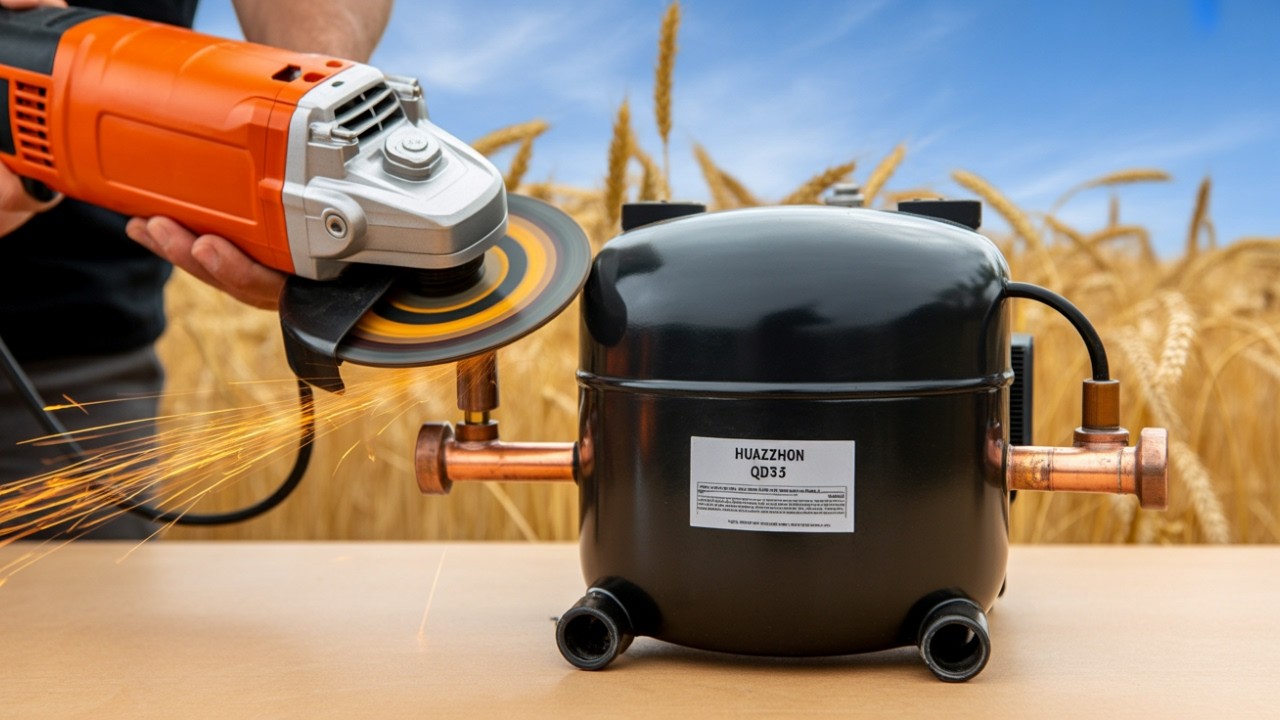


The Reuse of Discarded Refrigerator Compressors Advances in Workshops, Technical Schools, and Home Projects, Gathering Applications in Compressed Air, Vacuum, and Alternative Refrigeration, Directly Impacting the Reduction of Electronic Waste, Operational Costs, and the Technical Limits of Use Outside the Original System
An increasing number of discarded refrigerator compressors in homes, workshops, and urban centers have been repurposed in technical and experimental projects, especially after the original appliance reaches the end of its useful life, expanding functions, reducing waste, and opening up space for low-cost applications outside the formal industry.
The Role of the Compressor in the Disposal of Refrigerators and Why It Concentrates Technical Value
The compressor is the main electromechanical element of the refrigerator. It compresses the refrigerant fluid and keeps the thermal cycle active during long periods of continuous operation.
Even when the refrigerator fails, the compressor often remains functional.
-
With a cost per shot close to zero, the DragonFire laser could change naval warfare in 2027 and provide British ships with nearly unlimited defense against drones.

-
A British startup creates tires that generate electricity in electric vehicles when passing over potholes, speed bumps, and cracks.

-
Scientists have created robots made with living cells that have their own nervous system, swim on their own, explore the environment, and self-organize without any genetic engineering, and now they want to do the same with human cells.

-
Students create a solar-powered ambulance that operates without a plug, without fuel, and still keeps medical equipment running in remote areas.

Being hermetic, quiet, and robust, the component holds most of the technical value of the discarded appliance. This explains why it is the first item removed by technicians and informal recyclers.
In the logic of the inverted pyramid, this data is central: the reuse of the compressor occurs because it survives the disposal of the equipment that houses it, maintaining operational capacity outside the original system.
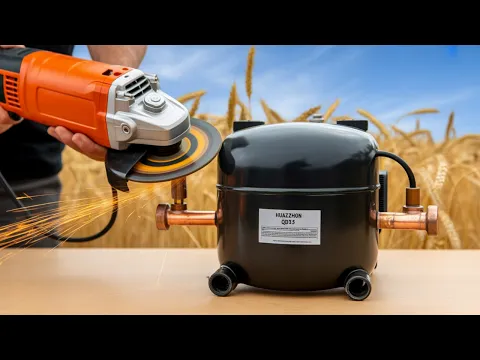

Conversion of Refrigerator Compressor Into Air Compressor for Light Use
The most widespread application of reuse is the conversion of the compressor into an air compressor. The outlet originally intended for refrigerant gas now provides compressed air for low-demand uses.
This adaptation is common in home workshops, light maintenance, precision painting, and inflating. The silent operation is a differentiator compared to conventional piston compressors.
Despite the functionality, there are clear limitations. The compressor was not designed for continuous compression of atmospheric air. Without relief valves, filters, and appropriate storage, the risk of overheating increases.
The reuse, therefore, occurs within a well-defined technical limit, where reduced cost and moderate performance balance each other.
Using the Compressor as a Vacuum Pump in Handcrafted and Technical Applications
Another relevant front is the use of the compressor as a vacuum pump. In this case, the suction inlet of the motor is used to remove air from sealed containers, creating negative pressure.
This application appears in handcrafted processes, resin molding, material stabilization, and simple laboratory tests.
The low noise level makes the system viable in residential environments.
Continuous use, however, compromises the internal lubrication of the motor. The compressor depends on circulating oil, and operating in deep vacuum alters this balance.
Still, reuse remains functional in short and controlled cycles, reinforcing the versatility of the component outside the original system.
Attempts to Adapt the Compressor for Liquid Pumping
There are records of experimental use of the compressor as a liquid pump in low-pressure systems. Ornamental fountains, water circulation, and educational projects are among the examples.
This type of reuse requires more invasive adaptations. The compressor was not designed for prolonged contact with liquids, which increases the risks of corrosion and sealing failures.
For this reason, technicians classify this application as experimental. It does not replace conventional hydraulic pumps and is not recommended for permanent use.
Even so, the data is relevant to understand the limit of reuse: not all functionality is safe or sustainable in the long run.
Reuse in Alternative and Improvised Refrigeration Systems
In specific contexts, the reused compressor returns to perform its original function. It is integrated into improvised refrigeration systems, such as homemade cold chambers and adapted freezers.
These projects arise in rural areas, independent workshops, and low-cost initiatives. The compressor is combined with repurposed coils, simple thermal insulation, and external controllers.
The operation is possible but requires technical knowledge. Assembly errors can lead to leaks, efficiency loss, or electrical failures.
Still, reuse shows how the component can support new systems when disposal is done with criteria.
Educational, Technical, and Experimental Space Applications
Technical schools, universities, and maker spaces use refrigerator compressors as a teaching tool. The equipment allows for demonstrating principles of electricity, mechanics, and thermodynamics.
The low acquisition cost facilitates use in practical classes and prototypes. Students disassemble, analyze, and repurpose the motor in different configurations. This educational use amplifies the impact of reuse. The compressor ceases to be just a repurposed waste and becomes a tool for technical training.
The practice also encourages the culture of the circular economy and the reduction of unnecessary disposal.
Technical Limitations, Electrical Risks, and Environmental Concerns of Reuse
Despite the multiple applications, the reuse of the compressor involves significant risks. The first lies in the internal fluids. Lubricating oil and refrigerant gas require proper removal.
The release of these materials can cause environmental contamination and health risks. Additionally, improper electrical handling can result in shocks or short circuits.
Another technical limit is the absence of pressure and temperature sensors. The reused compressor relies on external protections to operate safely.
These factors explain why successful reuse usually occurs among experienced technicians or in controlled environments, and not as a universal solution.
Environmental Impact and Reduction of Electronic Waste
The reuse of the compressor helps reduce the volume of electronic waste. Each reused unit represents less metal discarded and less demand for new motors.
This effect is relevant in a scenario of constant growth in household disposal. The compressor concentrates metallic mass and components with high environmental impact.
However, the benefit only materializes when reuse is accompanied by proper disposal of hazardous internal waste. Otherwise, the environmental impact may be negative.
The central fact remains: conscious reuse extends the lifespan of a component that would otherwise be discarded prematurely.
When Recycling Is the Only Viable Alternative
Not every compressor can be reused. Units with internal failures, damaged coils, or excessive oil contamination present poor performance and high risk.
In these cases, proper recycling is the safest alternative. The process involves the removal of fluids and the separation of metallic materials for industrial reuse.
This step is essential to avoid environmental harm. Reuse does not replace recycling but acts as an intermediate step when there is technical viability.
Confusing reuse with indiscriminate use is a common mistake in poorly directed projects.
Between Domestic Improvisation and Technical Innovation
The reuse of refrigerator compressors occupies a hybrid space between improvisation and innovation. It does not replace industrial equipment but meets specific demands with low investment.
At the same time, it reveals how discarded components can sustain new functions when there is minimal technical knowledge. This balance defines the success or failure of the process.
The future challenge lies in transforming isolated practices into safer, standardized, and accessible solutions. Without this, reuse will remain restricted to technical and experimental niches.
Even with clear limits, the reused compressor stands as a concrete example of how a single component can transcend the traditional disposal cycle.










Fica quase impossível ler alguma coisa nesses sites , e tanta propaganda que saio antes de ler a metade!
Essa informação é mais velha do que fazer “xixi em parede”…