





 Portuguese
  English
  Spanish
  4 min of reading
  8 comments


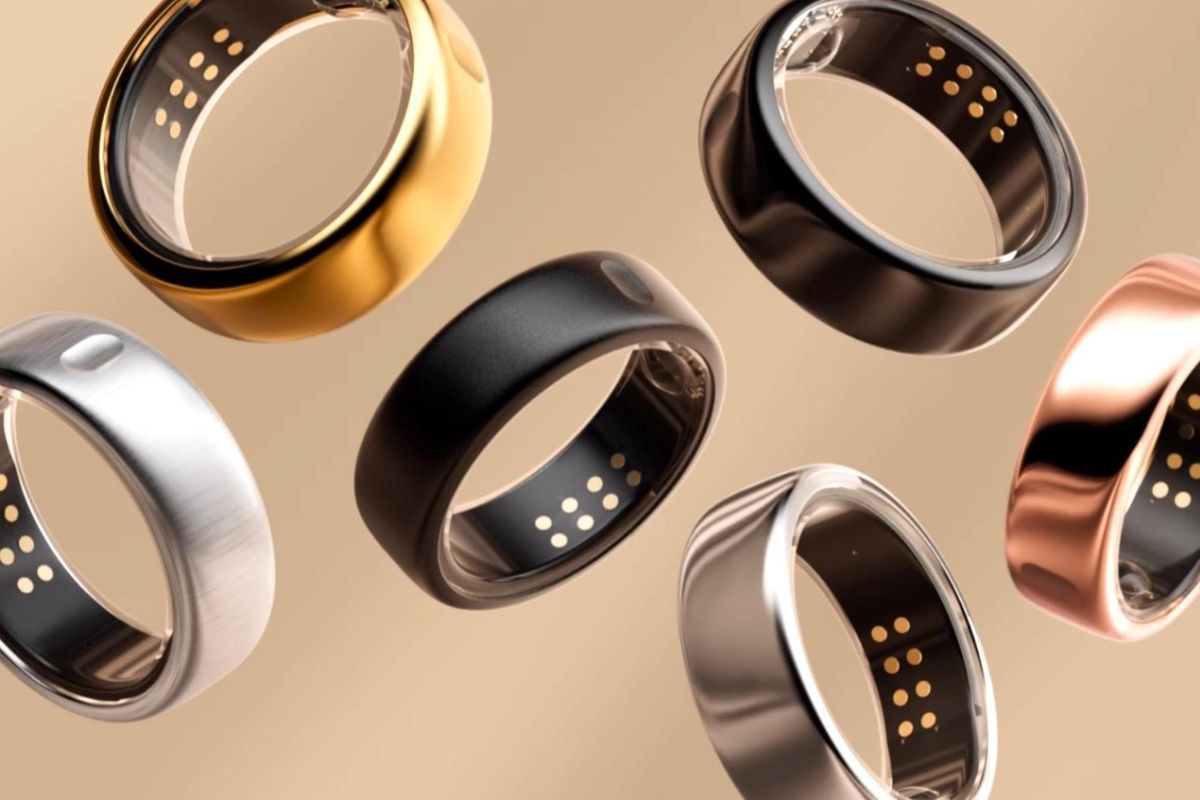


The New Samsung Smart Ring Promises to Monitor Your Health Discreetly and Efficiently, but Its Restricted Compatibility with the Brand Ecosystem Could Be a Decisive Factor; Check Out Our Analysis.
After months of rumors and speculation, Samsung has finally unveiled one of its most awaited products: the Samsung Galaxy Ring. Revealed during the Unpacked event in Paris, this smart ring marks the South Korean giant’s entry into a new category of wearables, with a complete focus on health monitoring, discreet design, and long battery life.
We had a first look at the device to analyze its engineering, understand its functionalities, and, mainly, answer the questions that Brazilian consumers have about this new and intriguing piece of technology.
Design, Construction and How to Buy in the Right Size
The Galaxy Ring will be available in three colors: black titanium, silver titanium, and gold titanium. The name is not just marketing: the ring’s structure is indeed made of titanium, ensuring high resistance to scratches and impacts in daily use. With a thickness of 2.6 mm and weighing between 2.3 and 3 grams, it is designed to be lightweight and comfortable.
-
Motorola launched the Signature with a gold seal from DxOMark, tying with the iPhone 17 Pro in camera performance, Snapdragon 8 Gen 5 that surpassed 3 million in benchmarks, and a zoom that impresses even at night.

-
Satellites reveal beneath the Sahara a giant river buried for thousands of kilometers: study shows that the largest hot desert on the planet was once traversed by a river system comparable to the largest on Earth.

-
Scientists have captured something never seen in space: newly born stars are creating gigantic rings of light a thousand times larger than the distance between the Earth and the Sun, and this changes everything we knew about stellar birth.

-
Geologists find traces of a continent that disappeared 155 million years ago after separating from Australia and reveal that it did not sink, but broke into fragments scattered across Southeast Asia.
One of the biggest practical questions is how to choose the correct size. Samsung has informed that, to ensure a perfect fit, it will send a sizing kit to the buyer’s address before the purchase is finalized. With the kit in hand, customers can try on the different rings to find the ideal size for the finger they intend to wear the ring on, ensuring that the internal sensors work accurately.
Battery and an Intelligent Charging System
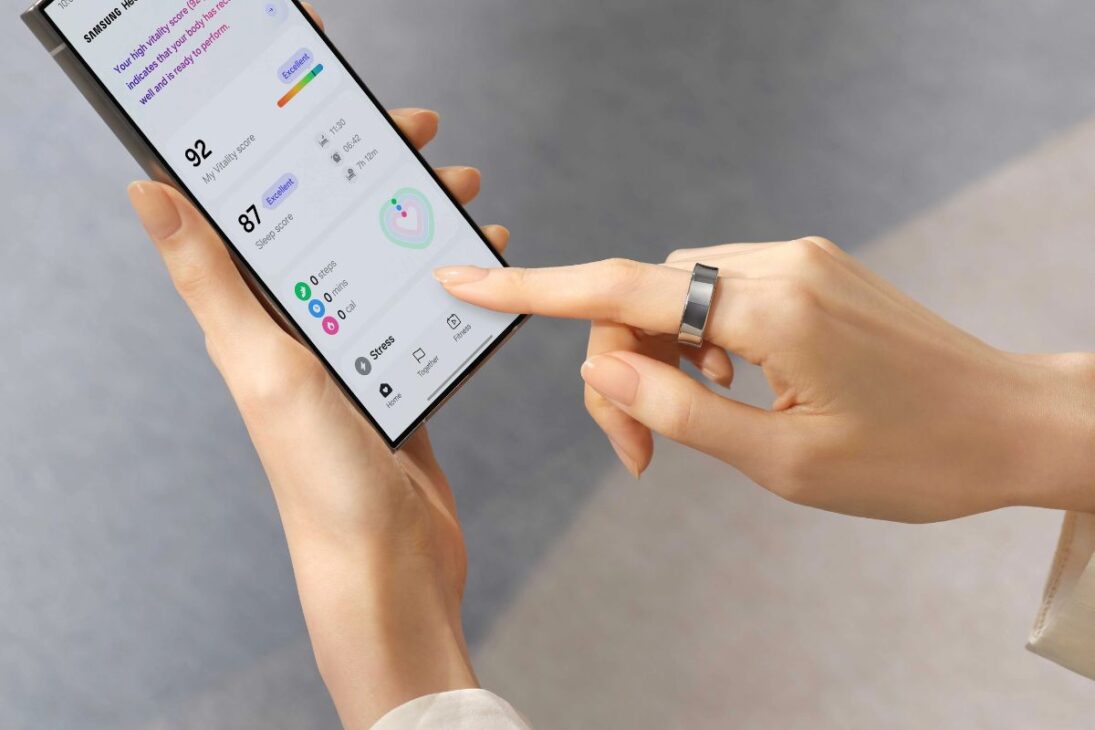
Battery life is one of the strong points of the project. Samsung promises up to 7 days of battery life on a single charge. Curiously, this time can be extended to up to 9 days if the ring is used in conjunction with a Galaxy Watch. This happens because the system understands that some measurements are already being taken by the watch, deactivating redundant sensors in the ring to save power.
Charging is done through a small case, which Samsung calls a “cradle.” The ring magnetically fits into the center, and according to the company, a full charge from 0 to 100% takes approximately 1 hour and 20 minutes. The case has an internal battery, allowing multiple charges of the ring even away from a power outlet.
The Compatibility Issue: The Strength and Weakness of the Ecosystem
This is the most critical point of the Galaxy Ring. Samsung confirmed that, at launch, the ring will be compatible only with the brand’s smartphones. Furthermore, to extract the maximum potential from its features, especially those using artificial intelligence (Galaxy AI), it will be necessary to own one of the premium Samsung devices.
Users of simpler phones from the brand can use the ring, but with some Galaxy Ring functions limited. The decision to close the ecosystem is a double-edged sword: on one hand, it guarantees perfect and optimized integration with other Samsung products; on the other hand, it alienates a vast range of consumers who use smartphones from other brands.
Main Functions: Health, Gestures, and What It Does Not Do
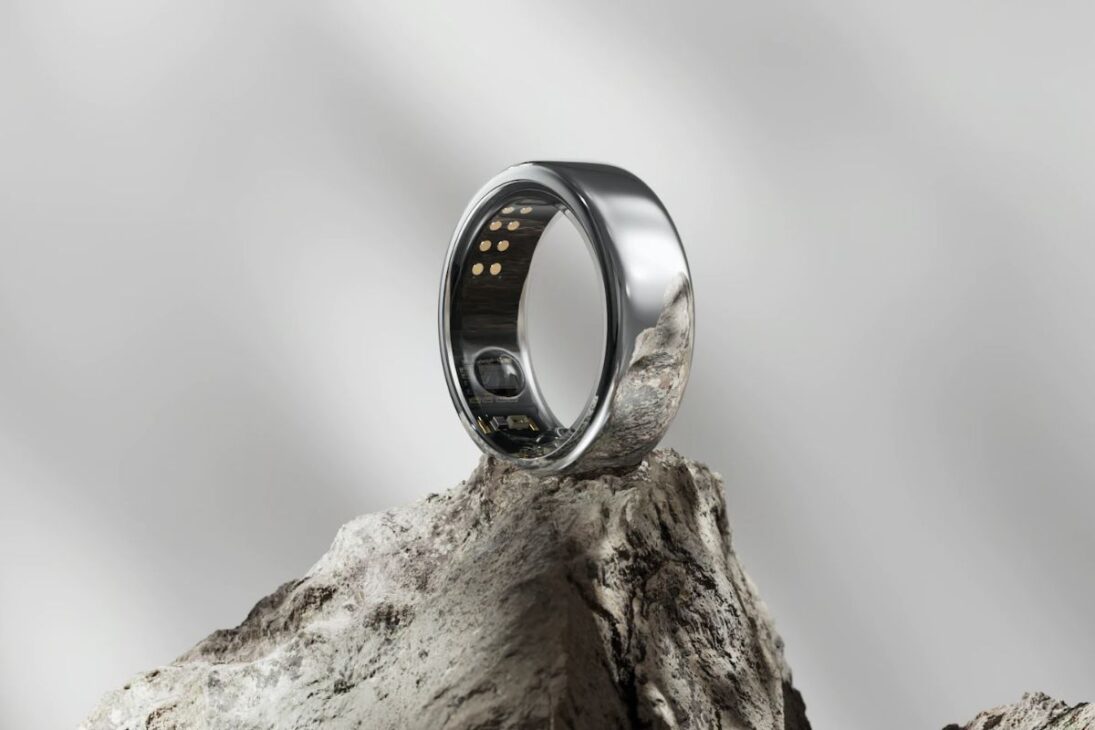
The main focus of the Samsung ring is passive and continuous health monitoring. Equipped with sensors on the inside, it is capable of measuring:
- Heart rate;
- Sleep quality and stages;
- Skin temperature;
- Physical activities, counting steps and caloric expenditure;
- Menstrual cycle, for the female audience.
Aside from health, it has gesture control functions. A pinching motion with the fingers, for example, can be used to trigger the phone’s camera or silence an alarm. Being completely sealed, with 10 ATM and IP68 water resistance certification, the ring can be worn during showering or swimming without issues.
However, it is important to note what it does not do. The Galaxy Ring does not have NFC technology, meaning it cannot be used for contactless payments. It also does not have integrated GPS, relying on the phone to log exercise routes.
The price of the Galaxy Ring in Brazil is R$3,149.00 on the official website.
Do you believe that a smart ring can replace a smartwatch in daily life? Would the restricted compatibility be a deterrent for you? Leave your opinion in the comments!








O maior impeditivo ao meu ver, é o valor, muito, muito caro pelo q oferece.
Sou usuária Samsung há muito tempo e vejo o produto mais destinado a usuários q não podem passar sem uma novidade da tecnologia.
Pelo preço ele deveria até buscar comida para mim. Sou usuário de Samsung mas o custo, pelo serviço oferecido e as limitações, não compro.
Esperava mais por este valor e ainda nao tem tecnologia NFC.