





 Portuguese
  English
  Spanish
  5 min of reading
  1 comment


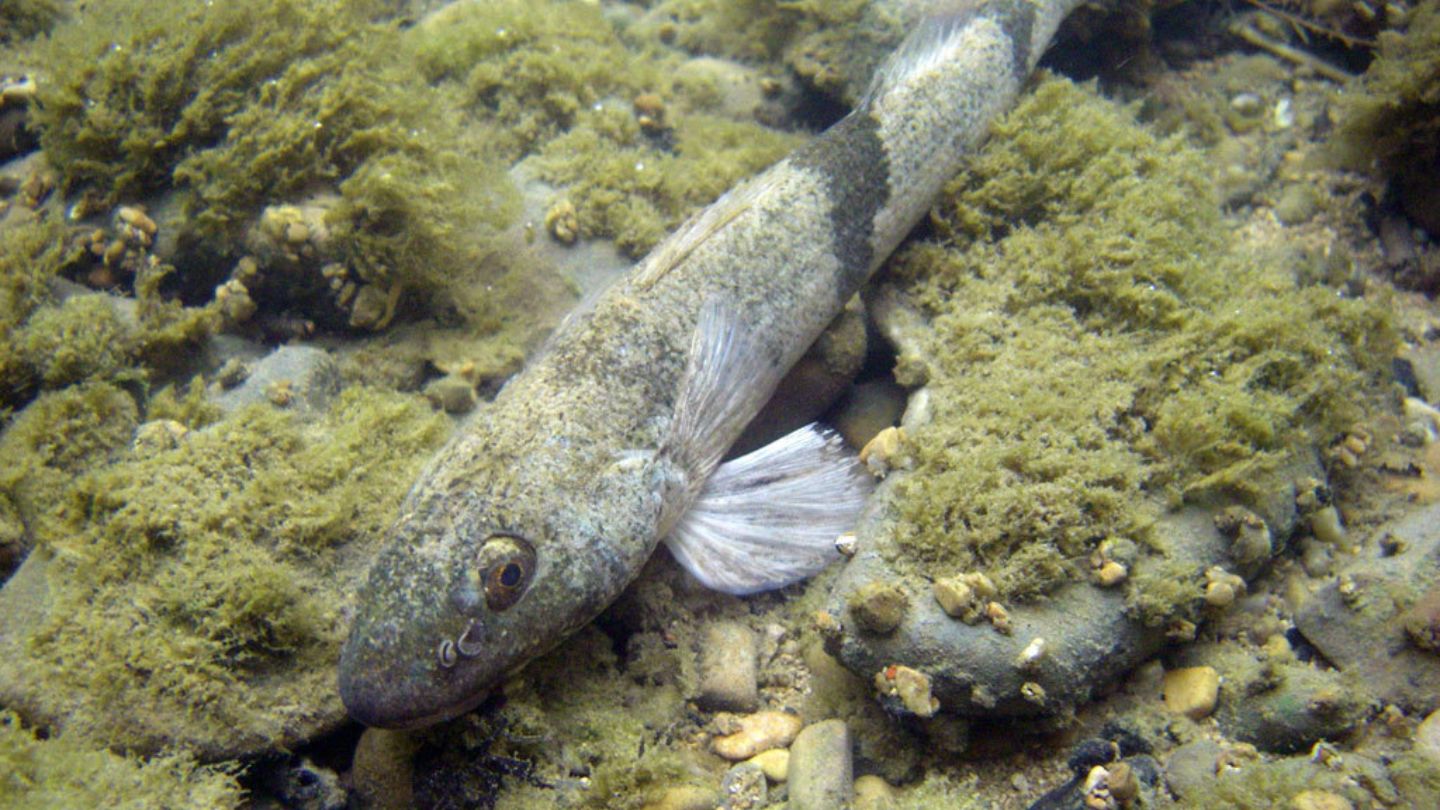


European Fish Zingel asper, Declared Extinct in European Rivers, Reappears in a Single Affluent, Forces Legal Protection and Exposes Historical Failures in Aquatic Conservation.
Few people know, but one of the most emblematic cases of biological “resurrection” in Europe does not involve charismatic birds or large mammals, but rather a small, inconspicuous and practically unknown fish to the public. The Zingel asper, also called apron, was considered functionally extinct in much of its historical range throughout the 20th century, after disappearing from almost all the rivers where it lived. For decades, it was believed that the species was doomed to survive only in old scientific records. Until it reappeared.
The reunion with the Zingel asper did not take place in a large European river, continuously monitored, but in a secondary affluent, little studied, where the species had silently resisted. This rediscovery triggered a chain reaction involving biologists, environmental agencies, local governments, and even the energy sector.
What Is the Zingel asper and Why Did It Disappear
The Zingel asper is a freshwater fish endemic to Europe, historically distributed in rivers of France, Switzerland, and parts of Southeastern Europe. It lives near the bottom, prefers cold, well-oxygenated waters with moderate currents, and relies on rocky beds for feeding and reproduction.
-
The Himalayas continue to grow to this day, with tectonic plates advancing 5 cm per year, mountains rising up to 10 mm annually, and the 2015 earthquake that killed 9,000 people may have increased the risk of an even larger seismic mega-event.

-
At an altitude of 400 km by astronauts from the International Space Station, Paris transforms at night into a golden mesh so precise that it reveals the outline of the Seine River, avenues, and entire neighborhoods like a luminous map drawn over the Earth.

-
iPhone 17 reaches historic low price with 256 GB, 120 Hz display, and drops to R$ 5,703 on Shopee, featuring A19 chip, dual 48 MP cameras, battery life of up to 30 hours, and advanced AI features.

-
Trip to Mars getting closer: Pulsar Fusion, from the UK, advances with plasma ignition in fusion engine and could drastically reduce space travel time, making crewed missions faster, safer, and economically viable.


The problem is that this type of environment was precisely one of the most affected by the transformation of European rivers throughout the 20th century. Dams, channeling, course straightening, agricultural and urban pollution, and reduced natural flow drastically altered the ecological conditions necessary for the species’ survival.
Unlike more generalist fish, the Zingel asper did not adapt. It does not tolerate stagnant waters, does not thrive in reservoirs, and does not compete well in degraded environments. Consequently, its populations went into silent collapse, until they disappeared from most scientific records.
The Rediscovery in a Forgotten Affluent
The turning point occurred when researchers, during routine ichthyological surveys, identified Zingel asper individuals in a specific affluent, outside the major river systems traditionally monitored. The population was small, fragmented, and extremely vulnerable, but it was alive and reproducing.
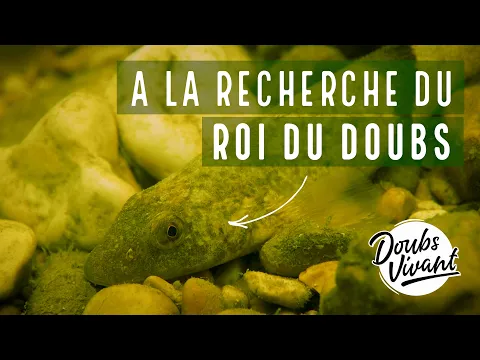

This finding was confirmed by genetic and morphological analyses, ending decades of uncertainty about the species’ real situation. What seemed like total extinction turned out to be, in fact, a case of survival in an ecological refuge.
The episode exposed a recurring flaw in conservation programs: species can disappear from widely studied areas yet still persist in ignored micro-habitats, outside the focus of public policies and traditional scientific monitoring.
A Fish That Became an Argument Against Hydroelectric Plants
The reappearance of the Zingel asper had immediate consequences. Classified as critically endangered by the IUCN, the fish came to be treated as a key species for the conservation of rivers with natural flow.
Planned hydroelectric projects or those in the early licensing phase began to be questioned. The mere presence of the species in a watercourse now required in-depth environmental studies, creation of exclusion zones, and in some cases, a complete review of proposed routes and dams.
The fish, invisible for decades, became a real factor of economic and political impact, demonstrating how biodiversity can directly influence heavy infrastructure decisions.
Why the Species Survived Where Others Disappeared
The survival of the Zingel asper in a single affluent was not luck. Subsequent studies indicated that this specific stretch maintained rare characteristics in modern rivers: continuous flow, low pollution, absence of large dams, and a still relatively intact bed.

Furthermore, the species displays low mobility. Once isolated in a suitable stretch, it tends to remain there, which explains why it did not recolonize degraded areas, but also how it managed to survive far from major transformations.
This behavior reinforces a crucial point of modern conservation: protecting ecological corridors is not enough when the entire surrounding environment becomes hostile. Sometimes, the last line of survival lies in small, almost invisible refuges.
The Role of European Conservation Projects
After the rediscovery, the Zingel asper became part of specific European Union programs, including initiatives from the LIFE program, focused on the restoration of river habitats. Actions include removal of artificial barriers, re-oxygenation of degraded stretches, and recovery of the natural riverbed.
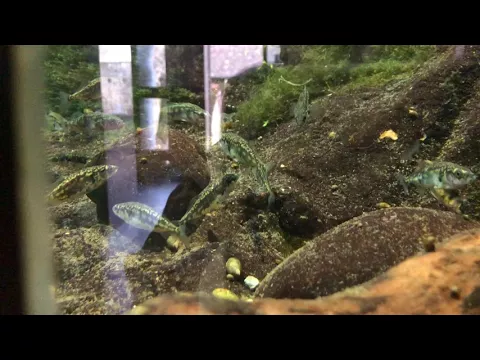
More than just saving a single species, these projects use the fish as an ecological indicator. If the Zingel asper can survive and reproduce, the river is healthy. If it disappears, the ecosystem has entered functional collapse.
This concept transformed an almost unknown fish into a strategic tool for environmental policy.
An Alert About “Invisible” Extinctions
The case of the Zingel asper reinforces an uncomfortable idea for science: many extinctions may be declared prematurely, while minimal populations resist beyond the reach of conventional studies. At the same time, it shows the opposite: species can disappear from vast regions without the public even noticing.
Rivers are ecosystems especially vulnerable to this kind of silent erasure. Unlike forests or savannas, river changes are fast, technical, and often irreversible.
When a Small Fish Changes Big Decisions
In the end, the Zingel asper became a symbol of something greater than its own survival. It represents the limit between development and conservation, between economic planning and ecological responsibility.
A fish that almost no one knew began to influence hydroelectric projects, environmental policies, and restoration strategies on a continental scale. The question that remains is direct and uncomfortable: how many other species, now considered lost, still survive in silence — and how many will disappear before anyone notices?









HELLO everyone! Still don’t know the right words to express my Gratitude to the Great DR. Irosi After being diagnosed with the #herpes for the past 1 years, I was given so many health prescriptions and advice with no improvement, I totally lost hope, until I found many testimonies of Great DR. Irosi in an online research Like anybody would be, i advice anyone that is living with herpes can also contact him today, because he has the cure to any virus, disease or illness. Contact him on WhatsApp: https://wa.me/+2349159062807 Email: drirosisolutioncenter@gmail.com