





 Portuguese
  English
  Spanish
  2 min of reading
  0 comments


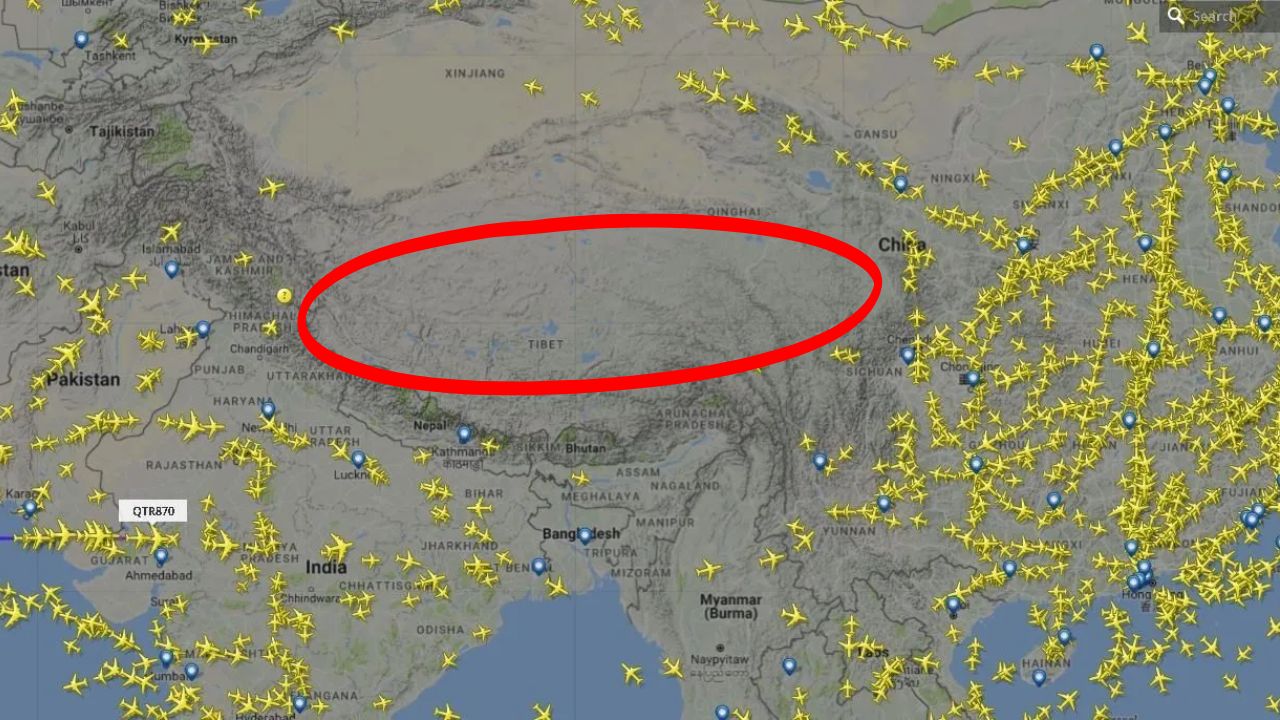
Discover Why It Is Practically “Prohibited” to Fly Over Tibet. Understand the Risks Related to Altitude, Extreme Weather, and the Difficulty of Rescue in This Challenging Region.
Have you ever noticed that it seems to be prohibited to fly over Tibet, since flight routes rarely pass through the region?
For many passengers, this absence may seem like a mystery. However, the decision of airlines to avoid flying over the region has nothing to do with superstition, but rather with safety.
The so-called “roof of the world” presents unique challenges that make flying much riskier.
-
Friends have been building a small “town” for 30 years to grow old together, with compact houses, a common area, nature surrounding it, and a collective life project designed for friendship, coexistence, and simplicity.

-
This small town in Germany created its own currency 24 years ago, today it circulates millions per year, is accepted in over 300 stores, and the German government allowed all of this to happen under one condition.

-
Curitiba is shrinking and is expected to lose 97,000 residents by 2050, while inland cities in Paraná such as Sarandi, Araucária, and Toledo are experiencing accelerated growth that is changing the entire state’s map.

-
Tourists were poisoned on Everest in a million-dollar fraud scheme involving helicopters that diverted over $19 million and shocked international authorities.


Extreme Altitude and Complicated Emergencies
The main reason to avoid Tibetan airspace is the altitude. In case of depressurization, pilots need to descend rapidly to around 3,000 meters, but in Tibet, this is practically impossible.
A large part of the region is over 4,500 meters above sea level, leaving very few safe areas for descent.
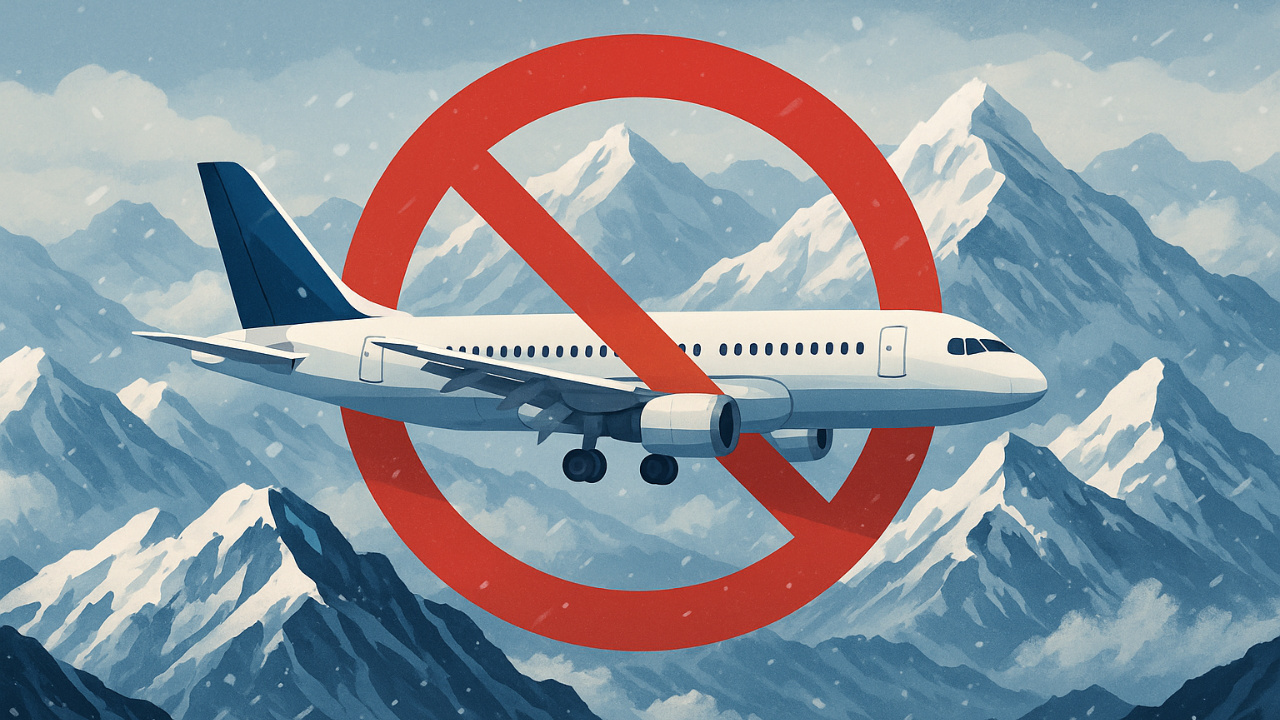
Source: generated by Artificial Intelligence
Additionally, there are very few nearby airports, and the distance to safe locations may be too great for oxygen cylinders to keep passengers stable.
This increases risks in emergencies and explains the decision to avoid the region.
Turbulence and Hostile Weather
Another critical factor is the weather. The enormous mountain ranges create unpredictable air currents, turning flying into a turbulent and uncomfortable experience.
Even modern commercial airplanes face difficulties crossing these areas, making operations unsafe.
And that’s not all. The extremely low temperatures in Tibet also pose additional risks, such as fuel freezing.
Although aircraft are designed to withstand intense cold, the combination of altitude and extreme temperatures presents a challenge even for the most advanced models.
Rescue Almost Impossible
If an accident occurs, access to the site is another major problem. The mountainous, remote, and sparsely populated terrain makes it practically unfeasible for rescue teams to arrive quickly.
Even helicopters find it difficult to land or operate in these conditions.
Why Do Airlines Prefer to Avoid the Tibet Region?
Given all these factors—high altitude, constant turbulence, risk of freezing, and difficulty of rescue—airlines choose to circumvent Tibetan airspace.
This measure ensures safer flights and reduces risks for both passengers and crews.










Seja o primeiro a reagir!