





 Portuguese
  English
  Spanish
  4 min of reading
  0 comments


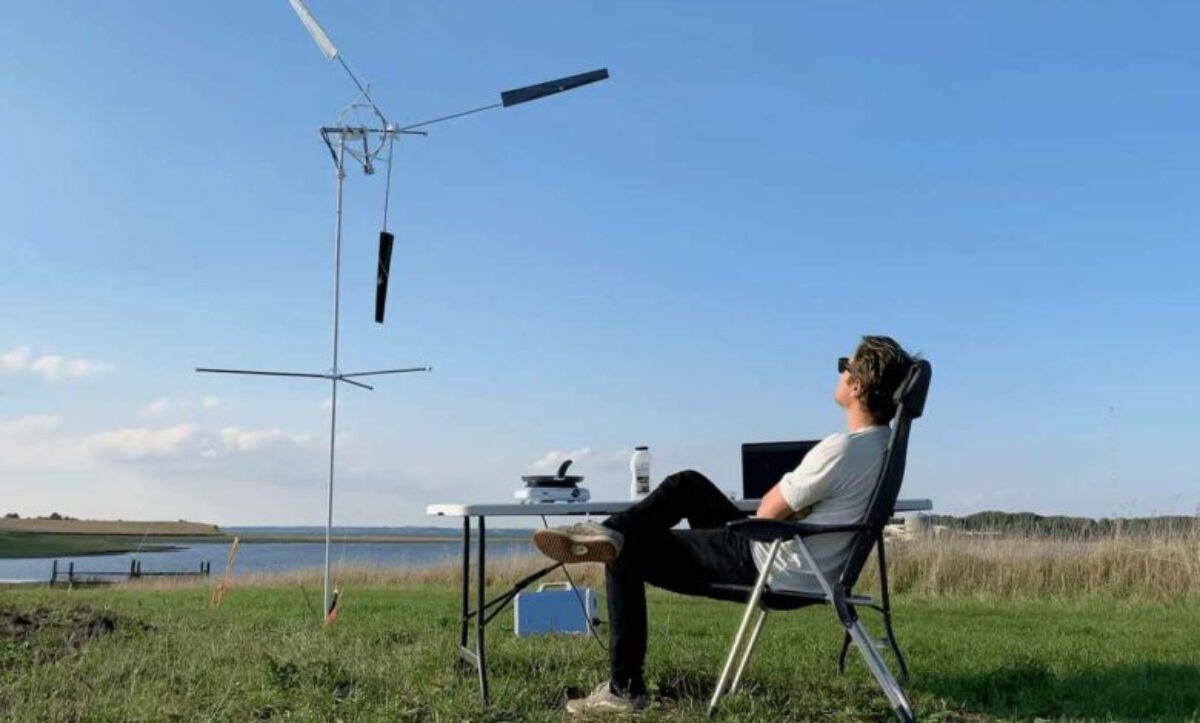
Portable And Compact Wind Turbine Technology Allows For Electricity Generation In Remote Areas Or Without An Electric Grid, With Lightweight And Efficient Prototypes.
The search for affordable and clean energy solutions has led to innovations that surpass old infrastructure barriers. Although there is not (yet) a single global project led by a well-known “young inventor” that is portable and ready for industrial use, there are already real and proven portable wind turbine technologies developed by startups and small teams that come close to this idea. These solutions demonstrate the potential of decentralized wind energy for electrification in isolated locations, disaster zones, camping, agriculture, and areas where the electric grid doesn’t reach.
Real Portable Wind Turbines
One of the most talked-about technologies is the portable turbine from the Canadian startup Aurea Technologies, which created a collapsible model named Shine Turbine.
This turbine is so small that when disassembled it fits in the space of a one-liter bottle, weighing about 1.4 kg, and is capable of generating enough energy to charge devices during trips, camping, or emergencies without traditional electric power.
-
The Brazilian state accelerates industrial competitiveness with a focus on the extraction of strategic minerals to boost the energy transition in Goiás.

-
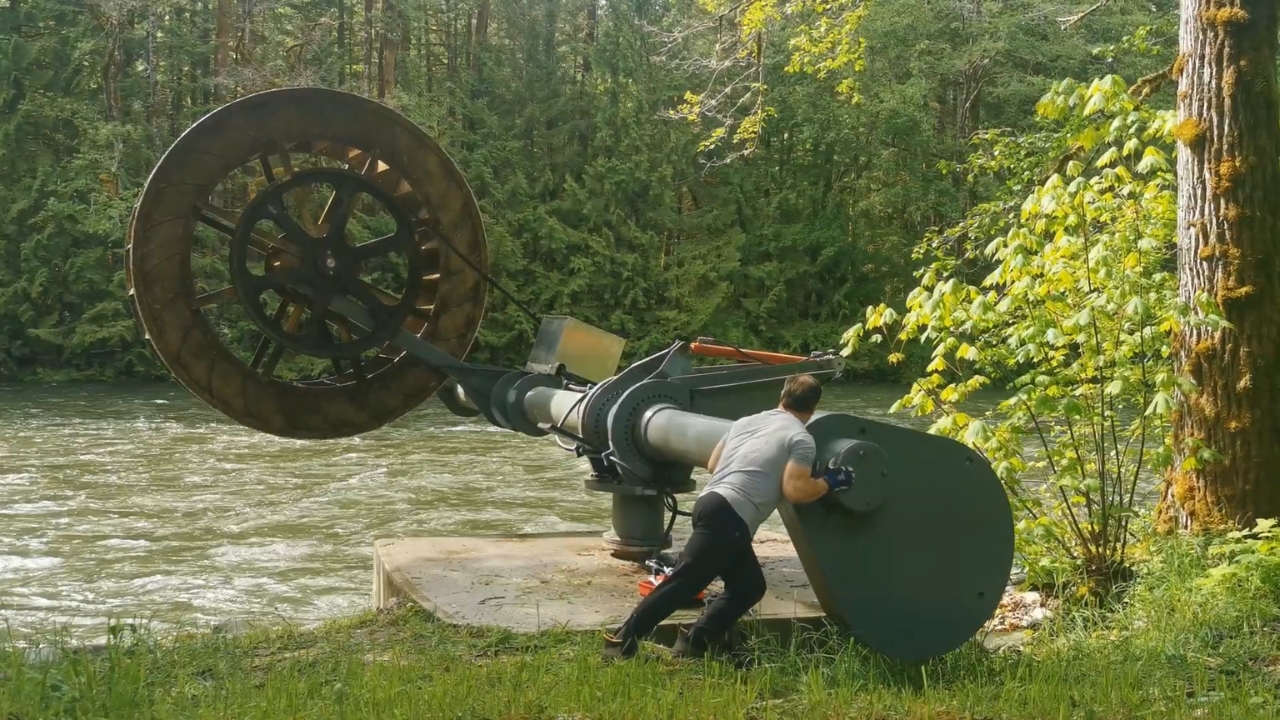
A Canadian retiree creates a hydroelectric system on a real river, generating energy continuously throughout the day and demonstrating how the power of water can supply a house with stability even in a simple structure.
-
Petrobras reaffirms its commitment to the market and ensures that it will carry out the energy transition safely to maintain national sovereignty.

-
Researchers discover a possible hydrogen deposit of up to 46 million tons beneath an ancient coal basin, and the volume could exceed half of the entire global production.


Made with foldable blades and connected to an internal battery, the Shine Turbine utilizes wind speeds of around 13 km/h to 45 km/h to generate energy, with the advantage of operating in varying weather conditions and being able to store energy for later use.
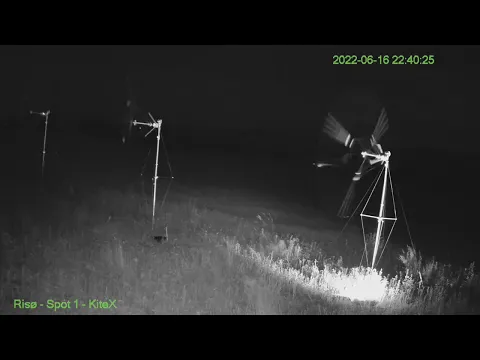
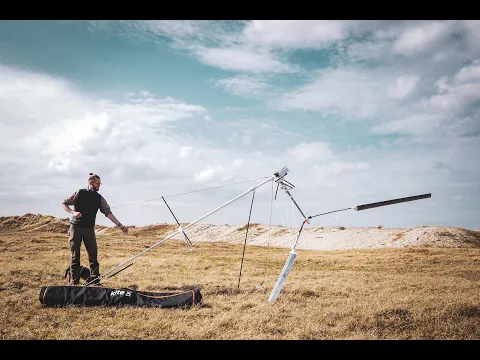
Another real approach, although not directly linked to a young inventor, is the portable turbine designed by the Danish company KiteX, which created the Wind Catcher, a modular model of about 200 W to 600 W that can be assembled in less than 15 minutes in the field using fiberglass rods and nylon straps.

This makes it suitable for use in rural areas or other isolated zones where renewable energy is sought without fully depending on the public grid.
How This Technology Works And Why It Is Relevant
The central idea behind these turbines is simple but powerful: capture the kinetic energy of the wind and convert it into electricity through a generator connected to a rotor or similar system. Unlike large industrial wind structures, the portable versions are:
- compact and lightweight, making it easy to transport in backpacks or vehicles;
- low maintenance costs, as they do not require robust structures or continuous electric support;
- self-sufficient, generating energy directly from renewable sources — wind — without the need for fossil fuels;
- adaptable to different locations, from remote areas with consistent winds to emergency scenarios where traditional infrastructure has been damaged or is absent.
Practical Examples And Community Use
Although many portable models focus on individual use (like charging phones or small batteries), there are also educational and community projects that show how similar technologies can be scaled to generate energy for entire communities.

An example of this is the project Elitorre in El Salvador, where students developed a small wind generator aimed at reducing energy costs in rural and underserved areas, demonstrating the potential for replicable wind solutions in contexts with limited access to electricity.
Projects like these, although still in the prototyping stage or innovation competition, indicate a real trend: portable renewable energy technologies are not just laboratory concepts but are being applied in useful ways to ensure electricity in remote environments, strengthen local resilience, and reduce reliance on fossil fuels and unstable electric grids.
Current Obstacles And Limitations
Even with real prototypes, there are challenges before such solutions are widely used:
- limited generation capacity: portable turbines still generate energy on a small scale compared to traditional wind farms;
- wind variability: in locations with weak or irregular winds, generation can be inconsistent;
- application scale: although ideal for electronic devices or small loads, portable turbines still do not replace larger systems aimed at powering homes or entire communities without additional support.
However, these barriers are being constantly overcome by innovative designs and lighter, more efficient materials, suggesting a future where portable wind turbines will not only supply small loads but also complement community micro-grids, isolated health centers, and other critical points of energy accessibility.
Advances in portable wind turbines have already demonstrated that clean energy can be produced in places that previously seemed unviable. Shine Turbine, Wind Catcher and educational projects like Elitorre show that compact wind technologies are transitioning from mere prototypes to practical solutions in real scenarios, especially in remote or disaster-affected areas.









-

-

-

-

10 pessoas reagiram a isso.