





 Portuguese
  English
  Spanish
  5 min of reading
  11 comments


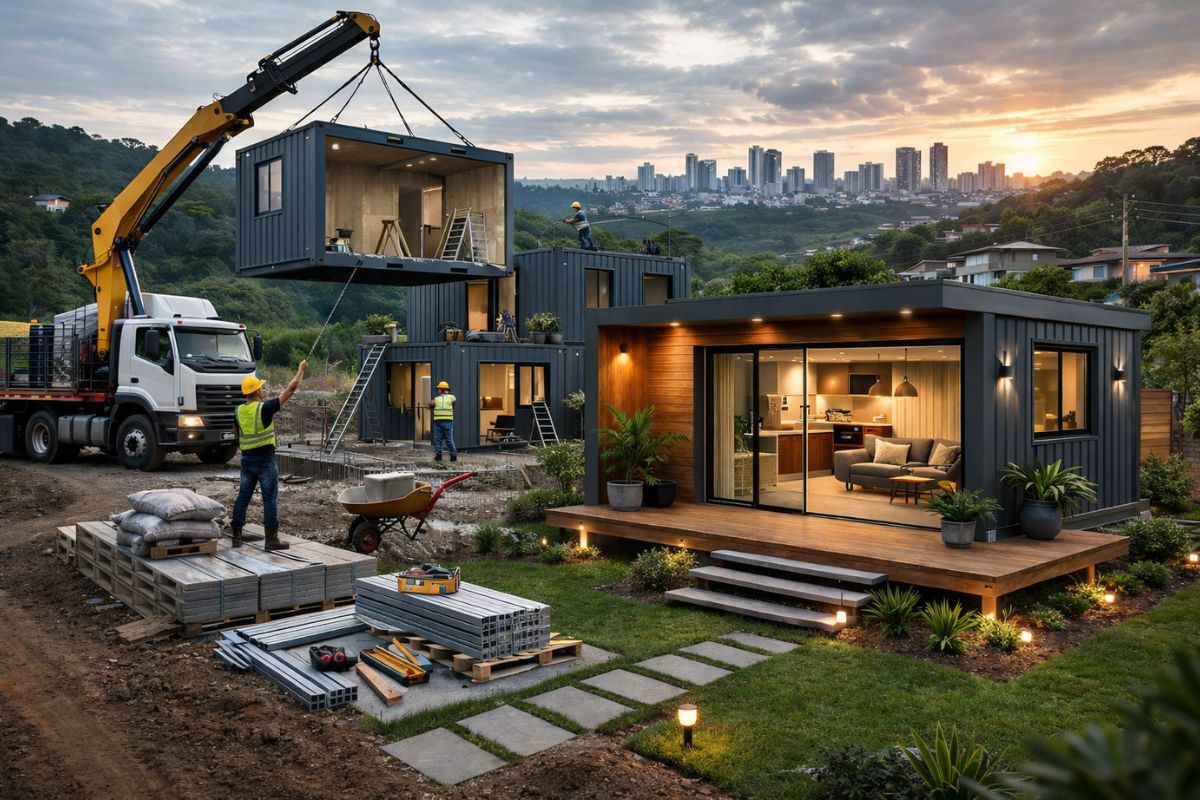


In Place Of Brick, Modular Houses Made Of Steel And Container Are Gaining Ground By Reducing Waste, Simplifying Foundations And Shortening Construction. With Delivery In A Few Weeks, The Model Can Lower The Final Value By Up To 40%, Offer Modules Of About 30 M² And Attract Residents And Investors Interested In Speed.
The Idea Of Houses Assembled Like “Lego” Has Been Consolidating As A Practical Alternative To Traditional Masonry In Brazil, Mainly Because It Speeds Up Delivery And Cuts Steps That Usually Consume Months Of Work And A Lot Of Labor On Site.
With Prefabricated Steel Structures And Modules Made From Shipping Containers, The System Arrives On Site Practically Ready To Live In, Requiring Less Material Waste And A More Predictable Schedule, Which Has Caught The Attention Of Both Those Who Want To Live And Those Who Want To Invest.
Why Modular Houses Are Taking Space From Brick

The Movement Is Happening Because The Construction Industry Is Gradually Moving Away From Exclusively Relying On “Building Walls, Plastering, Fixing, Rebuilding”. In Modular Houses, The Central Concept Is To Reverse The Logic: Much Of The Work Is Resolved Earlier, In Manufacturing And Pre-Assembly, So That The Construction Site Becomes A Place For Installation, Not Improvisation.
-
The lack of welders, electricians, and operators becomes a structural threat in 2025, with the construction industry and manufacturing already suffering from delays, cost pressures, and labor shortages in Brazil.
-
Brazil and Paraguay are just 46 meters away from a historic union on the bioceanic bridge that promises to revolutionize trade between the Atlantic and the Pacific.

-
With 55 km over the sea, a cost of US$ 20 billion, and enough steel to build 60 Eiffel Towers, China’s largest project has connected Hong Kong, Zhuhai, and Macau in a colossal bridge that defies the logic of engineering.

-
A trick with joint compound transforms a Styrofoam ceiling into a plaster-like ceiling: leveled panels, wires and mesh at the joints, sand, paint, and change the environment while spending little today.

This Change Tends To Reduce Common Losses In Traditional Construction, Such As Material Surpluses And Rework. This Does Not Mean “Construction Without Work”, But Rather A Shorter And More Controlled Process, With Fewer Steps Exposed To Weather, Delays In Delivery, And The Dependence On Large Teams Working Simultaneously.
How Much It Costs And Where The Savings Of Up To 40% Appear

The Promise Of Cost Reduction Is Directly Connected To The Fact That The Steel Structure Comes Ready From The Factory. Instead Of Building Everything From Scratch On The Lot, Modular Houses Require Simplified Foundations And, Subsequently, The Main Connections, Such As Plumbing, Electrical, And Fixation Points.
In Practice, The Cost Per Square Meter In This Format Ranges Between R$ 1,800 And R$ 2,400. The Savings Tend To Be Less About “Cheaper Material” And More About Efficiency: More Organized Logistics, Less Waste, And A Reduced Need For A Large Workforce Over Extended Periods.
When Very Luxurious Finishes Are Introduced, The Cost May Approach Traditional Standards, Because What Increases The Price Becomes The Chosen Level Of Detail, Not The Method.
Where And How Long It Takes To Be Ready: The Leap That Changes The Decision
The Time Factor Is What Usually Turns The Tables For Those Comparing Methods. In Masonry, A 40 M² House Can Take 90 To 150 Days To Build. In Contrast, The Houses In The “Tiny House” Format (Container Modular) Can Be Delivered In 20 To 45 Days, A Much Shorter Timeframe For Those Who Need Predictability.
This Shortening Occurs Because The Lot Stops Being The “Factory Floor” For The Property. With Most Of The Structure Resolved Earlier, The Schedule Becomes Less Dependent On The Daily Rhythm Of Various Simultaneous Fronts And More On A Streamlined Sequence Of Installation And Connection.
For The Resident, This Can Mean Receiving The Keys In Record Time; For The Investor, It Means Putting The Asset To Work Sooner.
Container Modules: Why 30 M² Became Standard Measurement

In The Container Modular Model, The “Structural Box” Already Exists: The Shipping Container Serves As The Base Of The Module. A Standard Of 12 Meters Can Deliver About 30 M² Of Usable Area, Which Works Well For Compact Proposals With Low Maintenance And Rapid Implementation.
This Is Where Layout Solutions Come In: Multifunctional Furniture And Total Space Utilization Become An Integral Part Of The Project.
In Smaller Houses, Every Inch Needs To Work In Favor Of Comfort, And This Tends To Guide Choices From Cabinets To The Position Of Windows, Beds, And Support Areas, Focusing On Circulation And Actual Daily Use.
Durability, Maintenance And The Useful Life Of 50 Years
Speed Does Not Need To Mean Fragility. Modular Structures Are Associated With An Average Useful Life Of 50 Years, Provided Maintenance Is Done Correctly. Practically Speaking, This Places The Model On A Long-Term Level, Dispelling The Idea That It Is Something “Temporary” Just Because It Arrives Ready.
The Discussion Then Migrates To Preventive Maintenance And Regular Care, Just Like Any Property: Preserving Structure, Avoiding Leaks, Keeping Systems In Order, And Respecting Usage Conditions. Durability Becomes A Matter Of Consistent Maintenance, Not Prejudice Against The Method.
Why Investors Are Targeting Inns And Tourist Regions
In Addition To Residential Use, The Appeal Grows For Those Who Want To Create Inns And Accommodations In Tourist Destinations. The Logic Is Straightforward: Modular Houses Can Be Installed Quickly And With Reduced Construction Impact On Site, Something Valued In Areas Where Noise, Debris, And Long Construction Periods Weaken The Experience And The Neighborhood.
Another Point Is The Competitive Advantage Of “Ready And Organized”. For Those Operating Hospitality, Starting Up In Weeks Instead Of Months Can Be Decisive.
Time, In This Case, Turns Into Revenue Sooner, And This Explains Why The Model Attracts Attention From Those Thinking About Returns And Not Just Housing.
The Swap From Brick To Modular Houses Made Of Steel And Container Is Not Just An Aesthetic Trend: It Involves Timeliness, Waste, Logistics, And The Possibility Of Better Planning Final Costs.
With Faster Delivery, Modules Of About 30 M², And An Expectation Of Decades Of Use, The Topic Advances Because It Solves Tangible Pain Points For Builders, Buyers, And Investors.
If You Had To Choose Today, Would You Consider Living In A 30 M² Modular Home Due To The Timeline And Cost, Or Would You Only Consider This Model For Investment In An Inn/Rental? What Would Weigh More In Your Decision: Price, Delivery Time, Or Durability?










Para mim, tempo de uso,modernidade e ecologicamente correta, com arrojo do bem estar de um imóvel com 30m2, q bom chegou ao Brasil.
O preço é o mais relevante, mesmo assim é preciso já ter o terreno, que não está incluso no valor!
O que me preocupa é o preço e o tempo de entrega.
Mas, gostaria de saber se essas casas são revestidas por dentro.
Att
M. Ignez