





 Portuguese
  English
  Spanish
  3 min of reading
  0 comments


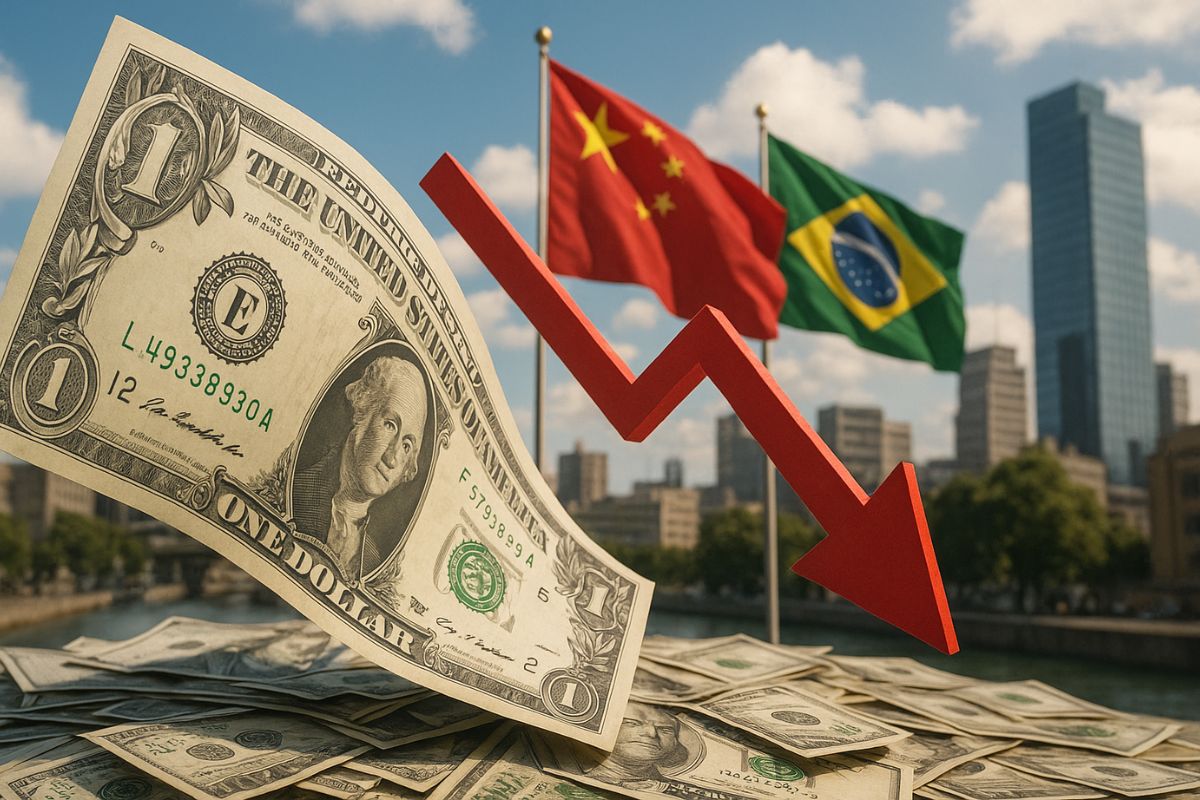
Kenneth Rogoff, Harvard Professor, Sees Weakening of the American Currency and Points to Expansion of the Euro, Asian Currencies, and Cryptos as Alternatives, Pressure on the American Currency.
The former chief economist of the International Monetary Fund (IMF), Kenneth Rogoff, stated that the dollar is expected to see a minimum decline of 5% to 10% in the coming years, challenging the dominance that the currency has maintained for decades. The statements were made during the Itaú BBA event in São Paulo and caught the attention of the international market.
According to InfoMoney, Rogoff highlighted that although the United States is at the forefront of artificial intelligence, this will not be enough to keep the currency valued.
For him, the dollar is currently well above its real purchasing power, which reinforces the trend of devaluation.
-
The government requests the Federal Revenue Service for a new system to automate the income tax declaration, reducing errors, time, and bureaucracy for millions of Brazilians.

-
Pix in installments, international Pix, and contactless payment without internet: the Central Bank revealed the new features coming to the tool that is already used by almost every adult in Brazil.

-
Mercado Livre has just started selling medications with delivery in up to three hours to your door, and this move could completely change the way Brazilians buy medicines on a daily basis.

-
In Dubai, rising tensions from the war in the Middle East are causing super-rich individuals to leave the Gulf and direct their fortunes to a new financial refuge in Asia.

Foreign Policy and Effects on Exchange Rate
Still according to InfoMoney, the economist attributed part of this movement to the policies adopted by the Donald Trump administration, which replaced soft power with direct economic force.
In Rogoff’s view, the strategy has been implemented aggressively and has accelerated transformations that were already occurring in the global financial system.
He recalled that the dollar was placed on a “pedestal” after World War II, but since the 1970s it has lost ground as a reserve currency.
The rise of the euro, Asian currencies, and the growth of cryptocurrencies indicate a more multipolar future, in which countries will not rely exclusively on the American currency to conduct business.
Cryptocurrencies and Stablecoins on the Rise
For Rogoff, one of the clearest signs of this new scenario is the growth of cryptocurrencies and, especially, stablecoins, digital currencies pegged to stable assets like the dollar.
These tools are already said to represent over 20% of the global economy, according to estimates cited by him, and could even replace traditional debit and credit cards.
The economist warns, however, that this advance brings risks of oversight, as the lack of effective auditing could open doors to tax evasion and regulatory weaknesses.
Path to a Multipolar System
Rogoff argues that emerging countries, such as Brazil, India, and China, should seize the opportunity to strengthen their own digital platforms and reduce dependence on the dollar.
According to him, artificial intelligence is expected to accelerate the diversification of currencies in international trade, giving more relevance to different economic centers.
Experts say Rogoff’s warning reinforces a long-term change in the global monetary system.
The central question now is whether the United States will manage to adapt its economic strategy to preserve the influence of the dollar, or if the global market will definitively move towards a multipolar balance.
Rogoff’s forecast opens the floor for an intense debate: Will the dollar continue to be the pillar of the global economy, or will it give way to a network of currencies and digital assets sharing prominence?
And you, do you believe that the minimum decline of 5% to 10% in the dollar will really happen and change the global balance? Or does the market still rely too much on the American currency? Share your opinion in the comments — we want to hear from those who closely experience the impacts of this possible transformation.









Seja o primeiro a reagir!