





 Portuguese
  English
  Spanish
  5 min of reading
  0 comments


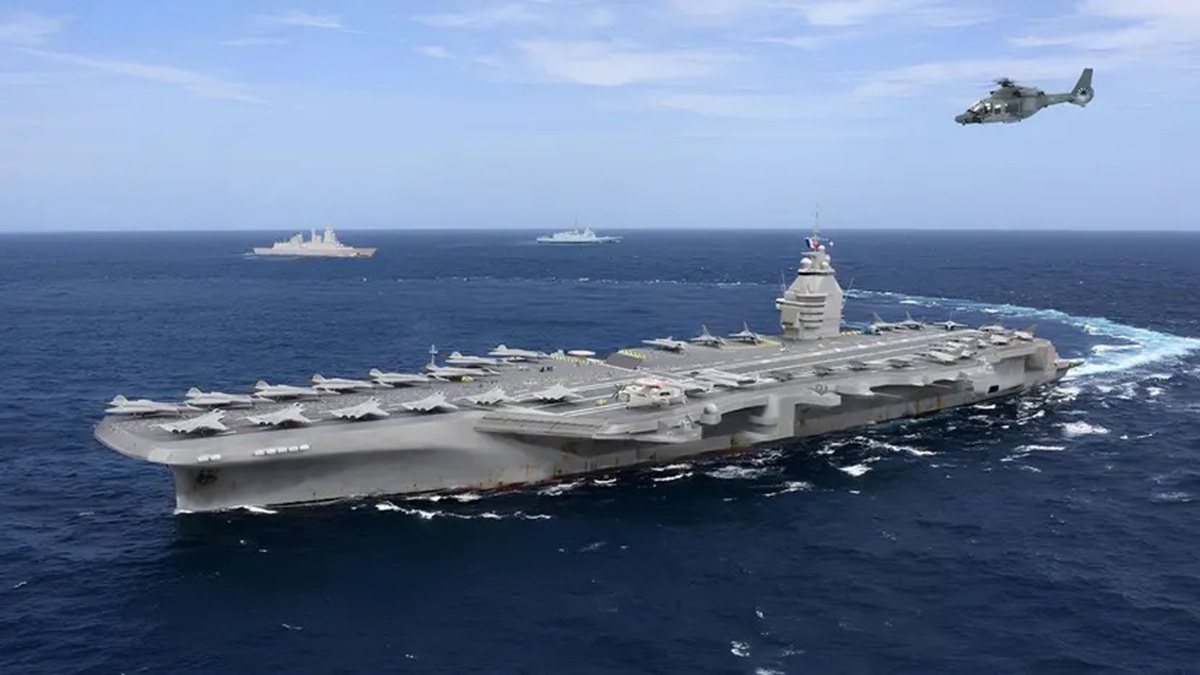
Program Plans 78,000-Ton, 310-Meter Nuclear-Powered Ship at a Cost of €10.25 Billion, with Construction Starting in 2032 and Operational Incorporation Planned for 2038
France has confirmed the construction of a new nuclear aircraft carrier, the PANG, budgeted at €10.25 billion, with an expected service entry in 2038, replacing the Charles de Gaulle and strengthening French strategic naval projection.
Presidential Decision and Strategic Framing
The announcement was made by President Emmanuel Macron during a speech to French troops in Abu Dhabi, highlighting the new ship’s role in nuclear deterrence and long-term maritime presence.
Macron stated that the decision to launch the program was made in the same week as the speech, emphasizing the project’s industrial importance for French small and medium-sized enterprises involved in the naval supply chain.
-
While the world looks at oil, the war with Iran is already disrupting helium supply from Qatar, affecting car and iPhone chips, threatening AI expansion, and putting pressure on aluminum packaging at the highest value in four years.

-
Global warming will expose a treasure hidden under the ice of Antarctica and may spark an international dispute over gold and valuable minerals.

-
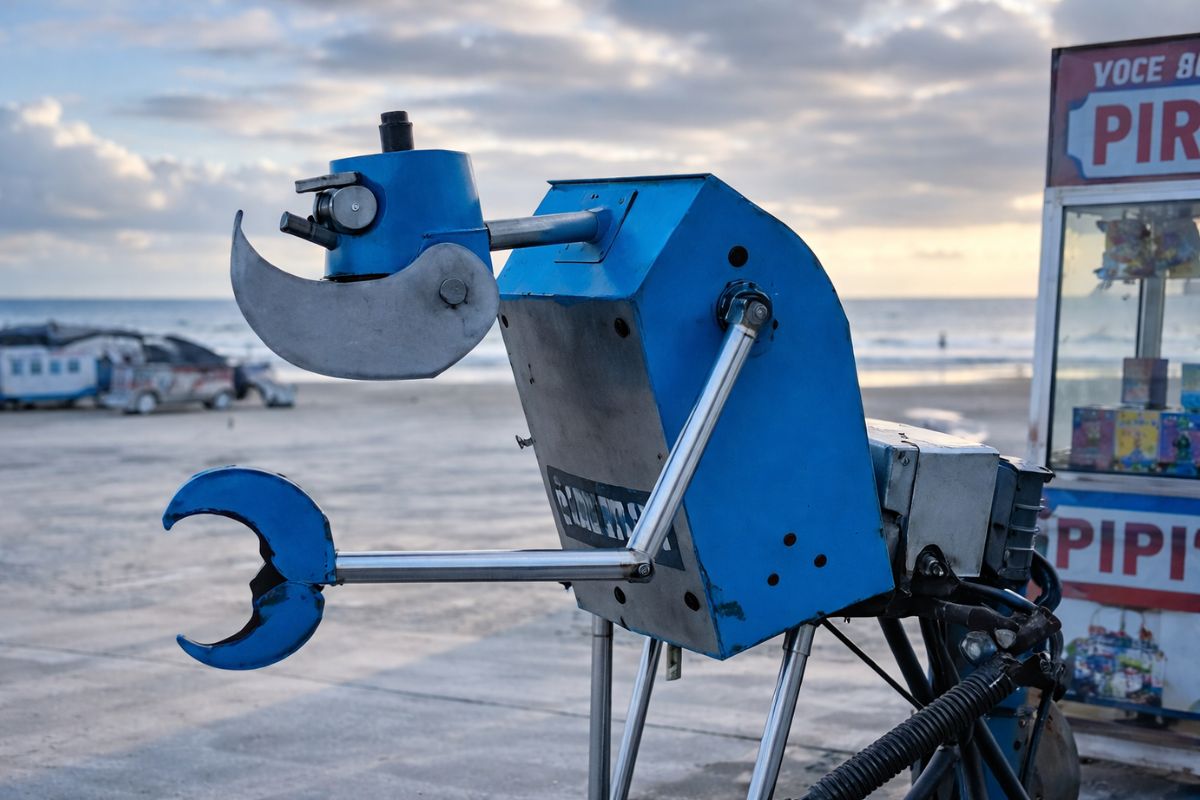
A street vendor from Praia Grande built a robot made of scrap from scooters and washing machines that pulls his popcorn cart on the beach, emits sounds, and interacts with customers, becoming an attraction on the coast of São Paulo.
-
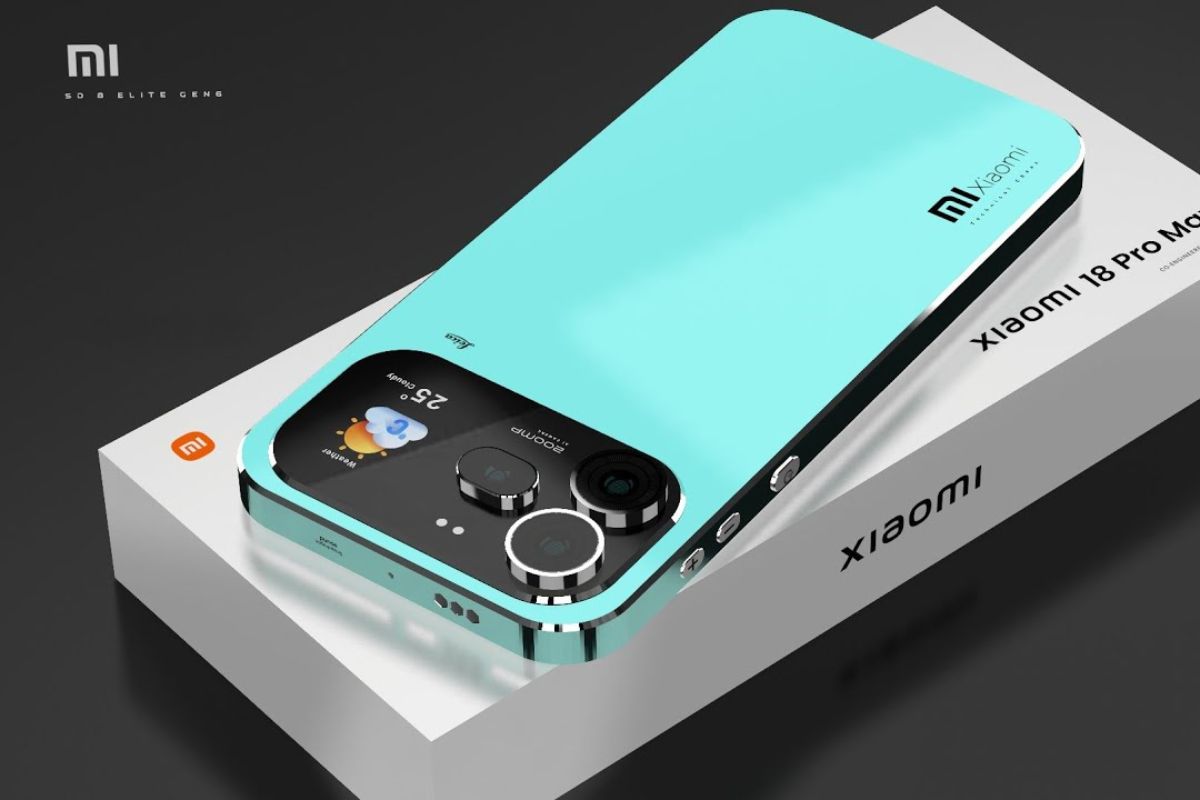
The specifications of the Xiaomi 18 Pro Max have been leaked, and the highlight is a dual 200 MP camera with a new 22-nanometer technology that promises to consume less energy and capture details in shadows and bright areas using LOFIC HDR.

The visited base is located near the Strait of Hormuz, a critical area for global oil flow, a context cited to reinforce the strategic relevance of the announced naval investment.
The new aircraft carrier, named Porte-Avions Nouvelle Génération, is expected to replace the Charles de Gaulle at the time of its scheduled retirement, ensuring operational continuity for the French navy.
According to Reuters, the project is central to the French defense strategy amidst growing geopolitical uncertainty and the European debate on external security dependence.
The context includes Russia’s ongoing war in the Ukraine and expanded discussions in Europe on strategic autonomy, especially amid signs of reduced American commitment.
The statements were made as debates about the role of the United States in European security intensify, in a scenario marked by positions from President Donald Trump.
Costs, Timeline, and Internal Criticism
The estimated cost of the program is approximately €10.25 billion, equivalent to around US$12 billion, with the final budget decision expected in the 2025 defense budget.
The French government has already begun work on the nuclear propulsion components, anticipating critical technical steps to meet the schedule culminating in the ship’s operational entry in 2038.
If completed as planned, the PANG will be the largest warship ever built in Europe, consolidating France as the only European Union country with an armed nuclear aircraft carrier.
Despite government support, the project faces internal criticism, with center and moderate left lawmakers questioning the priority of the investment given the French fiscal situation.
These critics advocate for a potential postponement of the program, an argument rejected by the Executive, which links the PANG to the maintenance of national strategic and industrial capabilities.
Approved Design and Technical Development
Technical details of the PANG were disclosed by defense reports cited by Global Times and the Naval News portal, based in Paris.
The project entered developmental processes in two phases in December 2020, after four years of studies that resulted in a vessel significantly larger than its predecessor.
The new aircraft carrier is expected to displace approximately 78,000 tons, nearly double the 42,000 tons of the Charles de Gaulle, enhancing air capacity and maritime autonomy.
The estimated length is about 310 meters, with a beam of approximately 90 meters, dimensions that allow for more intensive air operations and greater onboard logistical flexibility.
The energy system will be completely electric throughout the vessel, integrating nuclear propulsion with electrical networks capable of sustaining catapults and advanced sensors.
Aerial Capabilities and Onboard Systems
The PANG will feature a unique integrated island superstructure, designed to optimize operational flows and reduce interference during the launch and recovery of aircraft.
It is expected to have three electromagnetic launch catapults, as well as an advanced emergency braking system with three wires for successive high-frequency landings.
The deck will include two hangars and two aircraft elevators positioned at the edge of the deck, on the starboard side, a solution aimed at accelerating operational cycles.
France has decided to acquire electromagnetic catapult systems from the United States, claiming that domestic alternatives would not meet the timelines and costs established for the program.
French authorities have ruled out domestic options, despite recent Chinese advancements in similar technologies, a decision aligned with the need to reduce technical risks and delays.
The planned air wing includes about 30 combat aircraft or unmanned combat aerial vehicles, supported by E-2D Hawkeye and onboard helicopters.
The ship is set to operate upgraded Rafale M fighters to F5 standard, maintaining continuity with current air doctrine, though without incorporating fifth-generation fighters.
France in the Global Aircraft Carrier Context
Currently, France is part of a select group of six countries capable of operating fixed-wing aircraft carriers with the launch and recovery of fighters at sea.
The United States leads with 11 nuclear-powered aircraft carriers, while China operates three units, including the Fujian equipped with electromagnetic catapults.
India maintains two aircraft carriers with STOBAR configuration, the United Kingdom operates two STOVL ships, and Russia has the Admiral Kuznetsov, with an uncertain operational future.
A Chinese military specialist cited by Global Times assessed that the PANG may resolve the propulsion limitations of the Charles de Gaulle and enhance French capabilities.
The same analyst noted that, despite the viability of the Rafale M, the aircraft will not represent a fifth or sixth-generation fighter when the new ship enters service.
Construction, Shipyards, and Final Stages
The construction of the PANG is scheduled to begin in 2032 at the Chantiers de l’Atlantique shipyards, located in Saint-Nazaire, according to the official timeline released.
After the structural assembly, the ship is set to be transferred to Toulon in the mid-2030s for final finishes and nuclear refueling.
In this final phase, sea trials and operational validations will be conducted before formal incorporation into the fleet, concluding the replacement cycle of the current flagship.
These complementary stages conclude the program, consolidating one of the largest naval investments in Europe in decades and redefining French maritime projection capability.










-

-

-

-

-

-

13 pessoas reagiram a isso.