





 Portuguese
  English
  Spanish
  3 min of reading
  18 comments


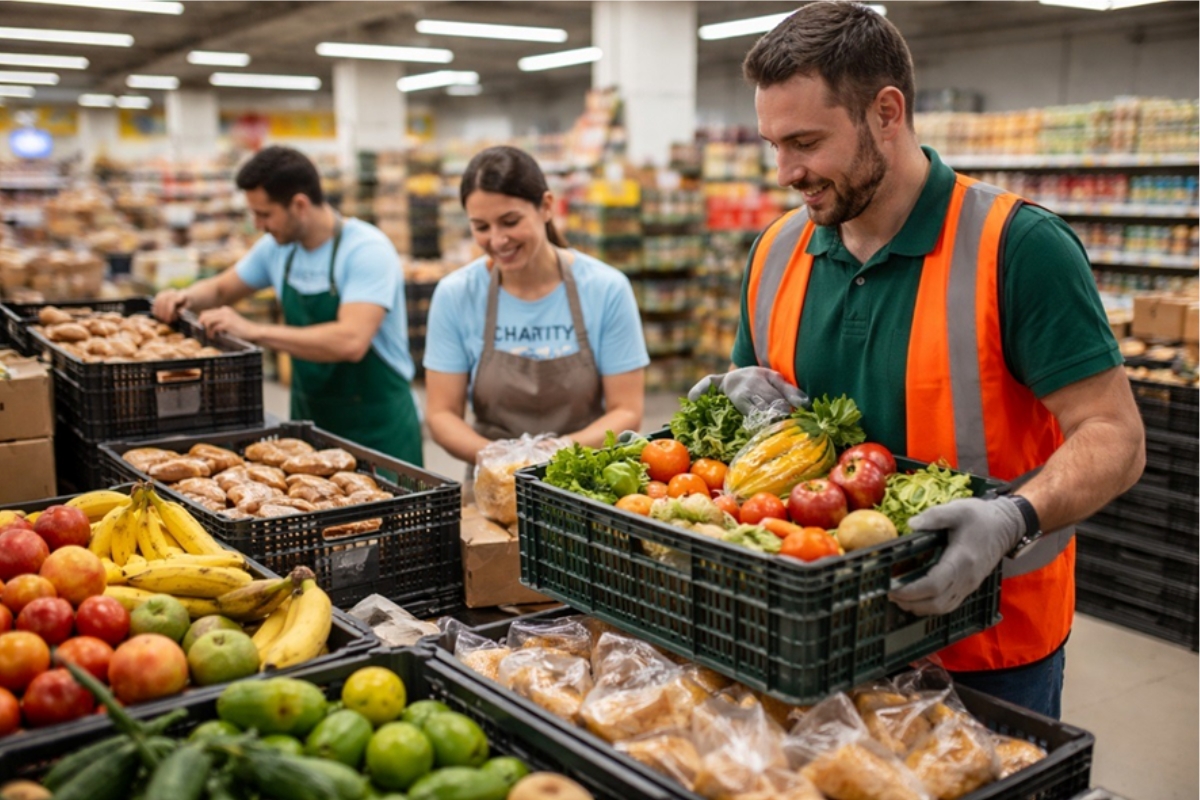


In France, the Government Implemented a Law in 2016 That Requires Supermarkets Larger Than 400 Square Meters to Donate Food for Consumption, Increasing Donations by Up to 15 Percent and Generating About 10 Million Additional Meals Per Year, Causing Social and Environmental Impact.
Since 2016, France has become a global reference in combating food waste. The country adopted pioneering legislation by turning what was once merely a choice for retail networks into an obligation.
The rule is clear: supermarkets over 400 square meters must donate unsold products that are still suitable for consumption.
What was once thrown away now goes to charitable organizations. The change altered the sector’s dynamics and created a new network of solidarity that connects businesses, social organizations, and people in vulnerable situations.
-
Friends have been building a small “town” for 30 years to grow old together, with compact houses, a common area, nature surrounding it, and a collective life project designed for friendship, coexistence, and simplicity.

-
This small town in Germany created its own currency 24 years ago, today it circulates millions per year, is accepted in over 300 stores, and the German government allowed all of this to happen under one condition.

-
Curitiba is shrinking and is expected to lose 97,000 residents by 2050, while inland cities in Paraná such as Sarandi, Araucária, and Toledo are experiencing accelerated growth that is changing the entire state’s map.

-
Tourists were poisoned on Everest in a million-dollar fraud scheme involving helicopters that diverted over $19 million and shocked international authorities.


In a global scenario marked by food insecurity and rising living costs, the French decision gained even more relevance. What seemed like a one-off measure became an example of public policy with concrete effects.
French Law Transformed Surplus into Food for Those in Need
The legislation involves large supermarket chains that must form partnerships with assistance organizations.
These institutions are responsible for redistributing fruits, bread, and other products that would have otherwise been discarded.
The impact was direct. Food that would have gone to landfills is now supplying shelters and food banks.
What seemed like just an administrative rule has become a tool to combat hunger and strengthen local social support networks.
Moreover, the measure created a culture of greater responsibility in the food retail sector, encouraging better stock management and sales planning.
Reduction of Waste and Immediate Environmental Impact
One of the main effects of the measure was the decrease in the volume of waste sent to landfills.
Less discarded food means less organic decomposition and lower pollutant emissions.
The policy started to operate on two fronts simultaneously: food security and environmental sustainability.
The result draws attention for uniting social and ecological impact in a single strategy, something many countries are still trying to structure.
The reduction of waste also contributes to a more efficient use of natural resources involved in food production, such as water, energy, and soil.

Numbers Show 15 Percent Growth in Donations
Estimates indicate that the initiative could increase the quantity of annual donations by up to 15 percent.
That represents approximately 10 million additional meals per year.
In addition to the social benefit, the law also reduces waste management costs for supermarkets, which no longer bear part of the expenses related to disposal.
In other words, the measure has a positive effect for both recipients and donors, creating a more sustainable cycle within the food chain.
The growth in donations shows that well-targeted public policies can yield measurable results in a short time.
French Model Begins to Influence Other Countries
The success of French legislation has crossed borders. Although other European nations have not yet adopted identical laws, the redistribution of wasted food has been gaining increasing support in discussions on sustainability and food security.
The French experience has become a reference when it comes to combating waste and strengthening food security.
Experts point out that similar initiatives could generate relevant impacts in countries with high waste rates, as long as they are adapted to local realities.
The decision made in 2016 changed the fate of tons of food and showed that public policies can turn waste into opportunity. By mandating the donation of surplus, France reduced waste, increased access to food, and created a model that can inspire other economies to rethink their relationship with consumption and disposal.
Do you believe that a similar law could work in Brazil? Share your opinion in the comments.










Lei ****,:obrigar alguém fazer o que talvez não quer.
É por essas e outras que a fiança vai ser exterminada de dentro para fora.
Alimentar imigrantrs sem qualificação e dem vontade de progredir.
Esse país está alimentando e proliferando incompetentes,pois se a pessoa não consegue nem se alimentar e alimentar sua sua família, prá que ter filhos?
Isso acontece em boa parte da África fazem 50 anos que escuto para sjudar crianças morrendo de fome,se os pais e nem o país consegue alimentar sua população, então nem deveria existir.
Sr.joao , gaste seu tempo livre para conhecer um pouco mais da África, Haiti, Afeganistão, e outros paises, onde alguns de seus moradores imigram, sabemos que não o fazem por vontade propria .depois de conhecer um pouco mais as políticas desses países e talvez do seu, possa avaliar a solidariedade de estender a mão aos que precisam.
Há grupos supermercadistas franceses atuando no Brasil, e nestas lojas há espaço para armazenar produtos que perderam o padrão para venda, mas bons para o consumo de pessoas carentes. Todavia, havia ou há leis no Brasil que proíbem os supermercados doarem produtos que estão com características abaixo das exigências de venda. Tem que ver isso aí ?!
Me pergunto porque o Brasil ainda não está criando leis iguais a essa ,aqui é ao contrário, os supermercados são obrigados a jogar fora os alimentos descartados
Li uma matéria uma vez dw um dono de restaurante que aqui se não me engano foi em Curitiba que um dono de restaurante foi autuado e correu o risco de ser multado por doar a comida que sobrava do restaurante
Os próprios moradores o denunciaram por se sentirem incomodados reclamando do tamanho da fila de pessoas que se formava na rua pra conseguirem ganhar um prato de comida.
Fiquei muito chocada de certas. pessoas podem ser desconectadas com a realidade e com as dificuldades da vida ,no Brasil muitas pessoas ainda passam fome ,por varios dias sem ter o que comer
Enquanto ficam inventado e criando leis absurda que em muitas vezes quando não é pro próprio bem estar deles, são leis que realmente não ajudam em nada de imediato aos que mais precisam e que se encontram em situações fome
desemprego e sem ter onde morar
Parabens a França por essa iniciativa ,que outros países sigam esse maravilhoso exemplo
Criar leis que que funcionem e que relamente chegue o mais rápido possível a quem mais precisa de ajuda .