





 Portuguese
  English
  Spanish
  7 min of reading
  2 comments


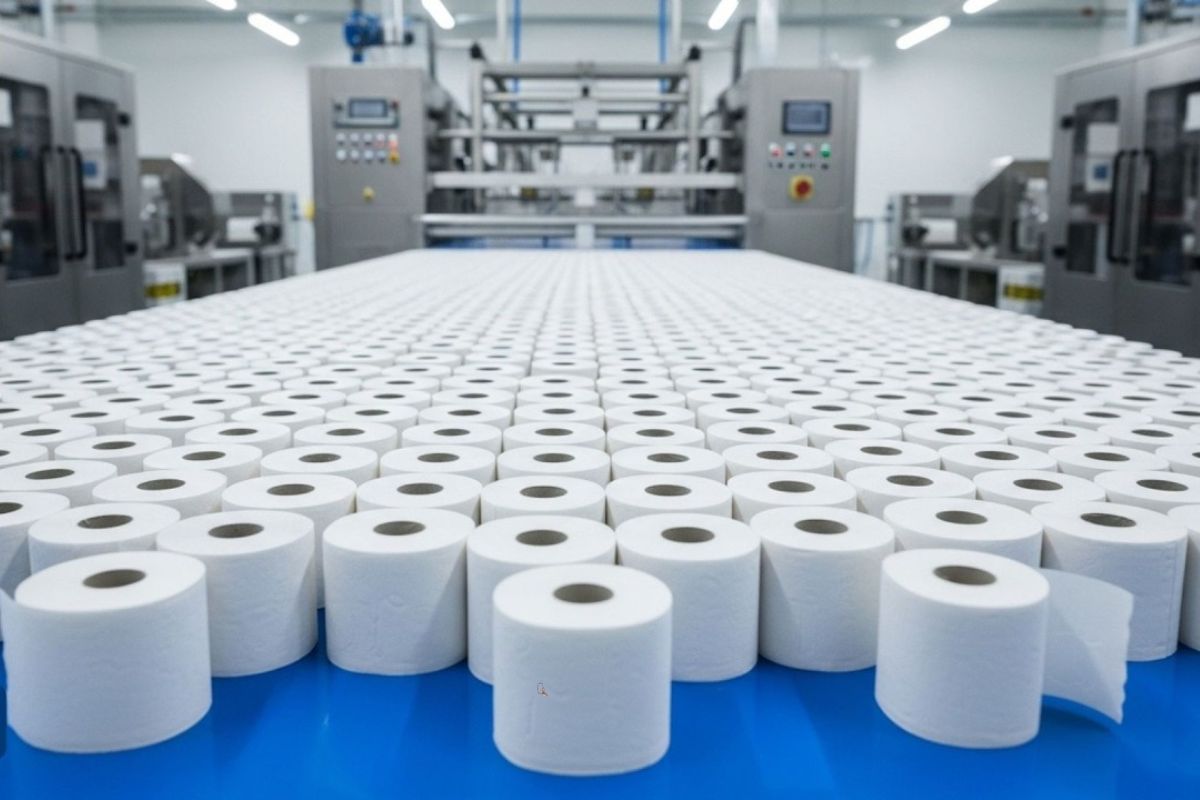


With Machines Over 100 Tons, Temperatures Close to 150 ºC, and Purified Cellulose Reaching Over 99% Whiteness, Toilet Paper Is Produced in a Continuous Process That Begins with Eucalyptus and Ends with Light, Soft, and Resistant Rolls on Market Shelves
You Use Toilet Paper Every Day, But Rarely Think About What Goes into Each Sheet. While Consumption Is Steady, the Industry Produces Over 25,000 Rolls Per Second Worldwide, in Lines That Almost Never Stop. A Brief Stop of Just a Few Hours in Large Factories Is Sufficient to Pressure the Stock of Entire Cities, Showing How an Apparently Mundane Product Depends on a Critical Industrial Gear.
What Comes Off the Supermarket Shelf as a Soft, Scented Roll of Toilet Paper Started Life as Eucalyptus and Pine Logs Cut from Planted Forests, Passed Through Digesters at Over 150 ºC, Reacted with Carefully Measured Chemical Solutions, and Was Transformed into a Continuous Sheet That Runs on Machines at 2,000 Meters Per Minute. Behind Every Roll of Toilet Paper Lies a Combination of Heavy Engineering, Process Control, and Chemical Precision That Must Operate on a Giant Scale to Deliver a Safe, Standardized, and Intimate Product.
From Planted Forest to the Start of Toilet Paper

The Cycle of Toilet Paper Begins in Eucalyptus and Pine Forests Planted Specifically for the Pulp Industry.
-
From sertanejo star to international investor: Ana Castela invests millions in a mansion in the USA, creates a themed accommodation in Orlando, and shows that the “boiadeira” also wants to grow away from the stage.

-
The 10 most stunning motorhomes in the world: a $3 million trailer with a rooftop nightclub and garage for a Ferrari, “palaces on wheels” with Italian marble, private cinema, and five-star hotel luxury for billionaires.

-
Trump wanted to spend $400 million on the White House, but the courts prohibited the million-dollar construction.

-
How the Egyptians erected giant structures like pyramids, temples, and obelisks without modern technology, cranes, or engines still amazes the world and reveals the power of engineering based on ramps, levers, ropes, and colossal organization.


These Trees Are Chosen Because They Grow Quickly, Have Long Fibers and a Good Balance of Strength and Softness, Which Is Essential for Making Toilet Paper That Is Not Easily Torn but Also Not Rough.
The Typical Cycle, from Planting to Harvest, Takes About Seven Years, with Continuous Replanting of Harvested Areas.
After Harvest, the Logs Are Transported in Convoys to the Factory. There, They Go Through Rotating Cylinders with Steel Blades That Peel the Wood Without Wasting the Core.
The Clean Wood Is Cut into Small Chips, Pieces the Size of Coins That Will Be the Raw Material for the Entire Chain.
These Chips Enter Pressurized Digesters, Where They Are Cooked in a Caustic Soda Solution and Sulfide Compounds at Over 150 ºC.
The Goal Is to Dissolve the Lignin, the Natural “Glue” That Holds the Fibers Together, Releasing a Pulp Rich in Cellulose.
From a Single Tree, the Efficiency of the Process Allows for About 1,500 Rolls of Toilet Paper, Illustrating the Scale Gains of Modern Production Lines.
High-Demand Bleaching and Purification

The Pulp That Comes Out of the Digester Is Brown, Wet, and Strongly Smelling of Wood. It Is Far From the White, Neutral Toilet Paper That Consumers Associate with Hygiene.
The Next Step Is a Cycle of Washing, Bleaching, and Stringent Purification, Aimed at Removing Impurities Without Damaging the Fibers.
First, the Pulp Undergoes Successive Washes with Hot Water Under Pressure, Reducing Residues of Lignin and Chemical Remnants from Cooking.
Next, It Enters a Sequence of Bleaching Tanks, Where Reagents Such as Hydrogen Peroxide and Chlorine Dioxide Are Measured with Millimetric Precision.
The Control Is So Precise That Optical Sensors Measure Whiteness in Real-Time, Automatically Adjusting the Dosage if the Tone Deviates from the Desired Range.
At the End of This Stage, the Cellulose Suspension Reaches a Purity and Whiteness Level That Can Exceed 99%.
This Clean, Uniform, Odorless Appearance Is Essential, As Toilet Paper Is an Item in Close Contact with the Skin and Must Be Chemically Stable, Neutral, and Safe.
Before Proceeding to the Sheet Machines, the Pulp Is Concentrated into a Kind of “Cellulose Milkshake,” with a Creamy Consistency, Ready to Be Transformed into Paper.
From Cellulose “Milkshake” to Continuous Sheet

With the Adjusted Pulp, the Mechanical Heart of the Toilet Paper Factory Comes into Play. In Large Production Lines, Machines the Size of a Three-Story Building Work Continuously.
The Cellulose Mixture Is Distributed Over a Fine Metal Mesh Conveyor, Forming a Wet Layer Where Only About 1% Is Solid Fiber and the Rest Is Water.
This Mat Passes Through a Series of Rolls and Steam-Heated Cylinders, with Temperatures Around 120 ºC, Compressing and Drying the Material in Seconds.
At the Center of the Process Is the Yankee Dryer, a Large-Diameter Cylinder Heated Internally, Which Quickly Removes Moisture and “Anchors” the Forming Roll of Toilet Paper.
Meanwhile, High-Capacity Fans Blow Hot Air Over the Surface, Accelerating Evaporation.
The Combination of Pressure, Temperature, and Speed Allows for Achieving Speeds of About 2,000 Meters of Paper per Minute, Equivalent to Dozens of Football Fields of Sheet Produced Every Hour.
Sensors and Cameras Monitor Every Inch of the Sheet, Detecting Defects, Variations in Weight, or Breaks.
If Something Goes Out of Specification, Defective Sections Are Automatically Cut and Recycled for Internal Reuse, Ensuring That Only Material Within Specification Moves Forward to Become Toilet Paper.
How Toilet Paper Gains Softness, Layers, and Texture
Upon Leaving the Drying Section, the Sheet Is Still Raw Paper: Thin, Strong, but Lacking Texture and the Characteristic Feel of Modern Toilet Paper.
Next, the Giant Sheet, Which Can Exceed 6 Meters in Width, Is Guided by Dozens of Rolls That Stretch and Stabilize It Until It Reaches Thicknesses Thinner than a Human Hair When Compared Across Multiple Layers.
Many Factories Use Multi-Ply Systems, Overlapping Two or Three Ultrathin Layers to Produce the Two or Three-Ply Toilet Paper That Consumers Find on the Market.
These Layers Are Combined in a Controlled Wet Gluing Process, Where Thermal Pressure and Hot Air Jets Seal the Fibers Together, Creating a Stable “Sandwich” Without Relying on Traditional Visible Glues.
This Stage Is Where Texture and Relief Appear. Metal Rolls Engraved with Specific Patterns Create Embossing, Compressing Points of the Sheet to Form Raised Designs.
Besides the Visual Appeal, This Texture Increases Softness and Absorption, Creating Microcavities That Retain Air and Liquids.
Some Processes Use Double Embossing and Microjets of Air Between the Layers, Forming Microscopic Air Pockets That Reinforce the Soft Feel to the Touch.
From Giant Rolls to Toilet Paper Rolls
When the Continuous Sheet Is Ready, It Is Rolled into Huge Rolls Called “Mother Rolls,” with Diameters of Up to 3 Meters and Weighing Several Tons.
Each of These Rolls Equals Thousands of Rolls of Toilet Paper.
The Conversion of This Roll into Individual Products Happens in High-Speed Cutting and Rolling Lines.
Circular Blades Divide the Roll into Strips with the Exact Width of a Roll. Next, Mechanical Arms and Motorized Shafts Wrap Each Strip Around Cardboard Cores, Forming the Compact Rolls We Are Used to Seeing in Packaging.
In Modern Industrial Lines, It Is Common for Dozens of Rolls to Be Produced Every Second, Requiring Fine Synchronization Between Cutting Speed, Paper Tension, and Shaft Rotation.
After Forming the Rolls, the Ends Are Trimmed, and the Last Sheet Is Loosely Rolled in a Controlled Way to Facilitate the “Start” of Use.
Cameras and Sensors Check Diameter, Density, Layer Alignment, and Texture Regularity.
Only After This Check Does the Toilet Paper Move to the Packaging Stage, Where It Is Grouped into Family Packs or Larger Bales for Wholesaling and Distribution.
Tests of Strength, Dissolution, and Safety
As a Daily Use Product Directly Related to Hygiene and the Functioning of Sewage Systems, Toilet Paper Must Meet Technical Requirements That Go Beyond Softness.
To This End, Samples from Each Batch Are Taken to Internal Laboratories, Where They Undergo Physical and Functional Tests.
Tensile Testing Machines Measure the Force Required to Tear Strips of Paper in Different Directions, Determining Whether the Material Can Withstand Normal Use Without Breaking Easily.
In Test Tanks, Segments of Paper Are Agitated in Water to Simulate Behavior During Flushing, Evaluating Dissolution Time and Risk of Clogging.
In Parallel, Texture Sensors and Optical Inspections Check Color Uniformity, Embossing Regularity, and Absence of Defects or Stains.
When the Line Includes Scented Versions or Those with Softening Agents, Extra Controls for Concentration, Distribution, and Stability of the Additives Ensure That The Toilet Paper Maintains the Same Standard of Safety and Comfort Throughout Its Shelf Life.
Only After Approval in All These Tests Is the Batch Released for Shipment.
A Simple Product on the Shelf, a Complex Chain Behind the Scenes
From the Eucalyptus Log That Enters the Factory to the Giant Rolls Running at 2,000 Meters per Minute, the Journey to the Roll You Have in Your Bathroom Is a Sequence of Engineering, Chemical, and High-Precision Automation Decisions.
Toilet Paper May Seem Like a Simple Product, But It Relies on Planted Forests, Digesters at 150 ºC, Sensor-Controlled Bleaching Systems, and Industrial Lines That Cannot Fail.
At the Same Time, the Sector Invests in Alternatives Such as Recycled Papers and Fibers from Other Sources, in Addition to Optimizing Water and Energy Consumption in Various Plants.
Common to All These Projects Is a Central Goal: to Deliver Toilet Paper That Is Soft, Strong, Safe, and Compatible with Sanitation Infrastructure.
The Next Time You Open A Package and Pull the First Sheet, It Is Worth Remembering That There Is a Whole Chain of Heavy Engineering and Chemical Precision Hidden Behind an Automatic Gesture.
And for You, Which Stage of Toilet Paper Manufacturing Surprised You the Most or Made You View This Product in a Completely Different Way?








Interessante tudo isso mais vale lembrar que hoje o eucalipto é colhido com 3.5 anos graças às clonagem e agora conseguiram eliminar as flores e nectar para aumentar a massa de celulose ou seja sem o mínimo de preocupação com o meio ambiente.
A aplicação de veneno através de helicóptero eliminar todo inseto no raio de 5km
Ufa!!! É uma coisa que parece tão simples, mas que passa por vários processos complexos até chegar ao ponto de uso.
Se todos tivessem a ideia de como certos produtos passam por vários processos para chegar ao produto final, talvez déssemos mais valor às coisas e respeitassem mais o meio ambiente. Preservassem + as florestas, mares, rios, ruas, avenidas, não jogassem lixo nas ruas e calçadas, enfim, tespeitasem o seu entorno. É bom refletir em tempos de crise climática e ondas de calor em todo o planeta!!!🤔🤔😬😬😭😭