





 Portuguese
  English
  Spanish
  3 min of reading
  0 comments


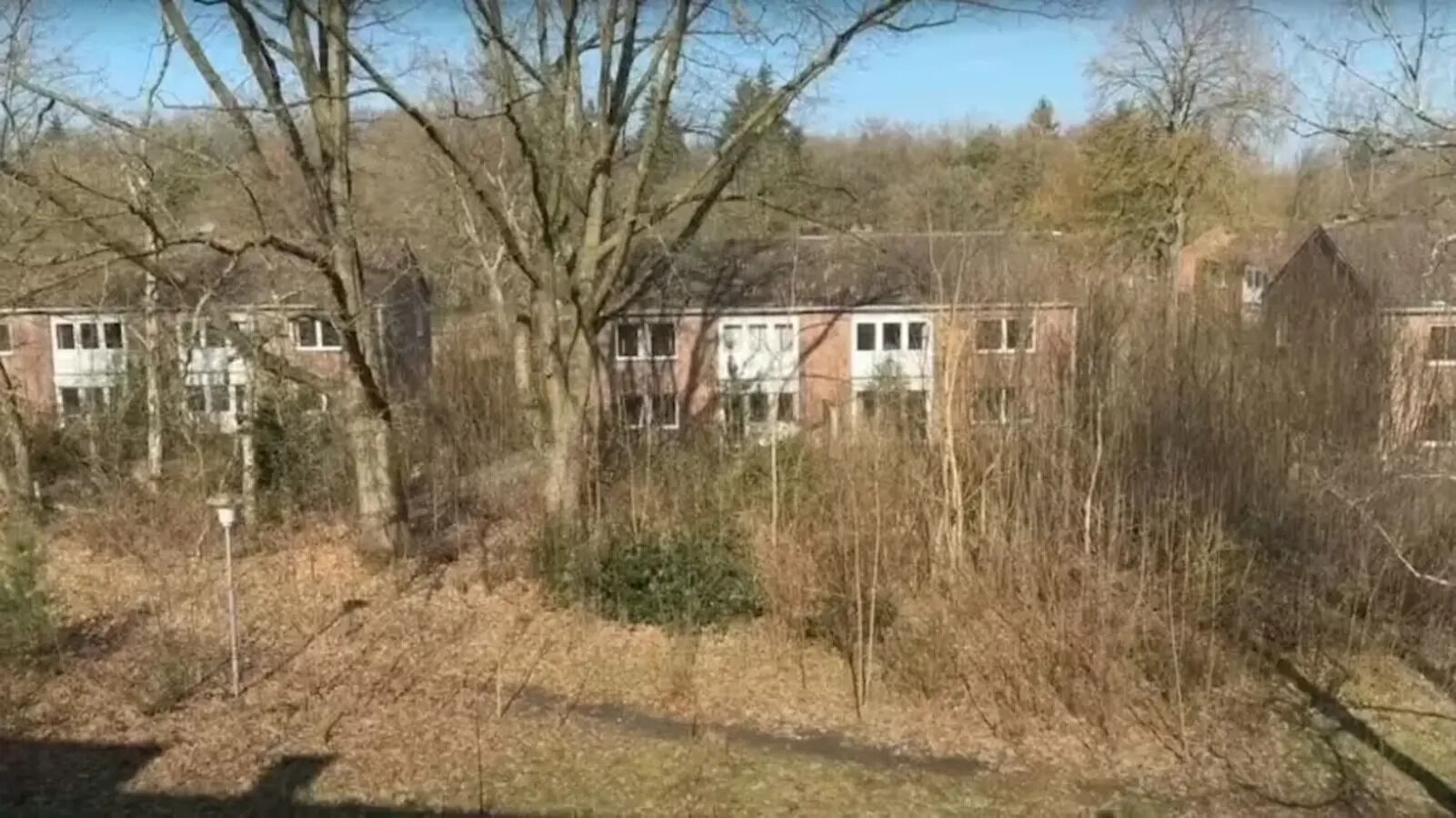
Former British Base in Germany, Rheindahlen housed up to 12 Thousand People and Today Holds Intact Cold War Scenes
The Rheindahlen Military Complex was built by the British Armed Forces in 1952. Located in Mönchengladbach, in the district of Rheindahlen, the space was known as “a city within another.” Its purpose was to house up to 12,000 military personnel and their families in the post-World War II.
There lived members of the British Army of the Rhine, the UK’s occupying force in West Germany.
With the Cold War, these troops became part of NATO, defending the region against a possible Soviet invasion.
-
Friends have been building a small “town” for 30 years to grow old together, with compact houses, a common area, nature surrounding it, and a collective life project designed for friendship, coexistence, and simplicity.

-
This small town in Germany created its own currency 24 years ago, today it circulates millions per year, is accepted in over 300 stores, and the German government allowed all of this to happen under one condition.

-
Curitiba is shrinking and is expected to lose 97,000 residents by 2050, while inland cities in Paraná such as Sarandi, Araucária, and Toledo are experiencing accelerated growth that is changing the entire state’s map.

-
Tourists were poisoned on Everest in a million-dollar fraud scheme involving helicopters that diverted over $19 million and shocked international authorities.


Attacks and Tension
Throughout its existence, Rheindahlen faced not only external threats. The IRA, an armed group advocating for the reunification of Ireland, carried out two attacks on the site.
The first was in 1973 when a car bomb was left in the parking lot of a cinema. The explosive was supposed to detonate at the end of the screening, but no one was injured.
In 1987, another car bomb exploded near the officers’ mess and recreation center. The attack left 31 injured, including 27 West Germans and four Britons, but no fatalities.
Everyday Life at the Military Base
Despite the risks, the complex had a busy routine, especially in the 1960s and 1970s. JHQ Rheindahlen had a NAAFI market, a gas station, two post offices, a clothing store, and five primary schools.
There were also bookstores, libraries, cafes, banks, a travel agency, and medical and dental services. The only secondary school was Queens School Rheindahlen.
Decline After the Cold War
With the fall of the Berlin Wall in 1989 and the end of the Cold War, the British and NATO presence was reduced. Gradually, the complex lost its strategic function.
In December 2013, the British Army returned Rheindahlen to the German government. Plans to convert the houses into shelters never materialized.
In 2015, Arab investors proposed creating a park on the site, but the idea also did not progress.
Ghost Town
Nearly 12 years later, Rheindahlen is abandoned. Vegetation covers much of the urban area, creating a landscape described as “post-apocalyptic.”
Urban explorer Colin Hodson visited the site in May for his YouTube channel, The Bearded Explorer. He stated that the feeling was strange and compared the experience to the series The Walking Dead.
“It’s exactly what it would look like if the world ended and everyone disappeared. Nature would literally take over everything,” he said.
Intact Infrastructure
The city occupies 376 hectares and maintains valuable infrastructure. There are blocks of houses with four bedrooms, large garages, apartments, and sports facilities. In the summer, the dense vegetation hides many structures.
Signs of human presence are minimal: a few graffiti and isolated cases of vandalism. For Hodson, time has stopped there.
According to the Daily Express, most properties would be worth millions of pounds. The total value of the complex is considered “priceless.”
Possible New Use for the Military Base
Part of Rheindahlen may return to activity. There are plans for the North Rhine-Westphalia police force to use the space as a military training center.
The aim would be to enable realistic operations, such as hostage rescue simulations, taking advantage of the city features.
Meanwhile, squirrels and deer are the only permanent inhabitants of one of the most curious legacies of the Cold War in Germany.









-

-

-

-

-

11 pessoas reagiram a isso.