





 Portuguese
  English
  Spanish
  5 min of reading
  1 comment


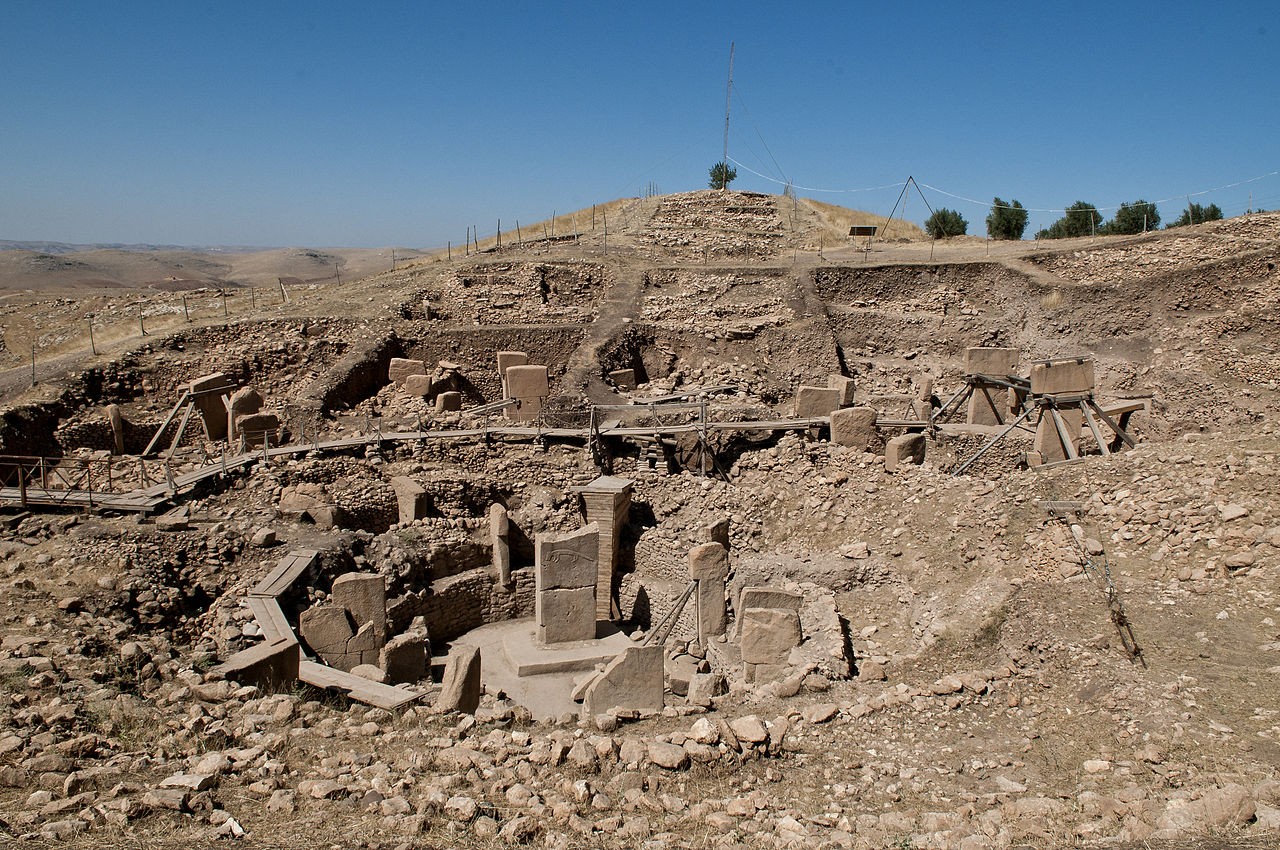


New Studies Indicate That Göbekli Tepe May Be Older Than Previously Thought, Rekindling The Debate About When Humans Began To Erect Complex Monuments.
When Göbekli Tepe was first excavated in the 1990s, it already seemed time-displaced. A monumental complex made of stone pillars up to 6 meters high, some weighing over 20 tons, richly decorated with animal reliefs, did not fit with the classic image that archaeology had of the hunter-gatherers at the end of the last Ice Age. Nevertheless, the initial dating — about 11,500 to 12,000 years ago — was accepted as a safe limit. Now, new analyses are pushing this story even further back, opening a profound debate about when, how, and why humans began to build monuments.
The central point of this discussion is that Göbekli Tepe may not just be an exceptional isolated site, but the most visible remnant of a much older and more complex cultural process than previously thought. Recent studies of stratigraphy, soil micromorphology, and analysis of lithic tools suggest phases of occupation predating the more well-known monumental structures, possibly dating back several centuries or even millennia beyond the traditionally reported date.
What Makes Göbekli Tepe So Out of The Archaeological Norm
Before Göbekli Tepe, the consensus was relatively simple: first came agriculture and animal domestication; then, with food surpluses, permanent villages, social hierarchies, and finally, monumental constructions emerged. Göbekli Tepe reverses this logic.
-
He started running at 66 years old, broke records at 82, and is now a subject of study for having a metabolic age comparable to that of a 20-year-old, in a case that is intriguing scientists and inspiring the world.

-
Oldest tree on the planet reappears after 130 years of searches: Wattieza, 385 million years old, was 10 meters tall and had no leaves or seeds; Gilboa fossils in New York solved the mystery in 2007.

-
A 48-square-meter house assembled in hours with 4,000 bricks made of recycled plastic that does not absorb moisture, has natural thermal insulation, and costs less than 90,000 reais in a complete kit.

-
Luciano Hang revealed that Havan’s air fleet has already accumulated more than 20,000 landings, 10,000 flight hours, and 6 million kilometers traveled, and he says that without the planes, the company would never have grown so quickly.




There, there is no clear evidence of established agriculture at the time of the construction of the great stone circles.
The remnants indicate highly organized hunter-gatherer societies, capable of mobilizing large human groups to extract, transport, and erect enormous limestone blocks.
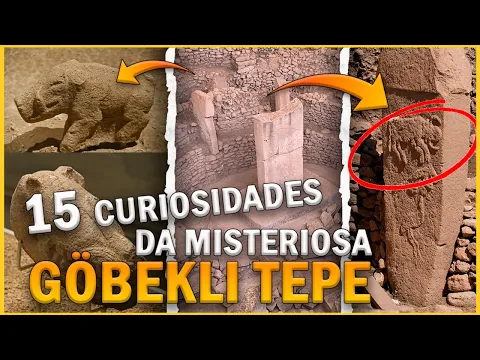
The “T” shaped pillars are particularly intriguing. Many archaeologists interpret these shapes as stylized human representations, with arms, hands, and even belts sculpted in relief. This suggests not only technical skill but also a sophisticated symbolic system, something that was traditionally believed to emerge only much later in human history.
The New Clues Indicating An Even Earlier Occupation
The recent debate is not based on a single sensational discovery, but on a body of evidence that, taken together, raises suspicions about the traditional chronology.
The microscopic analysis of soils revealed layers of human activity predating the great constructions, including remnants of hearths, fragments of tools, and footprints that do not fit perfectly within the already accepted period.
Moreover, comparative studies with other sites in the Anatolian region show similar technological patterns in stone tools that may be even older.
This suggests that the knowledge required to plan Göbekli Tepe did not come from nowhere but was inherited from previous generations, possibly long before 12,000 years ago.
Another important point is that only a small fraction of the site has been excavated so far. Conservative estimates indicate that over 90% of Göbekli Tepe remains buried. What has already been revealed may just be the “monumental phase” final of a place that has been used for much longer.
Monuments Before Agriculture: A Radical Shift in Paradigm
If Göbekli Tepe really began to be used before the currently accepted date, it reinforces an idea that has been gaining traction among some researchers: that the construction of monuments and ritual practice may have been a driving force for the emergence of agriculture, rather than a consequence of it.
In other words, large social gatherings, collective rituals, and the need to feed large groups gathered periodically could have pushed these communities to experiment with systematic plant cultivation.
In this scenario, religion, symbolism, and social organization would have preceded agricultural economics, completely changing the classic narrative about the birth of civilization.
Why This Hypothesis Meets So Much Resistance
Proposals that push Göbekli Tepe into an even more distant past face natural resistance within the academic community. Archaeology works with concrete evidence and rigorous dating, and chronological revisions require multiple independent confirmations.
Many experts argue that, so far, the most reliable radiocarbon datings continue to point to about 11,500 years ago.
However, even the most cautious researchers recognize that Göbekli Tepe did not emerge in a cultural vacuum.
The discussion is not just “how many years old it is”, but what this implies about the cognitive, social, and symbolic capabilities of humans at the end of the Pleistocene. At this point, the site has already forced archaeology to abandon overly linear models of cultural evolution.
The Broader Impact on The History of Humanity
If the bolder hypotheses are confirmed, Göbekli Tepe will cease to be merely “the oldest temple in the world” and become evidence that complex societies existed long before textbooks suggest.
This does not mean civilizations in the classical sense, with cities and writing, but communities capable of planning monumental collective projects, sharing myths, symbols, and a structured worldview.
This revision has profound implications. It affects how we understand the origin of social inequality, organized religion, architecture, and even the very notion of human progress. Instead of a straight line leading from simple survival to complexity, history may have been marked by advances, setbacks, and social experiments forgotten by time.
A Site That Still Holds More Questions Than Answers
Göbekli Tepe continues to be excavated, studied, and debated. Each new research season brings data that, instead of resolving the mystery, often deepens it. The possibility that the site is even older than previously thought is not just a chronological curiosity; it is an invitation to rethink the foundations of human history.
As much of the complex remains buried, the feeling among researchers is clear: Göbekli Tepe has not yet told its complete story.
And when it does, it may force archaeology — once again — to rewrite entire chapters on when, why, and how humans began to build the symbolic world we, in a sense, still inhabit today.








A Civilização Perdida do mundo não é só Göbeklitepe, tem também Karahantepe, Sayburç, etc.. É a maior descoberta arqueológica da história da humanidade.