





 Portuguese
  English
  Spanish
  5 min of reading
  0 comments


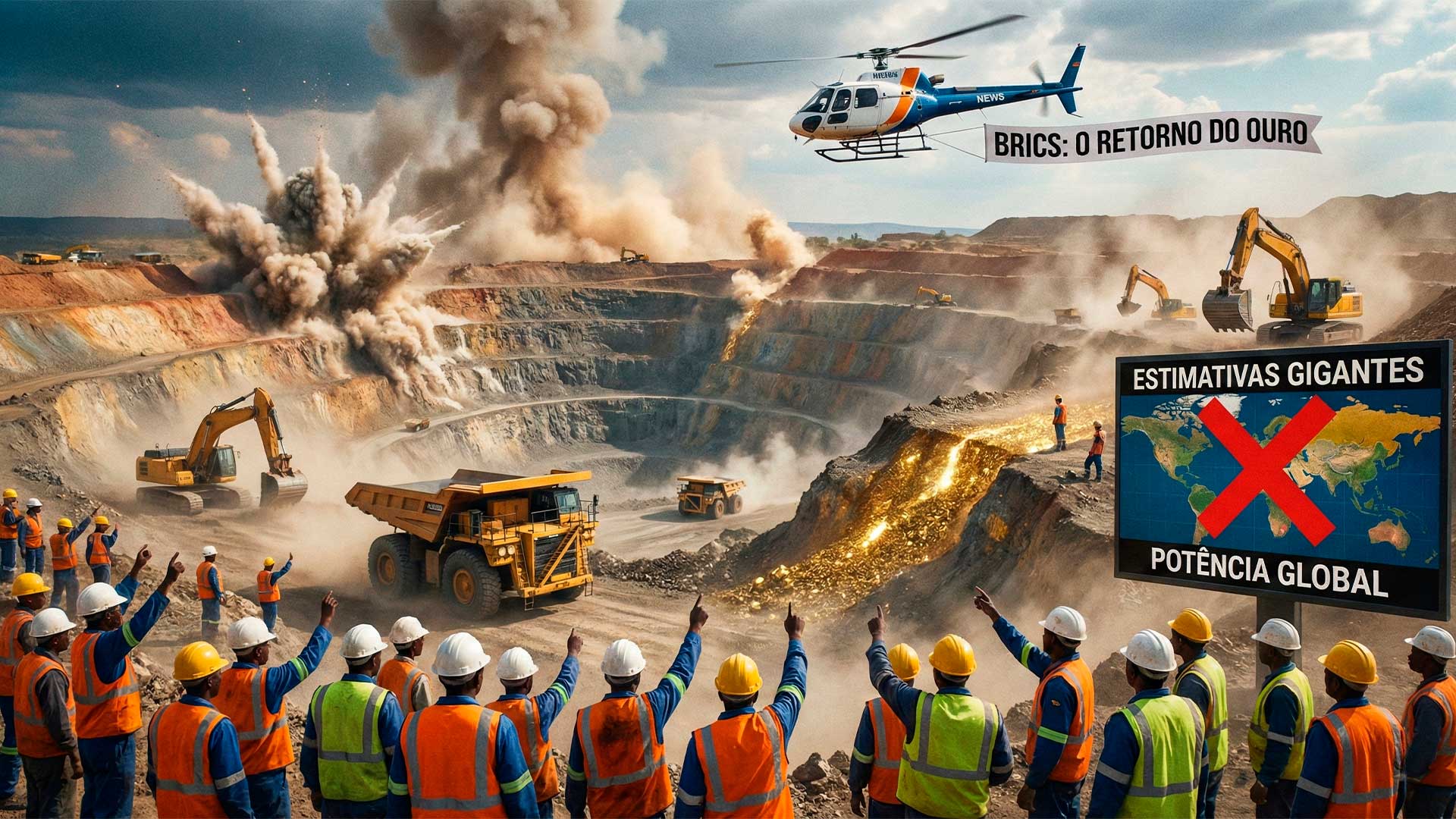
Studies Highlight That the Witwatersrand Region in South Africa Still Concentrates Gold on a Historical Scale, Which Reopens Discussions About Jobs, Costs, and Mining Risks
The South Africa, a member of the BRICS, has gained attention in the gold market again due to new scientific readings and data revisions about the Witwatersrand basin, one of the largest gold provinces in the world. The focus is not on a “secret mine” discovered from scratch, but on the extent of what may still exist in the rocks and waste of an area mined for over a century.
According to academic research and technical reviews, Witwatersrand remains a rare case in economic geology for concentrating gold in specific layers of conglomerates, the so-called “reefs.” Therefore, the subject reappears strongly whenever there are advances in mapping, structural modeling, and re-evaluation of the material already extracted.
The region is located around Johannesburg, a city that grew directly tied to the gold rush that began at the end of the 19th century. Today, the debate is less about rush and more about viability, as part of the remaining gold is in deep areas, difficult to access, and with high costs.
-
The Argentine government celebrates the lowest poverty rate in 7 years, but experts warn that the methodology has changed, real wages have fallen, unemployment has risen, and the number of people on the streets of Buenos Aires has increased by 57% since Milei took office.

-
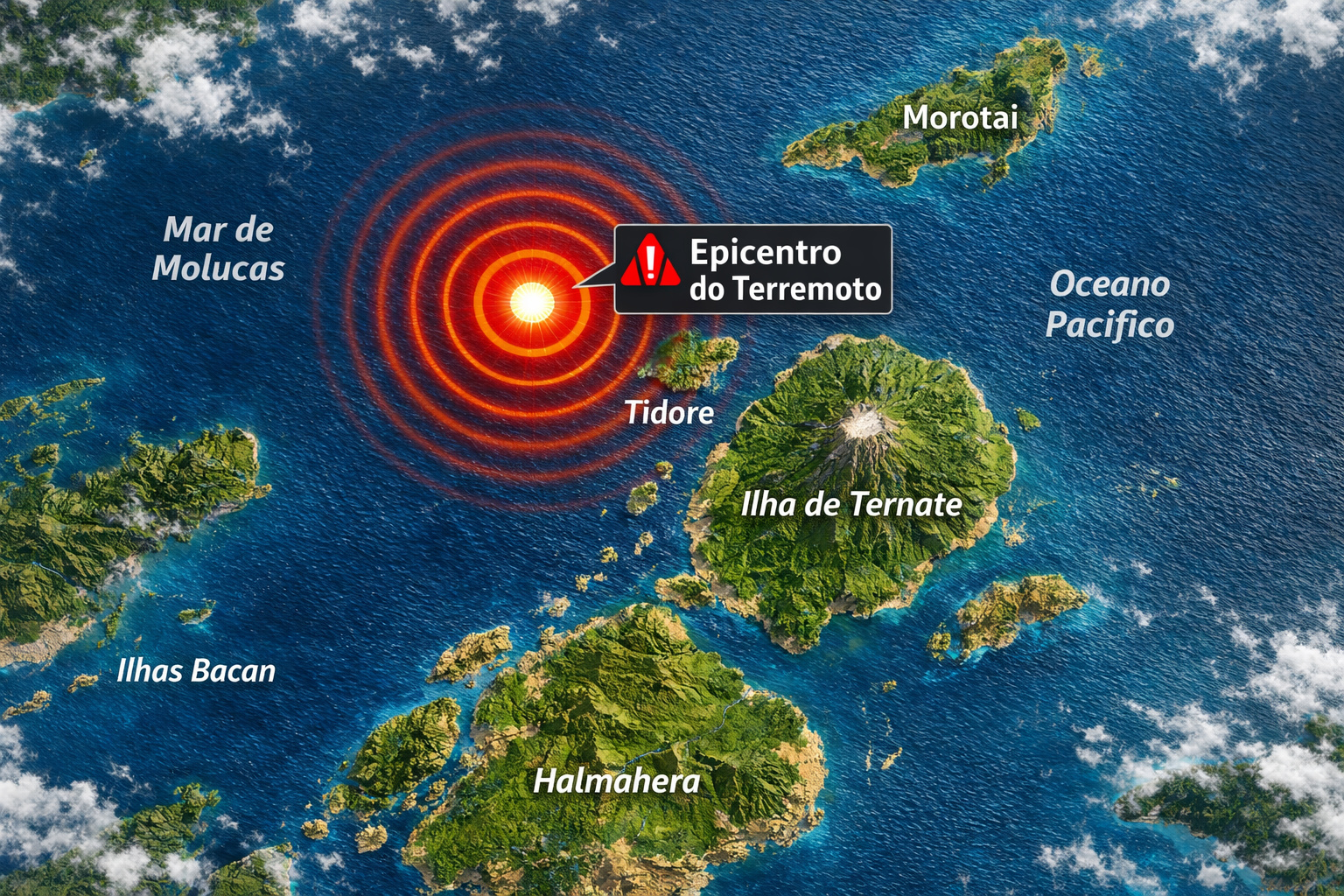
7.8 magnitude earthquake in Indonesia frightens the population, triggers tsunami alert, and hits an island with over 200,000 inhabitants this Thursday.
-
Google will finally let you change that embarrassing Gmail address you created in your teenage years without losing any accounts, logins, or old emails: the feature is already available in the United States.

-
Heading to Brazil in a Bonanza F33 single-engine aircraft: a couple departs from Florida on a visual flight, makes technical stops in the Caribbean to refuel and organize paperwork, and begins the staged crossing until they reach the country.


Even so, estimates in the scientific literature indicate that the gold account has not yet closed, and there could be tens of thousands of tons remaining when adding underground, deactivated mines, and surface deposits.
What Is Exactly Being Called a Discovery of Thousands of Tons
The term “discovery” has been used broadly, but most of what exists solidly so far relies on estimates and reinterpretations of already known data, not on a single pinpointed discovery with disclosed coordinates. In other words, the novelty usually lies in the understanding of the distribution of gold and in refining the accounts of what still remains.
An important reference is the discussion about how much gold still remains in the Witwatersrand system, also considering material in waste and areas outside current concessions. There are studies that calculate historical production in the range of tens of thousands of tons and, from that, project remaining reserves on a similarly massive scale.
Another point that fuels confusion is the mention of high altitudes, in the range of about 1,700 meters to nearly 1,900 meters above sea level. This describes the plateau and the crest of Witwatersrand where the rocks appear and where mining developed, not the underground depth of the mining fronts.
Why Witwatersrand Is So Different on the Gold Map
Witwatersrand is famous for concentrating gold in ancient conglomerates, associated with sedimentary processes and later reworking, and not just by magmatic veins as in many other gold provinces. According to studies, the scenario involves very ancient rivers and continental environments that deposited rich sediments, later modified by metamorphism and fluid circulation.
The age of this system is measured in billions of years, with research placing the basin in intervals of the Archean. This temporal scale helps to understand why geologists treat Witwatersrand as a “natural laboratory” to discuss the origin of gold and models of supergiant deposit formation.
What Could Change in the Economy of Johannesburg and South Africa
In history, gold was crucial in transforming Johannesburg into an economic hub, and the urban occupation itself followed the mining. The city was born and grew from the discovery of the Main Reef at the end of the 19th century, attracting investment, labor, and infrastructure around the gold production chain.
Today, the potential impact of new phases of exploration depends on a central detail: cost. South African gold mining is marked by deep operations, which require ventilation, cooling, vertical transportation, and substantial infrastructure, putting pressure on expenses and operational risks.
This means that “having gold underground” is not the same as “being able to produce gold profitably.” Viability depends on international price, exchange rate, energy, security, and productivity, as well as environmental permits and regulatory stability.
Still, revisions of reserves and reprocessing of waste can generate economic effects more quickly than opening new deep fronts. In practical terms, recovering gold from already moved material can combine less geological risk with different environmental and technological challenges.
There is also a long-term argument. If the literature is correct in suggesting a very large remaining volume, it keeps South Africa on the strategic radar for the metal, both for export and for refining chains and mining services that orbit the sector.
What Does This Represent for the Global Market and for the BRICS
Witwatersrand has already been pointed out as responsible for a huge slice of the gold produced in the world, and this memory weighs on investors’ perception. When reports and studies reinforce that the system may still hold gold on a relevant scale, the market tends to read it as a sign of potential supply in the long term, even if not immediately.
In the context of the BRICS, the discussion gains a geopolitical layer because gold is seen as a reserve asset and financial instrument in times of uncertainty. Even without any announcement of monetary policy, the simple increase in attention on a significant gold district in a country within the bloc tends to make headlines.
However, there is an important limit. Future supply only consistently influences prices when there are funded projects, production schedules, and proven operational capacity, something that does not always accompany headlines about “thousands of tons.”
The Social and Environmental Costs That Could Stifle Enthusiasm
The greater the promise, the higher the demand for responsibility. Gold mining involves known liabilities, such as waste, dust, water management, and contamination risk, as well as labor conflicts and impacts on surrounding communities.
There is also the delicate issue of artisanal mining and informal mining in abandoned areas, which tends to grow when the economy tightens and when there is existing underground infrastructure. This scenario adds pressure for oversight and solutions that reduce human risk and crime associated with the metal.
If Witwatersrand returns to the center of a new wave of investments, the likely controversy will not be about “whether there is gold,” but about who benefits, who pays the environmental bill, and what working conditions will be accepted to extract wealth at increasingly challenging depths.
If you think this wealth could accelerate development or just repeat inequality and environmental impact, leave a comment. It is worth discussing whether the “gold of BRICS” is an economic solution or just another cycle that benefits a few and leaves the burden for many.










-

-

-

11 pessoas reagiram a isso.