





 Portuguese
  English
  Spanish
  3 min of reading
  0 comments


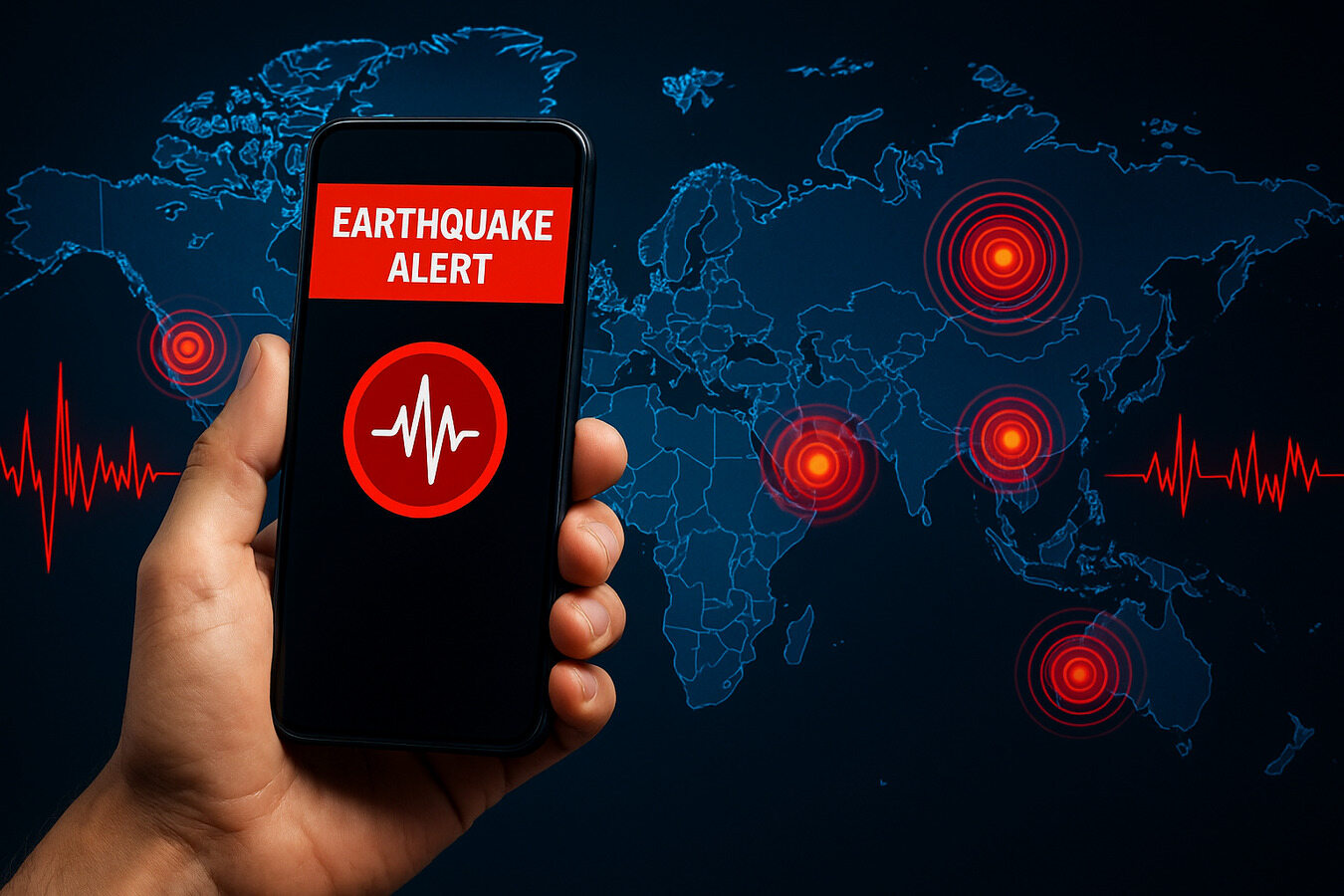
With Data From 2 Billion Cell Phones, Google System Has Issued Over 1,200 Earthquake Alerts In 98 Countries
Google has turned cell phones into safety tools. The company revealed that over 2 billion Android smartphones have been used as sensors to detect earthquakes in real time. The system, called Android Earthquake Alerts (AEA), managed to issue 1,279 alerts in 98 countries between 2021 and 2024.
The basis of this system lies in accelerometers, common sensors in cell phones. These devices record sudden movements and, using algorithms, can identify tremors.
Even without the precision level of traditional seismometers, the volume of data makes up for it. By gathering information from billions of devices, Google has built a network capable of detecting earthquakes with effectiveness comparable to that of national systems.
-
Scientists discover in Fiji that a piece of land surrounded by mangroves is actually a giant mound of shells discarded by ancient inhabitants over 1,200 years ago.

-
No one was able to prove for over 500 years that this medieval city existed, until ground-penetrating radar mapped streets, houses, and entire structures beneath the soil of Norway, and the excavation confirmed a complete preserved city where there was once only legend.

-
In the United States, a valley 86 meters below sea level has reached 56.7°C and remains the place with the highest air temperature ever recorded on Earth, a direct result of a terrain that traps heat between high mountains in the midst of the desert.

-
Goodbye clothes with odors from use: Samsung’s device uses high-temperature steam, eliminating up to 99.9% of bacteria, removing dust mites, and neutralizing odors directly in the wardrobe without the need for washing.


According to a study published on July 17 in the journal Science, the AEA captured over 11,000 earthquakes.
This expanded access to alerts, growing from 250 million people in 2019 to 2.5 billion currently.
Earthquake Alerts With Seconds to Spare
According to Google’s official statement, the idea is to provide a few precious seconds before the tremor hits. “This time may be enough to go down a staircase, move away from dangerous objects, and take cover,” the company emphasized.
Similar systems already exist in countries like China, Mexico, Japan, South Korea, and the United States. However, they rely on fixed seismic stations, which are expensive.
This means that many countries still lack any type of coverage. It was precisely this gap that Google aimed to fill using smartphone technology.
The system detects P waves, the first to arrive during an earthquake, which are faster but less destructive.
Then, it alerts users about the incoming S waves, which tend to cause more damage. The idea is to act before the worst happens.
Challenges Faced
Despite the success, researchers faced several challenges. Cell phone accelerometers are less accurate, and data varies according to the model of the device, type of soil, and building construction.
To work around this, Google used signal clustering techniques and data standardization.
Even so, some failures occurred. In February 2023, earthquakes in Turkey were underestimated by the system. The responsible parties attributed the error to failures in the algorithms, which have since been updated.
Another important point is the low false alert rate. Of the more than 1,200 alerts issued, only three were considered misleading: two due to storms and one due to an event that caused several phones to vibrate at the same time.
Reactions and Limits
According to data collected until March 2024, 85% of users who felt an earthquake confirmed that they received an alert. Of these, 36% were warned before the tremor, 28% during, and 23% afterward.
Even with good results, the system raises debates. Some experts question the fact that a tech giant operates a tool potentially linked to the lives of millions of people.
Google, for its part, states that the AEA is not meant to replace official systems but to complement them.
The study concludes that the global network of smartphones can significantly contribute to the improvement of early warning systems.
The rapid data collection and user feedback are powerful tools for adjusting and evolving the algorithms used.
With information from Live Science.






-

-

5 pessoas reagiram a isso.