





 Portuguese
  English
  Spanish
 4 min of reading
  0 comments


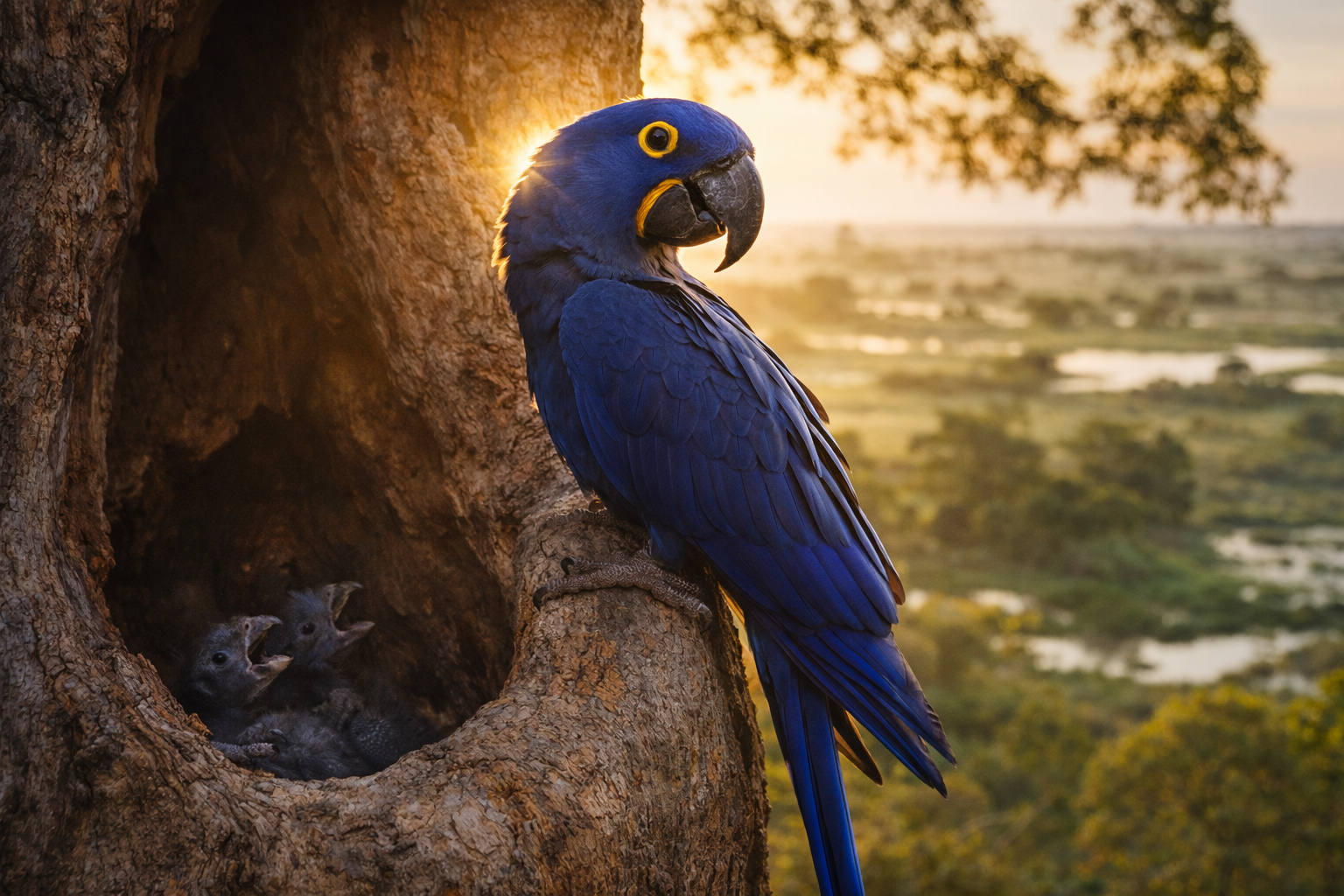
Active Nest of Blue Macaw Confirmed in the Southern Pantanal of Mato Grosso do Sul After Years Without Recorded Reproduction, Reinforcing the Direct Impact of Conservation.
The confirmation of an active nest of the blue macaw in the southern Pantanal of Mato Grosso do Sul marks a turning point for one of the most emblematic species of Brazilian fauna. The record was validated by field teams linked to the Instituto Arara Azul, an organization that has been monitoring populations, nesting cavities, and reproductive rates of the species in the region for decades.
This is significant because, in certain areas of the Pantanal, entire years have passed without confirmed reproduction, a direct reflection of historical pressures such as wildlife trafficking, loss of nesting trees, and changes in the hydrological regime. An active nest indicates not only presence but also minimum conditions of safety, food, and environmental stability for the species to reproduce again.
Why the Blue Macaw is So Sensitive to Reproduction
The blue macaw is the largest parrot in the world, potentially exceeding 1 meter in length from beak to tail and weighing around 1.3 kg. Despite its imposing size, its reproductive strategy is fragile:
-
Friends have been building a small “town” for 30 years to grow old together, with compact houses, a common area, nature surrounding it, and a collective life project designed for friendship, coexistence, and simplicity.

-
This small town in Germany created its own currency 24 years ago, today it circulates millions per year, is accepted in over 300 stores, and the German government allowed all of this to happen under one condition.

-
Curitiba is shrinking and is expected to lose 97,000 residents by 2050, while inland cities in Paraná such as Sarandi, Araucária, and Toledo are experiencing accelerated growth that is changing the entire state’s map.

-
Tourists were poisoned on Everest in a million-dollar fraud scheme involving helicopters that diverted over $19 million and shocked international authorities.


- forms long-term monogamous pairs;
- depends almost exclusively on natural cavities in old trees, such as the manduvi;
- generally produces only one viable chick per season, even when laying two eggs.
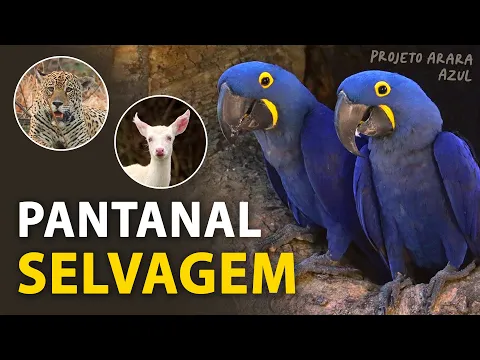

This means that any interruption in reproduction for several consecutive years leads to population declines that are difficult to reverse. For this reason, the confirmation of an active nest after a long interval without records is regarded as a high-value biological indicator.
The Direct Role of Conservation in the Return of Nests
Reproductive success did not happen by chance. Since the 1990s, conservation projects in the Pantanal have adopted specific strategies, such as the legal protection of nesting trees, installation of artificial nesting boxes in critical areas, and continuous monitoring of breeding pairs. In parallel, educational actions with rural property owners have reduced the removal of chicks and the cutting down of key trees.
Long-term data show that regions with continuous monitoring exhibit significantly higher reproduction rates than areas without project presence. The newly confirmed nest is precisely located in one of these monitored areas, reinforcing the evidence that applied conservation yields measurable results.
The Pantanal as the Last Great Refuge for the Species
Currently, the Pantanal hosts one of the largest wild populations of blue macaws on the planet, even surpassing records from the Amazon and the Cerrado. The combination of palm groves, the abundance of coconuts — the species’ food base — and large old trees creates an environment still functional for reproduction.
However, large-scale fires recorded in recent years, coupled with prolonged droughts, have put this balance at risk. The confirmation of an active nest in this context serves as a biological signal of resilience, but not as a guarantee of definitive recovery.
What a Single Nest Means for the Future of the Species
In absolute terms, one nest may seem insignificant. In conservation biology, however, each viable chick represents a strategic gain, especially in slow-reproducing species. A single successful pair can remain active for decades, producing descendants that help keep the population stable over time.

Additionally, the record strengthens public policies, justifies new investments in conservation, and increases international engagement, as the blue macaw is considered a flagship species for the protection of the Pantanal.
A Living Symbol That Extinction Is Not Inevitable
The confirmation of the active nest in the southern Pantanal of Mato Grosso do Sul does not erase the risks that the blue macaw still faces, but it sends a clear message: when habitat, science, and protection walk together, life responds.
In a biome pressured by climate change and extreme events, the image of a blue macaw returning to reproduce in the same territory where it nearly disappeared becomes one of the strongest symbols of hope for conservation in Brazil today.








-

-

-

-

-

-

53 pessoas reagiram a isso.