





 Portuguese
  English
  Spanish
 5 min of reading
  0 comments



Sustainable Technology Arrives in Brazil and Transforms Methane, a Polluting Gas, into Graphene and Clean Hydrogen, Boosting Industrial Innovation, Decarbonization and New Strategic Markets in South America.
Brazil has taken a prominent position in the industrial innovation landscape by forming a partnership that introduces a groundbreaking technology capable of transforming a polluting gas that is highly harmful to the climate into graphene and clean hydrogen, two essential inputs for the new sustainable industrial economy in South America.
According to a publication by FIEMG this Wednesday (4), the initiative unites the Brazilian Nanum Nanotechnology with the British Levidian and marks a significant advance for the national industry by integrating technological innovation, decarbonization, and economic value generation. The agreement has been recognized as a step toward reducing emissions and increasing industrial competitiveness without compromising performance or production scale.
Groundbreaking Technology Transforms Polluting Gas into Graphene and Clean Hydrogen
The partnership guarantees exclusivity for the implementation of the technology in South America, positioning Brazil as a regional hub for advanced production of strategic materials. The introduced technology in Brazil, known as LOOP, was developed by Levidian to convert methane, a polluting gas with a high global warming potential, into graphene and clean hydrogen through microwave plasma.
-
The Brazilian state accelerates industrial competitiveness with a focus on the extraction of strategic minerals to boost the energy transition in Goiás.

-
A Canadian retiree creates a hydroelectric system on a real river, generating energy continuously throughout the day and demonstrating how the power of water can supply a house with stability even in a simple structure.

-
Petrobras reaffirms its commitment to the market and ensures that it will carry out the energy transition safely to maintain national sovereignty.

-
Researchers discover a possible hydrogen deposit of up to 46 million tons beneath an ancient coal basin, and the volume could exceed half of the entire global production.


Unlike traditional processes, the technology operates under low temperature and pressure conditions. As a result, there is a direct breakage of the methane molecule without combustion. This differential reduces environmental impacts and enhances process efficiency, making the solution compatible with modern industrial decarbonization strategies.
Therefore, the groundbreaking technology represents a concrete alternative to transform environmental liabilities into high-value industrial assets, strengthening the industry of South America.

Strategic Partnership Positions Brazil as Leader in South America
Nanum Nanotechnology, a Brazilian company affiliated with the Union of Pharmaceutical and Chemical Industries for Industrial Purposes in the State of Minas Gerais (SINDUSFARQ), part of the FIEMG system, has signed the memorandum of understanding with Levidian to bring the LOOP technology with regional exclusivity.
This agreement places Brazil at the center of the dissemination of groundbreaking technology in South America, creating a favorable environment for industrial innovation and the development of advanced technological applications.
At the same time, the partnership strengthens national production capacity, allowing solutions based on graphene and clean hydrogen to be developed and applied locally, with greater quality control and scale.
Graphene and Clean Hydrogen as Vectors of the New Sustainable Industry
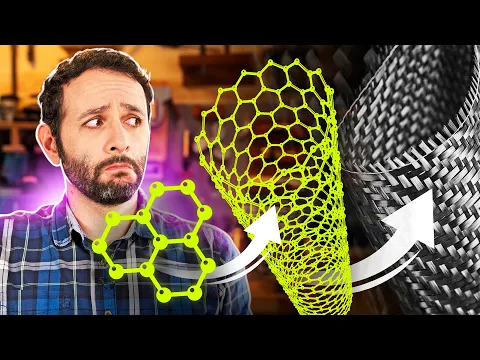
Graphene is internationally recognized for its exceptional properties, such as high mechanical strength, electrical conductivity, and chemical stability. The hydrogen produced by the LOOP process is classified as clean hydrogen, as it does not rely on traditional emission-intensive routes.
The conversion of a polluting gas into graphene and clean hydrogen creates an industrial model aligned with global environmental demands. Additionally, it expands Brazilian industry’s access to strategic inputs. This model strengthens production chains, reduces external dependency, and stimulates applied innovation, benefiting various industrial sectors in South America.

Leadership Views on the Groundbreaking Technology
According to Aílton Ricaldoni Lobo, president of the Board and majority shareholder of Nanum Nanotechnology, the partnership reinforces the company’s strategy to expand access to advanced materials in Brazil and enable high-performance industrial applications.
The CEO of Nanum, José Fernando Contadini, emphasizes that the integration of the groundbreaking technology with the company’s production structure will allow offering one of the most comprehensive portfolios of graphene-based solutions to the national and regional market, with scale and consistency.
From Levidian’s side, commercial director Ian Hopkins states that Brazil stands out as a strategic market with a growing demand for industrial applications that combine productive efficiency and emissions reduction, especially in South America.
Industrial Impacts of Using Graphene and Clean Hydrogen
The implementation of LOOP technology in Brazil will enable practical and measurable advances for different industrial segments. Among the main benefits are applications in:
- Lubricating oils formulated with graphene, which significantly extend the lifespan of machines, engines, and equipment by reducing friction and wear on components, potentially contributing to reduced fuel consumption;
- Industrial paints and coatings, with greater corrosion and wear resistance, extending the lifespan of assets and structures;
- Advanced composite materials, especially polymers and plastics with better mechanical performance and lower weight;
- Concrete with graphene, which shows increased strength, reduced curing time, and productivity gains.
In all these cases, the use of graphene and clean hydrogen derived from a polluting gas contributes to more efficient, sustainable, and competitive processes in South America.
Groundbreaking Technology and Industry Decarbonization
The conversion of methane into high-value-added materials reinforces an industrial approach oriented towards a low carbon economy. Instead of just mitigating emissions, the groundbreaking technology creates economic value from a polluting gas.
This model aligns with global sustainability strategies that prioritize innovation, efficiency, and reduction of environmental impacts throughout the entire production chain.
At the same time, the technology strengthens the competitiveness of the Brazilian industry, enabling it to meet increasingly demanding environmental markets.
Expansion of Industrial Innovation in South America
With the exclusivity of LOOP technology, Brazil becomes a regional hub for the development of applications based on graphene and clean hydrogen. This creates opportunities for knowledge transfer, development of new products, and strengthening of the industrial ecosystem.
Moreover, the presence of groundbreaking technology in the country contributes to attracting investments and strategic partnerships, amplifying the positive impact of innovation throughout South America. This movement consolidates Brazil as a regional reference in sustainable and high-performance industrial solutions.
A New Chapter for the Brazilian Sustainable Industry
The partnership between Nanum Nanotechnology and Levidian inaugurates a new moment for the Brazilian industry by introducing a groundbreaking technology capable of transforming a polluting gas into graphene and clean hydrogen, with real applications and potential industrial impact.
The agreement demonstrates that innovation, sustainability, and economic growth can go hand in hand, strengthening the national industry and increasing its relevance in South America.
By converting environmental challenges into technological opportunities, this initiative points a clear path for the industrial future: more efficiency, lower environmental impact, and value generation based on proven innovation.







-

Uma pessoa reagiu a isso.