





 Portuguese
  English
  Spanish
  7 min of reading
  1 comment


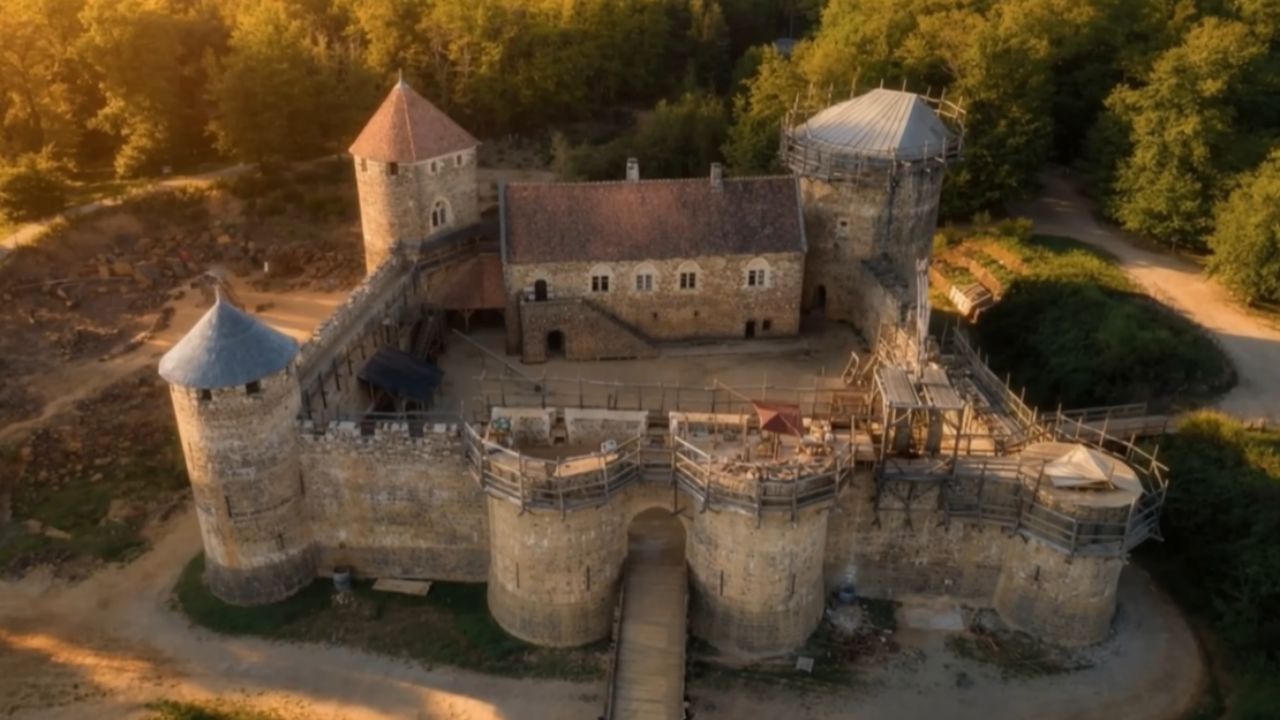


In France, Guédelon Castle Rises Six Planned Towers, Two Already Completed, Receiving About 300 Thousand Visitors Per Year to See a Castle Being Built with Techniques from 1228
One of the most curious experimental archaeology projects in the world is underway in the heart of France, featuring a castle. In the midst of the technological era, a group of historians, craftsmen, and medieval enthusiasts decided to build a castle from scratch, as if it were still the year 1228, using only tools, materials, and methods from that time. The result is a massive living construction site, where each stone, each beam, and each tile tells a story.
More than just raising walls, Guédelon Castle is an ambitious attempt to answer a simple and powerful question: how were castles really built in the Middle Ages. Since 1997, the project has grown year after year, with six towers planned, two already completed, and an annual flow of hundreds of thousands of visitors who closely observe a construction that progresses at a human pace, without hurry, modern machines, and with total fidelity to the medieval spirit.
The Idea That Transformed a Dream into a Castle
It all started with a castle restorer named Michel Guyot. He hired two specialists to assess whether it was worth restoring the ruins of an ancient castle in the region. In their report, the specialists concluded that those ruins had been built on the base of an even older castle and even sketched a drawing of what the original castle might have looked like.
-
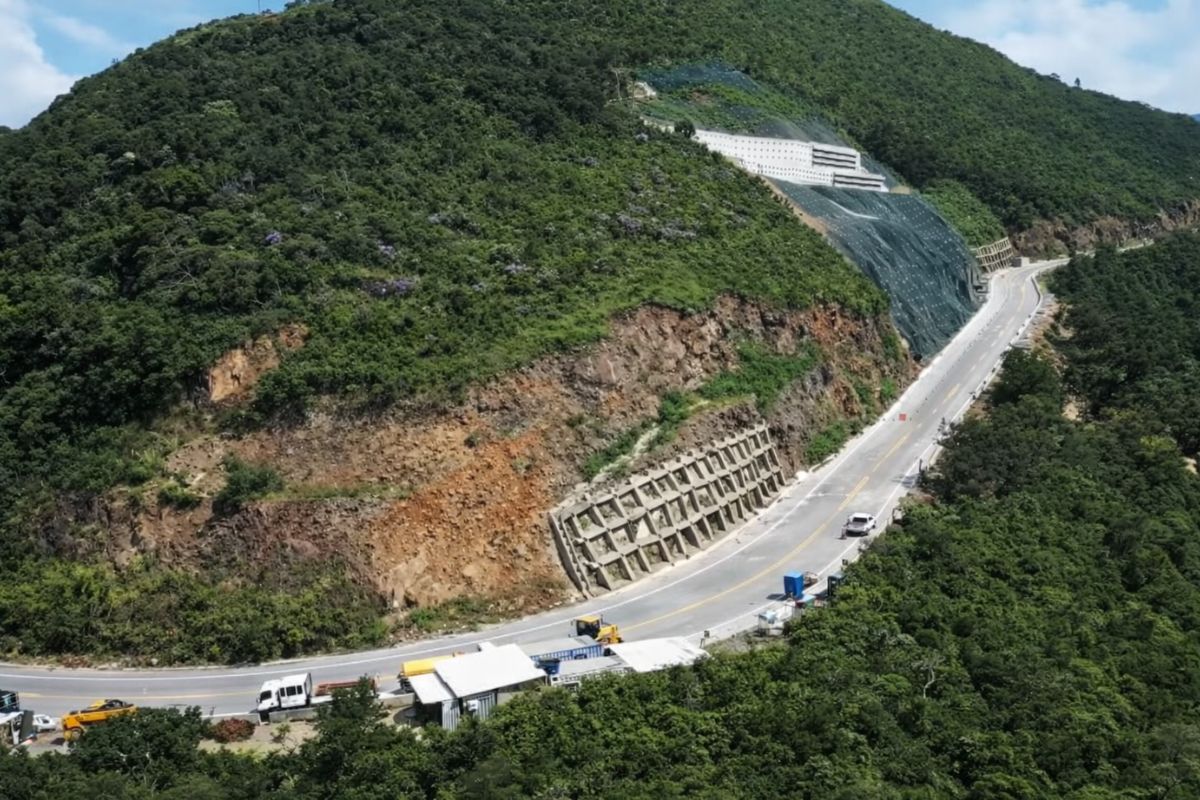
The section of Serra da Rocinha on BR-285 is now open in Timbé do Sul: 50 m tensioned curtains and top-down technique stabilize the slope, with a stairway duct controlling the water.
-
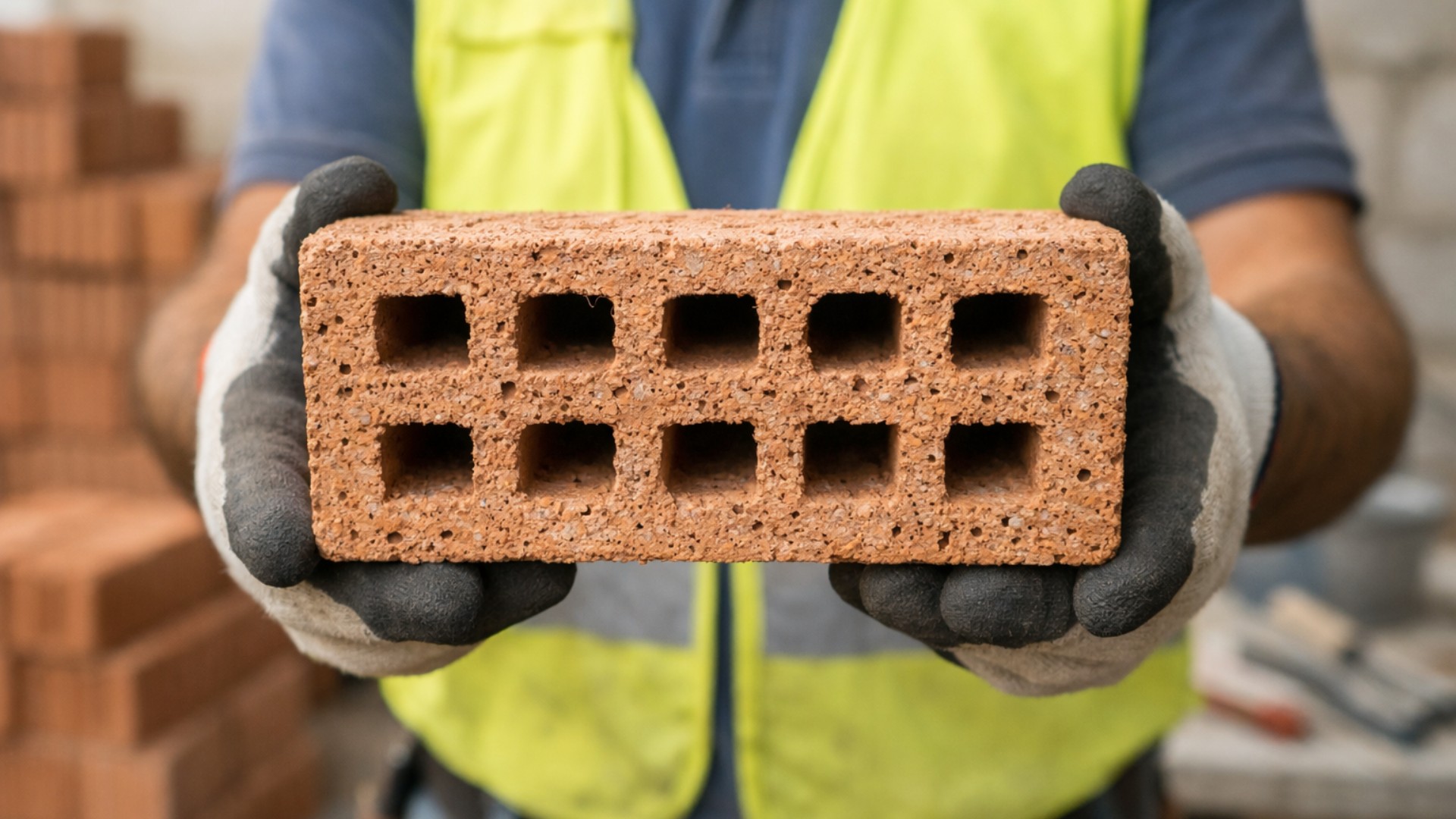
Scientists use sawdust mixed with clay to create a lighter brick, promising efficient thermal insulation and impressing by transforming waste into a solution for construction.
-
With a DNA shape, this bridge in Singapore draws attention in modern architecture and surprises tourists by transforming a simple crossing into an unforgettable visual experience in the urban heart.

-
Giant underwater pipeline begins to take shape with a R$ 134.7 million project at the Port of Santos: the 1.7 km structure uses 12-meter and 700 mm pipes to supply water to 450,000 people in Guarujá.


In a simple footnote, they wrote that reconstructing the Castle of Saint-Fargeau would be an incredible project. That phrase never left Guyot’s mind. Instead of merely restoring ruins, he made a bold decision: to abandon the restoration idea and start a completely new castle, authentic, built from scratch, as it would have been constructed in the Middle Ages. To do this, they chose and purchased a plot of land with easy access to stone, clay, wood, and water, just as a feudal lord would have done in the 13th century.
Guédelon Castle: A Medieval Open-Air Laboratory

Work on Guédelon Castle began in 1997, with land clearing and the hiring of the first workers. Historians and archaeologists wanted to go beyond theory. The goal was to feel, in practice, the challenges faced by medieval builders. Therefore, they established a golden rule: no modern machines or electric tools.
The construction has become a large experimental laboratory. Learning means doing, erring, testing, correcting, and trying again. In the beginning, the project divided opinions. Some people found the idea fascinating, while others called it madness. But when the site opened to the public the following year, interest spoke louder. Right in the first year, tens of thousands of visitors came to see, with their own eyes, a medieval castle rising before them, stone by stone.
Workshops, Tools, and Materials Like in 1228
To keep Guédelon Castle as authentic as possible, the entire surroundings were organized like a true village of medieval crafts. As construction progressed, new workshops emerged according to the needs of the next stage. First came the stone cutting workshop, then the carpentry shop, followed by the forge, the mortar workshop, and so on.
In the quarry next to the castle, the stone blocks are extracted by hand, with tools forged in the very forge. Each block is carefully shaped to fit the thick walls that define the silhouette of the castle. Instead of modern cement, the mortar is made with lime, sand, and water. Limestone is burned in a rustic oven to produce lime, which is then mixed right there to create the mass that binds the stones and coats the walls.
The wood used in the structure of the castle also follows the same principle. Trees are cut directly from the surrounding forest, transformed into beams and pieces by specialized carpenters. The structures are assembled with joints, wooden pegs, and, when necessary, handmade nails forged on-site. The main roofs receive handcrafted clay tiles, dried in the sun, and fired in ovens. The result is a set of slightly irregular tiles that reinforce the rustic and authentic aspect of the castle. In other supporting buildings, the roofs are made with wooden shingles, accentuating the medieval air of the whole set.
The Heart of the Castle and Its Defensive Walls
Within the walls, Guédelon Castle takes shape like a small world of its own. There is a large courtyard where people, animals, and materials circulate, and a main hall that functions as the heart of the castle. In medieval constructions, this was where communal meals, important meetings, and political decisions took place, always around a large table and a robust hearth.
The tall and thick walls protect the entire complex, while towers offer a privileged view of the surroundings. Small openings in the walls serve for defense with bows and arrows, allowing archers to hit enemies without fully exposing themselves. Every detail of the castle is designed to reconcile military functionality, daily life, and historical authenticity, from the thickness of the walls to the positioning of the windows.
Forgotten Crafts That Come Back to Life
One of the most fascinating aspects of Guédelon Castle is the gathering of crafts that have nearly disappeared over time. Masons, blacksmiths, carpenters, potters, basket makers, tapestry makers, and other craftsmen work every day to keep alive knowledge that was almost lost.
Iron is shaped in traditional forges, giving rise to tools, hinges, nails, and metal structures used in the castle itself. The basket maker produces baskets and straw utensils essential for transporting materials. The potter manufactures pots and ceramic vessels. The tapestry sector manages wool-based pieces. Each activity has its defined space, and each craftsman knows exactly where to find what they need, replicating the organization of a large medieval construction site.
Wheel Cranes, Mill, and Old-Fashioned Feeding
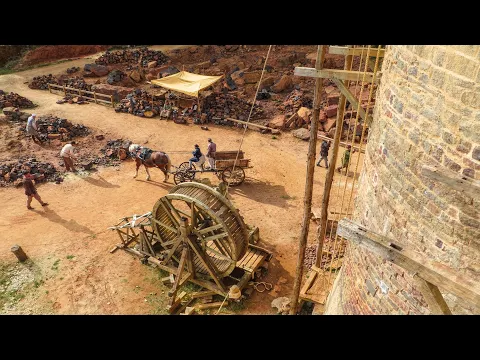

Another element that draws a lot of attention is the wheel cranes used on the Guédelon Castle construction site. Fully built from wood, these devices operate through human power. The worker walks inside a large wheel, and the movement lifts heavy loads like stone blocks and beams. It’s a simple yet efficient system that was one of the main lifting resources in the Middle Ages.
Even meals follow historical references. The food is simple, prepared with rustic utensils and recipes inspired by medieval cuisine, respecting the ingredients available at that time. A water wheel-powered mill produces flour the old-fashioned way. From there, the product goes directly to the kitchen, where bread is baked in clay ovens. Horses and donkeys are used for transporting stone, wood, and clay, while geese and other animals help complete the rural atmosphere. To enhance the immersion, all workers wear typical clothing, reinforcing the feeling that visitors have truly entered a construction site in the 13th century.
Tourism, Research, and Education in One Castle
Year after year, Guédelon Castle took shape. Foundations, walls, crane wheels, towers, and the great hall slowly emerged, always with a focus on historical fidelity. There is simply no final completion deadline. The work follows the human pace, and each stage can take months, just as it did in the Middle Ages. This slowness is part of the project’s meaning.
Besides being a construction site, the castle is open to the public. Visitors can observe the work of craftsmen, follow the use of tools, and understand, in practice, what the daily life of a large medieval construction was like. About 300,000 people visit the site each year, a number that forced the project to adopt a more robust tourist structure, with food and souvenir services. The revenue generated helps fund the continuation of the work, which has also received support from public funds at various times.
Many students and volunteers also participate in the construction of Guédelon Castle. They go there to learn more about the crafts of the Middle Ages and end up directly contributing to keeping alive a tradition that time almost wiped out. Thus, the castle has become, at the same time, a tourist attraction, classroom, and historical laboratory.
When the Castle is Finished, What It Will Represent
As the years passed, Guédelon ceased to be just an archaeological experiment and became one of the most impressive construction projects in the world. The castle is not only being built; it is being designed as a complete experience, reclaiming an old way of living, working, and organizing society.
Of the six towers planned in the architectural project, two are already completed. The others advance slowly, with new techniques being tested and perfected, always respecting the limits of historical references. Just as it happened in the Middle Ages, the work moves slowly, following the rhythm of the materials, the weather, the labor, and the constant learning.
When completed, Guédelon Castle will have become an authentic medieval castle erected in the 21st century, using methods from the 13th century. More than a monument, it will be proof that history is not just something read in books, but something that can be felt, observed, and lived in every stone placed, in every tool used, in every detail of the construction site.
And you, if you could spend a day at Guédelon Castle, would you prefer to watch the construction on the walls, observe the work in the forge, or see the wheel cranes in action up close?








As a textile artist I would rather work in the spinning and weaving areas. It would be a dream come true, to be part of a functional living adventure.