





 Portuguese
  English
  Spanish
  4 min of reading
  2 comments


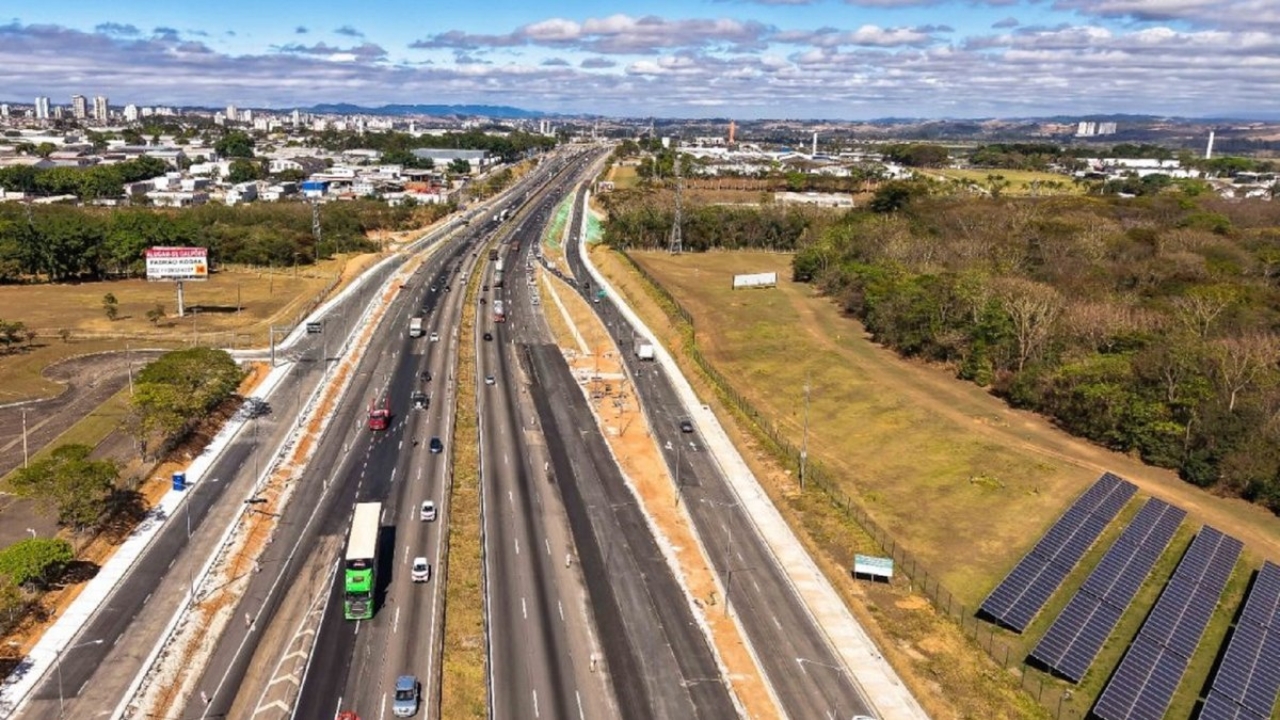


The Winding Section Between Rio and São Paulo Undergoes an Unprecedented Transformation: 24 Overpasses and a Modern Layout Promise to Revolutionize National Transportation
The Presidente Dutra Highway (BR-116), which connects the two largest economies in the country, is responsible for moving half of Brazil’s Gross Domestic Product (GDP). But anyone who has crossed the section of the Serra das Araras, between Piraí and Paracambi, in Rio de Janeiro, knows well the chills caused by the tight curves and the winding layout inherited from the 1920s. Now, one of the most emblematic and dangerous sections of the highway is undergoing the largest transformation in its history.
With half of the works already completed, the concessionaire CCR RioSP promises to deliver by 2027 a new Serra das Araras, completely reformed and safe. The project, estimated at R$ 1.5 billion, includes the construction of 24 overpasses, an expansion to four lanes in each direction, and the definitive elimination of the steep curves that have challenged drivers and truckers for decades.
The Modernization of a Historical Layout
The section of Serra das Araras was inaugurated in 1928, when road transportation was still in its infancy in Brazil. Since then, the growth of vehicle traffic, especially heavy cargo, has made the area a logistical bottleneck and a critical accident point. The current project aims to correct a historical problem: the narrow layout filled with tight curves that, to this day, limits the maximum speed to 40 km/h in several areas.
-
Friends have been building a small “town” for 30 years to grow old together, with compact houses, a common area, nature surrounding it, and a collective life project designed for friendship, coexistence, and simplicity.

-
This small town in Germany created its own currency 24 years ago, today it circulates millions per year, is accepted in over 300 stores, and the German government allowed all of this to happen under one condition.

-
Curitiba is shrinking and is expected to lose 97,000 residents by 2050, while inland cities in Paraná such as Sarandi, Araucária, and Toledo are experiencing accelerated growth that is changing the entire state’s map.

-
Tourists were poisoned on Everest in a million-dollar fraud scheme involving helicopters that diverted over $19 million and shocked international authorities.


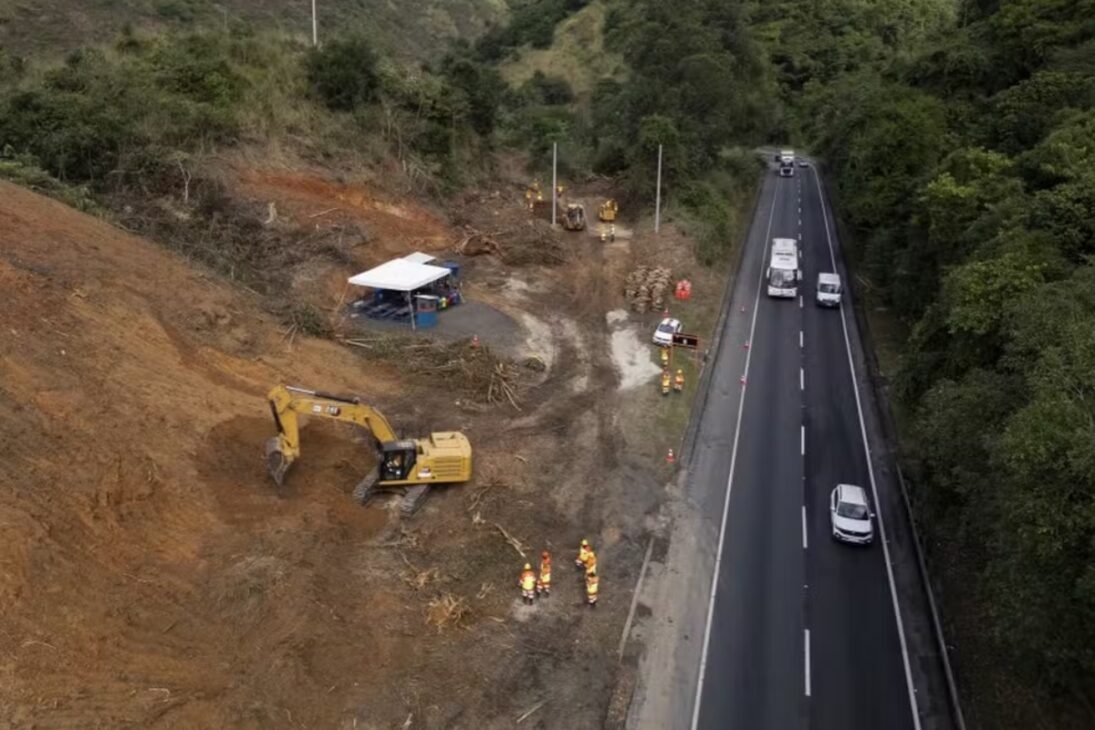
With the new design, the allowed speed is expected to double to 80 km/h, reducing travel time and increasing the flow of cargo transport between Rio de Janeiro and São Paulo, a vital axis for industry and national commerce. According to CCR, the expectation is that the descent time from the mountain will be halved, while the ascent will be about 25% faster.
In addition to the new lanes and overpasses, the project includes escape ramps, pedestrian walkways, safe stopping areas, and a complete drainage system to manage rainwater runoff. These improvements benefit not only drivers but also neighboring communities and the safety of workers who rely on the Dutra daily.
Precision Engineering and Environmental Challenges
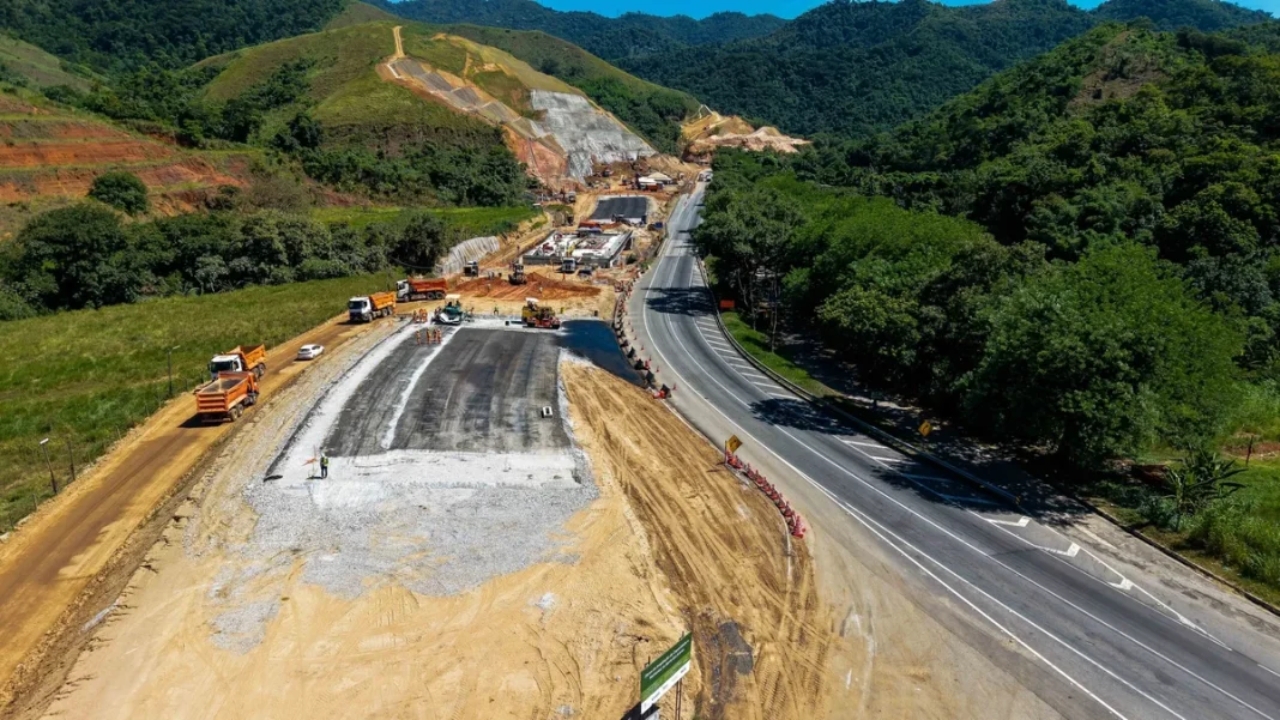
Executing a project of this magnitude in a mountainous terrain is a technical challenge comparable to the country’s large infrastructure works. The rugged terrain demands deep excavations and complex containment solutions. To reduce environmental impact and accelerate the schedule, CCR set up crushing plants and pre-cast yards in Paracambi and Seropédica, allowing beams and concrete structures to be manufactured locally.
So far, more than 200 beams out of a total of 450 have already been installed. The intense work pace involves 24-hour shifts, with around 2,500 workers operating simultaneously on different fronts. The goal is ambitious: to complete the project one year ahead of the original deadline and deliver the new section by March 2027, marking a milestone for Brazilian road engineering.
Despite the optimism, the challenges are significant. Maintaining traffic on the old road during construction requires closures and temporary detours, which can lead to delays. Additionally, erosion control and environmental preservation are crucial aspects, as the Serra das Araras is home to one of the most sensitive Atlantic Forest areas in the South Fluminense region.
Economic and Logistical Impacts
The transformation of the Serra das Araras goes far beyond aesthetics or road safety. It is a logistical revolution with a direct impact on Brazil’s industrial competitiveness. A significant portion of manufactured products, agricultural goods, and industrial inputs that drive the economy of the Southeast passes through this section of the Dutra.
By eliminating dangerous curves and improving traffic flow, the new lane will reduce operational costs for carriers and logistics companies, as well as decrease fuel consumption and delivery times. The result will be a more efficient corridor capable of transporting goods with greater predictability and safety.
In addition to the direct benefits for transportation, the project also boosts the regional economy, creating jobs and increasing income in municipalities like Piraí and Paracambi, where the main construction sites are located. Local merchants and service providers are already feeling the positive impact of the presence of thousands of workers and investment in complementary infrastructure, such as energy, communication, and public transport.
A New Era for the Dutra
Once completed, the new layout of Serra das Araras is expected to signify the end of one of the most feared points on the highway and the beginning of a phase marked by modernization and efficiency. CCR RioSP estimates that the project will not only increase safety but also significantly reduce the number of accidents and forced stops caused by mechanical failures on steep ascents.
The federal government and the private sector consider the project a benchmark for future highway concession projects in the country. The model applied to the Dutra, which combines private financing, performance targets, and early delivery, could become a standard for other interventions in strategic corridors, such as BR-381 (Fernão Dias) and BR-040 (Rio–Juiz de Fora).
The new Serra das Araras is, therefore, a symbol of the effort to modernize Brazilian infrastructure. A section that, for decades, was synonymous with tension and risk is now transforming into a showcase of technology, planning, and safety. Brazil is bidding farewell to the curves that marked its road history and paving the way for a future of safer, faster roads, connected to the economy of the 21st century.









Metade do PIB? Tá de sacanagem. Informações sem procedência alguma. Jornalista de twitter.
Muito bom. Agora poderiam aproveitar para corrigir a aberração que foi feita no Edital de Concessão da Dutra, deixando todo o trecho do Retão de Jacareí sem pistas marginais. Logo o trecho do Retão de Jacareí, um dos pontos de maior tráfego em toda a Dutra, sendo um dos trechos mais perigosos da rodovia (algo que a própria ANTT reconhece), seja pela falta de capacidade de escoamento em horários de maior demanda, seja pela falta de segregação entre trânsito local e trânsito expresso. Não bastasse isso, ainda tem o intenso movimento pendular entre Jacareí e São José dos Campos, um dos maiores da rodovia. Mesmo com todas essas questões, a ANTT negou a ampliação das pistas marginais de São José dos Campos, para que elas tivessem continuidade pelo Retão de Jacareí.
Essa questão precisa ser revista, inclusive por questões de segurança para o usuário.