





 Portuguese
  English
  Spanish
  5 min of reading
  4 comments


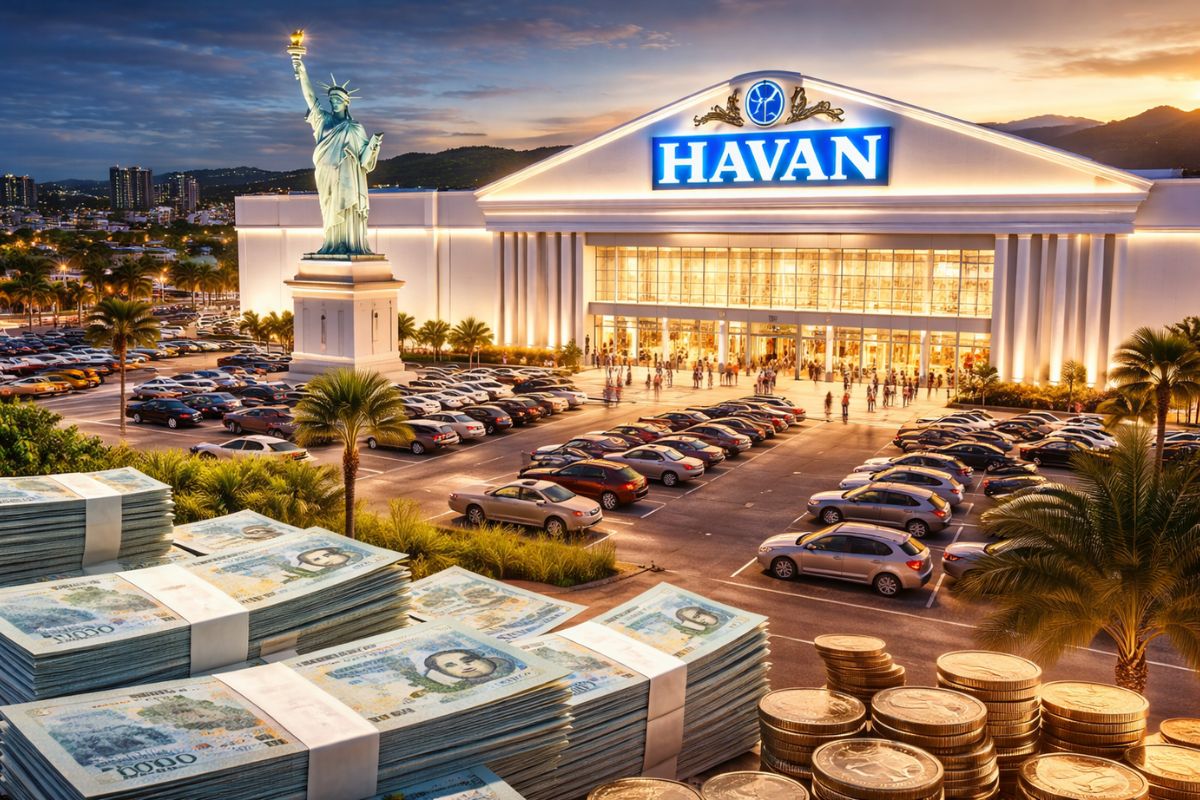


Havan Claims It Will Invest R$ 1.2 Billion by the End of 2026 to Open 15 New Stores, Reach 200 Units, and Launch Megastores Like the One in Goiânia, with 10,000 m² and 200 Direct Jobs, While Promising to Enter States Without Operations, with a Timeline Mentioned for March.
Havan, led by Luciano Hang, put numbers and deadlines on the table while detailing an expansion plan totaling R$ 1.2 billion by December 2026. The promise is to open 15 new stores, reach 200 units, and use Goiânia as a showcase for megastores, with 10,000 m² and around 200 direct jobs.
The move comes at a time when retail is competing on price, convenience, and territorial presence at the same time. Havan’s bet is that scale and reach will create an advantage, but execution depends on scheduling, workforce, and the ability to sustain large stores in different markets.
The Money, the Goal, and What Havan Is Saying It Wants to Buy

When discussing R$ 1.2 billion, Havan frames the plan as an investment distributed until the end of 2026, focusing on openings and physical structure.
-
The government requests the Federal Revenue Service for a new system to automate the income tax declaration, reducing errors, time, and bureaucracy for millions of Brazilians.

-
Pix in installments, international Pix, and contactless payment without internet: the Central Bank revealed the new features coming to the tool that is already used by almost every adult in Brazil.

-
Mercado Livre has just started selling medications with delivery in up to three hours to your door, and this move could completely change the way Brazilians buy medicines on a daily basis.

-
In Dubai, rising tensions from the war in the Middle East are causing super-rich individuals to leave the Gulf and direct their fortunes to a new financial refuge in Asia.


The public design is simple: 15 new stores to surpass 200 units, with megastores as the visible standard, and not just smaller street stores.
What lies behind the numbers is the practical question: why now. The implied argument is about occupying territory and competing for regional consumption.
When a chain aims for 200 units, it becomes less dependent on a single hub and more on dozens of medium-sized markets, and this reorganizes logistics, inventory, and hiring.
In the short term, the plan creates a direct effect: each announced opening comes with expectations of job opportunities and local commerce activity.
Havan repeats the megastore model and tries to turn openings into market events, without promising miracles: it’s expansion with a timeline, not a leap without a calendar.
At the same time, the size of the check itself exposes a common risk for large chains: the investment needs to pay off in different income realities, competition, and shopping habits.
R$ 1.2 billion buys a building, but it doesn’t buy demand, and that’s where execution, city by city, usually decides if the goal becomes routine.
Goiânia as a Starting Point and the Role of 200 Direct Jobs
The first piece of the timeline has already been showcased: the megastore inaugurated on January 31 in Goiânia, Goiás, was presented as unit number 188.
With over 10,000 m², it serves as a reference for what Havan intends to replicate throughout the year.
The most sensitive data for the city is employment. The company highlights around 200 direct jobs associated with the unit, a number often used as a gauge of immediate impact.
When a store of this size arrives, the fastest effect appears in hiring, even before any discussion about prices and market share.
Goiânia also helps answer where and how the strategy materializes: a large megastore, with a variety of categories, and operations designed to attract foot traffic.
This format tends to require parking, robust logistics, and a mix that supports repeat visits, not just curiosity about the opening.
That’s why 200 direct jobs become more than just a number: they signal the size of the operation, the capacity for turnover, and the ambition of the format. If Havan replicates scale in new areas, hiring becomes a thermometer of real pace, beyond the speech.
15 New Stores, 200 Units, and the Competition for Presence in States Without Operations
The declared goal is straightforward: 15 new stores to reach 200 units by 2026. The plan also includes the intention to enter states where it has not yet operated, mentioning Amapá, Roraima, and Ceará, in addition to strengthening regions where the chain already operates.
The schedule for the first quarter appears as a sign of rhythm. Openings are mentioned in February, in Maringá, Paraná, and in March, in Curitiba, also in Paraná. The idea is to maintain a flow of openings that sustains the expansion narrative, without relying solely on a major opening.
The promise of being present in all states by the end of the year amplifies the challenge, as it turns expansion into a national coverage issue. Entering states without operations is more than just opening a door: it’s building a supply chain, training, and adapting to local competitors, which often requires months of stabilization.
In this calculation, 15 new stores are not just numbers; they represent decisions about location, cost, and strategy. And Havan itself recognizes, albeit indirectly, that coexistence with regional retail and consumption differences determines whether 200 units will be a sustainable milestone or just a round number.
What Remains for Consumers and the Local Economy by the End of 2026
From the consumer’s perspective, Havan’s expansion tends to increase the supply of categories mentioned as part of the portfolio, such as clothing, electronics, and decor items. The chain bets on assortment breadth and pricing strategy, but the actual result depends on stock, turnover, and shopping experience, which vary according to city and income.
For the local economy, the initial impact usually focuses on employment and services. Each unit is described as capable of generating, on average, around 200 direct jobs, reinforcing the narrative of regional development associated with the arrival of the megastore.
However, there’s a less obvious layer: the entry of a large chain can raise competitiveness and pressure traditional commerce, especially in cities where retail is more fragmented. The same movement that broadens options can concentrate demand, and this effect differs in capitals and mid-sized centers.
By the end of 2026, what Havan is measuring is whether it can transform investment into consistent presence, and not just into openings. The plan mentions R$ 1.2 billion, 15 new stores, and the path to 200 units, but the real thermometer will be the capacity to maintain operations, attract audiences, and sustain jobs.
Havan states it will put R$ 1.2 billion by the end of 2026 to open 15 new stores, reach 200 units, and multiply megastores, starting with Goiânia, with 10,000 m² and 200 direct jobs. Expansion exists on paper and has already begun in the streets, but the challenge is to replicate the model without losing momentum.
If a Havan megastore opened near where you live, what would weigh most in your decision: variety, price, convenience, or the effect on local commerce? And looking towards 2026, do you think 15 new stores and 200 direct jobs per unit will change the city’s economy or just shift consumption?









Falta a Havan olhar p Guarulhos cidade c mais de um milhão e trezentos mil habitantes
Esse é o Brasil que tá quebrando. Nesse post você não verá nenhum G A D O comentando kkkkkk
Graças aos empresários que a esquerda tanto briga contra,não estamos pior. E que ironia,logo um G A D O trasendo tantos empregos e movimentando a economia do país kk
Mas sim o país está quebrado,da um Google nas contas públicas e surpreenda-se com o tamanho do rombo que seu presidente foi capaz de fazer.
Acredito que um pouco de cada item, porém dar empregos me parece um ganho social, bons preços reverte em ganhos familiares, eu particularmente hoje adoro comprar na Havan, mobiliei meu apto e o enxoval foi todo HAVAN, loucas eletros domésticos tudo o que precisamos para nosso conforto. Atendimento excelente …