





 Portuguese
  English
  Spanish
  4 min of reading
  0 comments


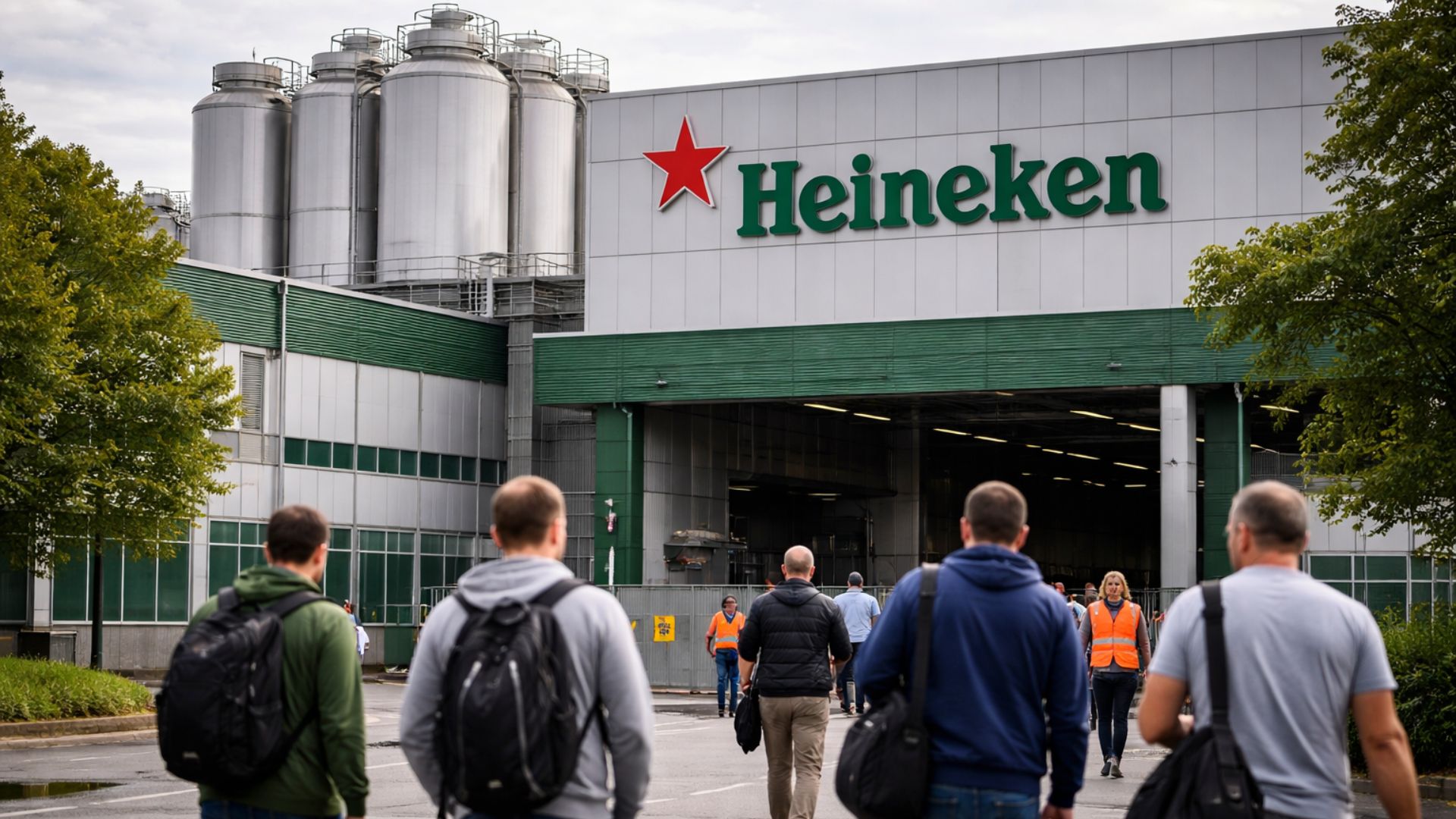
Cuts of Up to 6 Thousand Jobs, Productivity Target, and Lower Profit Forecast Put Heineken at the Center of the Restructuring of the Beer Sector.
Heineken announced on Wednesday that it plans to eliminate between 5,000 and 6,000 jobs over the next two years and simultaneously reduce its profit growth forecast for 2026.
This measure comes at a time of weak beer demand in various markets, with consumers more pressured financially and companies in the sector accelerating cost-cutting programs.
The plan represents almost 7% of the company’s global workforce, which has about 87,000 employees.
-
The government requests the Federal Revenue Service for a new system to automate the income tax declaration, reducing errors, time, and bureaucracy for millions of Brazilians.

-
Pix in installments, international Pix, and contactless payment without internet: the Central Bank revealed the new features coming to the tool that is already used by almost every adult in Brazil.

-
Mercado Livre has just started selling medications with delivery in up to three hours to your door, and this move could completely change the way Brazilians buy medicines on a daily basis.

-
In Dubai, rising tensions from the war in the Middle East are causing super-rich individuals to leave the Gulf and direct their fortunes to a new financial refuge in Asia.


The Dutch brewery is also undergoing a leadership transition: Dolf van den Brink announced in January that he will step down as CEO on May 31, 2026, and the company is seeking a successor.
In trading, Heineken’s shares reacted positively, reflecting the market’s perception that the package could enhance cost discipline and investment capacity in areas deemed strategic.
Layoffs at Heineken and Global Cost Cutting
According to the company, the initiative is part of a productivity program designed to generate savings and reorganize operations.
The anticipated cut of 5,000 to 6,000 jobs will take place over two years and will affect various areas, including administrative roles and operations-related activities.
During a conference call with the press to discuss the annual results, Chief Financial Officer Harold van den Broek said the company is looking to strengthen its operational structure to support investments.
“We are doing this to strengthen our operations and be able to invest in growth,” he stated.
Heineken indicated that part of the reductions will focus on Europe and in markets classified as non-priority, with lower expansion prospects.
Another portion will come from adjustments previously discussed, related to the supply chain, headquarters, and regional business units.
Investor Pressure and CEO Succession
According to the company, the job cuts are part of the effort to respond to investor demands for greater efficiency.
The company has been pressured to demonstrate that it can grow with a leaner structure in an environment of lower volumes and still significant costs across various fronts.
The CEO transition amplifies this requirement.
Van den Brink’s departure, announced in January, was described as a decision to close a chapter after nearly six years at the helm.
The succession occurs while the company attempts to execute its long-term strategy and deliver productivity gains at a faster pace.
This scenario also contributes to a more conservative stance in communication with the market.
By reducing its profit growth ambition for 2026, the company signals that it does not expect a quick recovery in consumption, at least in the short term.
Profit Forecast for 2026 Below Previous Target
Heineken stated that it expects organic operating profit to grow between 2% and 6% in 2026.
The range is below the previous forecast for 2025, when the company had anticipated growth of 4% to 8%.
This revision reinforces the view that the sector continues to move at a slow pace, with weaker demand and greater consumer selectivity.
By lowering expectations, the company also seeks to calibrate its message to avoid future disappointments in an environment that remains unstable for discretionary goods, such as alcoholic beverages.
Still, the most recent results came in above analyst expectations.
The company reported a 4.4% increase in organic operating profit in 2025, surpassing projections that anticipated growth around 4%, according to market estimates released alongside the earnings report.
Decline in Beer Consumption and Sector Adjustments
Heineken’s announcement comes amid a series of similar measures taken by competitors.
The sector has reported a decline in sales momentum and revisions of operational plans, citing everything from the loss of consumer purchasing power to adverse weather conditions in some markets.
The Carlsberg, one of the main European rivals, has also announced cost-reduction programs and indicated a profit growth forecast for 2026 in the same range, between 2% and 6%.
Other beer and alcoholic beverage companies, according to market reports, have been combining initiatives to cut expenses, sell assets, and adjust production after years of slower performance.
In the view of analysts and investors, the challenge is to balance cost-cutting while preserving brand strength and commercial power, especially during a time when companies compete with other consumption categories and changing habits, including a growing demand for non-alcoholic alternatives or lower-alcohol options in some markets.
Operational Reorganization and Focus on Efficiency
In presenting the program, the company stated that the goal is to simplify structures and concentrate resources in areas with higher returns, in addition to freeing up budgets for reinvestment in growth.
The company also indicated that part of the effort is connected to reorganizations already announced in areas such as supply chain and corporate functions.
The final design of the cuts, however, will depend on how each regional unit will implement the measures.
For now, the public signaling is focused on regions with lower potential and internal processes that can be centralized, standardized, or reconfigured.
For investors, the central point is whether Heineken will be able to sustain margins and profitability even with pressured volumes.
The market’s view is that the answer lies in both operational efficiency and the ability to maintain portfolio relevance in a less buoyant consumption scenario.
With the CEO succession underway and a productivity plan that foresees thousands of cuts, the question remains: will Heineken be able to regain its growth momentum without losing market share in an environment where consumers are more cautious?








-

Uma pessoa reagiu a isso.