





 Portuguese
  English
  Spanish
  3 min of reading
  9 comments


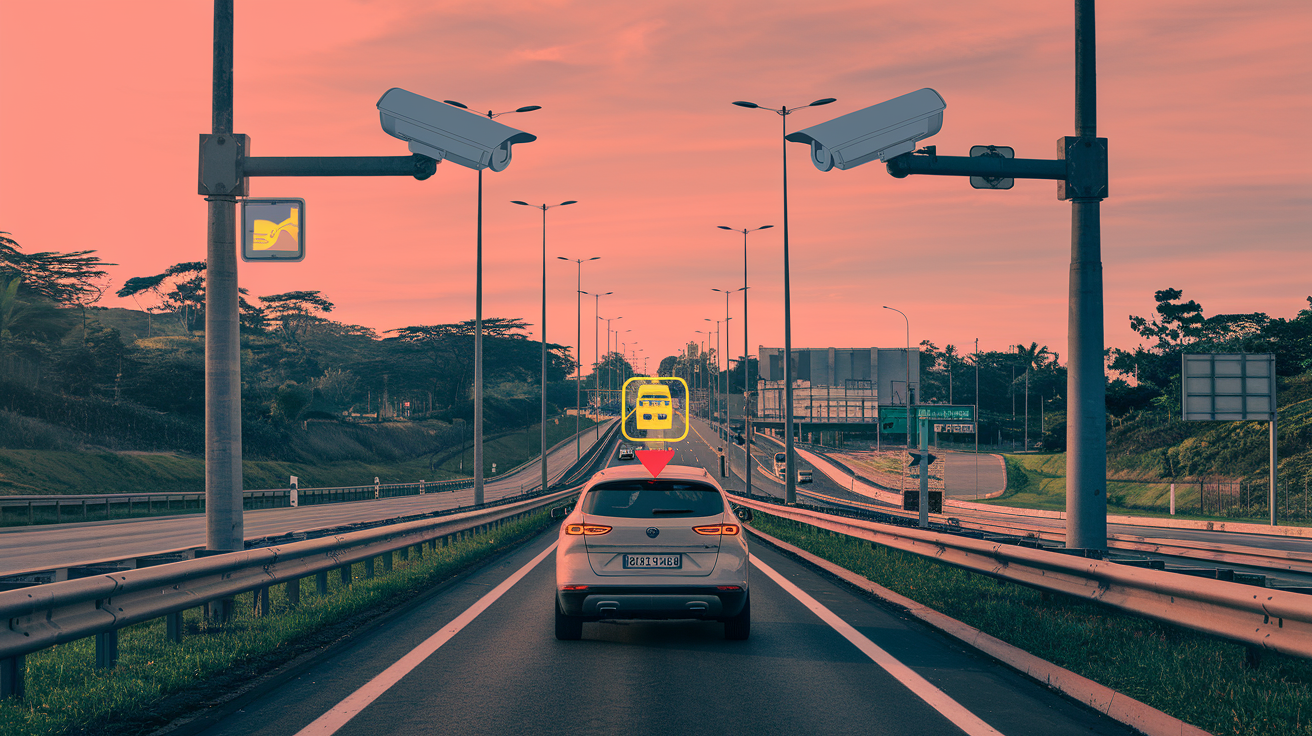


Highways Will Have Cameras With Artificial Intelligence Capable of Identifying Offenses Such as Using Cell Phones While Driving and Not Wearing Seatbelts. The System Assists the Federal Highway Police (PRF) in Enforcement, Aiming to Reduce Accidents and Promote Road Safety.
Driving on Brazilian highways can become an even tougher experience for those who insist on ignoring traffic rules.
A new monitoring system using cameras with Artificial Intelligence (AI) promises to identify offenses that previously went unnoticed and intensify enforcement.
The technological advancement has already begun operating in Minas Gerais and could directly impact driver behavior.
-
Motorola launched the Signature with a gold seal from DxOMark, tying with the iPhone 17 Pro in camera performance, Snapdragon 8 Gen 5 that surpassed 3 million in benchmarks, and a zoom that impresses even at night.

-
Satellites reveal beneath the Sahara a giant river buried for thousands of kilometers: study shows that the largest hot desert on the planet was once traversed by a river system comparable to the largest on Earth.

-
The government requests the Federal Revenue Service for a new system to automate the income tax declaration, reducing errors, time, and bureaucracy for millions of Brazilians.

-
Scientists have captured something never seen in space: newly born stars are creating gigantic rings of light a thousand times larger than the distance between the Earth and the Sun, and this changes everything we knew about stellar birth.


The concessionaire Eco050 announced the deployment of new cameras on the BR-050, in the most critical sections of the highway, especially in the urban areas of Uberlândia.
The equipment is capable of identifying drivers using cell phones while driving and passengers without seatbelts.
The expectation is that this innovation will contribute to reducing accidents and enhance safety on the roads.
How the New Enforcement System Works
The system uses high-precision cameras, equipped with advanced AI algorithms that capture images in real time.
When an offense is identified, the information is sent directly to a system integrated with the Operational Control Center (CCO) of the concessionaires.
Subsequently, the Federal Highway Police (PRF) validates the records and issues notifications to offending drivers.
According to Eco050, the system began operating in December 2024 and already shows significant results.
“We recorded an average of 30 offenses per operation, which highlights how common these practices still are among drivers,” said Bruno Araújo Silva, Operations Manager at Eco050 and Ecovias do Cerrado.
The use of cell phones while driving is one of the main causes of accidents on Brazilian highways.
According to data from the PRF, the distraction caused by handling a cell phone considerably increases the risks of serious collisions.
Moreover, the absence of seat belts amplifies the impacts in the event of accidents, increasing the severity of injuries and the number of fatalities.
Expansion of Technology and Impact on Highways
The technology applied on the BR-050 may become a reference for other highways in the country.
Eco050 stated that in the future, the system will also be installed at PRF bases, further facilitating enforcement efforts.
The model adopted on the BR-050 is already inspiring the expansion of monitoring to other sections, such as the recently initiated use of average speed radars in Uberaba.
For road safety experts, the implementation of these technologies represents a significant advancement.
“The main goal is not just to punish offenders but to educate drivers and create a culture of respect for traffic laws,” emphasized Silva.
The expectation is that with the intensification of enforcement, there will be a behavioral change and a considerable reduction in the number of accidents.
The PRF emphasizes the importance of complying with traffic regulations, warning that offenses such as using a cell phone while driving and not wearing a seatbelt are considered serious or very serious.
In addition to penalties outlined in the Brazilian Traffic Code (CTB), drivers caught in these situations are exposed to risks that can be fatal.
The Importance of Intelligent Enforcement
Monitoring using AI cameras is part of a global trend of modernizing traffic enforcement.
Countries like Australia and the United Kingdom already use similar systems, with positive results in reducing offenses and accidents.
In Brazil, the adoption of these technologies reflects an effort to keep up with these advances and promote safer traffic.
The combination of technology and active enforcement can represent a turning point in road safety.
With the new system in operation, the expectation is not only for fines to be issued but also for greater awareness among drivers regarding the importance of driving responsibly.
Drivers traveling on the BR-050 should be attentive to the new rules and adopt safer habits.
With enhanced enforcement and the use of Artificial Intelligence, road safety enters a new era, where offenses will not go unnoticed and the preservation of lives will be the priority.




Se o empenho para fiscalização fosse o mesmo para com o atual governo ****!?
Cada dia que passa vejo que o povinho brasileiro tem o governo que merece!
Se importam mais com a vida privada dentro do veículo do que a própria segurança!
Ficam com essa droga de celular, mexendo e olhando, esquecem que o veículo se tornou uma arma que pode MATAR!
O povinho chato! Fraco e hipócrita!
Graças a DEUS não faço parte desse povinho mimizento, vitimista e egocentrico.
Graças a DEUS tem um povo brasileiro que obedece as leis e pensa no próximo!
Dá valor a vida e não a bem material !
Porque não utilizam essa IA para prender os **** corruptos desse governo que está aí que trouxe tudo o que não presta para seu lado