





 Portuguese
  English
  Spanish
  3 min of reading
  48 comments


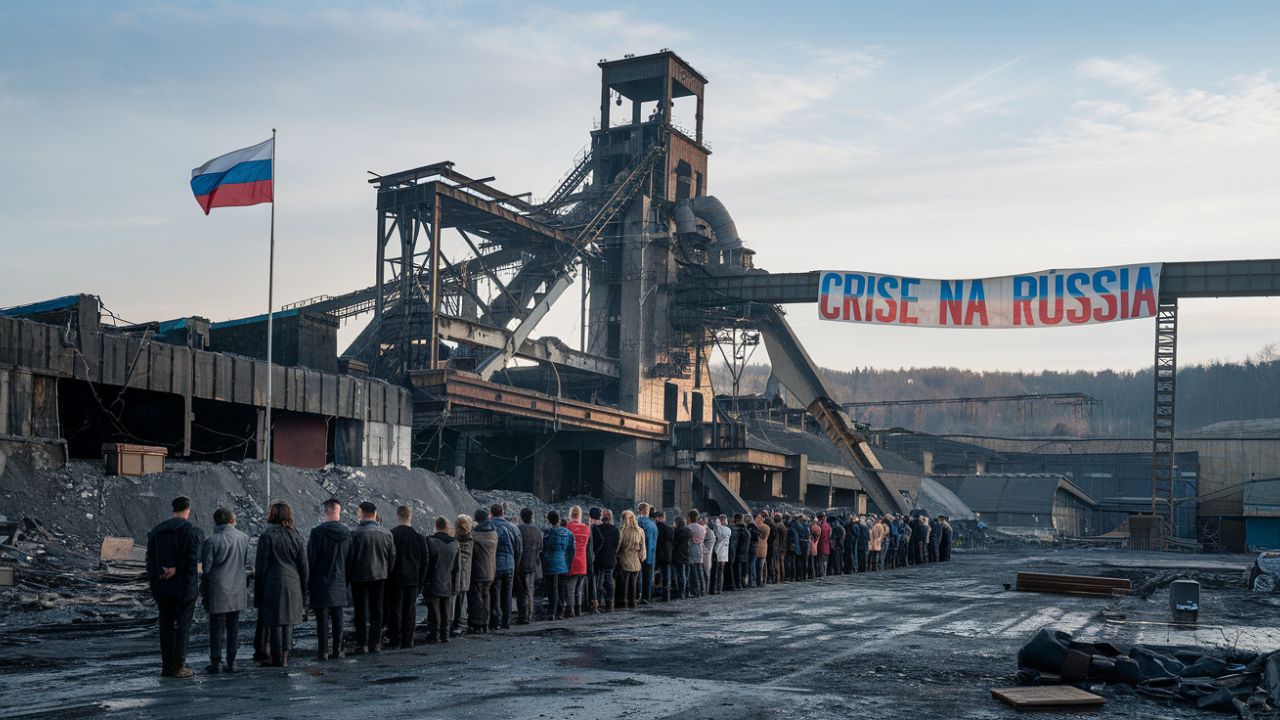


With More Than 1,000 Mass Layoffs in Russia’s Mining Sector Already Announced and Salaries Delayed Amounting to 46 Million Rubles (US$ 2.3 Million), Workers Go on Strike While Mines Close Indefinitely Amid Billion-Dollar Losses in the Coal Sector.
Living four months without a salary while watching your sector crumble like a sand castle. This is exactly what is happening in Russia, where the coal mining industry is facing one of its largest crises. Mass layoffs in Russia are already a reality in regions like Kuzbass, and desperate workers have even resorted to hunger strikes, according to the UK newspaper Express.
An Industry in Collapse
The Russian mining sector has always been a key player in the country’s economy, especially in regions like Kuzbass. However, Western sanctions have imposed a brutal barrier to coal exports, cutting access to crucial markets.
Revenue has fallen sharply, and companies like Sibcoal Management and Razrez Evtinsky Novy have announced indefinite closures. Dependence on markets like China and India has not brought the expected relief. Exports to China fell by 8%, while shipments to India plummeted by 55% in just the first half of 2024.
-
The government requests the Federal Revenue Service for a new system to automate the income tax declaration, reducing errors, time, and bureaucracy for millions of Brazilians.

-
Pix in installments, international Pix, and contactless payment without internet: the Central Bank revealed the new features coming to the tool that is already used by almost every adult in Brazil.

-
Mercado Livre has just started selling medications with delivery in up to three hours to your door, and this move could completely change the way Brazilians buy medicines on a daily basis.

-
In Dubai, rising tensions from the war in the Middle East are causing super-rich individuals to leave the Gulf and direct their fortunes to a new financial refuge in Asia.

Mass Layoffs in Russia: A Blow to Workers

In Kuzbass, the heart of coal mining, the reality is harsh. More than 1,000 miners have received layoff notices, and the number may grow. To make matters worse, the Inskaya mine, the site of a recent hunger strike, symbolizes the despair of workers.
Without salaries for months and with unfulfilled promises from management, miners are literally fighting for their survival. The mine’s salary debt already totals an impressive 46 million rubles (US$ 2.3 million), leaving entire families without a livelihood.
The Economic Crisis in the Coal Sector
The numbers are relentless: the losses in the mining sector have increased 4.1 times compared to the previous year, reaching US$ 1.9 billion. 52% of companies in the sector are operating at a loss. The impact is also felt in public coffers. Tax revenues in Kuzbass have plummeted by 59%, and regions like Buryatia are facing similar declines. It’s a perfect storm, where each falling piece directly affects the others, creating a devastating domino effect.
The economic crisis quickly transformed into a humanitarian crisis. Whole communities, previously dependent on the mines, are now facing mass unemployment and a lack of prospects. The workers who have gone on strike are the most visible symbol of this despair, but the impact goes beyond that. Schools, hospitals, and local small businesses are also feeling the blow.
The Future of Mining in Russia
Is there a way out of this crisis? Some experts believe that diversifying markets and investing in renewable energy sources could be a long-term solution. However, in the short term, the government needs to act to avoid a social collapse. What is clear is that the Russian mining sector is at a crossroads.
The mining crisis in Russia goes beyond numbers and graphs. It is a story of people fighting to survive, while an entire sector faces an unprecedented challenge. The mass layoffs in Russia are just the tip of the iceberg of a crisis that could redefine the country’s future.









Com um louco no comando, a bomba está literalmente caindo no colo do povo.
Isso é muito mais um desejo do articulista do que um fato concreto.
Esse modelo de governo ditatorial não funciona e nem deve funcionar mais em lugar nenhum um. O Putin, assim como outros presidentes de nações acham que a **** ainda é uma boa, mas não é. Quem paga por isso é a população que vive escravizada, sem liberdade e sendo isolada, ou seja, o mundo que vivemos hoje é globalizado e a nação que não perceber e entrar na linha pode acabar colhendo frutos indesejáveis…a Rússia é um exemplo