





 Portuguese
  English
  Spanish
  5 min of reading
  0 comments


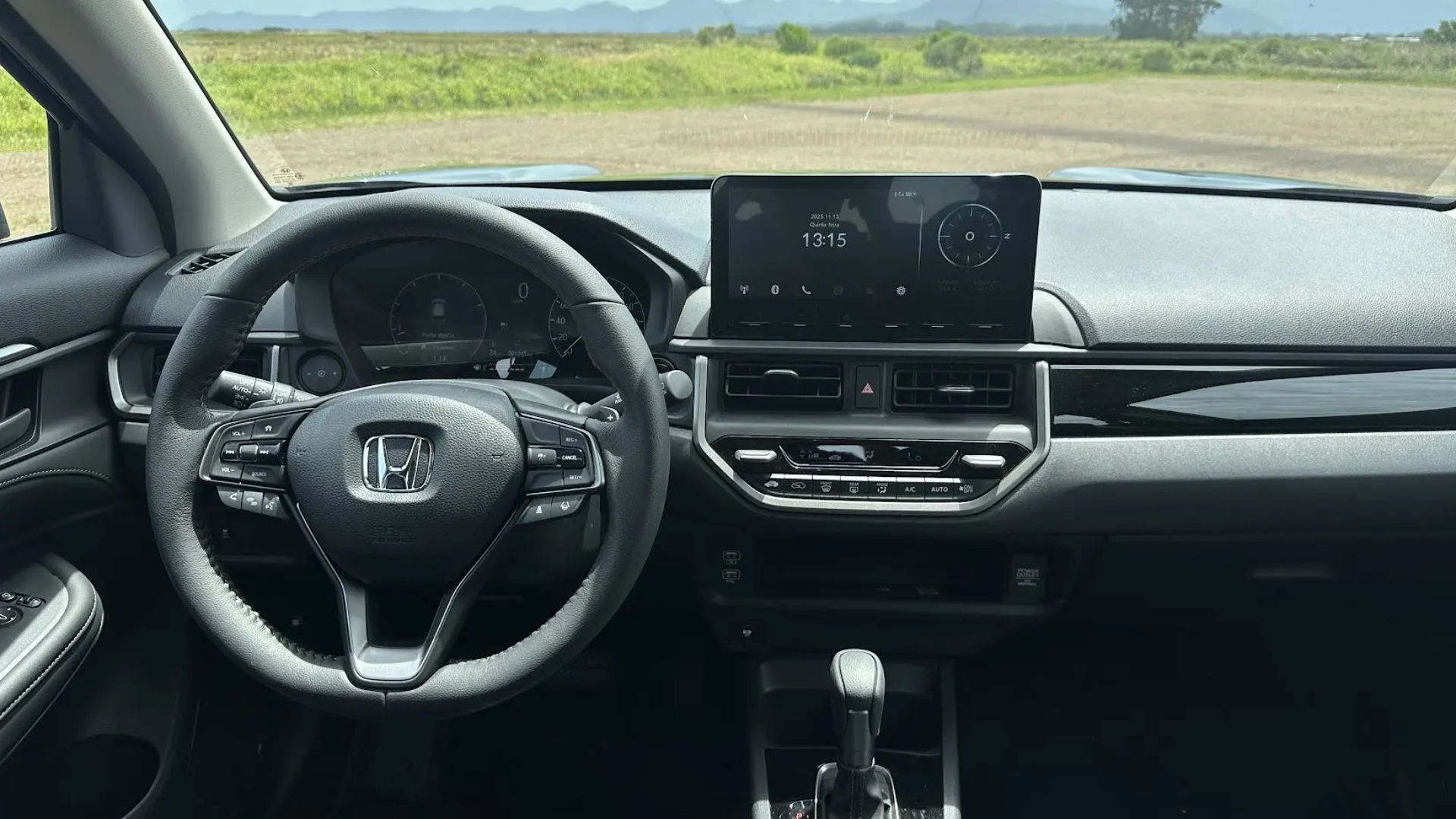
The New Honda WR-V Debuts Larger Than The HR-V, With More Interior Space, Spacious Trunk, And Simple Mechanical Set Featuring A Robust Safety Package And Family Proposal That Repositions The SUV Within The Line Of The Brand In Brazil.
The new Honda WR-V marks the return of the compact SUV to the brand’s lineup in Brazil with a configuration quite different from the previous one.
Now, the model is larger than the HR-V in some dimensions.
It offers a 458-liter trunk, 22.3 cm of ground clearance, and relies exclusively on the 1.5 aspirated flex engine with 126 hp, without a turbo option, in the EX and EXL versions, with prices starting at R$ 144,990.
-
The car stored for 38 years: when opening the barn door, what appears is breathtaking and looks like a scene from a movie!

-
Fiat works miracles in the Brazilian market, lowers the price of its 0 km hatch to R$ 69,990, reestablishes the model as the cheapest car in the country, and reignites the battle against Kwid and C3.
-
Chevette with cooking gas: How the gas cylinder ends up being used in cars clandestinely and why this makeshift solution can result in leaks, explosions, damaged engines, and seized vehicles.

-
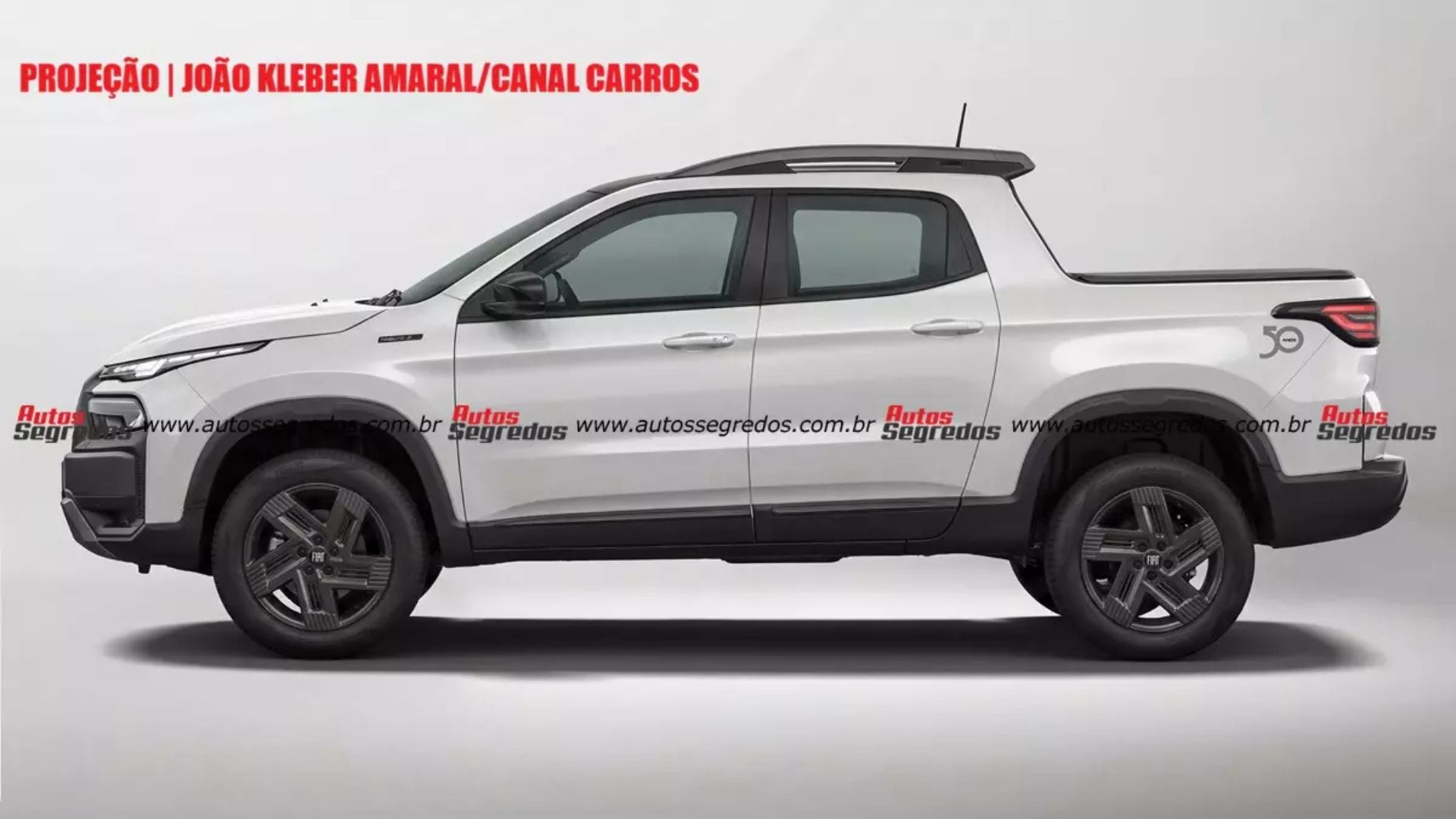
Fiat launches the new 2027 Toro hybrid with 48V, 176 hp, an electric motor of 15.5 hp, a 0.85 kWh battery, up to 7% fuel savings, 8% fewer emissions, and possible exemption from IPVA.

Dimensions And Space Of The Honda WR-V
Built on the Global Small Car (GSC) platform, the same as the City and HR-V, the new WR-V measures 4.32 meters in length, 1.79 m in width, 1.65 m in height, and has a wheelbase of 2.65 m.
In practice, this positions it as an entry-level SUV for the brand with size close to – and even exceeding in some aspects – the HR-V.

The result is evident in the interior. Passenger space is one of the main selling points of the model.
Taller adults travel comfortably in both legroom and headroom in the rear seat.
Another highlight is the 458-liter trunk, which is larger than that of the HR-V itself.
During the press evaluation, it was possible to accommodate several cabin bags and backpacks without difficulty.
The hatchback opening, however, is still done only via the lock or internal command.
Robust Visual And Unique Identity
Unlike the first WR-V, directly derived from the Fit, the new generation has been redesigned with its own lines and a more traditional SUV appearance.
The body features flatter surfaces, square proportions, and a high hood, reinforcing the sense of robustness.
At the front, the attention-grabbing elements include the large grille with rectangular elements, LED headlights, and the elevated bumper.
The rear follows the same squarer style, with LED taillights interconnected by a decorative bar.
The 17-inch wheels equip both the EX and EXL versions. The roof rack is exclusive to the EXL configuration.
Interior, Finishing, And Equipment

In the interior, the differences between the versions mainly appear in the upholstery.
In the WR-V EXL, the seats are upholstered in vinyl. The EX option features fabric.
The finishing predominantly uses hard plastic on the dashboard and door trims.
The cabin includes items such as a partially digital 7-inch dashboard and a 10-inch multimedia center with wireless Android Auto and Apple CarPlay.
In the EXL version, there is also a wireless charger. The front USB ports are type A.
In the name of cost, only the driver’s power window has a one-touch function.
The full package for all four doors will be offered as an accessory.
There is also no lighting in the sun visors.
In the rear seat, there are air-conditioning vents and a 12V socket.
No USB ports are available in the back.
The traditional Magic Seat system was not adopted because the fuel tank is located under the rear seat.
1.5 Aspirated Engine And CVT Transmission
Unlike several direct competitors, the WR-V arrives without a turbo engine.
The entire lineup uses the 1.5 DI i-VTEC flex aspirated engine, with 126 hp and 15.8 kgfm, combined with a CVT transmission with seven simulated gears.
This is the same mechanical set present in the City and in the entry-level versions of the HR-V.

Performance is not the focus, but measurements showed acceleration from 0 to 100 km/h in about 11.3 seconds, similar to that of 1.0 turbo SUVs.
With the CVT, revs rise quickly during hard accelerations, increasing internal noise.
The paddles on the steering wheel help better control the responses.
Consumption, Handling, And Comfort
According to Inmetro, the WR-V records 12 km/l in the city and 12.8 km/l on the highway with gasoline.
With ethanol, the numbers are 8.2 km/l and 8.9 km/l.
In driving, the driving position is high.
The elevated hood is in the field of vision.
The ground clearance of 22.3 cm favors overcoming bumps and uneven surfaces.
The approach angle is 17.4 degrees and the departure angle is 27.2 degrees.
The suspension follows the traditional recipe of the segment, calibrated for comfort.
The pothole filter is efficient and the car conveys a good sense of control in curves.
The noise isolation is adequate for the category.
Brakes, Safety, And Honda Sensing Package
To contain costs, Honda adopted drum brakes at the rear.
In braking tests, the WR-V showed stopping distances below 40 meters, comparable to rivals with discs on all four wheels.
The active safety package is one of the most comprehensive in the segment.
All versions come with the Honda Sensing system, featuring adaptive cruise control, front collision warning with automatic braking, and lane-keeping assist.
The model offers six airbags and stability and traction controls.

There is no blind spot warning.
In maneuvers, the SUV uses a multi-view rear camera.
Another highlight is the six-year warranty, currently the most extensive offered by the brand in Brazil.
Repositioning, Previous Generation, And Hybrid Future
The first generation of the WR-V arrived in 2017 and was produced until 2022.
Sales gradually declined.
Now, the new generation returns with a global project, manufacturing in Itirapina, and a focus on occupying the entry-level SUV role, below the HR-V, but with more space and a larger trunk.
Honda has confirmed that the third-generation national HR-V will be the brand’s first flex hybrid in the country, expected for 2028.
For the WR-V, however, there is no official announcement of hybrid engine options or any disclosed timeline.
With this set of ample space, generous trunk, and robust safety package, will the Brazilian public prioritize the WR-V even without a turbo engine?








-

-

-

6 pessoas reagiram a isso.