





 Portuguese
  English
  Spanish
  4 min of reading
  2 comments


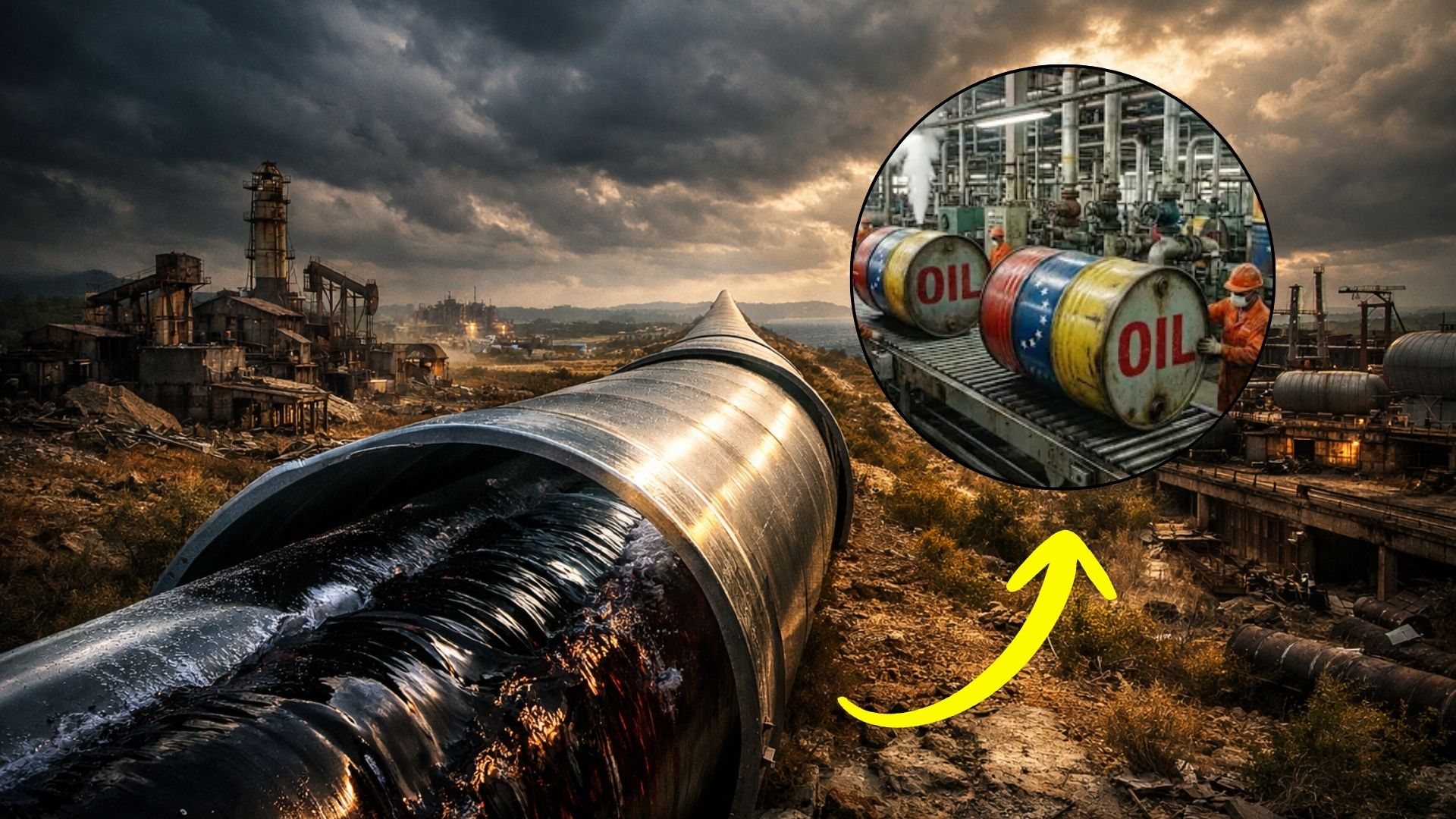


Oil Infrastructure Connects Giant Reserves of Orinoco to Strategic Export Routes, Involving Large Pipelines, Internal Industrial Challenges, Coastal Terminals, and Specialized Refineries Abroad, in a Logistical Chain Decisive for the Venezuelan Economy.
Venezuela holds the largest proven oil reserves in the world, estimated at around 303 billion barrels, mostly located in the Orinoco Belt.
Transforming this volume into continuous exports requires a complex industrial chain that starts from extraction on land, progresses through internal pipelines to coastal terminals, and continues by sea to refineries capable of processing extra-heavy oil, especially units installed on the Gulf Coast of the United States.
Despite frequently being portrayed in a simplified manner, the Venezuelan oil sector operates under significant technical and industrial constraints, involving aging infrastructure, high costs, and the need to adapt oil to international transportation and refining standards.
-
Petrobras evaluates suspension of sales to distributors and considers canceling the cooking gas auction following guidelines from the Federal Government.
-
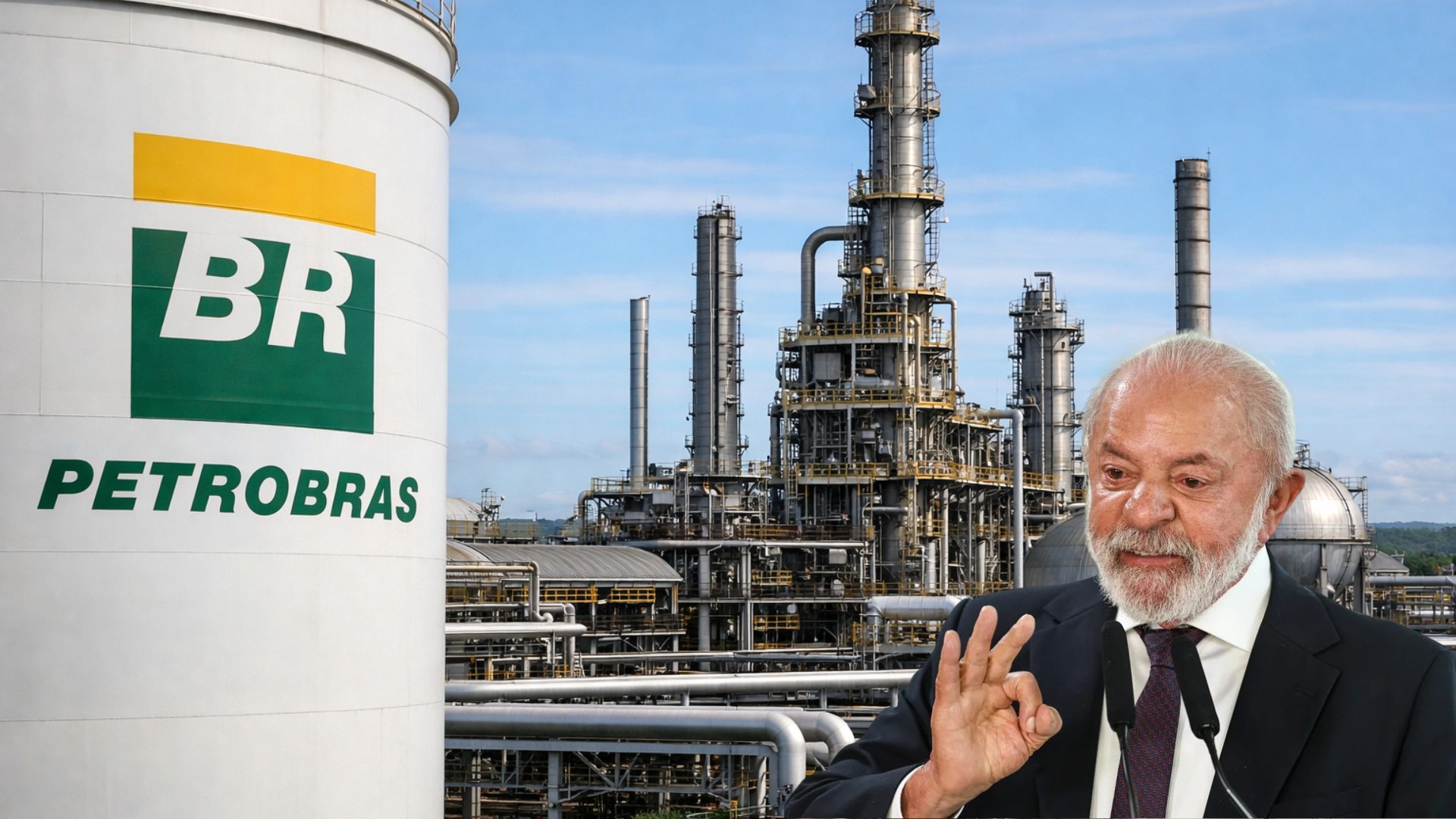
Lula reveals a masterstroke by Petrobras to undo a deal made by Bolsonaro, which involves the return of an important refinery that currently produces less than half of what was expected and makes Brazil dependent on international diesel.
-
A study confirms that the natural gas sector will reduce greenhouse gas emissions in Brazil by 0.5% and accelerate the energy transition by 2026.

-
Petrobras implements a severe adjustment and confirms a 55% increase in the price of aviation kerosene with a proposal for installment payments for the companies.


In this context, pipelines play a central role, connecting remote production areas to export points and sustaining the continuous flow of oil.
Extra-Heavy Oil from Orinoco and Logistical Challenges
The Orinoco Belt is known for its predominance of extra-heavy oil, characterized by high density, higher sulfur content, and difficulty in flow.
These properties require additional processes, such as mixing with diluents or industrial treatment, before the product can be transported and marketed on a large scale.
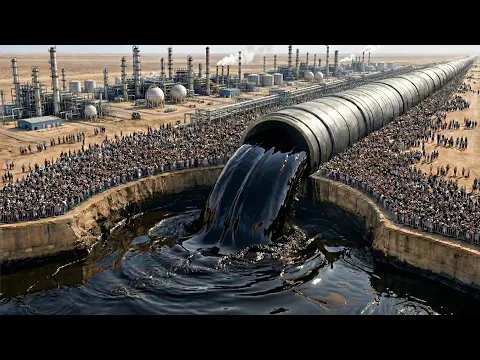

As a result, logistics becomes as decisive as the volume available underground, making the infrastructure of pipelines, pumping stations, and terminals a strategic element for the national oil industry.
Venezuelan Pipelines and the Link to the International Market
Within Venezuelan territory, pipelines function as an extensive continuous transportation system, linking production fields inland to industrial complexes on the coast.
These pipelines transport oil to storage, blending, and shipping areas, from where the cargo proceeds by tanker to the main consumer markets.
On the country’s northern coast, the José Industrial Complex in Anzoátegui state stands out as one of the main convergence points of this network, concentrating facilities aimed at processing and exporting Orinoco oil.
How Large-Diameter Steel Pipes Are Manufactured
The construction of pipelines of this scale begins in the steel industry, with the production of pipes made from high-strength carbon steel.
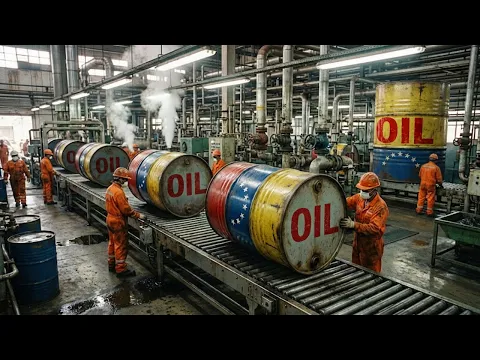
Metal plates are cut to precise dimensions and gradually shaped into large-diameter cylinders, approximately 1.8 meters, designed to withstand high internal pressures and environmental variations.
After longitudinal welding, each pipe undergoes cooling, finishing, and end preparation processes, ensuring dimensional accuracy and structural safety.
The segments, typically around 12 meters in length, are designed to balance installation efficiency and logistical feasibility in transport to the worksites.
Installation of the Pipelines in the Field
Along the designated route for the pipeline, support areas are organized to store, inspect, and sequence the pipes before installation.
The construction area is prepared with land leveling and the opening of temporary roads, allowing the circulation of heavy machinery and technical teams.
Excavators dig trenches according to project specifications, while the excavated soil is separated for later backfilling.
In rocky terrain sections, controlled blasting techniques may be employed to ensure adequate depth and alignment.
Before placing the pipes, the bottom of the trench receives a layer of fine material, such as sand, which distributes loads and reduces structural stresses.
Welding, Inspection, and Backfilling

The sections of piping are aligned and welded on-site, often with the assistance of internal hydraulic equipment that maintains the perfect geometry of the joints.
Each weld undergoes technical inspections, including non-destructive testing, to ensure the integrity of the line.
After applying protective coating to the joints, the pipes are carefully lowered into the trench by specialized machines.
The backfilling occurs in stages, with progressive soil compaction, ensuring stability and protection throughout the lifetime of the pipeline.
From Terminal to International Refining
At coastal terminals, oil is stored, adjusted to commercial specifications, and prepared for export.
Part of the extra-heavy oil goes through processing units known as upgraders, which enhance its characteristics to facilitate refining.
From there, tankers transport the cargo to refineries equipped with the necessary technologies to treat heavy oils.
This journey highlights why, despite holding around 17% of global reserves, Venezuela depends on a highly integrated logistical chain to transform its geological potential into effective revenue.
With infrastructure, industry, and market so closely interlinked, which stage of this chain will be decisive in defining the future of Venezuelan oil production?








A refinaria de Pasadena outrora comprada e vendida pela Petrobrás foi concebida pra refinar esse petróleo pesado da Venezuela. Foi também feito um acordo pra fazer uma igual aqui no Brasil, a Venezuela até hoje tá devendo e a obra paralisou…pergunto: isso é verdadeiro?
Onde está o oleoduto que leva o petróleo para os EUA? Foi jornalista formado que escreveu isso?