





 Portuguese
  English
  Spanish
  7 min of reading
  0 comments


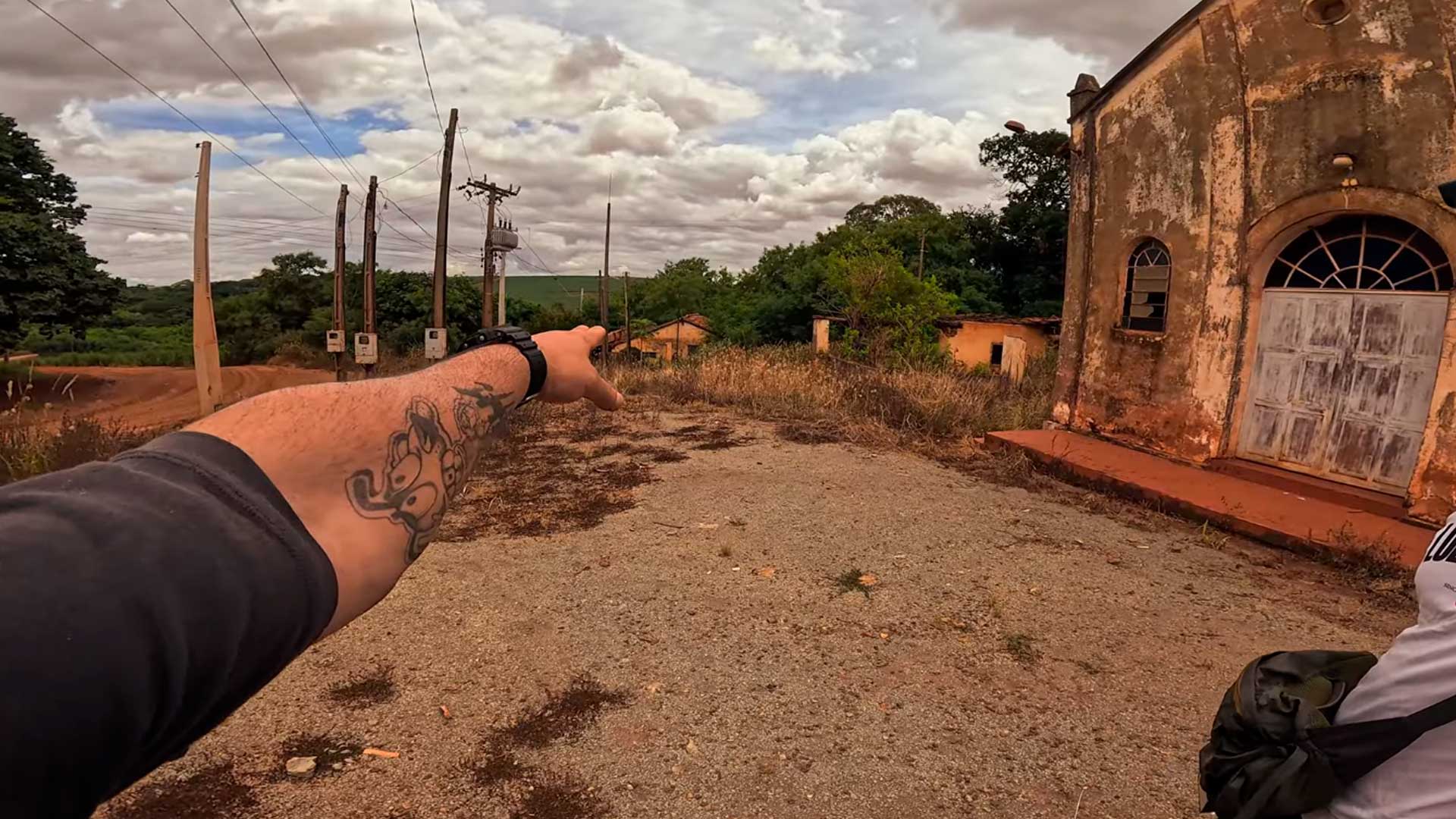
Urban Exploration Unveils A Group Of Abandoned Buildings Including A House With Intact Belongings, A Locked Religious Temple, And A Rural School With Decade-Old Records Revealing The Fate Of Former Villages Created Around Sugarcane Mills In Brazil
An intriguing discovery in the heart of rural Brazil revealed a completely abandoned village, consisting of a preserved church, a school surrounded by vegetation, and houses left behind with all belongings intact. The exploration, documented in a video by urban adventurers, showcases a scene that seems frozen in time, where even cars decay in the open, and personal items remain exactly where they were left.
The site, nestled among extensive sugarcane fields, exhibits characteristics typical of old Brazilian rural villages that grew around sugar mills and have been progressively abandoned over the last few decades.
The discovery gained attention on social media, sparking curiosity about the fate of these forgotten communities and the reasons that led to the total abandonment of structures still in good condition.
-
Friends have been building a small “town” for 30 years to grow old together, with compact houses, a common area, nature surrounding it, and a collective life project designed for friendship, coexistence, and simplicity.

-
This small town in Germany created its own currency 24 years ago, today it circulates millions per year, is accepted in over 300 stores, and the German government allowed all of this to happen under one condition.

-
Curitiba is shrinking and is expected to lose 97,000 residents by 2050, while inland cities in Paraná such as Sarandi, Araucária, and Toledo are experiencing accelerated growth that is changing the entire state’s map.

-
Tourists were poisoned on Everest in a million-dollar fraud scheme involving helicopters that diverted over $19 million and shocked international authorities.


During the exploration, it was possible to identify at least four main structures: a residence with an abandoned car in the garage, a locked but seemingly preserved Catholic church, an old rural school overrun by vegetation, and a commercial establishment that appears to have functioned as a bar or grocery store. The presence of scattered animal feed throughout the site suggests that, although uninhabited, the area still receives occasional visitors who care for abandoned cats.
Preserved Church Remains Locked With Intact Equipment


The church found at the site represents one of the most impressive finds of the exploration. Although completely locked by iron doors with no external handles, it was possible to observe through the windows that the interior maintains a remarkable preservation, including chandeliers, sound equipment, old monitors, and even mixing tables.
According to the explorers, the religious structure seems to be much older than the other buildings in the complex, possibly dating back several decades. The church has access only from the rear, with an internal locking system that completely prevents entry.
Attached to the temple, there is a space that appears to have been used for community festivities, with characteristics of a hall and an area that possibly functioned as a kitchen or food distribution point during religious events.
The preservation of the religious site contrasts with the abandonment of the other structures, suggesting that there may have been attempts to specifically protect this heritage. The absence of vandalism is also noteworthy, considering that many abandoned places in Brazil often suffer from degradation and theft.
Rural School Holds Records Of Generations Of Students
The abandoned school, identified as “Grupo Escolar Felipe Cardoso,” turned out to be a true archive of local memory. The walls filled with inscriptions left by former students over different eras tell stories that date back to 1956, with records continuing into 2023, showing that the place was still visited even after the cessation of educational activities.
Among the most striking discoveries are heartfelt messages from former students who returned to the site with their children, demonstrating the emotional bond they maintain with the institution. An inscription dated 2019 mentions: “I studied here from 1991 to 1994. Today I am here with my children,” revealing the sentimental importance of the space for those who studied there.
The structure of the school, although overtaken by vegetation, features multiple classrooms, a cafeteria, gender-separated bathrooms, and even a library or materials room. The raised wooden floor, characteristic of old buildings, is still preserved in some areas. The chalkboards remain on the walls with inscriptions ranging from phone numbers of old cafeterias to philosophical reflections written by visitors.
According to experts in urban exploration consulted by the Mundo Urbex project, abandoned rural schools are important witnesses to the transformation of the Brazilian countryside, especially in regions that have undergone intense rural exodus in recent decades.
Traces Reveal Daily Life Abruptly Interrupted
The explored house shows signs of having been abandoned suddenly. Furniture, clothes, kitchen utensils, and even a vehicle remained on site, creating an atmosphere of mystery about the circumstances of the abandonment. The explorers noticed peculiar details, such as the presence of an oven and markings suggesting that the residence was inhabited until a relatively recent time.
The commercial establishment, which the explorers identified as a possible bar, retains bottles, counter structures, and even a barbecue grill, elements typical of small businesses that served as meeting points in Brazilian rural communities.
These country bars historically functioned as social centers of villages, where residents gathered and shared information.
The constant presence of sugar mill workers passing by in pickup trucks, as reported during the exploration, confirms that there is sugarcane production activity in the region. This reinforces the hypothesis that the village was gradually emptied as the mills modernized their operations and centralized workers’ housing.
Phenomenon Of Abandoned Rural Villages Intensifies In Brazil
The documented case is not isolated. With the transformation of sugarcane farming and the introduction of modern mills, many plantation owners abandoned their properties, a process that intensified throughout the 20th century in various regions of Brazil.
According to research on the history of the Brazilian sugar and alcohol sector, the modernization of mills primarily occurred between the 1940s and 1960s, a period during which many rural communities began to lose population. This movement led to the emergence of ghost towns in various parts of the country, especially in states with a strong sugarcane tradition.
In the Northeast, which has 25,000 sugarcane producers, 92% of whom are considered small family farmers, many mills have been deactivated in recent decades, leading to the abandonment of entire structures and communities. Some of these mills are being reactivated by cooperatives, but the old villages remain abandoned.
The phenomenon of rural abandonment is not limited to the sugarcane sector. According to data on urban exploration in Brazil, there are hundreds of villages, districts, and settlements that have been progressively emptied due to the end of economic cycles, changes in trade routes, or population concentration in larger urban centers.
Urban Exploration Reveals Cultural Heritage At Risk
The practice of urban exploration (urbex) has grown in Brazil, allowing forgotten places to be documented before they disappear completely. According to experts, this activity plays an important role in preserving collective memory, even if indirectly.
Urban exploration photography is viewed by enthusiasts as a hobby linked to the arts, with an emphasis on the pleasure of exploring ruins and taking beautiful photographs, following the ethical principle of “take nothing but photographs, leave nothing but footprints.” This philosophy prevents locations from being further degraded or looted.
In the case of the documented village, the absence of significant vandalism suggests that the site remains relatively isolated and protected due to the difficulty of access. The dense vegetation surrounding the school and its location amid the sugarcane fields act as natural barriers against ill-intentioned visitors.
However, experts warn of the risks associated with this practice. The exploration of abandoned buildings presents dangers such as unstable structures, the presence of venomous animals, and the possibility of trespassing on private property if there is no permission from owners.
Abandoned Cats Are Cared For By Local Workers
A touching detail of the exploration was the discovery of a colony of cats living among the ruins. The animals, including a seemingly pregnant female, are regularly fed with food and water left by people who work nearby, possibly employees of the local sugarcane mill.
This care demonstrates that, despite the abandonment of the structures, there remains a human connection to the site. The presence of fresh food and water indicates frequent visits, suggesting that former residents or workers in the area maintain some form of emotional responsibility for the space and its current occupants.
Similar cases are common in abandoned locations in Brazil, where neighboring communities or former residents provide minimal care for animals left behind, even when there is no longer a habitable structure on site.
Rural Cultural Heritage Remains Without Official Protection
The situation of the abandoned village raises questions about the preservation of Brazilian historical rural heritage. Unlike urban constructions or those of high architectural value, small rural villages rarely receive attention from preservation agencies, leaving them at the mercy of time and natural degradation.
According to cultural heritage specialists, rural schools, village churches, and other similar buildings represent an important part of Brazilian social history, documenting ways of life, popular architecture, and community organization from past eras. However, the lack of resources and specific policies for their preservation results in the gradual loss of these historical witnesses.
The documented case also illustrates the economic and social transformations of the Brazilian countryside in recent decades, marked by agricultural mechanization, land concentration, and migration to urban centers. These changes have left hundreds of similar localities across the country, each harboring unique stories at risk of disappearing without record.
Have you visited or do you know of an abandoned village in your area? The records left on the school walls show that many people maintain an emotional connection to these places, even decades after abandonment. Should structures like these receive protection as historical heritage, or is abandonment a natural part of the evolution of rural communities? Share your opinion in the comments and let us know if you know of similar cases in your area.










-

-

2 pessoas reagiram a isso.