





 Portuguese
  English
  Spanish
  4 min of reading
  0 comments


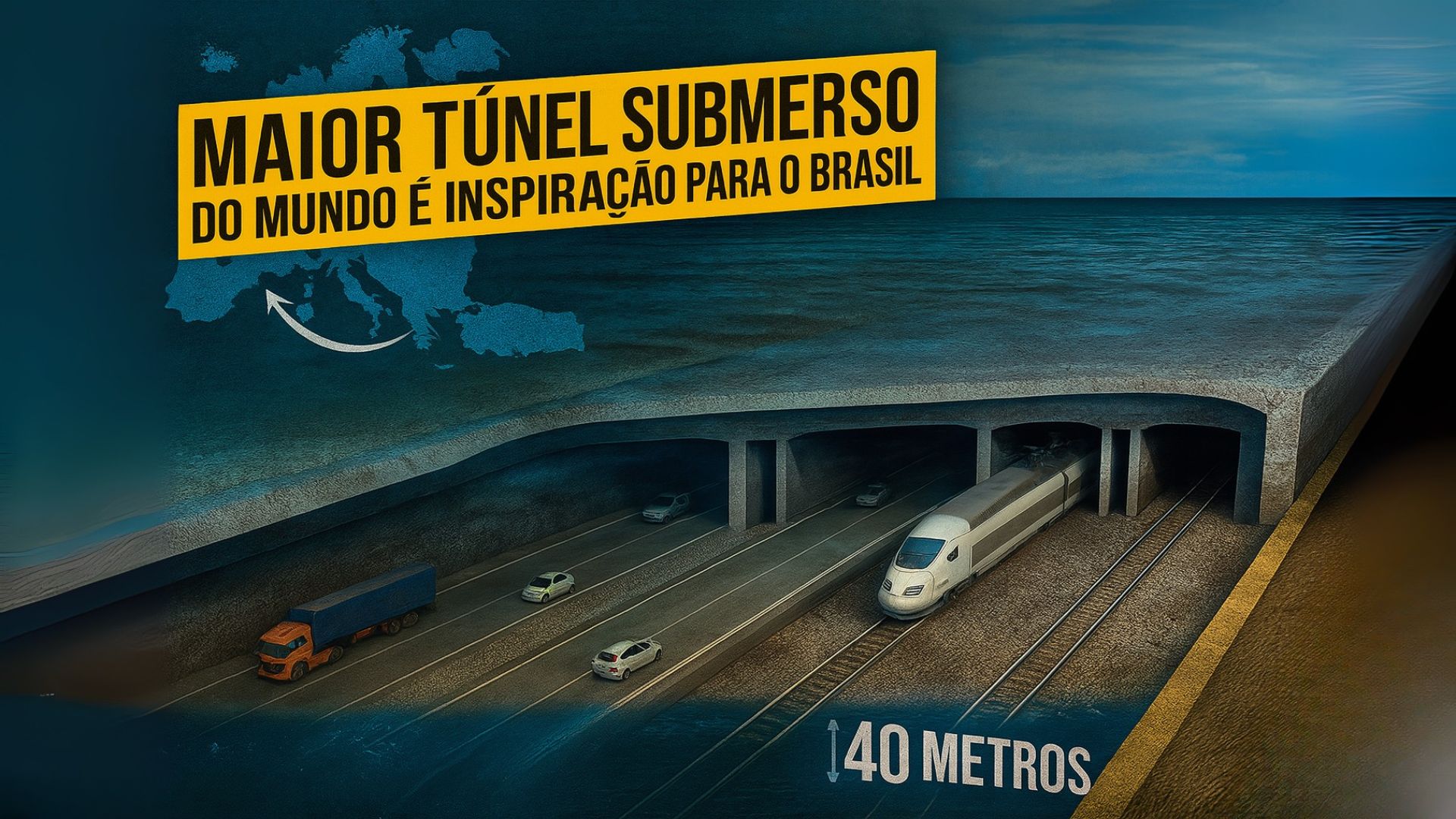
Innovative Underwater Structure Connects Countries and Inspires National Project; Discover the Engineering Solutions and Environmental Challenges Behind the World’s Largest Immersed Tunnel.
The world’s largest immersed tunnel is under construction in Northern Europe, connecting Denmark and Germany through an underwater infrastructure that has become an international reference.
The method used involves pre-fabricated concrete modules, installed about 40 meters deep in the Baltic Sea, allowing for the creation of a high-capacity transport corridor that spans borders.
Inspired by this model, Brazil is advancing a pioneering project to connect Santos and Guarujá on the São Paulo coast with a unique solution in the country.
-
Friends have been building a small “town” for 30 years to grow old together, with compact houses, a common area, nature surrounding it, and a collective life project designed for friendship, coexistence, and simplicity.

-
This small town in Germany created its own currency 24 years ago, today it circulates millions per year, is accepted in over 300 stores, and the German government allowed all of this to happen under one condition.

-
Curitiba is shrinking and is expected to lose 97,000 residents by 2050, while inland cities in Paraná such as Sarandi, Araucária, and Toledo are experiencing accelerated growth that is changing the entire state’s map.

-
Tourists were poisoned on Everest in a million-dollar fraud scheme involving helicopters that diverted over $19 million and shocked international authorities.


While the Brazilian project will have a length of 870 meters, the European venture stands out for its size and complexity, measuring 18 kilometers long.
When completed, the European tunnel will be the largest ever built using the immersed method, surpassing all previous examples of this type of construction in scale and technology.
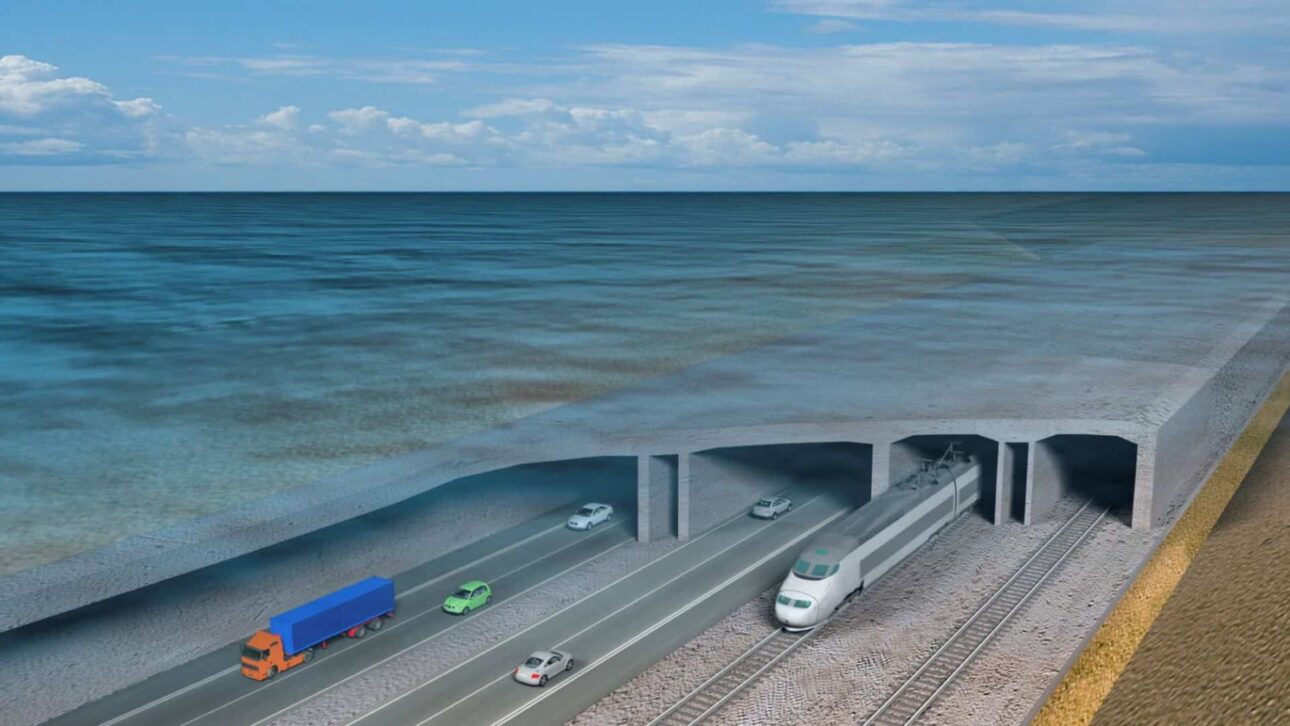
Construction Technique of Underwater Immersed Tunnel
The main difference between an immersed tunnel and a traditional tunnel, excavated by machines below the ground, lies in the construction technique.
In the case of the tunnel crossing the English Channel between France and the United Kingdom, deep excavations were necessary.
The immersed tunnel, on the other hand, uses pre-fabricated reinforced concrete modules, which simplifies execution and reduces both time and environmental impact.
How Is the Construction of the World’s Largest Immersed Tunnel
The tunnel under construction between Rødbyhavn, Denmark, and Puttgarden, Germany, consists of 79 giant concrete blocks, each measuring 217 meters in length, 42 meters in width, and nine meters in height.
The weight of each module is impressive: about 73,000 tons, equivalent to ten structures of the Eiffel Tower.
These pieces are assembled in a dedicated factory covering 220 hectares in Rødbyhavn, on Lolland Island.
The blocks are transported to a trench excavated at the bottom of the Baltic Sea and positioned with precision.
To ensure stability and safety, each module undergoes rigorous sealing and interconnection processes, forming a continuous structure nearly 18 kilometers long.
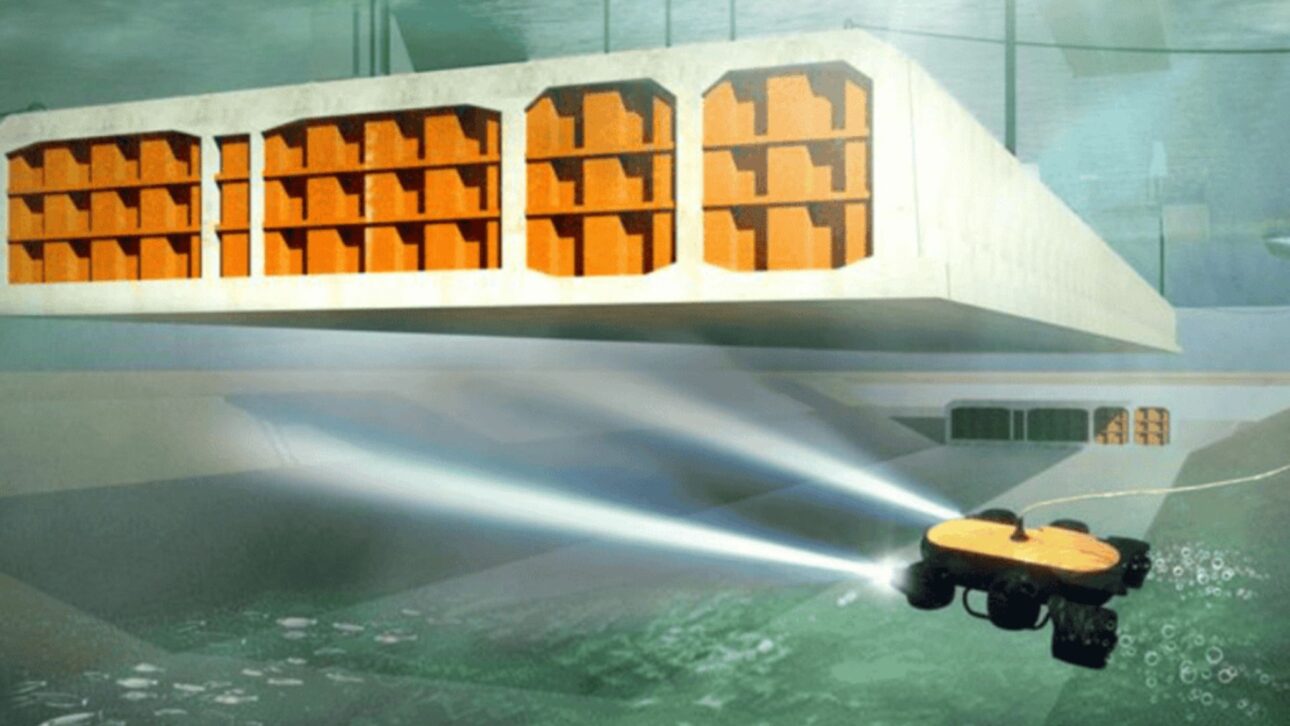
The installation of the pieces is subject to weather conditions, requiring specially designed vessels for the operation.
According to information from Femern A/S, the Danish state company responsible for the project, the start of immersing the first blocks depends on tests with the vessels and sea conditions.
The current forecast is that this phase will be completed by 2029.
The total estimated investment is €7.4 billion, approximately R$ 46.5 billion in July 2025 values.
The tunnel will host two-lane roads in each direction and two electrified railway lines, optimizing transport between the countries.
Environmental and Technical Advantages of the Immersed Tunnel
The immersed tunnel technique presents significant benefits.
Among them, the lower depth required for installation is noteworthy, as the structures are placed directly on the seabed or riverbed, reducing environmental impact compared to deep excavations.
The execution time also tends to be shorter, as the modules are manufactured off-site in series and are only “dipped” and connected in the underwater environment.
These differentials have made the European model a reference for Brazil, which is preparing to execute the country’s first immersed tunnel connecting Santos and Guarujá.
Details of the Immersed Tunnel Between Santos and Guarujá
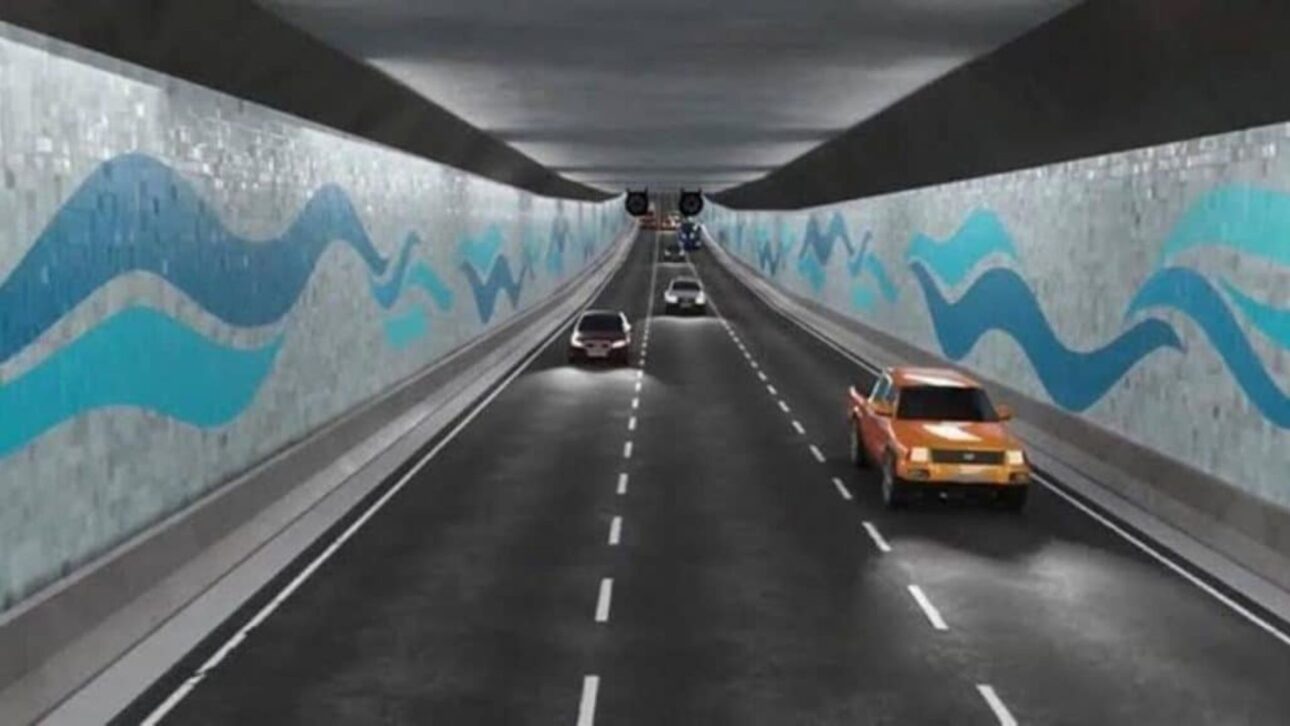
The project for the São Paulo coast foresees the implementation of six pre-molded concrete modules, manufactured in a dry dock.
Upon completion, each module will undergo sealing and impermeability tests before being transported by flotation to the installation point, at the bottom of the estuary separating the two cities.
The immersed tunnel between Santos and Guarujá will have a length of 870 meters and is part of a partnership between the federal government and the São Paulo state government, coordinated by the Ministry of Ports and Airports.
The planned investment is R$ 6 billion, aiming to improve urban mobility and logistics for the country’s busiest port region.
In addition to reducing travel time between Santos and Guarujá, the project promises sustainability benefits, as the modular system decreases the need for large-scale environmental interventions.
Another relevant point is the speed of execution, as the construction method allows modules to be produced in parallel with the preparation of the bed where the tunnel will be placed.









Seja o primeiro a reagir!