





 Portuguese
  English
  Spanish
  5 min of reading
  0 comments


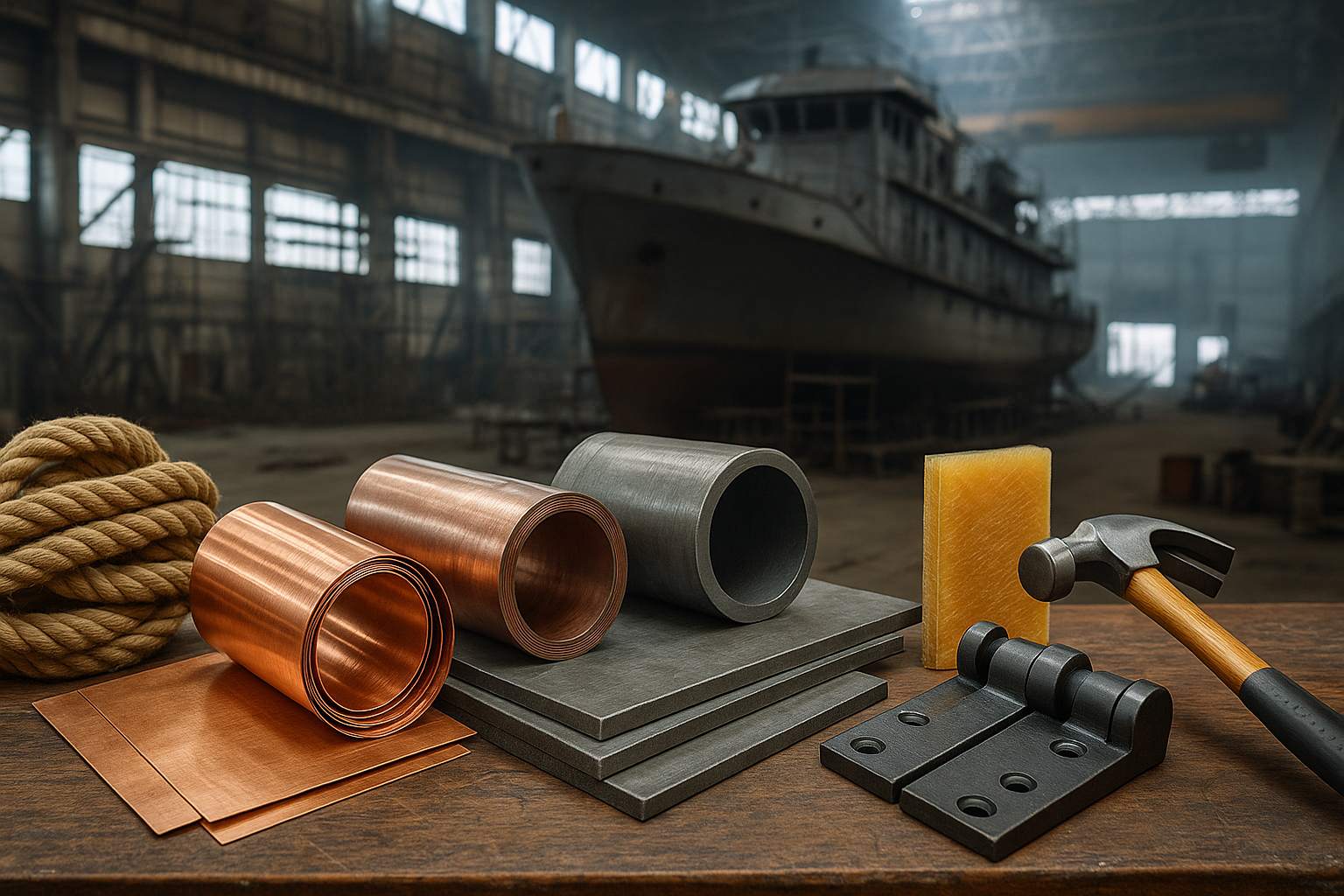
Discover The Main Naval Construction Materials, Their Historical Evolution And Current Application. Understand How The Right Choice Impacts The Strength, Durability And Efficiency Of Vessels In Any Type Of Navigation.
Since the dawn of civilization, humanity has sought to master the seas to explore new territories and facilitate trade.
As reported by the Smithsonian National Museum of Natural History, the earliest records of vessels date back more than 7,000 years ago, a period when the first rudimentary naval construction techniques began to emerge.
Over time, the evolution of naval construction materials reflected not only technological advancement but also the social, economic, and military needs of different eras.
-
Europe is trying to create an ammonia-powered marine engine without auxiliary fuel, which could unlock the race for giant emission-free ships. The technology aims to eliminate one of the biggest obstacles to clean maritime propulsion.

-
A 4,500-ton frigate with just over 100 crew members, state-of-the-art radar, and cruise missiles is being touted as the new standard of naval warfare in the 21st century.

-
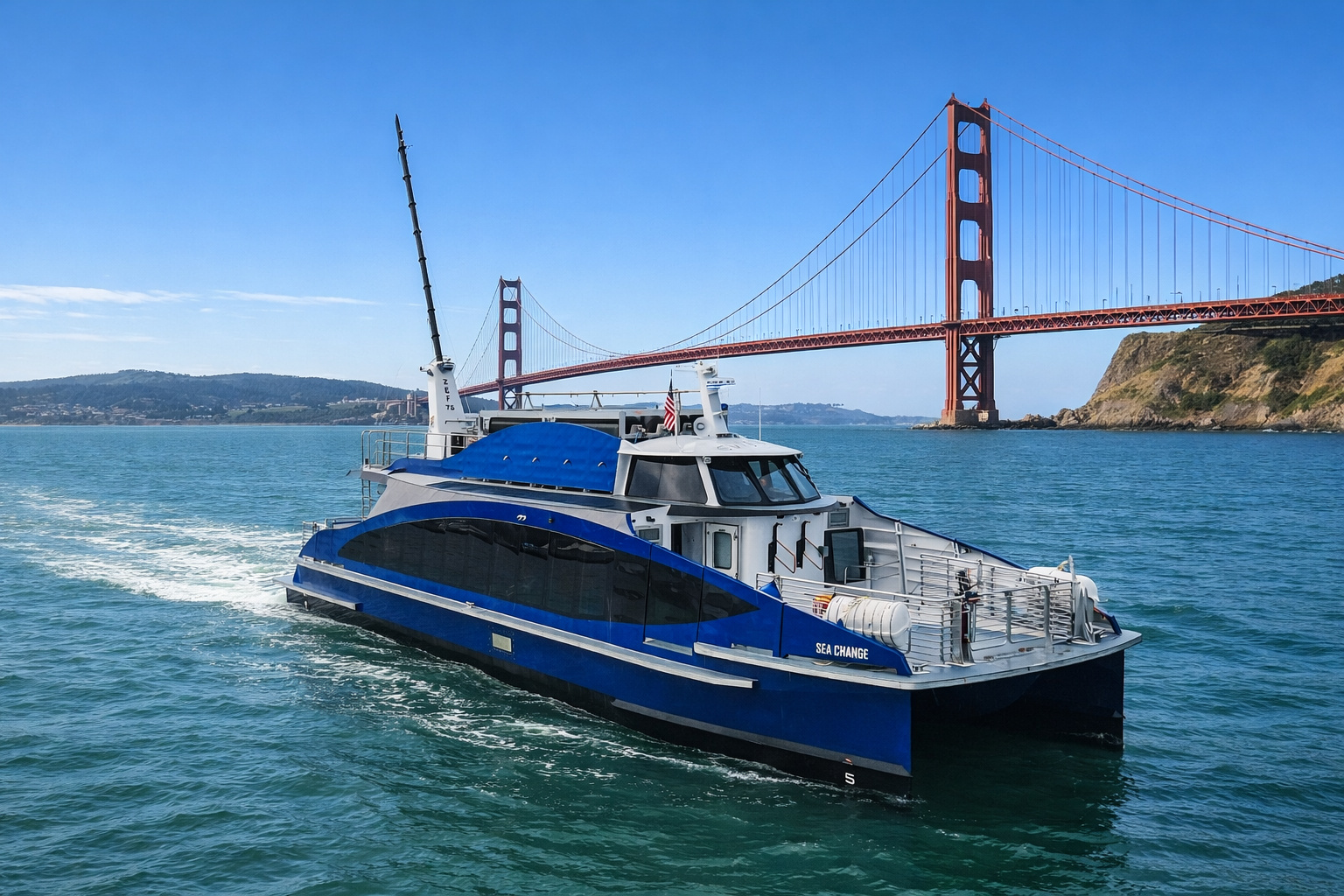
The first commercial hydrogen-powered ferry enters operation in the U.S., eliminates the use of diesel, uses fuel cells to generate clean energy on board, and transforms San Francisco Bay into a landmark of the new era of emission-free navigation.
-
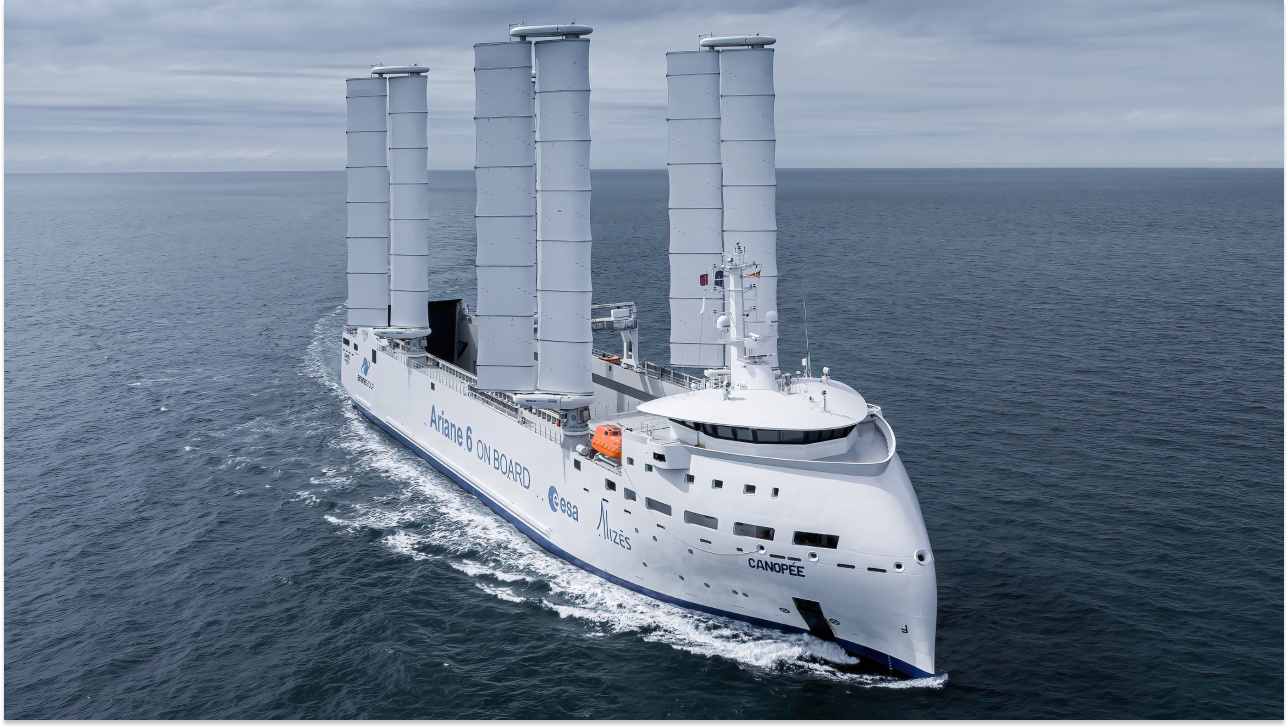
With a length of 121 meters and four rigid sails of 36 meters that automatically rotate to capture the wind, Canopée is the world’s first hybrid industrial cargo ship powered by wind, used to transport rockets and reduce fuel consumption by up to 30% on transoceanic routes.

Understanding the historical trajectory of these materials helps to comprehend why certain resources were chosen in each period and how these processes influence modern naval construction.
Therefore, this article presents a timeless approach, highlighting the main phases of material evolution and their importance for shipbuilding.
Additionally, knowing the materials is essential for engineers, naval architects, and enthusiasts, as the appropriate choice directly impacts the safety, performance, and sustainability of vessels.
According to the International Maritime Organization (IMO), the naval sector keeps pace with societal transformations, adapting to new global environmental and technological demands.
The Beginning Of Naval Construction: The Wood Age
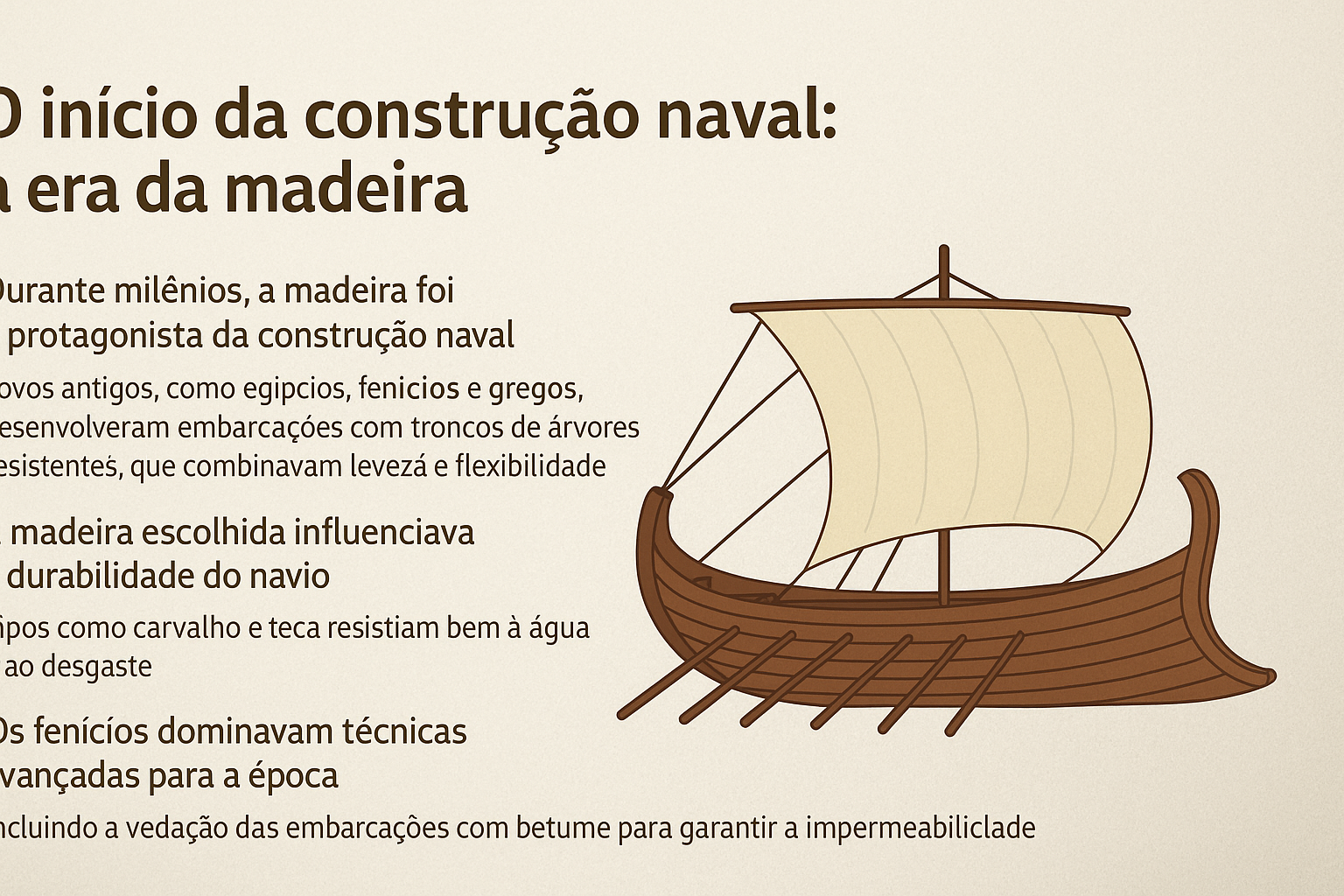
For millennia, wood has been the protagonist of shipbuilding.
Ancient peoples, such as Egyptians, Phoenicians, and Greeks, developed vessels using strong tree trunks that combined lightness and flexibility.
According to studies from the British Museum, the Phoenicians, between 1500 BC and 300 BC, had already mastered advanced techniques for the time, including sealing vessels with bitumen to ensure waterproofing.
The chosen woods, such as oak and teak, influenced the ship’s durability, as these types resisted well to water and wear.
As reported by the Institute of Maritime Archaeology in Athens, the knowledge about naval construction materials allowed ancient civilizations to build vessels capable of oceanic voyages, essential for trade and territorial conquests.
Therefore, wood construction was not just an available resource but also a symbol of human ingenuity in dealing with maritime challenges.
Throughout the Middle Ages, wood shipbuilding continued to prevail, enhanced by European and Asian cultures that developed vessels for commercial, fishing, and military purposes.
Moreover, wood allowed for relatively simple repairs during navigation, an essential factor for long journeys.
However, the use of wood had limitations: vulnerability to deterioration, infestation by marine organisms, and difficulties in supporting larger vessels.
Industrial Revolution: The Age Of Metals
With the advent of the Industrial Revolution in the 19th century, the naval construction landscape changed dramatically.
According to the Brazilian Institute of Naval Engineering, iron began to be used on a large scale starting in the 1850s, with the construction of the first iron-hulled ships.
Iron ships showed greater impact resistance and durability compared to wooden ships.
However, iron also had disadvantages, such as rapid corrosion in marine environments.
Thus, steel, a more durable and malleable metal alloy, soon took center stage.
According to the American Bureau of Shipping, steel became the standard material in shipbuilding by the end of the 19th century, thanks to its ideal combination of strength, flexibility, and cost.
Additionally, welding techniques replaced rivets, reducing weight and increasing the structural strength of ships.
As a result, larger, faster ships capable of carrying bulky cargoes could be built.
These advancements boosted global maritime trade and military operations during the great wars of the 20th century.
The Innovation Of Composite Materials And Fiberglass
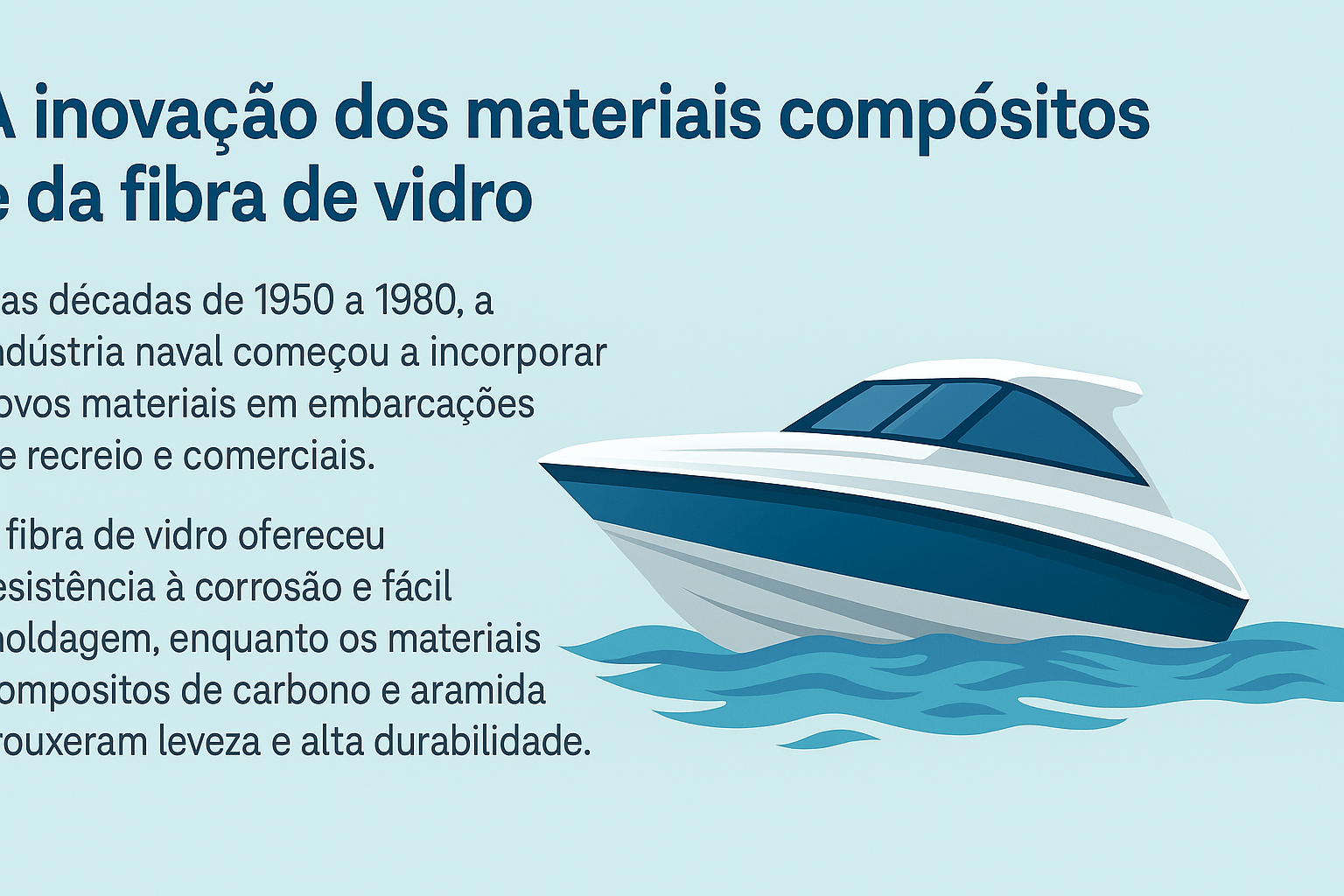
In the following decades, the naval industry began incorporating new materials.
According to the Naval Research Laboratory of the United States, the use of fiberglass began in shipbuilding starting in the 1950s, especially for recreational vessels and small commercial boats.
Fiberglass, combined with plastic resins, brought advantages such as corrosion resistance, ease of molding, and low maintenance costs.
Additionally, starting in the 1980s, composite materials gained ground, with the application of carbon and aramid fibers (such as Kevlar) for high-performance vessels.
These materials are light, highly resistant, and offer greater durability, despite their high cost.
According to the 2022 report from the International Association of Naval Engineering, these composites have been revolutionizing the design and efficiency of vessels, especially in the sports and military industries.
Other Essential Materials In Naval Construction
In addition to the main structural materials, other elements play important roles.
Aluminum, for example, has gained prominence in the construction of lightweight vessels, such as patrol boats, due to its strength and low density.
According to the Brazilian Aluminum Association, the material is corrosion-resistant and facilitates an increase in vessel speed.
The use of copper is for antifouling coatings, which prevent the growth of marine organisms, protecting the hull and increasing efficiency.
In recent years, antifouling paints based on eco-friendly biocides have replaced toxic metals to protect the environment, as recommended by the European Environment Agency (EEA).
Furthermore, plastic materials, rubbers, and thermal insulators are essential for internal systems, ensuring comfort and safe operation.
Sustainability And Environmental Challenges

The growth of environmental concerns in recent decades has brought new challenges for shipbuilding.
According to data from the European Environment Agency, since 2010, the naval industry has been investing in more sustainable materials and techniques.
Biocomposites, recyclable materials, and clean manufacturing processes are gaining more space.
For example, reusing treated wood and using recycled metals are practices that contribute to reducing environmental impact.
Moreover, the use of eco-friendly paints and coatings minimizes ocean pollution.
These initiatives reflect the growing social responsibility of the naval industry, which seeks to balance efficiency and sustainability.
The Future Of Materials In Naval Construction
The future of shipbuilding seems to be marked by technological and sustainable innovations.
According to the 2023 report from the International Association of Naval Engineering, nanotechnology and smart materials promise to revolutionize the sector.
It is expected that self-repairing and environment-sensitive materials will be incorporated, increasing the lifespan and safety of ships.
Additionally, autonomous vessels printed in 3D with advanced materials may become a reality in the coming years.
These technologies could lower costs, increase energy efficiency, and reduce environmental impact.
Therefore, mastery of materials and their properties will be even more crucial for engineers and shipbuilders.










Seja o primeiro a reagir!