





 Portuguese
  English
  Spanish
  4 min of reading
  4 comments


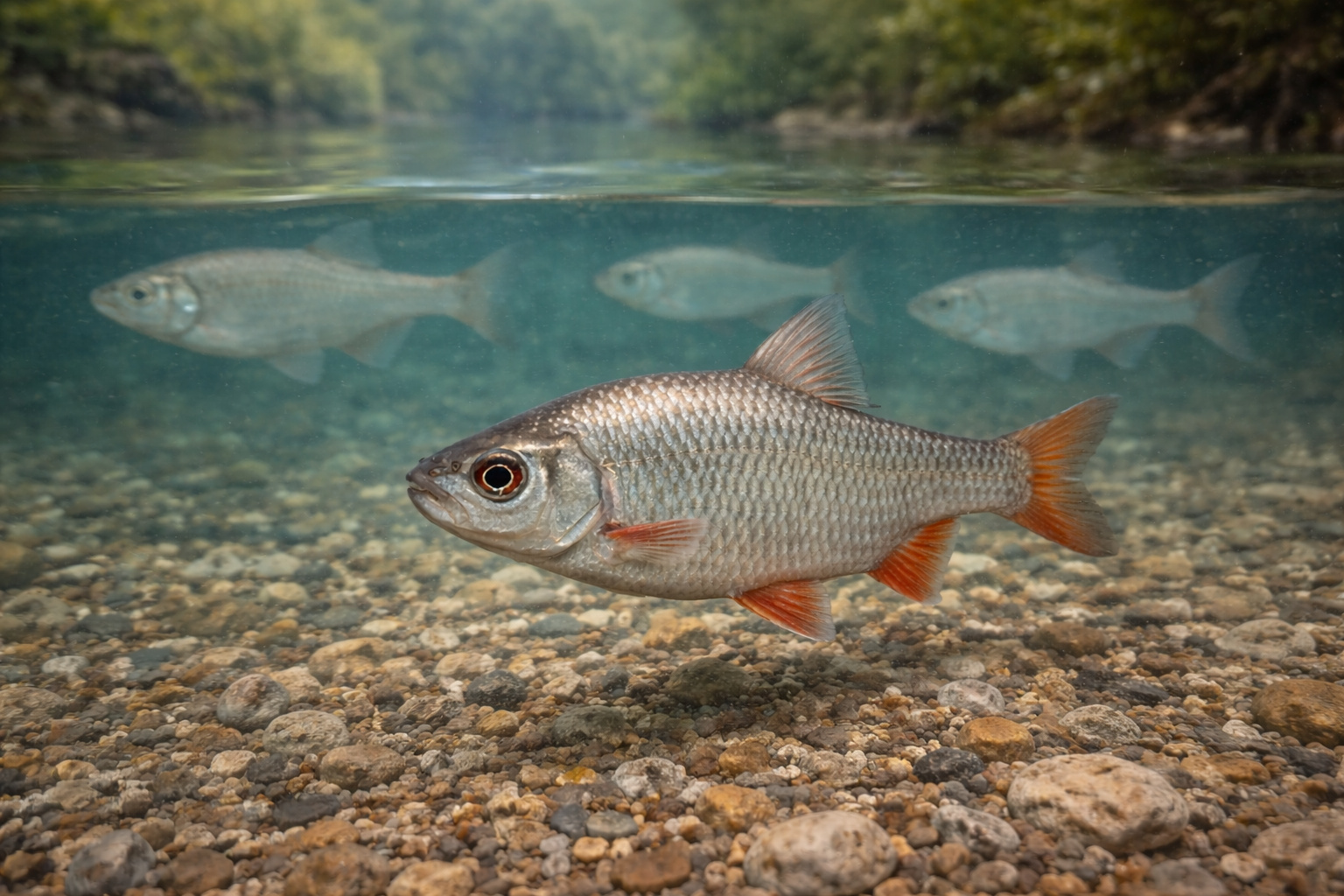


The Hybridization Between Rutilus rutilus and Abramis brama Blocks the Reproduction of Native Fish, Causes Silent Extinctions, and Threatens Entire Freshwater Ecosystems.
When we talk about extinctions, most people imagine exotic predators, diseases, pollution, or climate change. But there is a type of disappearance that is much quieter and harder to see: genetic extinction, when a species ceases to exist biologically not because it dies, but because it irreversibly dilutes into hybrids incapable of perpetuating their own DNA. This phenomenon has been recorded in the rivers and lakes of Europe for decades and is directly related to the hybrid between Rutilus rutilus and Abramis brama, two common species of cyprinids, whose crossing produces fish with a devastating characteristic: they prevent natives from reproducing and perpetuate the genetic collapse of local populations.
How the “Genetic Blackout” Works
The process begins in a seemingly harmless way: distinct yet closely related species crossbreed. The difference is that, in this case, the resulting hybrids exhibit reduced fertility or total sterility, depending on the population and region. This means that:
- they invade spawning areas, occupying the same space as natives;
- they release incompatible gametes, wasting the reproductive energy of natives;
- they compete for food and habitat very efficiently, as they often grow faster;
- and, most seriously, they prevent the success of native parents’ eggs and larvae, generating a “genetic trap” effect.
In other words, hybrids appear, occupy the niche, and shortly after the native can no longer leave viable offspring in sufficient numbers, resulting in an extinction process without corpses — the DNA disappears before the individuals do.
-
A British startup creates tires that generate electricity in electric vehicles when passing over potholes, speed bumps, and cracks.

-
Scientists have created robots made with living cells that have their own nervous system, swim on their own, explore the environment, and self-organize without any genetic engineering, and now they want to do the same with human cells.

-
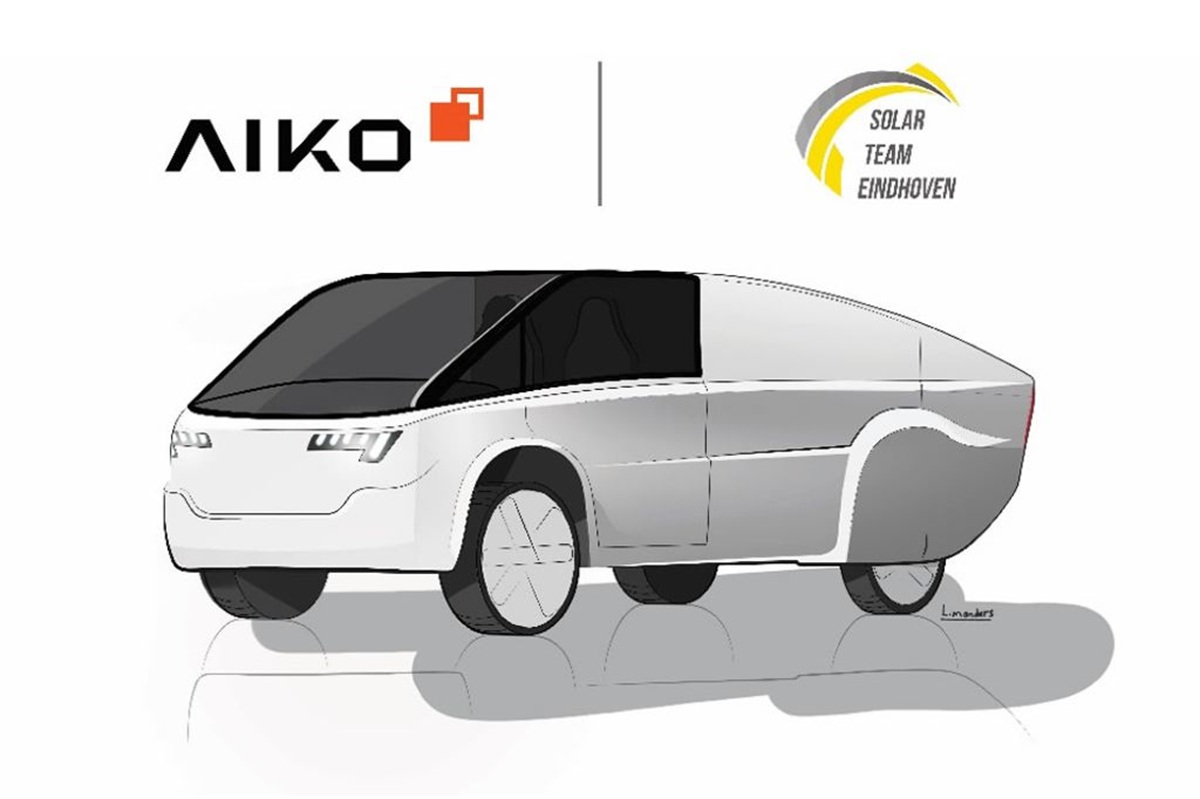
Students create a solar-powered ambulance that operates without a plug, without fuel, and still keeps medical equipment running in remote areas.
-
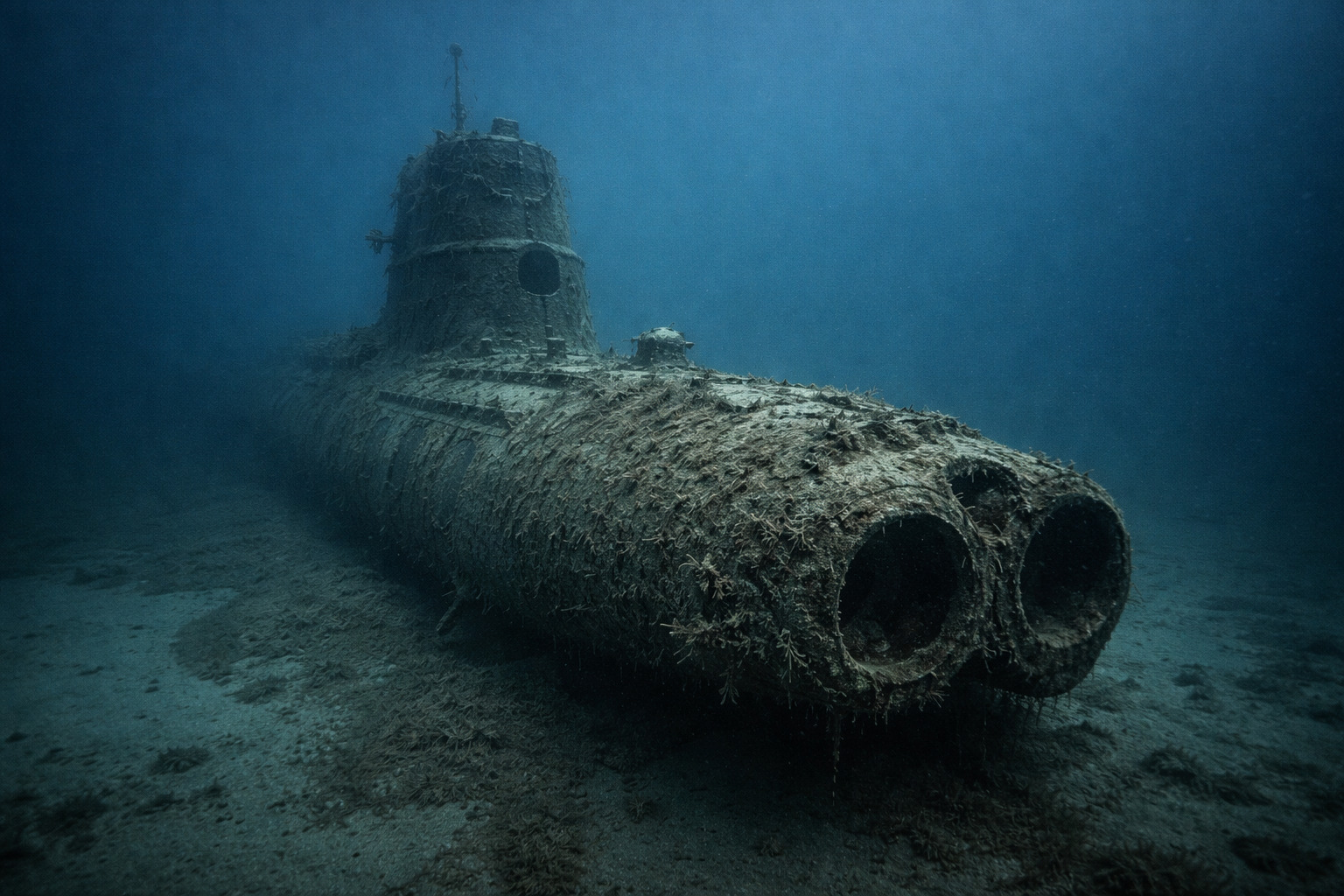
French “ghost” submarine lost in World War II reappears after more than 80 years on the seabed near the coast of Spain.


Why This Concerns Scientists and Ecologists
The situation is more serious than it appears for three main reasons:
- It is invisible to the public eye — there are no dead fish floating, no dramatic scenes, no headlines.
- It is irreversible on a human evolutionary scale — once a genetic stock collapses, there is no way to “de-hybridize” an ecosystem.
- Even if hybrids are sterile, they consume territory, food, and reproductive energy, creating an ecological blockage.
Research on the subject indicates that the most affected region is Central and Eastern Europe, especially countries with intensive canal systems, dams, and artificial restocking. Studies published in Conservation Genetics and Nature Ecology & Evolution show that native species are losing functional DNA and morphological characteristics, while hybrids dominate niches that were once exclusive to pure species.
The Role of Humans in the Process
This phenomenon did not arise out of nowhere — it is a side effect of human activities, particularly:
- Translocation of fish between basins;
- Release of fish for recreational fishing;
- Artificial connectivity between rivers through canals;
- Dams that force different species to share restricted areas;
- Pollution and eutrophication that favor some species and eliminate others.
It’s the classic case where it’s not the strongest that survive, but the most favored by the environment altered by humans.
The Impact on European Ecosystems
Europe has been witnessing the collapse of isolated populations, especially in lakes and canals; an increase in hybrids in urban and agricultural areas; loss of native lineages with ecological and historical value; and trophic changes, as hybrids tend to have more opportunistic diets. This alters the entire food chain, impacting piscivorous birds, mammals, amphibians, and even aquatic insects.

Can It Happen on Other Continents?
Yes, and it is already happening on a smaller scale in regions where European cyprinid species have been introduced, especially in North America, Central Asia, and New Zealand.
Scientists are monitoring the situation because, as geneticists studying the subject explain, asymmetrical hybridization is one of the fastest forms of environmental extinction indirectly caused by humans.
The Future Scenario and the Ecological Alert
The problem of Rutilus rutilus × Abramis brama serves as a warning for a larger phenomenon: the collapse of genetic diversity in freshwater. Rivers and lakes represent less than 1% of the planet’s water but host about 10% of all known vertebrate species. They are fragile environments, quick to change and slow to recover.

While invasive predators and diseases grab headlines, destructive hybridization continues to be the silent murder of biodiversity, erasing species without anyone noticing — without conflict, without noise, without corpses, just DNA disappearing from the planet.






The role of MEN? The role of humans or MAN would be appropriate. What a liberal bias load of tripe
Since the introduction of roach to N. Ireland around 80 years ago, roach x bream hybrids have appeared throughout the country. They have severely impacted the biomass of pure bream here in Co. Fermanagh, but there are signs of recovery. Fish populations are on constant flux, and micro plastics, pharmaceutical wastes in sewage outfalls etc. pose equal if not worse threats than hybridisation.
Interesting article but with so many grammatical and spelling mistakes. Please read properly and correct before posting to be considered credible.
Check the writer’s name, and you will realize that she’s not a native English speaker. Taking that into consideration, I think she’s done very well.