





 Portuguese
  English
  Spanish
  4 min of reading
  45 comments


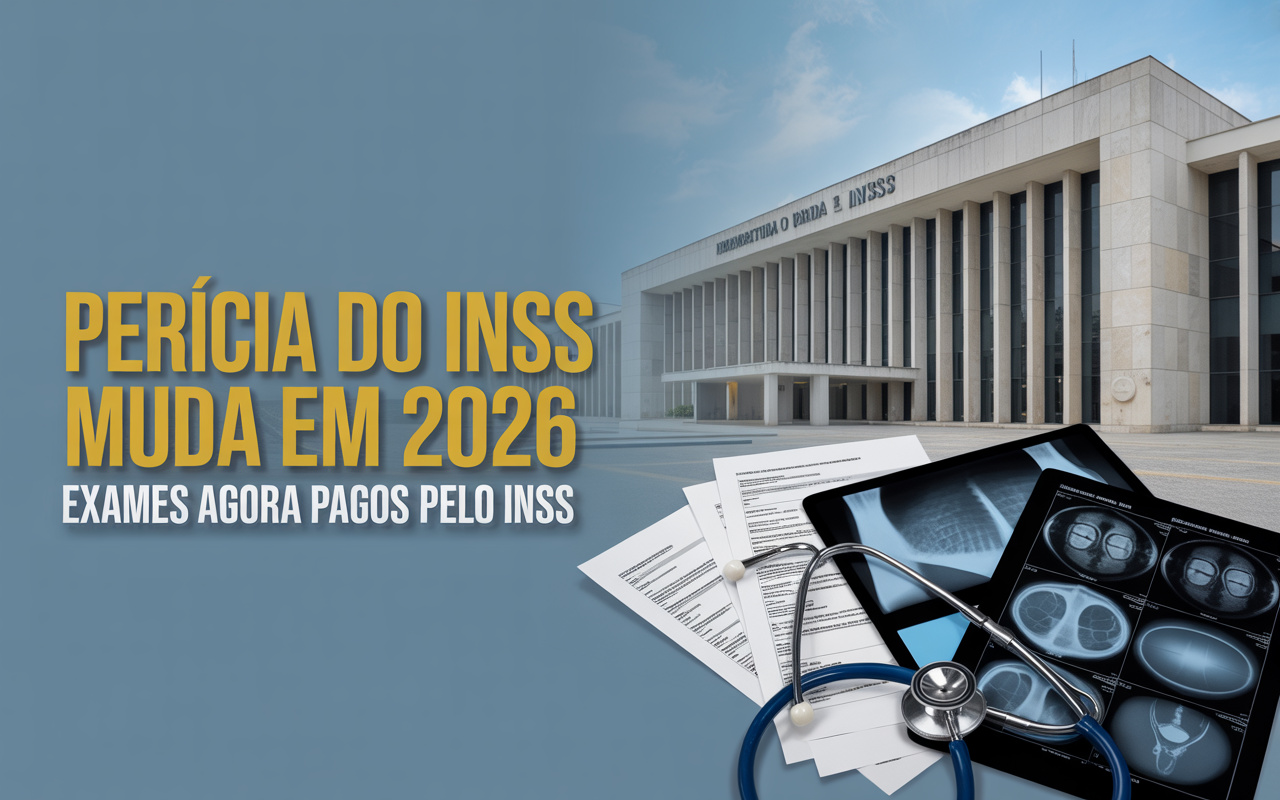


As of 2026, exams and reports required in INSS examinations must be paid by the institute itself, according to judicial decision and new regulation.
The medical examination of the INSS will undergo one of the biggest transformations in recent years starting from January 1, 2026. From this date, the insured will no longer be obliged to pay out of pocket for expensive exams or specialized reports required by the federal medical expert to complete the examination. In practice, this means the end of a common and unfair situation: the expert required exams such as magnetic resonance imaging, computed tomography, or specialist reports, and the insured, often unemployed or unable to work due to illness, had to bear high costs to avoid having the benefit denied. The new regulation promotes a change supported by the constitutional principles of human dignity and social protection of Social Security, guaranteed by Article 194 of the Federal Constitution.
What Motivated the Change: National Reach Judicial Decision
This change did not arise from isolated administrative initiative. It stems from a decision of the Federal Court, rendered in Civil Public Action No. 5000295-09.2015.4.04.7200/SC, which recognized that it is not legal to transfer the cost of essential exams for social security medical expertise to the insured.
The Court understood that if the examination is necessary for the INSS to form conviction about the right to the benefit, the cost cannot be imposed on the citizen, especially when it comes to people in situations of economic vulnerability.
-
Government enacts new law: paternity leave increases from 5 to 20 days with gradual increases until 2029, and Social Security pays the paternity salary; companies no longer bear the absence cost, estimated at R$ 5.4 billion.

-
End of the 1-hour lunch break in the CLT? Current labor law maintains the break, allows for negotiated reductions, and defines rules for working hours and home office in Brazil.

-
Employee Fired After Accumulating 114 Days of Medical Leave in One Year, Labor Court Upholds Company’s Decision

-
Employee Fired While Treating Depression Wins in Court and Vale Is Required to Rehire Him Following Decision Based on the CLT and INSS Benefits


With the publication of the new regulation, this judicial understanding becomes incorporated into the administrative practice of the INSS, with mandatory application throughout the national territory.
What Changes in Practice for Those Undergoing Examination
Starting in 2026, whenever the federal medical expert deems that there are not enough elements to conclude the examination based solely on documents already presented, and requests complementary exams or technical reports, the cost will be the responsibility of the INSS.
This applies to high-cost exams, such as imaging tests, specialized assessments, and other procedures necessary to prove incapacity, disability, or health conditions relevant to the benefit.
The insured will no longer run the risk of having their request denied simply for not having the money to pay for exams required by the State itself.
The Rule Applies to Which Types of Requests
The new obligation of the INSS is not limited to initial benefit requests. It also applies to situations that, in practice, create even more insecurity for the insured.
This includes new requests for social security and assistance benefits, requests for extension of benefits due to incapacity, and requests for reinstatement of benefits that were terminated after examination.
In other words, whenever there is a federal medical examination and the need for additional exams, the cost can no longer be transferred to the insured.
How the INSS Should Fund These Exams
Although the obligation is already defined, the operational model will still be detailed by the INSS in conjunction with the Department of Federal Medical Expertise. A new regulation should establish how funding will work in practice.
Among the proposed methods are direct reimbursement to the insured, upon presentation of receipts, conducting exams through partnerships with affiliated clinics and laboratories, or other administrative mechanisms that ensure free access to required exams.
The central point is that none of these solutions can impose costs on the insured, respecting the judicial decision.
Why This Change Is So Relevant from a Legal Point of View
From a legal standpoint, the measure reinforces fundamental constitutional principles, such as access to social security, human dignity, and the right to due administrative process without excessive burden on the citizen.
The Court made it clear that the State cannot require complex technical evidence and, at the same time, transfer the cost of this evidence to those who depend on the benefit to survive. The new rule corrects a historical distortion in the operation of INSS examinations.
What the Insured Should Do Starting in 2026
From the entry into force of the rule, the insured who has exams required by the expert should not automatically pay out of pocket. If this occurs, it will be possible to challenge the requirement administratively, and, if necessary, judicially, based on the decision of the Civil Public Action and the current regulation.
This change also tends to reduce the judicialization of benefits denied due to “lack of exams,” one of the most frequent reasons for lawsuits against the INSS.
A New Scenario for Medical Examination in Brazil
The obligation for the INSS to fund complementary exams represents a structural change in the relationship between the insured and the federal medical examination. The focus shifts to fair assessment of health condition, rather than the financial capacity of the citizen to produce technical evidence.
Starting in 2026, the INSS examination will no longer penalize those who cannot pay and will fully assume responsibility for its own evaluation process. For millions of Brazilians, this is not just an administrative change; it is a concrete guarantee of access to basic social security rights.










Huber Latina para o Yuri hamanha 13horad
Bom para os beneficiários da previdência, porém a decretação que o SUS NÃO FUNCIONA. Ele teria que dar agilidade e se responsabilizar por isso em tem record.
Existe uma pegadinha, nesta decisão! “Se o médico perito,PEDIR exame. Não se confundam. Se vc precisa de exames para comprovar o seu estado de saúde, vai continuar pagando CARO, por exames. Eles quase nunca pedem exames para comprovação de saúde. As vezes eles nem vêem os exames que são levados, imagina pedir! Proposta Nate-Morto
Realmente os exames eles nem olham porém o laudo dos exames eles olham e muito bem olhado