





 Portuguese
  English
  Spanish
  4 min of reading
  0 comments


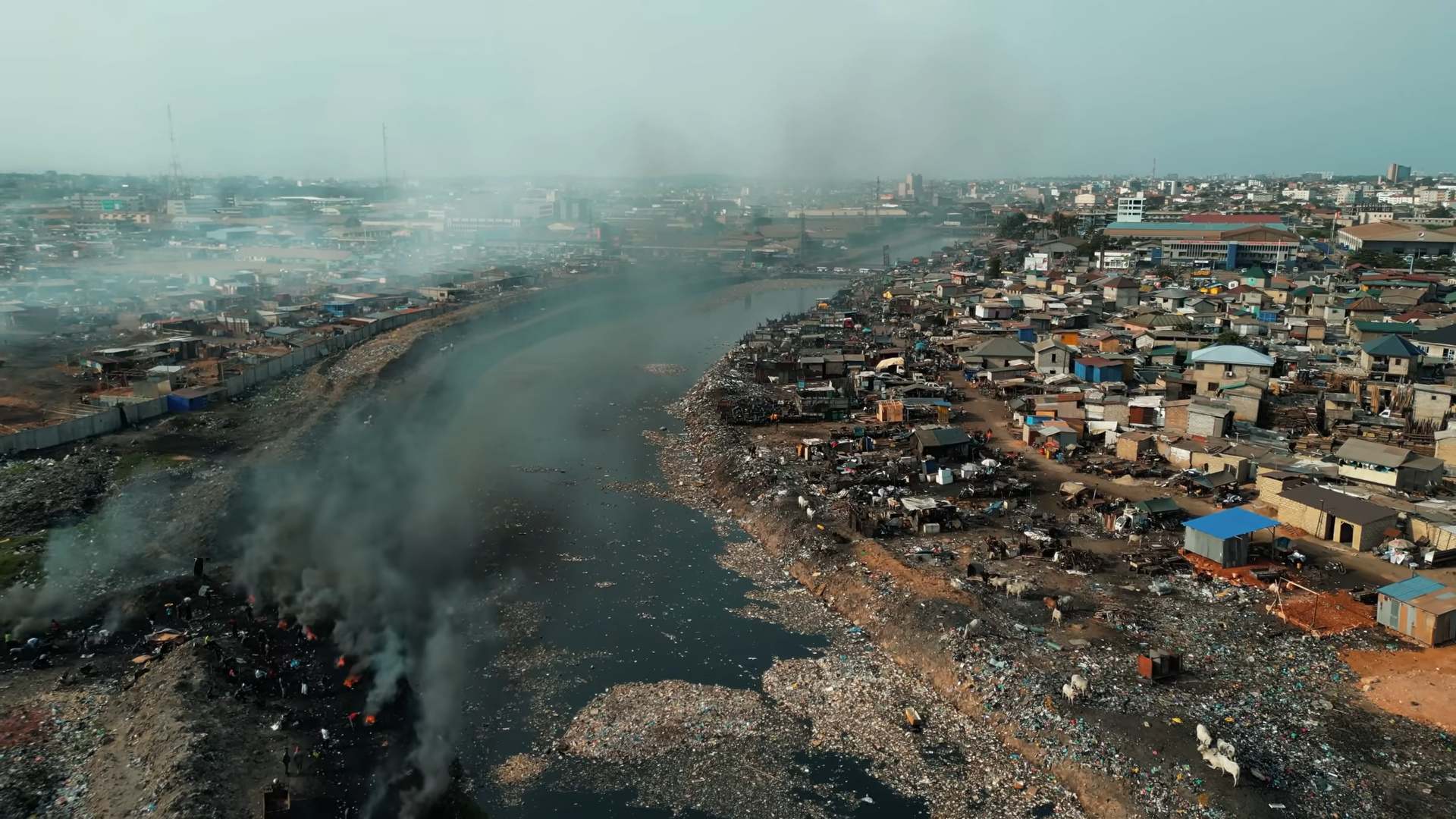
In Agbogbloshie, in Accra (Ghana), up to 250 thousand tons of e-waste per year generate income with copper, but expose residents to extreme contamination and health risks.
In Agbogbloshie, a district located in central Accra, the capital of Ghana, West Africa, there is one of the most documented cases of urban environmental collapse in the 21st century. The site has become a global symbol of the e-waste problem after several studies conducted by institutions such as Pure Earth (formerly Blacksmith Institute), the United Nations University (UNU), and investigative reports from BBC, The Guardian, and Al Jazeera. The most cited data indicate that up to 250 thousand tons of electronic waste per year pass through the area or its informal recycling chain, a figure widely reported in studies published between 2013 and 2020.
The consolidation period of the problem coincides with the increase in the import of used electronic equipment mainly from Europe, the United States, and Asia, intensified since the 2000s, when illegal disposal began to be disguised as “donation of second-hand equipment.”
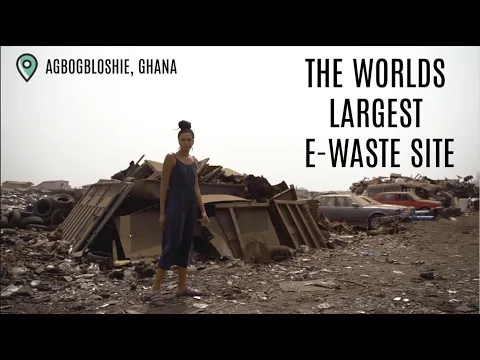

The main institutional source on the environmental impact of the site is Pure Earth, an organization that has repeatedly included Agbogbloshie in its annual reports on the most polluted places in the world, along with research conducted by universities such as the University of Ghana, ETH Zurich, and UNU.
-
With 74% of companies facing difficulties in hiring, technicians and engineers in renewable energy are becoming scarce in Brazil and are essential to support the expansion of solar, wind, and green hydrogen projects.

-
Historic bankruptcy of Centauro shocks the market, and the century-old company puts more than 500,000 products, machines, and complete infrastructure up for online auction.

-
New shoe factory in Ceará is expected to create 400 jobs and strengthen the local economy.
-
No one imagined it, but a mixture of sawdust with a mineral that fights fires surprises scientists with a result that changes the course of fire-resistant construction.

How Agbogbloshie Became a Global E-Waste Hub
Agbogbloshie did not start as a dump. Until the 1990s, the area was occupied by wetlands near Korle Lagoon and low-income communities. The transformation occurred when electronic scrap began arriving in large volumes at the port of Tema, about 30 km from Accra. Some of this material went to formal markets, but what had no commercial value ended up being directed to Agbogbloshie.
According to UNU, a significant fraction of the imported equipment arrives non-functional, despite being declared as reusable products. Tube televisions, old computers, refrigerators, printers, and cables accumulate in piles visible from miles away.
The neighborhood has become an enormous informal manual dismantling center. Young and adult workers use rudimentary tools—hammers, stones, and open fires—to extract copper, aluminum, and small amounts of valuable metals, such as gold present in electronic boards.
The Hidden Value in Waste: Copper, Aluminum, and Rare Metals
What keeps Agbogbloshie active is not the waste itself, but the economic value of metals. According to studies by UNU, a ton of electronic boards can contain more gold than a ton of ore mined from conventional mines.
Copper, the main target of cable burning, is sold daily in the local market and fuels informal industrial chains.
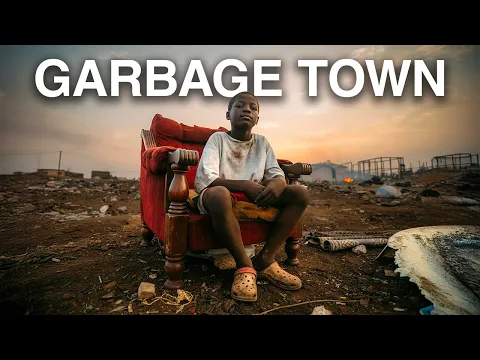
This trade sustains thousands of people, many of whom are internal migrants from northern Ghana. Reports from BBC estimate that between 4,000 and 6,000 workers work directly or indirectly on site, without contracts, without protective equipment, and without any environmental control.
The Invisible Smoke: What Is Released into the Air, Soil, and Water
The biggest problem in Agbogbloshie is not visual but chemical. The burning of wires and plastic carcasses releases a highly toxic combination of substances, including dioxins, furans, lead, mercury, cadmium, and polycyclic aromatic hydrocarbons.
Research published in the journal Science of the Total Environment identified lead levels in the soil dozens of times above the limits recommended by the World Health Organization (WHO). Water samples from Korle Lagoon showed high concentrations of heavy metals, affecting aquatic ecosystems and neighboring communities.
Pure Earth classifies the contamination of Agbogbloshie as a severe public health risk, especially for children and young workers who are more vulnerable to the absorption of heavy metals by the body.
Direct Impacts on the Health of the Local Population
Although there is no single official number for life expectancy in Agbogbloshie, medical studies conducted by the University of Ghana and international researchers document chronic respiratory problems, skin injuries, neurological disorders, and possible impacts on cognitive development.
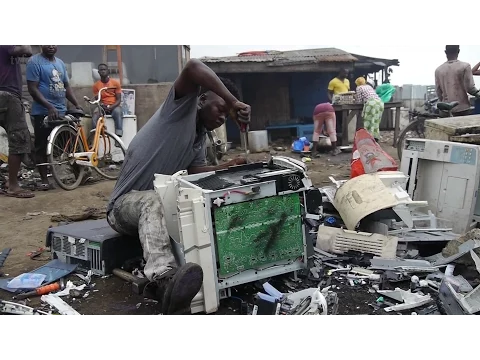
Blood analyses conducted on workers revealed elevated levels of lead and mercury, associated with motor difficulties, extreme fatigue, and increased risk of cardiovascular diseases. Constant exposure occurs without any personal protective equipment, which exacerbates the situation.
Intervention Attempts and the Limits of Solutions
Since 2015, the government of Ghana, in partnership with UNU and Pure Earth, has announced plans to transform Agbogbloshie into a formal recycling hub, with safe techniques and environmental control. Some pilot initiatives have been implemented, including dismantling centers without open burning.
However, reports from Reuters and BBC show that the scale of the problem exceeds the implemented solutions. The constant flow of waste and the economic dependence of the local population make it difficult to eradicate the informal model.
Furthermore, UNEP (United Nations Environment Programme) experts point out that the problem cannot be solved locally: it is a direct consequence of the global consumption and disposal model, which offloads environmental costs onto developing countries.
Agbogbloshie as a Mirror of the Global E-Waste System
Agbogbloshie is not an isolated case but a symbol. According to UNU, the world generated over 50 million tons of e-waste in 2019, and less than 20% was recycled formally. The rest went to landfills, illegal exports, or informal circuits like that of Accra.
While rich countries export the problem, communities like Agbogbloshie pay the price with health, contaminated soil, and cycles of poverty that are hard to break. The neighborhood has become a stark portrait of the modern paradox: billion-dollar recyclable metals coexisting with extreme sanitary conditions.








-

Uma pessoa reagiu a isso.