





 Portuguese
  English
  Spanish
  5 min of reading
  1 comment


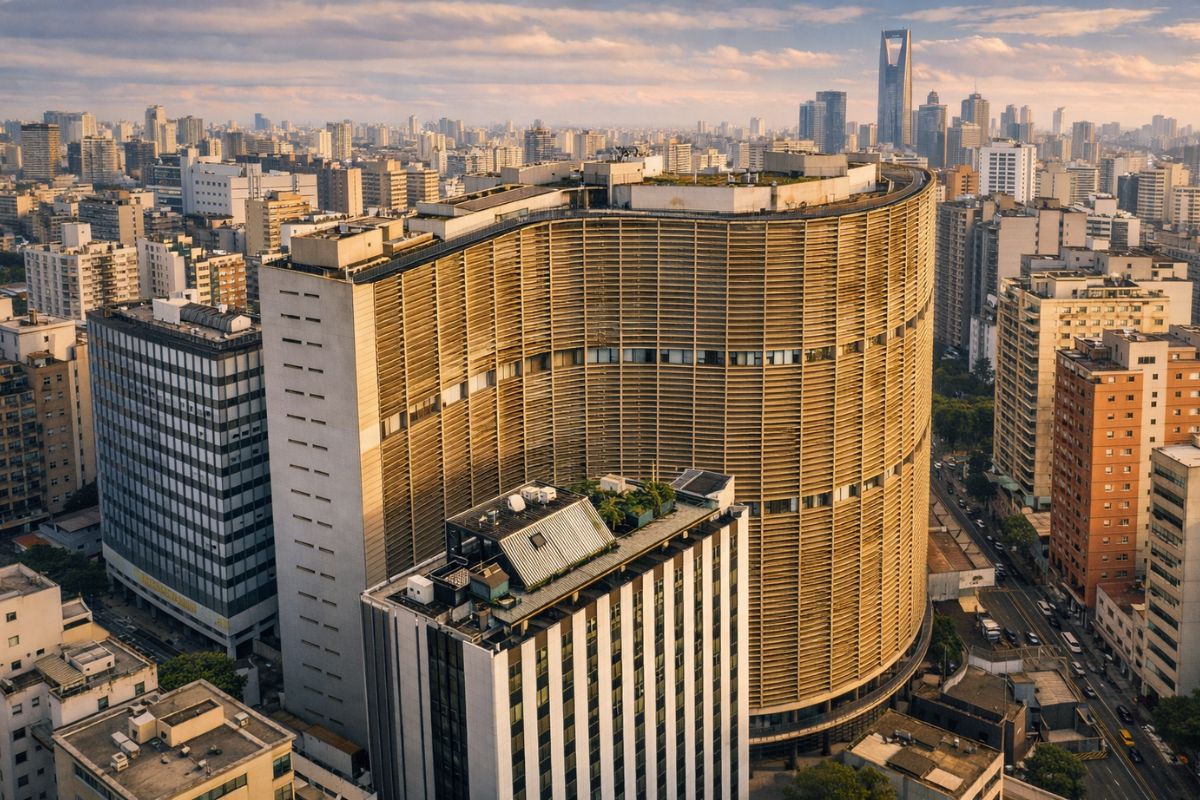


At Copan, Seasonal Rentals Occupy About 200 Apartments In An Iconic Residential Building In São Paulo, Reigniting The Debate About Property Rights And Reinforcing The Weight Of Rent In The Routine Of The Condominium.
The seasonal rental has become a reason for open dispute in the hallways of Copan, in the heart of the São Paulo capital. In a 37-story building with iconic curves and known as the largest residential building in Latin America, some residents see short stays as an income opportunity, while others view it as a direct risk to safety and daily coexistence.
Designed by Oscar Niemeyer as a large set of housing and shops, Copan has become a symbol of social diversity and intense circulation of people. Today, about 200 apartments are designated for seasonal rentals, which effectively makes the building operate as a mix of condominium, shopping gallery, and “hotel” spread across multiple units.
Copan, The Residential Giant At The Center Of The Dispute

One of the most well-known buildings in São Paulo, Copan has always drawn attention for its curves, central location, and size.
-
The government requests the Federal Revenue Service for a new system to automate the income tax declaration, reducing errors, time, and bureaucracy for millions of Brazilians.

-
Pix in installments, international Pix, and contactless payment without internet: the Central Bank revealed the new features coming to the tool that is already used by almost every adult in Brazil.

-
Mercado Livre has just started selling medications with delivery in up to three hours to your door, and this move could completely change the way Brazilians buy medicines on a daily basis.

-
In Dubai, rising tensions from the war in the Middle East are causing super-rich individuals to leave the Gulf and direct their fortunes to a new financial refuge in Asia.


It is a complex that combines apartments, shops, and services, with a constant flow of residents, workers, and visitors entering and exiting through the commercial area throughout the day.
In this already bustling environment, short-term rentals add an extra layer of circulation.
People who have never stepped into the building are now coming in and out with bags in hand, often staying only a few days on the same floor as those who have lived there for decades.
For those who support this model, short-term rentals help place Copan on the map of urban tourism and strengthen the building’s vocation as an icon of the city.
How Short-Term Rentals Gained Ground In Copan
The rise of digital platforms has paved the way for owners to transform their apartments into seasonal rental products, aimed at tourists, business travelers, and curious individuals who want to experience life in the center of São Paulo.
In Copan, many owners have already hired managers to take care of all the processes involved in these rentals, from advertising and reservations to cleaning, check-in, and key control.
The logic is to treat the apartment as a small business, with high guest turnover and a focus on profitability.
Those who invest in this type of rental often highlight three main attractions: the experience of living for a few days in the historic center, the appeal of the building’s iconic architecture, and the curiosity of seeing one of the most famous buildings in Latin America from the inside.
For this group, the flow of visitors helps to enhance property value and keep Copan alive, connected to the city’s movement.
Reception Under Pressure And Fear Regarding Safety


On the other side are residents who view short-term rentals as a direct threat to safety and the equilibrium of the condominium.
Long-term residents report concerns about having a large number of people without fixed ties circulating through the hallways, elevators, and common areas at the same time.
They remind us that the reception, maintenance, and teams that operate “downstairs” already deal with an intense routine.
With the increase in short-term rentals, these residents fear that the reception will need to give extra attention to registering each person, controlling entries and exits at a rapid pace, and still become more vulnerable to mistakes.
Some say that, in a building of this size, it only takes one mistake in identifying a guest or granting access for the entire security system to be compromised.
The fear is not just of theft or invasions, but also of losing control over who is circulating in the internal areas at certain times.
1969 Convention, Property Rights, And Court Decision
The condominium convention of Copan is from 1969, a time when there were no apps and it was unimaginable that short-term rentals would be organized through digital platforms. The text was designed for a building of permanent residents, with a different pace of apartment use.
Over time, however, reality changed faster than internal rules. Following a court ruling, the condominium had to adapt to the understanding of the Court of Justice, which declared this type of rental authorized.
The court’s reading was that the owner can use a platform to offer the property for shorter rental periods, supported by property rights.
In practice, this means that the condominium has little room to simply prohibit short-term rentals, even if some residents disagree.
The conflict now revolves around how to impose minimum internal rules for registration, security, and coexistence, without infringing on the rights of those who want to rent out their property in this way.
From Copan To The World: The Debate About Short-Term Rentals
What is happening today at Copan is not an isolated case. With the global growth of short-term rental platforms, discussions about this type of rental have also progressed in various parts of the world.
Cities like New York and Berlin have already adopted strict rules to limit the impact of short stays in residential buildings and entire neighborhoods.
At Copan, the debate is still ongoing. On one side are those who see short-term rentals as a legitimate way to take advantage of property value, attract visitors, and keep the building in the spotlight in the city.
On the other, residents who value daily stability fear that the condominium may start to resemble a hotel, with constant neighbor turnover and a growing sense of anonymity.
In the end, Copan has become a living laboratory to test how far short-term rentals can go in a giant condominium without breaking the fragile balance between property rights, safety, and the quality of life of those who live there year-round.
What do you think, should short-term rentals in buildings like Copan be limited by the condominium or allowed for property owners?








Aluguel atípico de airbnb somente com aprovação de 2/3 dos condomínios em assembleia.