





 Portuguese
  English
  Spanish
  5 min of reading
  9 comments


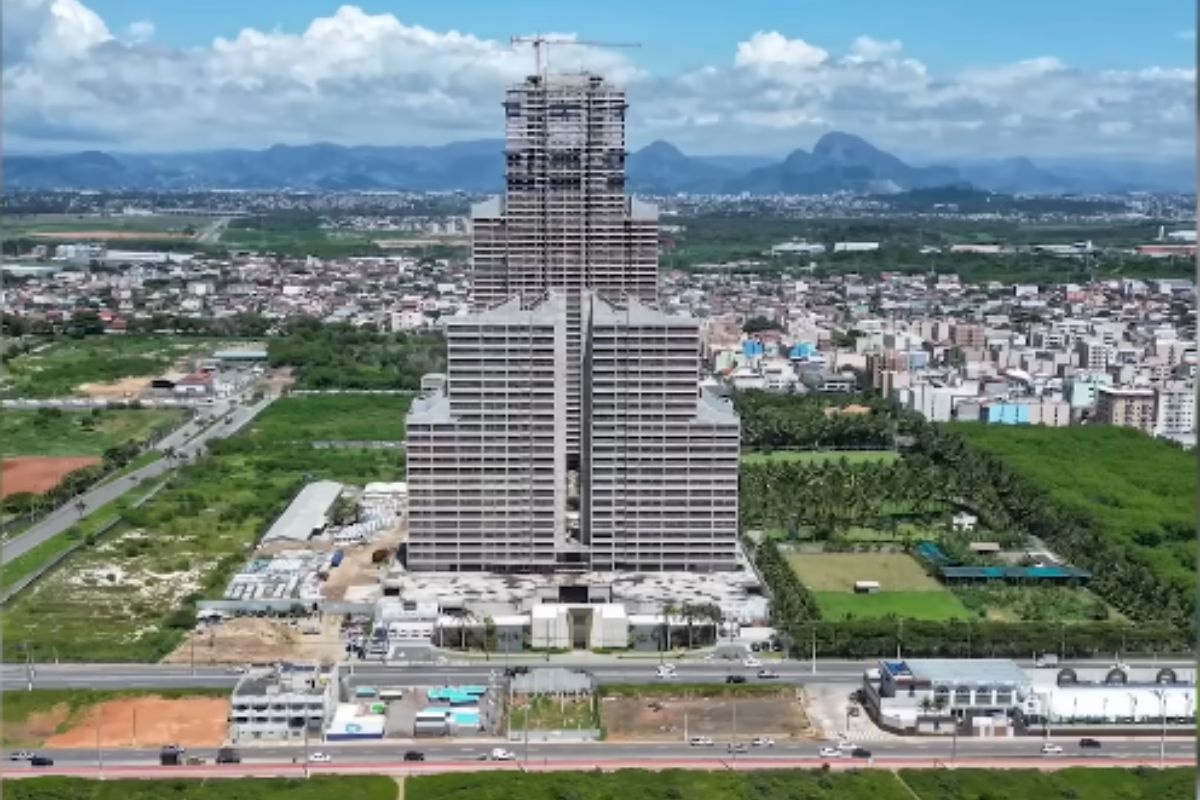


In Vila Velha, the Taj Tower of R$ 600 million Is Sold as Luxury by the Seaside, Aspires to Be the Tallest Tower in the City, and Sits Next to a Fragile Sandbank That Is Already Feeling the Pressure of Concrete.
In Vila Velha, a venture of R$ 600 million sold as luxury by the seaside promises imposing architecture, sea views, and exclusivity, but raises an uncomfortable question for outsiders. Two towers of 50 and 25 floors make up the complex named Taj, with apartments up to 300 m², a mirrored facade in shades of purple, blue, or brown, and the label of the future tallest tower in Espírito Santo, but the visual result resembles more a commercial building from the 80s than a contemporary residential structure integrated into the landscape.
While the advertisement speaks of sophistication, privacy, and luxury by the seaside, the surroundings tell another story. There are 390 apartments pouring people directly onto a narrow beach, in front of a fragile protected sandbank, all of this on the edge of a highway where the sidewalk seems to have been forgotten in the planning. Realtors say that, despite heavy marketing with celebrities, the venture launched in 2018 still hasn’t sold even half of the units, reinforcing the feeling that the luxury discourse does not match what is visible from the street.
When “Luxury by the Seaside” Looks Like the Facade of a Building from the 80s
In advertisements, the Taj appears as a symbol of luxury by the seaside, with promises of iconic architecture and a striking presence on the shore of Vila Velha.
-
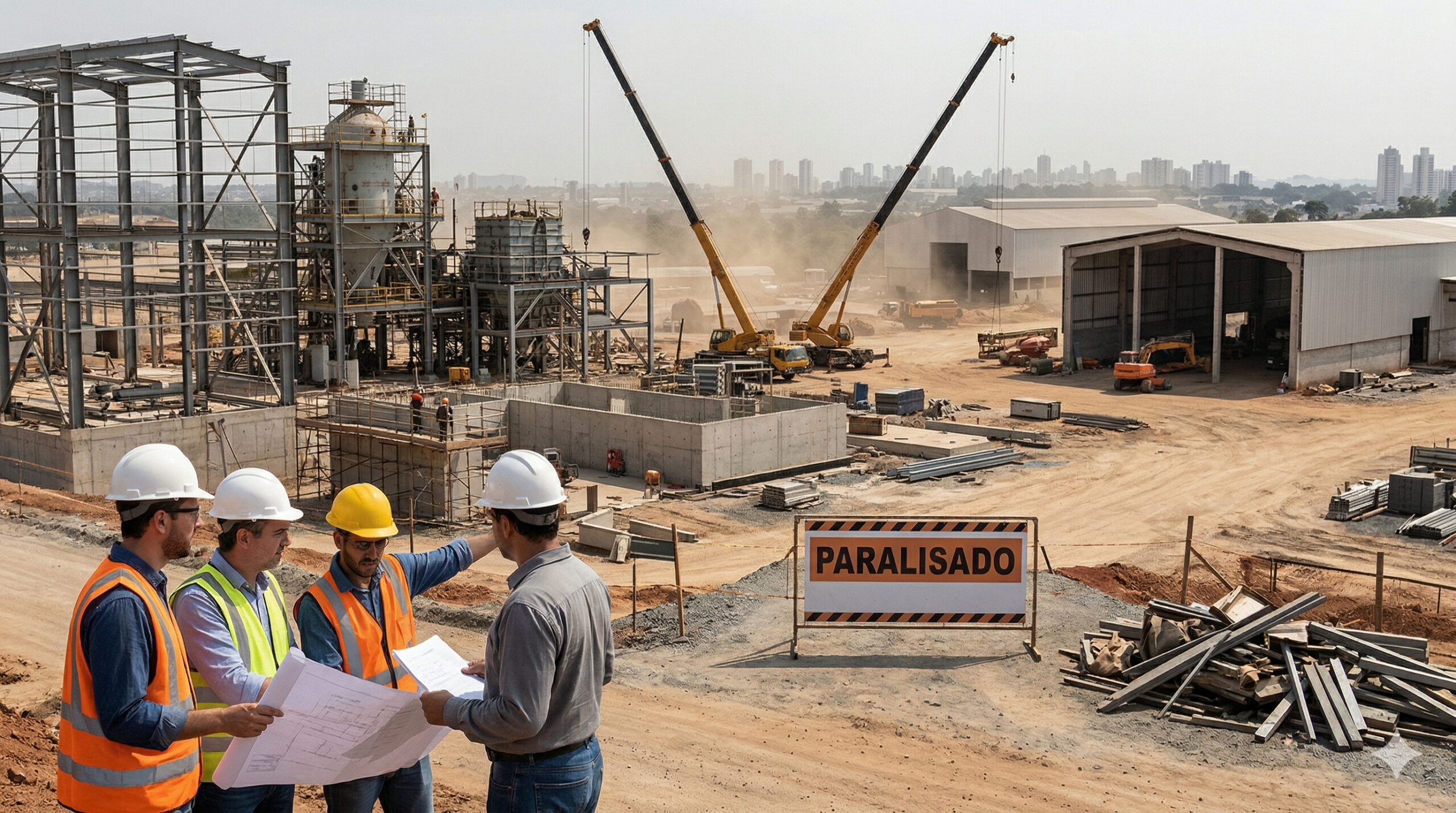
The lack of welders, electricians, and operators becomes a structural threat in 2025, with the construction industry and manufacturing already suffering from delays, cost pressures, and labor shortages in Brazil.
-
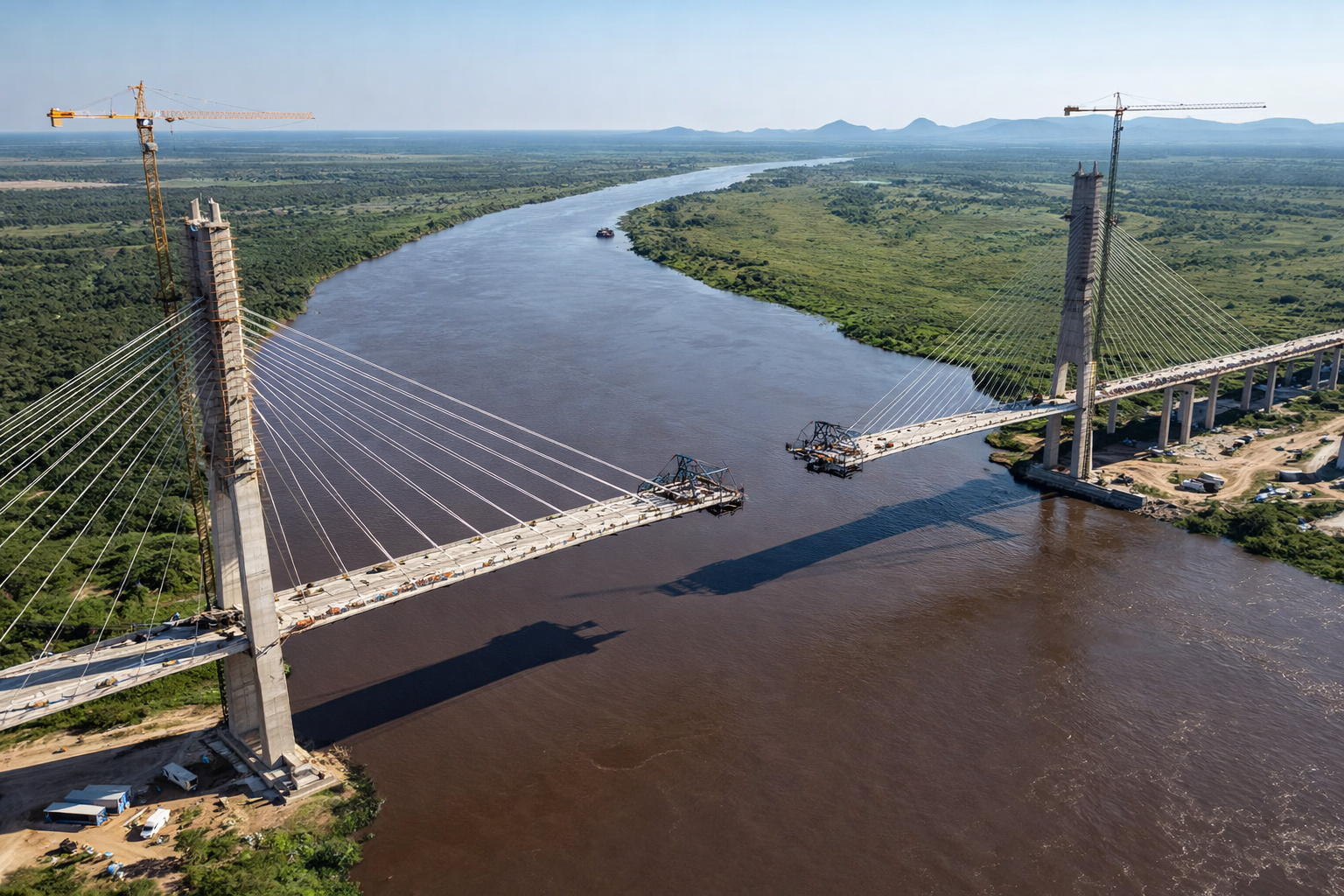
Brazil and Paraguay are just 46 meters away from a historic union on the bioceanic bridge that promises to revolutionize trade between the Atlantic and the Pacific.
-
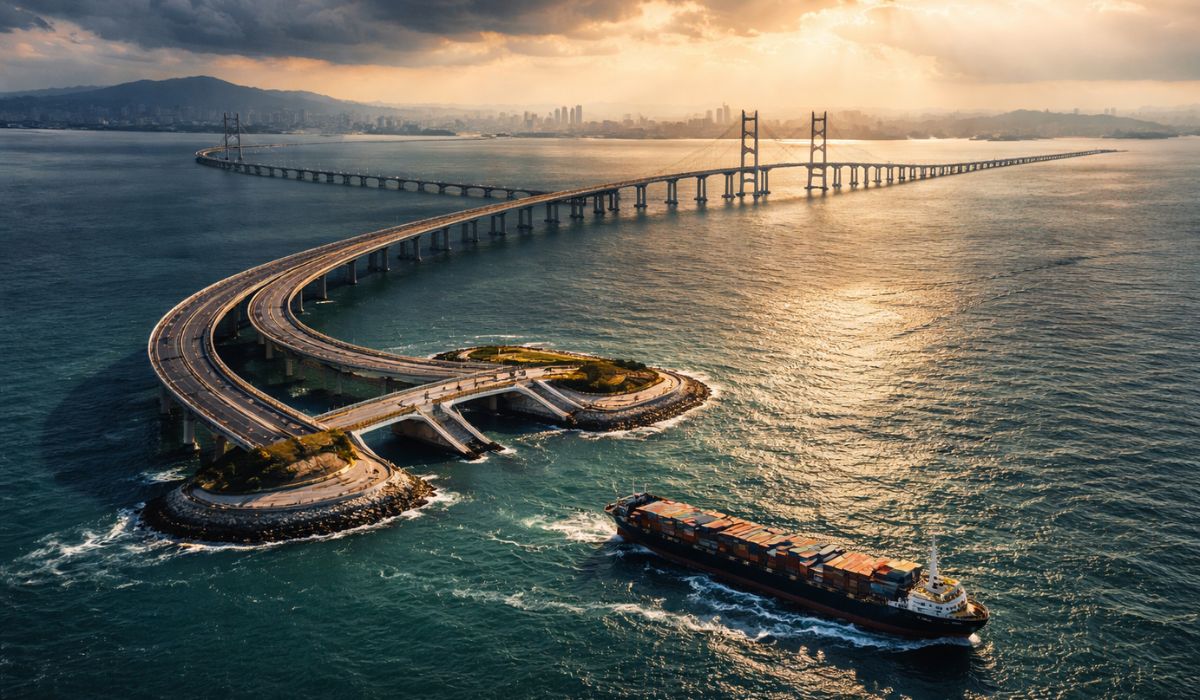
With 55 km over the sea, a cost of US$ 20 billion, and enough steel to build 60 Eiffel Towers, China’s largest project has connected Hong Kong, Zhuhai, and Macau in a colossal bridge that defies the logic of engineering.
-
A trick with joint compound transforms a Styrofoam ceiling into a plaster-like ceiling: leveled panels, wires and mesh at the joints, sand, paint, and change the environment while spending little today.

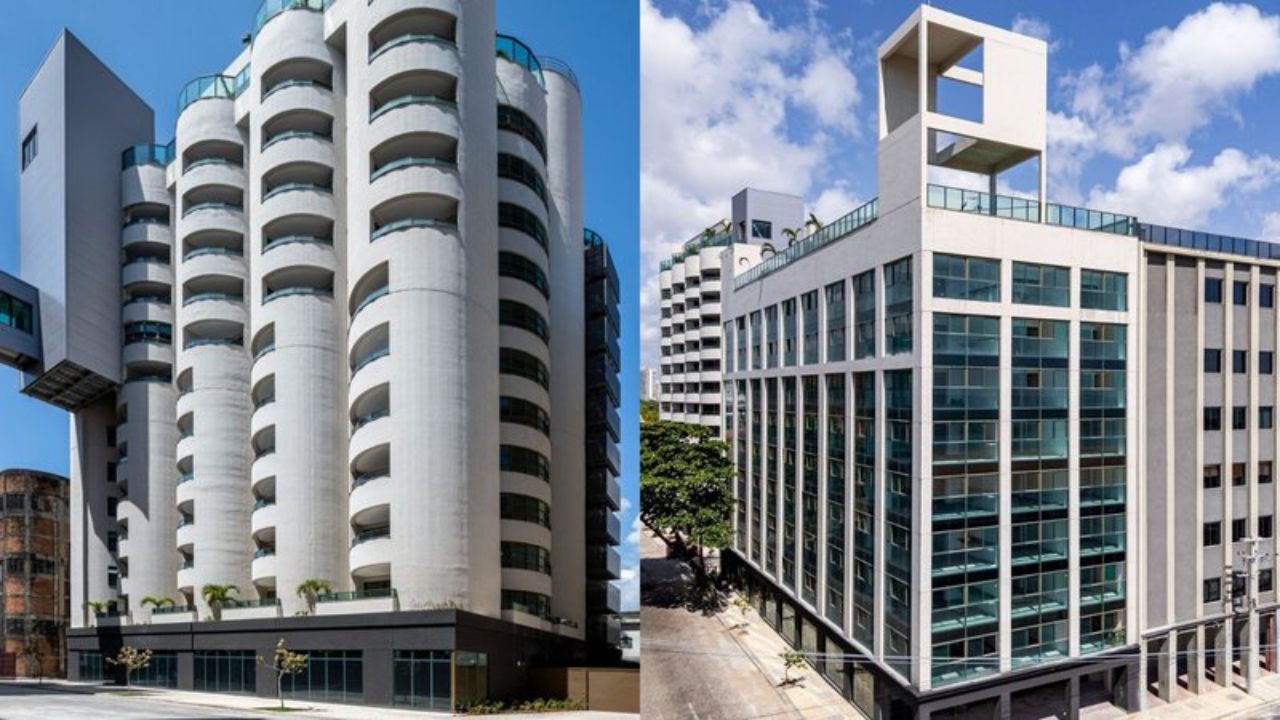
In practice, what stands out is a large vertical mirror, resembling an old corporate building, in colors that range from purple, blue, to brown, depending on the promotional material.
The advertisement touts “imposing architecture,” but the design resembles generic mirrored towers, typical of shopping centers from decades ago, with no dialogue with the human scale of the beach, the climate, or the landscape of Espírito Santo’s coastline.
Some question whether, given an investment of this magnitude, one couldn’t expect something that valued the place, the light, the ventilation, and the experience of those walking on the street, rather than just the aerial photo from the brochure.
390 Apartments, Privacy, and Very Little Foot on the Sand
Another point that clashes with the discourse of luxury by the seaside is the density of the development. There are 390 stacked apartments in two towers, which means hundreds of cars, hundreds of residents, and visitors concentrated in a relatively short stretch of the shore.
While the advertising insists on “privacy” and “exclusive luxury, by the seaside,” the number of units indicates just the opposite.
On days of high occupancy, the flow of residents tends to further pressure a beach that already has little sand available.
The promise of exclusivity coexists with the reality of crowded elevators, contested parking, and direct impact on the use of the shore.
Luxury by the Seaside Without a Sidewalk and with a Sandbank Under Pressure


One of the most glaring contrasts is the design of the surroundings. The Taj is glued to a highway and, in practice, seems to have “forgotten” the sidewalk, which transforms the simple gesture of leaving home and going to the ocean into an uninviting journey.
Paying dearly to live facing the ocean and having difficulty reaching the sand is a paradox hard to ignore.
Just ahead, there is not a large open beach, but a sandbank, typical coastal vegetation that is protected by law.
The lingering question is whether this area will really be preserved or whether it will gradually be compressed by indirect uses, pedestrian traffic, and the everyday pressure of the surroundings.
In a scenario of economic growth, it would be reasonable to expect that the so-called “luxury by the seaside” would include explicit respect for the fragile sandbank that still resists there.
From Taj Mahal to the Capixaba Beach: When the Name Promises More Than the Building Delivers
The venture was named Taj, a direct reference to the Taj Mahal, a white marble mausoleum adorned with precious stones in the city of Agra, India, recognized as a world heritage site and a global symbol of architectural sophistication.
There, the construction was born as a tribute from an emperor to his wife who died in childbirth; here, the name is used to sell “luxury by the seaside” in mirrored towers that have little dialogue with Brazil, the beach, or Espírito Santo.
Even the choice of landscaping elements falls into this clash of references. Palms planted by the seaside evoke more a slice of Dubai than the coastline of Espírito Santo, reinforcing the feeling that the project aimed to import a generic imagery of ostentation instead of building a language of its own, rooted in the place.
The question that remains is whether using the name of a global architectural icon for a set that hardly approaches that standard is not an example of marketing excess.
Master Plans, Excuses, and the Generic “Luxury by the Seaside”
In light of the growing criticism of unregulated verticalization and the quality of the new coastal buildings, developers often point a finger at the master plan, as if every decision regarding volume, facade, and relationship with the street were a mandate from the law.
In the case of the Taj, it is hard to believe that there is any rule mandating the construction of a purple mirrored tower called Taj, sold as luxury by the seaside, in front of a protected sandbank.
Another recurring justification is that the square meter in Brazil would be “too cheap” to allow for better projects, an argument that does not hold when the venture in question involves R$ 600 million and explicitly presents itself as a high-standard product.
When marketing promises luxury and delivers a large-scale architecture with the appearance of a “generic cut” from decades past, it remains for those who care about the city to demand, question, and criticize, so that the next project at least learns from these excesses.
The criticism and observations about the Taj venture were inspired by content from the channel São Paulo nas Alturas, by Raul Juste Lores.
Finally, in a shore where each building helps define the face of the city, do you think that this type of “luxury by the seaside” improves or worsens the future of Vila Velha as a place to live and enjoy the beach?








Uma reportagem precisa ser construída com responsabilidade e informações corretas. Quem conhece o Taj Home Resort sabe que o projeto foi pensado para proporcionar uma experiência diferenciada de moradia e lazer.
O Taj está em uma praia belíssima, ideal para surf, kitesurf, mergulho e banho, com estrutura de segurança reforçada por postos de salva-vidas. São mais de 60 itens de lazer, além do exclusivo Beach Taj, um espaço reservado para você e sua família viverem momentos especiais.
A ideia de que 390 famílias ocuparão todos os espaços não condiz com a realidade de condomínios muito maiores que convivem harmoniosamente. E, em relação à restinga, a Grand Construtora, responsável pelo empreendimento, já patrocina e apoia essa área há anos, demonstrando compromisso com preservação e desenvolvimento sustentável.
O Taj é um projeto moderno, com entrega prevista para 2026. Se você deseja conhecer de perto essa proposta, fale comigo — se fizer sentido para você.
Marcelo Araújo
📱 27 9 9618 6437
Marcelo, a propaganda de corretagem imobiliária em uma reportagem crítica ficou simplesmente péssima. O projeto de fato é duramente criticado pela sociedade, tanto de moradores do entorno quanto por arquitetos e urbanistas que olham para algo além das promessas de luxo vazio e exclusividade ilusória. Vila Velha não tem muito a ganhar urbanisticamente falando com um projeto desses. É claro que a construtora vai vender todas as unidades, é claro que alguns ricos e um monte de pseudo ricos vão habitar ai. Mas, sim, segue sendo uma promessa de mal gosto e uma negligência ambiental de porte considerável, a ponto de sucitar uma matéria em periódico. Mas não se preocupe, as unidades serão vendidas de qualquer forma, pese a qualquer crítica possível,e todos sabemos disso…
Qual é o apelido daquele trecho da praia?
KKKKKKKKKK
Sua opinião não é isenta, pelo contrário, pois está vinculada a interesses econômicos claros. A responsabilidade maior é de quem projeta uma aberração desta e dos órgãos que a aprovam, e não de quem aponta, com razão, os problemas.
Taj Home Resort — o cenário ideal para você viver momentos inesquecíveis com quem ama.
São mais de 60 itens de lazer, além do exclusivo Beach Taj à sua disposição para transformar seus dias em verdadeiras experiências de resort.
Se isso faz sentido para você e para sua família, permita-se conhecer de perto e sentir tudo isso ao vivo.
Agende sua visita.
Marcelo Araújo
📱 27 9 9618 6437
Corretor de Imóveis
É ****, é brega e é desnecessário. A crise estética chega a níveis inimagináveis. O novo rico gosta de ostentação mas tem um péssimo gosto.
Parece casa de pombo! Um monte de janelinhas coladas umas às outras.