





 Portuguese
  English
  Spanish
  5 min of reading
  0 comments



Inspired by Pix, Bre-B Transforms the Colombian Financial System with Support from Brazilian Fintechs and Promises to Change E-Commerce and Instant Payments in the Country.
Colombia launched, in October, the Bre-B, its first national instant payment system, inspired by Pix and designed by the Banco de la República to operate 24 hours a day, every day.
The launch occurred in two phases: controlled tests starting on September 23 and large-scale operations beginning on October 6, when it began appearing as a button or “Bre-B zone” in the applications and websites of financial institutions.
From day one of the rollout, international companies were able to accept the new method via the Ebanx platform, which integrated into the Colombian ecosystem through a partnership with local fintech Movii.
-
The government requests the Federal Revenue Service for a new system to automate the income tax declaration, reducing errors, time, and bureaucracy for millions of Brazilians.

-
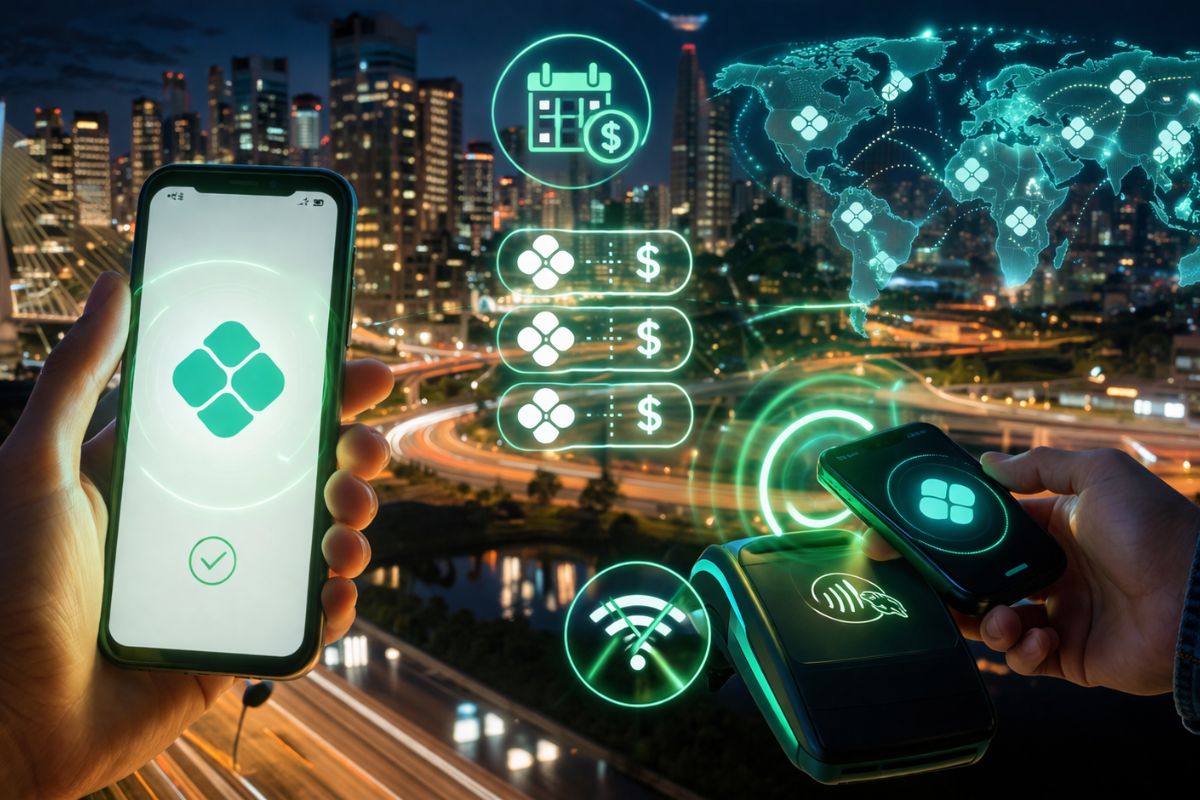
Pix in installments, international Pix, and contactless payment without internet: the Central Bank revealed the new features coming to the tool that is already used by almost every adult in Brazil.
-
Mercado Livre has just started selling medications with delivery in up to three hours to your door, and this move could completely change the way Brazilians buy medicines on a daily basis.

-
In Dubai, rising tensions from the war in the Middle East are causing super-rich individuals to leave the Gulf and direct their fortunes to a new financial refuge in Asia.


This connection uses Movii’s Smart Router to reach all nodes of the system and efficiently route transactions, opening Bre-B to global e-commerce without multiple integrations.
Brazilian Participation and Pix’s Influence
Ebanx was one of the few foreign companies invited to technically contribute to the implementation, starting in 2023, sharing learnings from Pix on topics such as interoperability and fraud prevention.
“We were called to share the experience we had in Brazil with Pix,” said Eduardo de Abreu, global product vice president at Ebanx, in line with the company’s public role on the Colombian central bank advisory committee.
According to him, the goal was to accelerate adoption by avoiding obstacles faced in Brazil.
In addition to Ebanx, Nubank also integrated preparations for the arrival of Bre-B, leveraging its accumulated experience with Pix in Brazil to offer the functionality in Nu Colombia.
As of October 6, the digital bank began allowing immediate payments and transfers with the “Bre-B Keys” directly in the app, at no cost to the user.
How Bre-B Works
In practice, Bre-B is an interoperability infrastructure that connects existing systems and participants — banks, cooperatives, digital wallets, and fintechs — allowing transfers in seconds between accounts of different institutions.
The mass usage transition prioritizes payments between individuals and between individuals and businesses through the button/“Bre-B zone” in the institutions’ digital channels.
The system adopts the concept of “Keys”, identifiers linked to accounts that replace long numbers.
The user chooses cell phone, email, document, alphanumeric or commercial key as their alias, which cannot be active simultaneously in more than one institution.
Registration began on July 14, in a “soft launch”, when institutions started to offer the Bre-B Zone for managing these keys.
Unlike the Brazilian model — which created a unique payment method and a centralized arrangement — Colombia opted to interlink distinct platforms under a common interoperability layer.
The design seeks to leverage products familiar to users, thus accelerating the adoption curve.
The Bre-B Zone standardizes the minimum experience: in addition to registering and managing keys, it concentrates mandatory activation and portability options.
Adoption in Numbers
Official indicators show rapid expansion in key registration throughout the third quarter.
On September 22, there were 35 million active keys and 14.5 million registered users.
As it transitioned to mass operation, announcements and specialized reports began indicating levels above 70 million keys and over 30 million linked customers, with daily growth as new institutions enabled their “zones” in the app and online banking.
In the first few days after the transition, Bre-B recorded 17 million transactions in one week, signaling initial relevant traction in the ecosystem.
At the same time, the Banco de la República confirmed that P2B payments via the “Bre-B” button became part of the standard flow in digital channels starting on October 6.
Expected Impacts and Reach
The Banco de la República and industry analysts estimate that Bre-B should reduce frictions in retail, lower the acceptance cost for micro and small businesses, and boost financial inclusion.
The public-private design and the decision to not charge participants for the system’s central services during an initial period reinforce the incentive for banks and fintechs to join.
For global companies, the opening from day one through the Ebanx-Movii connector allows them to offer checkout with instant payments to Colombian consumers without lengthy local integration projects.
In Brazil, a similar movement accelerated the migration of transactions from cards to Pix in specific segments of e-commerce.
The market expectation is that QR codes and account-to-account payments will gain ground over traditional means, especially in low and recurring tickets.
Similarities and Differences Compared to Pix
Both Pix and Bre-B are instant systems with real-time settlement and operation 24/7, built to be open and interoperable.
The main difference lies in the architecture.
While Pix was born as a unique method anchored by the Central Bank of Brazil, Colombia orchestrates payments among various existing arrangements through a common layer.
Additionally, the registration and management of keys in a standardized and mandatory zone for participants is a particular feature of the Colombian model.
For end users, the perceived effect is similar: transfer and pay in seconds, without depending on banking hours, using an easy-to-remember alias or a static/dynamic QR code.
The cap per transaction, the user fee policy, and the timeline for functionality expansion remain under adjustments and official announcements throughout the rollout.
What’s Next
The public schedule anticipates a gradual expansion of use cases, prioritizing payments between individuals and businesses and, subsequently, integration of new billing and receiving services.
The list of participating entities grows each week as banks, cooperatives, and digital wallets join the infrastructure and enable the “zone” in their channels.
While Pix consolidated a significant engagement of the adult population in Brazil and altered dynamics in the card market, Colombia observes the adoption of Bre-B with goals of formalization, safety, and competitiveness.
The question now is how the different actors will calibrate prices, experiences, and anti-fraud policies to sustain the scale of the new system without losing trust.
“The regulators in the region are eager to modernize their systems and get closer to the technological advancement that Pix has brought. Instantaneity is a one-way path,” said Eduardo de Abreu from Ebanx.
With the expansion of Bre-B and the active participation of Brazilian companies in its ecosystem, what other functionalities should the system prioritize to accelerate adoption among small businesses and everyday services?








-

-

-

-

-

24 pessoas reagiram a isso.