





 Portuguese
  English
  Spanish
  3 min of reading
  0 comments


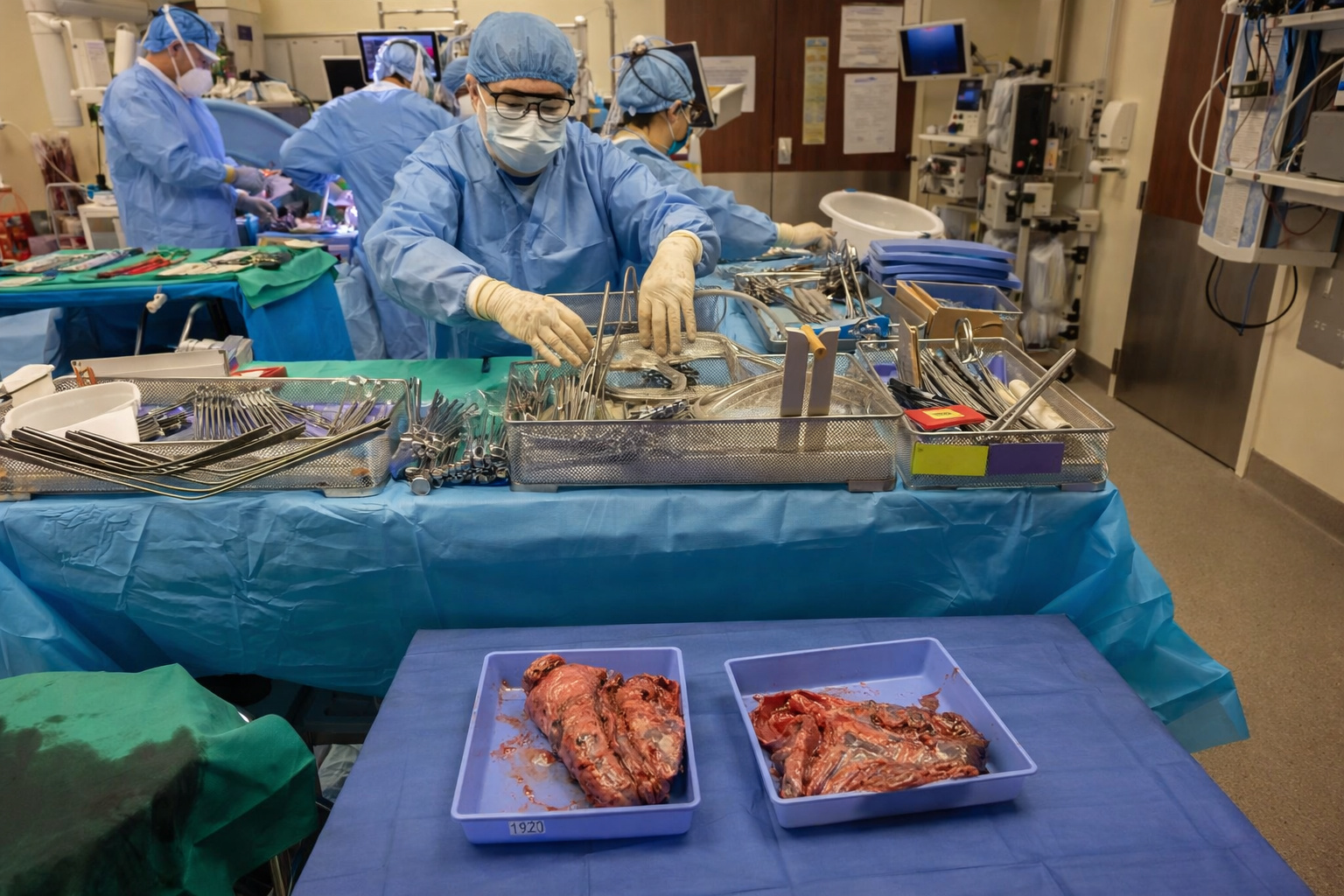
Extreme Procedure Allowed to Contain Deadly Infection, Stabilize Heart, and Pave the Way for a Double Transplant Considered Impossible Until a Few Years Ago
For decades, medicine deemed it unfeasible to keep a human alive without lungs. However, this barrier was overcome in the United States when doctors managed to sustain a patient for 48 hours without any respiratory organs, using a custom-made artificial system. The case involved a 33-year-old man who faced a fulminant lung infection and had both lungs removed as the only chance for survival.
The information was disclosed by Northwestern University and detailed in a scientific article published in the Med journal, from Cell Press. According to the researchers, the procedure represents a milestone in the treatment of catastrophic lung failure and expands the possibilities for patients previously considered without therapeutic alternatives.
The clinical picture began typically, with an Influenza B infection. However, within a few days, the condition evolved into severe necrotizing pneumonia and generalized sepsis. Additionally, a secondary bacterial infection caused by Pseudomonas aeruginosa showed resistance to nearly all available antibiotics, including the carbapenems, used as a last resort.
-
Motorola launched the Signature with a gold seal from DxOMark, tying with the iPhone 17 Pro in camera performance, Snapdragon 8 Gen 5 that surpassed 3 million in benchmarks, and a zoom that impresses even at night.

-
Satellites reveal beneath the Sahara a giant river buried for thousands of kilometers: study shows that the largest hot desert on the planet was once traversed by a river system comparable to the largest on Earth.

-
Scientists have captured something never seen in space: newly born stars are creating gigantic rings of light a thousand times larger than the distance between the Earth and the Sun, and this changes everything we knew about stellar birth.

-
Geologists find traces of a continent that disappeared 155 million years ago after separating from Australia and reveal that it did not sink, but broke into fragments scattered across Southeast Asia.

Race Against Time Amid an Irreversible Infection
The patient arrived at Northwestern Memorial Hospital already in critical condition, supported by ECMO, an extracorporeal membrane oxygenation system used when lungs and heart fail. Still, the infection was advancing rapidly. The lungs began to destruct internally, releasing toxins that worsened septic shock and led to the failure of other organs.
In this scenario, keeping the lungs meant allowing the infection to continue spreading. On the other hand, removing them seemed incompatible with life. Faced with this dilemma, the team led by thoracic surgeon Ankit Bharat made an extreme decision: to perform a complete bilateral pneumonectomy, eliminating the source of the infection before transplantation.
This choice created a new challenge. Without lungs, the heart loses the balance of pulmonary circulation, which can cause cardiovascular collapse within minutes. Therefore, the doctors needed to go beyond existing technologies.
Artificial System Replaced Vital Functions of the Lungs

To enable the procedure, specialists developed the Total Artificial Lung System (TAL), a system that not only oxygenated the blood but also replicated the role of the lungs in the dynamics of circulation. Unlike traditional ECMO, the TAL was designed to control blood flow, reduce the overload of the right ventricle, and maintain hemodynamic stability.
Moreover, the surgeons needed to deal with an anatomical problem. Without lungs, the heart can shift within the chest. To prevent this, the team used tissue expanders filled with saline and reconstructed the pericardium, keeping the heart in position until the new organs arrived.
The results emerged quickly. In less than 24 hours after the removal of the lungs, signs of sepsis began to regress. Lactate levels fell, blood pressure stabilized, and vasoactive drugs were discontinued. For 48 hours, the patient remained alive and stable without lungs, supported solely by the artificial system.
When compatible lungs became available for donation, the team successfully performed the double transplant. Currently, more than two years after the procedure, the patient lives independently and shows excellent lung function.
Scientific Evidence and Limits of Innovation
The analysis of the removed lungs brought another important advancement. Modern techniques of spatial transcriptomics and single-cell analysis revealed total destruction of lung architecture. The cells responsible for regeneration had disappeared, while scar tissue dominated the organs. In other words, there was no possibility of spontaneous recovery.
This data helps differentiate, at the molecular level, when a lung injury becomes irreversible. According to the researchers, this could speed up clinical decisions in the future and save precious time in critical situations.
Despite the success, the authors emphasize that the technique still requires highly specialized centers, with multidisciplinary teams and advanced infrastructure. Nevertheless, the case redefines the limits of modern medicine and indicates new pathways for the treatment of severe lung failure.
Do you believe that technologies such as artificial lungs could become common in the future of intensive medicine or will they remain restricted to extreme cases?








-

-

-

3 pessoas reagiram a isso.