





 Portuguese
  English
  Spanish
  5 min of reading
  12 comments


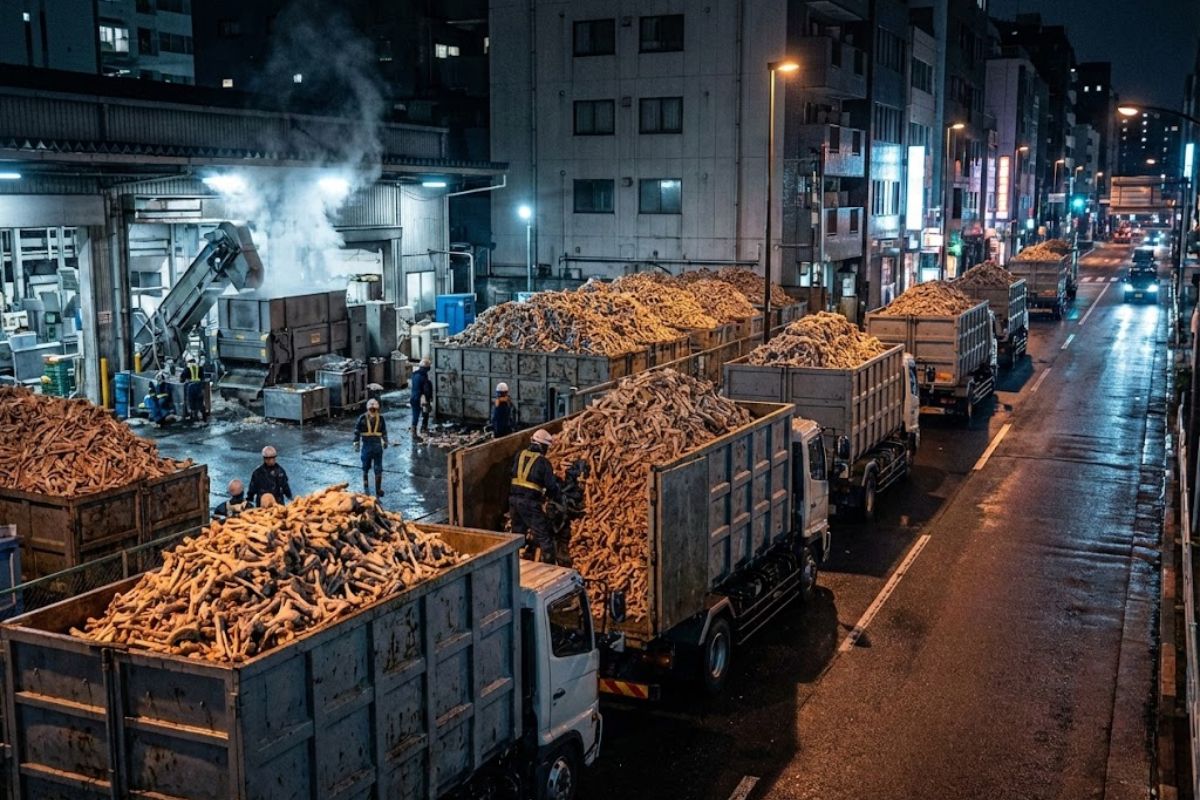


In The Operation Of E-Bright Co., Trucks Cross Tokyo At Night To Collect Pork Bones From Ramen Restaurants, While The Factory In Kanagawa Grinds, Boils, Dries And Granulates The Material; With 5,000 Tons Annually Processed, Half Is Returned To The Field As High-Phosphorus Fertilizer, Reducing Waste And Costs.
In Tokyo, the bones that support the flavor of many ramen broths cease to be an invisible liability and enter an organized industrial chain for reuse. At the center of this flow is E-Bright Co., which collects up to 3 tons per day and transforms a recurring waste into agricultural input.
The dynamics begin in the early morning in neighborhoods like Shinjuku and end in Kanagawa, where the material goes through grinding, boiling, drying, cooling, and granulation. The result is an operation that combines urban logistics, technical processing, and cost reduction for restaurants, in addition to a productive destination for organic waste.
Early Morning In Shinjuku: When Bone Collection Requires Minute Precision

At 2:15 AM, a truck pulls up in front of ramen shops and begins a short, repetitive sequence: open containers, remove boxes, transfer cargo, and move on to the next stop.
-
Friends have been building a small “town” for 30 years to grow old together, with compact houses, a common area, nature surrounding it, and a collective life project designed for friendship, coexistence, and simplicity.

-
This small town in Germany created its own currency 24 years ago, today it circulates millions per year, is accepted in over 300 stores, and the German government allowed all of this to happen under one condition.

-
Curitiba is shrinking and is expected to lose 97,000 residents by 2050, while inland cities in Paraná such as Sarandi, Araucária, and Toledo are experiencing accelerated growth that is changing the entire state’s map.

-
Tourists were poisoned on Everest in a million-dollar fraud scheme involving helicopters that diverted over $19 million and shocked international authorities.


The routine is timed because each stop impacts the total night collection window, especially on narrow roads with limited access.

The collector Kyosuke Sekigawa, 32, and in his second year with the company, describes a physically intense job where strength, balance, and speed need to go hand in hand.
In many cases, each collection takes about three minutes, but the volume varies greatly from store to store, affecting the effort and maneuvering time at each stop.
How Much Each Store Disposes And How That Scales On The Daily Route

The volume variation is one of the central factors of the operation. There are establishments that dispose of between 50 and 100 kilos per collection point, and larger units can concentrate five boxes per day, with an estimated weight of 20 to 30 kilos per box, totaling around 100 kilos transferred in a single stop.

In an individual routine, Sekigawa reports visiting around 25 shops during the shift, but the daily operation can reach about 60 establishments considering the set of routes and types of waste.

In addition to pork bones, the company also collects other wastes from restaurants, including incinerable items, which increases logistic complexity without changing the main focus: to remove bones efficiently and regularly.
Who Benefits From The Model: Restaurants, Urban Operation And Agricultural Chain
According to the company’s management, pork bones were traditionally treated as organic waste paid for by restaurants.
By converting this flow into recyclable material, E-Bright starts to buy the waste and changes the financial logic of those who previously only bore disposal costs.
For restaurants with high consumption, the annual return can reach around 1 million yen per unit.
In chains with multiple stores, the cumulative effect can reach tens of millions of yen. In practice, this explains why adherence tends to grow: environmental gains come with concrete economic incentives, without relying on a sudden change in kitchen operations.
From Collection To Processing: What Happens To The Bones Inside The Factory

In the industrial plant, operating between 5 AM and 9 PM, the collected bones first enter the grinder.

Then, they go to circular boiling tanks for about 20 minutes, with a temperature around 80°C.
This step has a technical objective: to reduce the presence of gelatin, which hinders the subsequent drying process.

With the gelatin removed, the material moves on to drying and then to cooling.
The team describes a flow that can take about an hour, considering boiling, drying, and thermal stabilization before bagging.

The result is a product that comes out almost powdered, with granulation adjusted according to the final application, in a process designed to maintain standardization.
Why The Bones Become Fertilizer And What Is The Differential Of The Product

The company claims to use only pork bones as raw material for the fertilizer, without mixing with other organic waste.
This defines a specific product profile, highlighting the phosphorus content, a nutrient valued in agricultural management and in the development of crops that require good soil nutritional support.

Part of the material may remain in powder, but there is an additional granulation step to reduce wind dispersion and facilitate application in the field.
Operationally, this adjustment transforms a more difficult-to-distribute product into a more practical fertilizer for farmers. It is the conversion of an urban waste into an agronomic input with commercial standards.
Annual Scale, Expansion Goals And The Limits To Growth
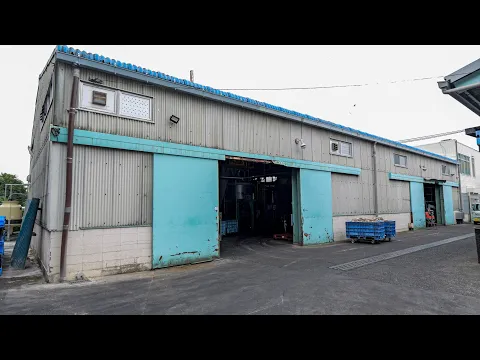

E-Bright reports processing around 5,000 tons of bones per year, with approximately 2,500 tons directed to fertilizer production.
This balance shows that the company works on two fronts simultaneously: urban waste management and supplying an agricultural chain that absorbs a significant portion of the repurposed material.
Currently, collection occurs in about 150 restaurants, with a goal of tripling this base.
The expansion challenge involves three points: increasing the capacity of the night routes, maintaining stability of daily processing (around 15 tons on operational days), and ensuring regular delivery of the fertilizer to the field. Without synchronizing these three points, the cycle loses efficiency.
The case of Tokyo and Kanagawa shows that the discussion about waste can move out of the abstract when there is operation, scale, and clear economic destination.
What was previously a disposal cost starts to circulate among restaurants, trucks, factories, and agriculture, with gains distributed at different stages of the chain.
If this model reached your city, do you believe that local restaurants and producers would quickly join? What part would be most challenging to implement in practice: night logistics, industrial processing, or connecting with farmers?










Trabalhei com distribuição de carne suína 30 anos, não vejo óbices em implementar no Brasil, fazer conjecturas políticas não faz parte do empreendedor, o negócio é focar no investimento e despesas , vê o custo e mercado comprador. Tendo margem abre o negócio e toca pra frente. É aquele ditado antigo ” quem não faz poeira, come poeira”.
A PARTE MAIS DIFÍCIL SERIAM DUAS.
A PRIMEIRA OS ROUBOS DE CAMINHÕES NO BRASIL.
A SEGUNDA SERIA A BOA VONTADE POLITICA SEM AS TAIS ****.
No Brasil, como a própria denominação reciclagem, já é mal valorizada, tratada a margem de algo importante e rentável, vai demorar muito até se enxergue tanto a negligência do descarte inadequado quanto de sua valorização. Um bom exemplo dessa falta de interesse em reaproveitamento do descartável/reciclável é o que se paga aos catadores, quando sempre existe uma melhor remuneração para as latas de alumínio e pior para papelão, garrafa pet, etc. Também não há hoje uma noção mais difundida diante da sociedade, o que é lixo e reciclagem porque ainda falta muito para o povo entender que é necessário uma separação dos descartáveis e do lixo doméstico e até mesmo para as coletas onde as mais organizadas se encontram nos grandes centros urbanos e seus governantes ainda são em sua maioria indiferente na lida do assunto tanto na concientizacao do cidadão quanto na logística necessária. Não se trata propriamente da cultura e educação baixa em determinada região para se concientizar, mas sim de uma livre iniciativa de quem tem esse poder.