





 Portuguese
  English
  Spanish
  6 min of reading
  0 comments


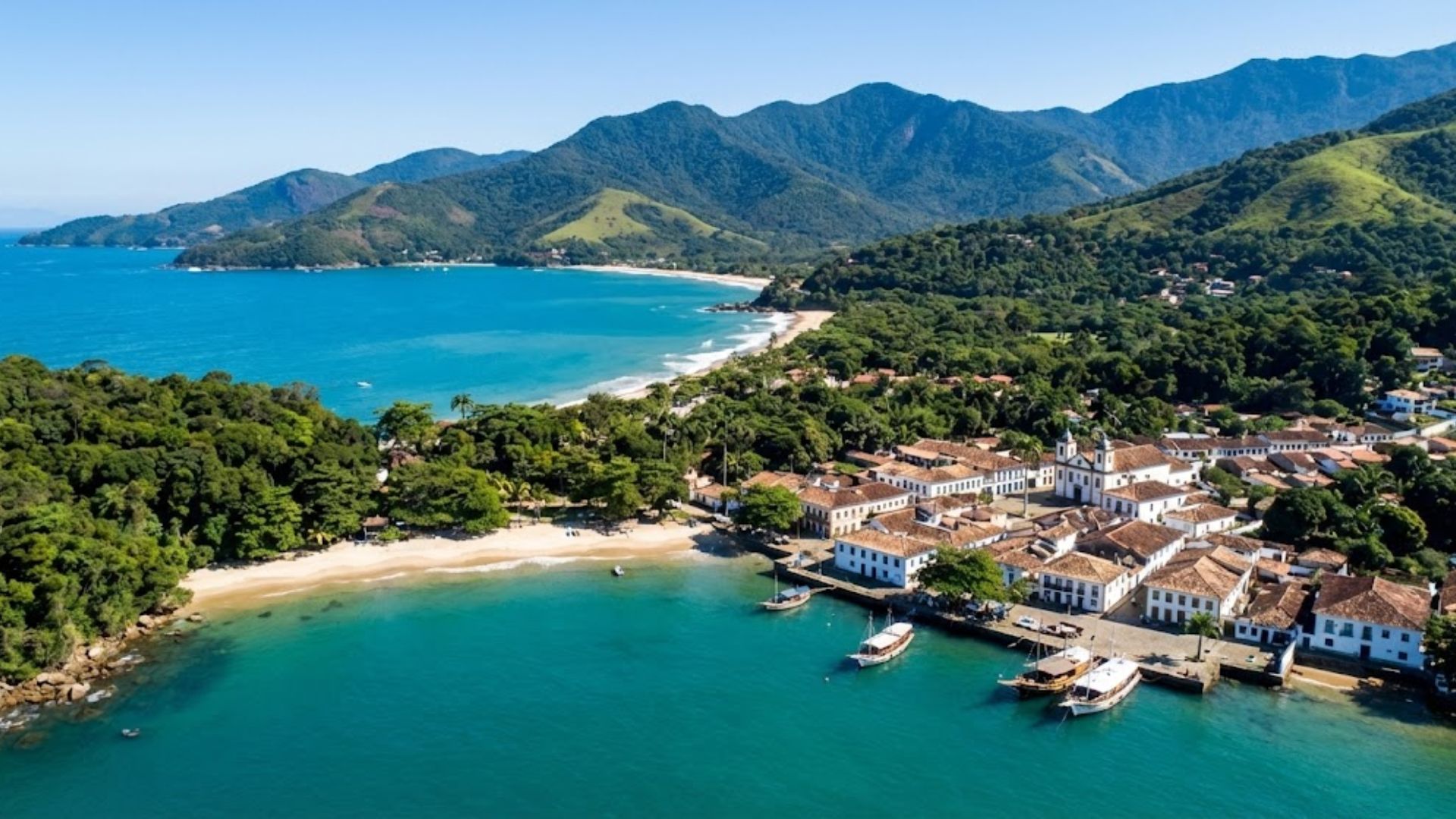
North Coast Destination Brings Preserved Beaches, Trails in the Atlantic Forest, Accessible Waterfalls, and a Historic Center by the Sea, Combining Nature and Tourist Structure in One of the Most Visited Areas of the State of São Paulo.
Just a few hours from the city of São Paulo, Ilhabela, on the north coast of São Paulo, holds one of the state’s most well-known collections of beaches and preserved areas.
The archipelago combines more than 40 beaches and trails within the Ilhabela State Park, as well as a historic beachfront center that features old buildings, local shops, and services focused on tourism.
Even with the “refuge” landscape, the dynamics of the destination require organization.
-
Friends have been building a small “town” for 30 years to grow old together, with compact houses, a common area, nature surrounding it, and a collective life project designed for friendship, coexistence, and simplicity.

-
This small town in Germany created its own currency 24 years ago, today it circulates millions per year, is accepted in over 300 stores, and the German government allowed all of this to happen under one condition.

-
Curitiba is shrinking and is expected to lose 97,000 residents by 2050, while inland cities in Paraná such as Sarandi, Araucária, and Toledo are experiencing accelerated growth that is changing the entire state’s map.

-
Tourists were poisoned on Everest in a million-dollar fraud scheme involving helicopters that diverted over $19 million and shocked international authorities.


Visitor flow tends to increase during holidays and vacations.
The main access depends on the ferry crossing from São Sebastião, which can cause queues during busier periods.
Ferry Crossing and Trip Planning to Ilhabela
Ilhabela is an island, and this defines the first step of the trip.
The crossing for vehicles and pedestrians occurs on the São Sebastião–Ilhabela route, managed by the state’s ferry system.
During peak demand times, the wait can be long.
Therefore, the São Paulo government maintains the option of scheduling boarding through Hora Marcada, a service created to reduce waiting time and provide predictability for transportation.
In addition to scheduling, the basic recommendation is to monitor the crossing conditions during the trip.
Schedules and operations may vary according to demand and weather conditions.
North Beaches of Ilhabela and Climate of Tranquility

Once the logistics of arrival are managed, the profile of the beaches helps to organize the itinerary.
In general, the north has more sought-after stretches for those wanting to slow down.
The sand stretches are surrounded by vegetation and have less intense occupancy than central and southern areas, especially on weekends and during high season.
Among the frequently mentioned spots is Praia do Jabaquara.
Located in the north, it is known for maintaining a more preserved environment and for providing direct contact with the Atlantic Forest.
The location appears on itineraries for those driving along the road.
It can also be reached by boat tours, depending on the offerings from tour operators.
Even so, it’s worth adjusting expectations.
The infrastructure varies greatly from one beach to another.
Some places offer limited services.
The difference in access, phone signal, and facilities is part of what makes Ilhabela alternate between more urban stretches and areas where nature dictates the pace of the visit.
South Beaches and Consolidated Tourist Infrastructure
In the south, the scenery often changes.
Praia do Curral has established itself as one of the most well-known addresses in the municipality.
The location concentrates services, commerce, and food options.
It also has easier access for those traveling by car on the island.
Local guides describe Curral as an area with visitor service structures and a constant presence of people.
It is also a beach frequently associated with family trips.

Tourism publications point to Curral as a common choice for those traveling with children.
The calmer sea in certain stretches and the convenience of spending the whole day with support from kiosks and services are cited factors.
However, this contrast between north and south is not a fixed rule.
Sea conditions can vary.
The number of people changes according to the calendar.
Therefore, what defines the “best” spot often depends on the visitor’s objective.
Trails, Waterfalls, and Ecotourism in Ilhabela
If the coast offers the first image of Ilhabela, the green interior supports the destination’s reputation.
A significant part of the territory is linked to the Ilhabela State Park.
The park features trails and Atlantic Forest areas with waterways and waterfalls.
This setting is sought after by those prioritizing ecotourism.
The network of paths and natural attractions frequently appears in the municipality’s promotional materials.
Travel guides highlight itineraries that combine beach and hiking.
The logic is straightforward.
In one day, some might cross from the sand to the trail.
The afternoon can end in pools and waterfalls when conditions allow, and access is clear.
In this kind of tour, planning is even more critical.
Distance, terrain, and climate weigh more than in urbanized beaches.

Castelhanos Beach and Controlled Access
Among the points that synthesize this encounter between adventure and nature is Praia de Castelhanos.
It is located on the island’s eastern face, facing the open sea.
Access by land involves the so-called Estrada Parque.
There may be entry control and daily capacity.
Rules and schedules for going and returning are defined by the official park management system of the state.
Those who reach Castelhanos often associate the location with a more adventurous profile.
Besides the journey requiring more attention, the beach is mentioned in surf guides.
Wave conditions usually work with east swells.
This reinforces its reputation as a sought-after spot by surfers when the sea is favorable.
On the other hand, the same isolation that preserves the landscape demands responsibility.
Logistics, adherence to circulation rules, and attention to what is available at the site are part of the experience.
Historical Center of Ilhabela and Cultural Life in the Village
In the urban axis, the contrast to the greenery appears in the Vila, as the historical center of Ilhabela is known.
It is there that streets of cobblestones, shops, restaurants, and cultural spaces are concentrated.
These elements help tell the local history.
The so-called Rua do Meio is mentioned as a corridor of shops, handicrafts, and services.
The location also hosts the headquarters of the Ilhabela Art and Culture Foundation in a preserved architectural building.
The center serves as a starting point for tours.
It is also an option for those looking to stroll on foot in the late afternoon.
The routine alternates between beach and urban programming.
The experience is usually less about enclosed attractions.

Walking, observing the architecture, consuming local products, and attending seasonal events are part of the itinerary.
Accommodation in Ilhabela and High Season
The accommodation options range from inns to hotels and vacation homes.
The choices are spread across different regions of the island.
Even with this variety, the recurring recommendation in high-demand destinations is to book in advance.
During the busiest periods, the combination of island, ferry crossing, and holiday calendar tends to concentrate visitors.
For those traveling with a tight schedule, small decisions can impact the day.
Defining whether the priority is staying close to the Vila, the central service axis, or a specific beach can reduce travel time.
This increases relaxation time.
Still, the ideal choice varies depending on the goal, budget, and type of experience sought.
With so many officially mapped beaches and a routine that alternates between sea, jungle, and historical center, Ilhabela continues to present itself as a kind of “versatile island.”
The experience can be completely different from one visit to another.









-

-

-

11 pessoas reagiram a isso.